


Description
Rosemary is one of our favorite Mediterranean herbs to grow because it is beautiful, easy to grow and smells so delightful! Rosemary translates to “dew of the sea”, pointing to her Mediterranean coastal roots and hints at her ability to thrive on mist and dew during the hot dry months of the year.
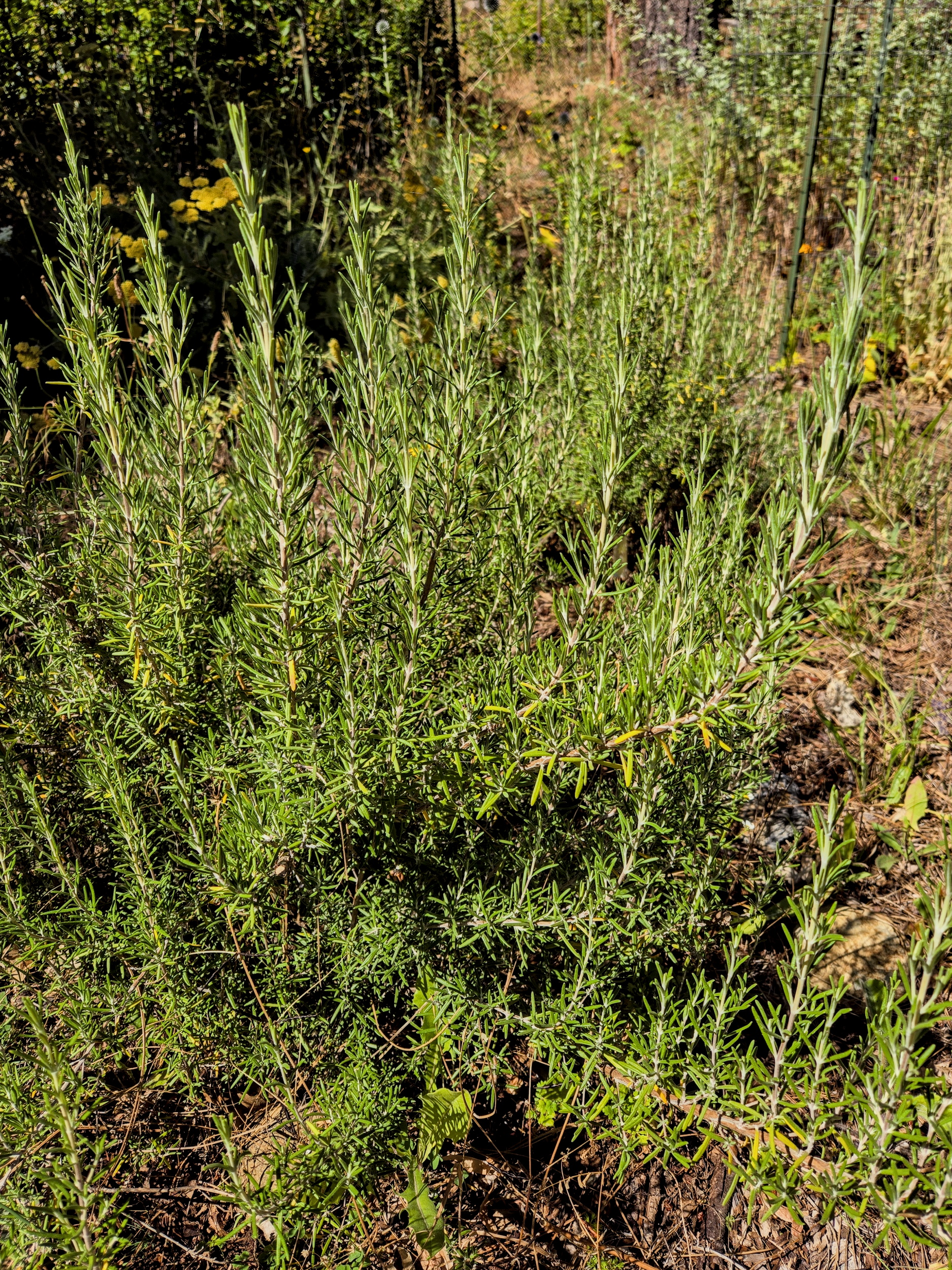
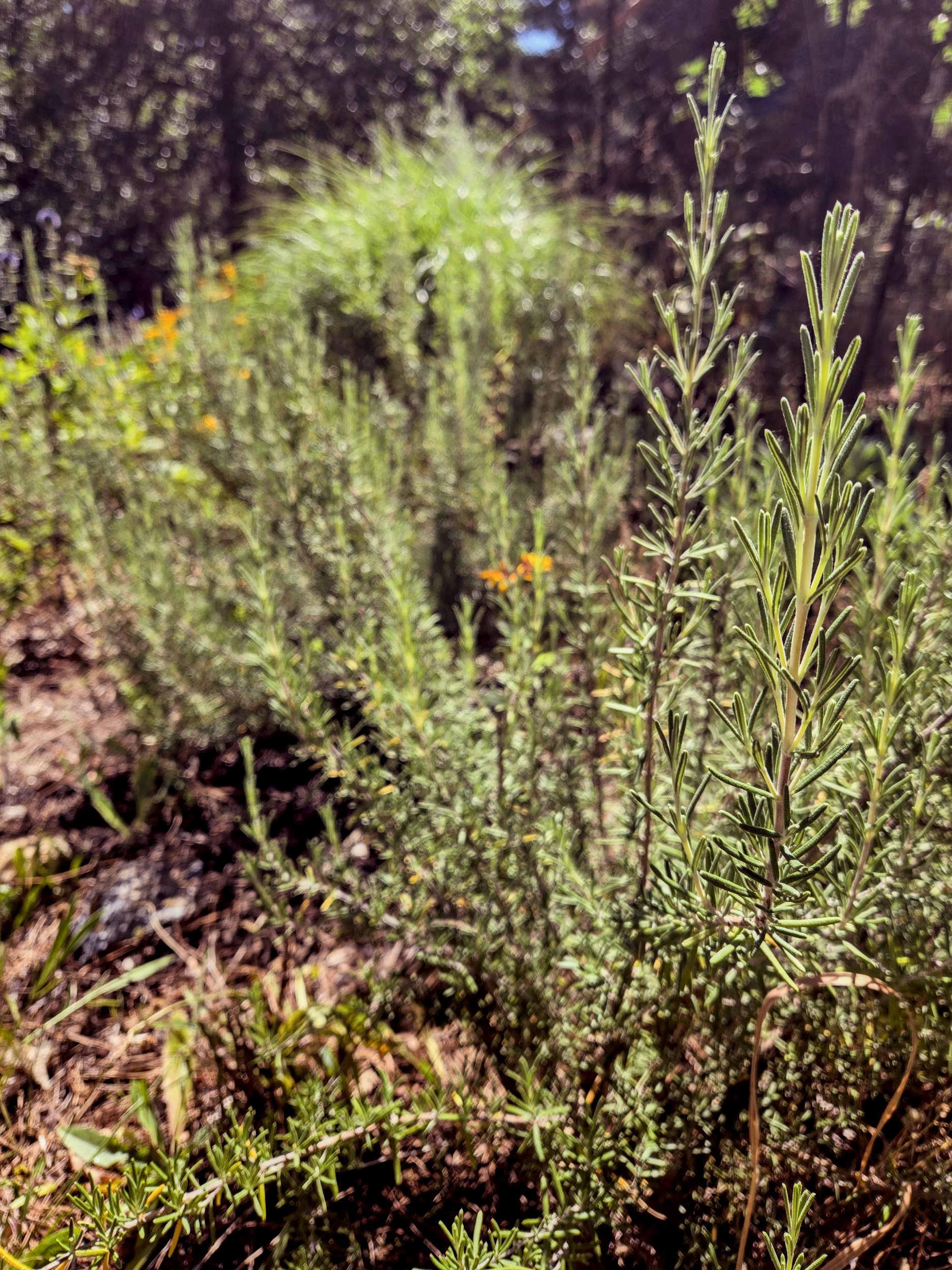
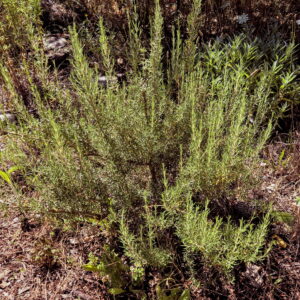
Rosemary’s drought tolerance gives us a lot of flexibility in our Mediterranean climate (hot, dry arid summers). We have one Rosemary plant growing in a part-shade herb bed that gets plenty of moisture and she absolutely loves those conditions. However, most of our Rosemary plants are further out from our prime garden soil, planted in harsher soil with less organic matter and receiving far less water and much more direct sunlight and heat. With less water and “imperfect” soil, Rosemary grows slower and has a few more yellow leaves, but she does quite well in those conditions and always impresses us with her strength and ability to thrive in harsh conditions.
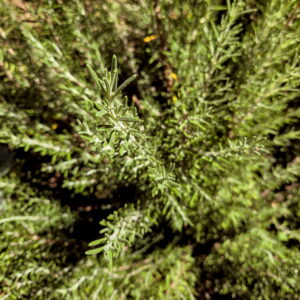
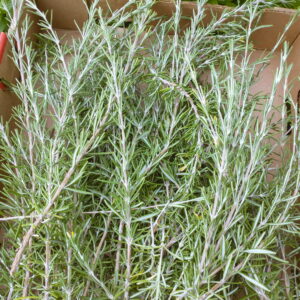
As an evergreen woody perennial with long needle-like leaves, Rosemary is akin to a small pine tree. Rosemary leaves are also resinous and have a somewhat similar smell to the smell of pine needles or pine sap.
Rosemary leaves have a lot of aromatic oils, and thus lots of medicine. A little bit of rosemary leaves go a long way, both in cooking and also in medicinal preparations.
Rosemary leaves are somewhat tough and not necessarily fun to eat unless they are minced. We love to add a few sprigs of rosemary (leaves attached to branches or stems) to roasts, stews, broths and soups to impart Rosemary aroma and flavor to the dish as it simmers. When done cooking, just remove the sprigs and enjoy! You can also powder dried rosemary leaves and add small amounts to anything you are cooking. Whole or crushed, fresh or dry rosemary leaves also liven up breads and soups year round.
Fresh Rosemary leaves added to simmering water will add a beautiful aroma to a room and can freshen up a space. Likewise, Rosemary leaf tea offers a delicious aroma and flavor to keep you warm on a cool day. In fact, drunk year round, Rosemary tea is a fantastic tonic herb with many health benefits including improving circulation, improving memory, reducing inflammation, helps with digestion and treatment of colds.
Like many other sages and mint-family herbs, Rosemary is calming and can be used to help reduce anxiety or stress. Rosemary is also antiseptic and can be used as a tincture, infusion or decoction to rinse and clean minor cuts and wounds to help prevent infection.
Likewise, because Rosemary is antimicrobial, anti-inflammatory and astringent, the tincture or powder of Rosemary leaves can be used in dental care to help clean gums and mouth of bacteria, tighten gum tissues, reduce plaque, and help heal micro lesions caused from brushing.
Rosemary infusion can be used as a hair rinse (after washing) to help reduce dandruff and scalp infections.
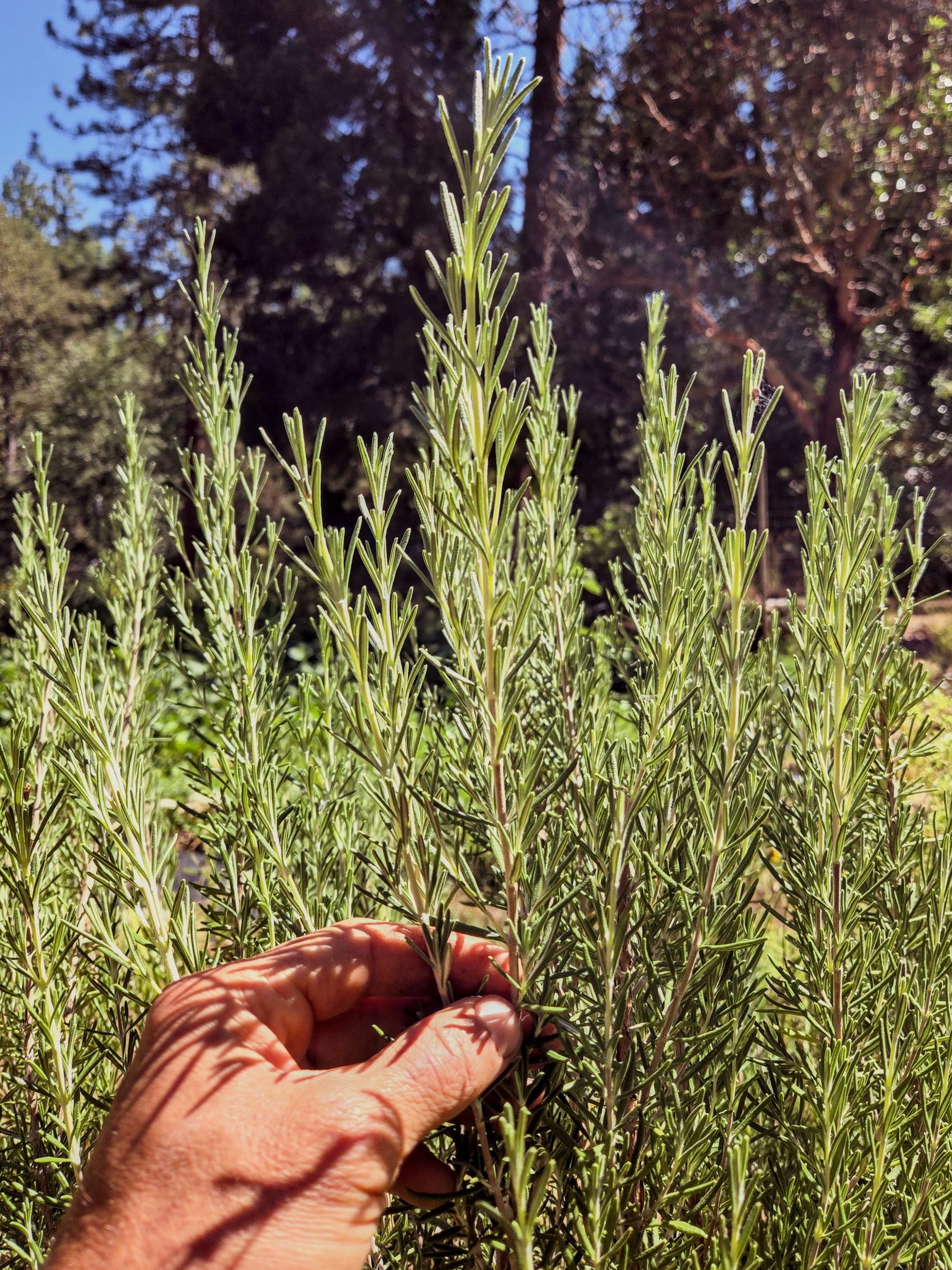
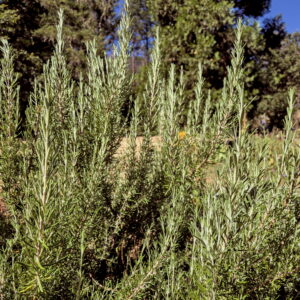
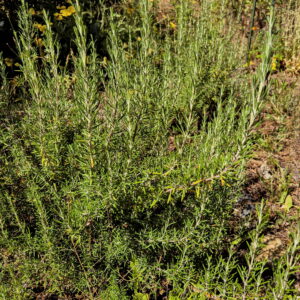
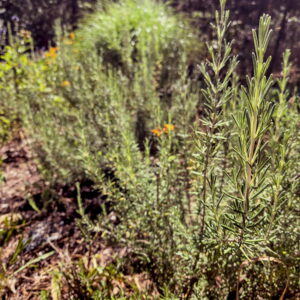
The seeds we offer come from upright Rosemary plants with long, tall stems perfect for harvesting sprigs for using fresh or drying in bundles. Upright Rosemary plants are taller and somewhat more cold hardy than prostrate or creeping rosemary plants.
Details
Lifecycle: Perennial
Lifespan: 20+ years
Hardiness zones: 6-12 (USDA)
Habitats: Dry and rocky soils, cliffs and coastal areas.
Plant size: 5 ft wide x 5 ft tall
Light: Full sun to part shade
Soil: Sandy and loamy soils preferred. Clay soil is OK if well draining.
Water: Infrequent watering is OK, drought tolerant.
Seed Starting
Surface sow rosemary seeds, lightly tamp them into good quality potting soil and do not cover the seeds as they are light dependent for germination. Keep the soil moist until the seeds germinate. Seeds will germinate sporadically, and not all at once, so be patient. Also note that rosemary seeds are known to have naturally low germination rates, so sow thicker than you would with other seeds.
Divide seedlings and plant into individual pots, working up into larger pots. Once they are large enough, plant the Rosemary seedlings into their final places.
Cultivation
Rosemary is notably drought tolerant and can handle periods of neglect. Rosemary is also not picky about soil conditions as long as the soil is well draining.
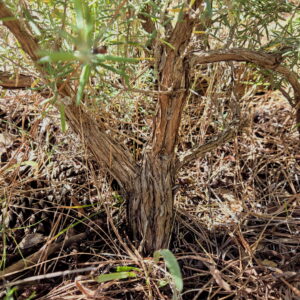
As a woody subshrub, rosemary is amenable to any pruning style. Prune for form once or twice a season to any shape you desire, or simply prune as you harvest twigs and branches to bring in for cooking or drying.
Rosemary is often pruned to a mounded shape, but it can also be fun to prune the structure of the woodier branches to resemble a mini tree.
Harvest
As an evergreen, you can harvest Rosemary leaves any time of year. You can harvest young tender stems, or woodier branches and bring them into the kitchen to pluck the leaves for cooking.
When I am drying Rosemary leaves, I prefer to harvest the tall, young un-branched stems which are easier to strip of leaves. But if I didn’t harvest early enough in the season, branched stems are the next best option!
Propagation
Rosemary is easy to propagate by layering. Simply bend down some long lower branches and cover a portion of the branch with soil and hold in place with a rock. Keep the top third or so of the branch above ground so it can keep growing and photosynthesizing. After one or two seasons, dig up the rooted branch in the fall, winter or spring and sever from the main plant. Immediately plant in its new location.
Rosemary can also be propagated by cuttings, but you need to take more cuttings than you think you’d need, because not all of them will take. For that reason I recommend propagating by layering because it’s much more reliable, unless you need quite a lot of rosemary plants.
Seed Saving
Rosemary flowers early in the season and once the flowers start to dry up look for small brown seeds inside. Pluck the dried flower with seeds inside into a small container. Get more than you think you’ll need, because Rosemary has relatively low germination rate. Rub the dried seed heads to release the seeds (threshing) and then screen the seeds with a mesh sieve if desired.



Reviews
There are no reviews yet