Table of Contents
A Guiding Ethos to Live and Work By
A few seasons ago Ann and I dreamed up Homestead Culture. Ever since then we have witnessed this business transform and blossom in ways we couldn’t have imagined. Calling it a business doesn’t do Homestead Culture justice, because it is so much more—It is our passion project, our love child, our life.
One of our greatest takeaways from studying permaculture is that gardens, homes and communities can be designed with ethics in mind. We extended the concept of ethics first design into our lives and our business. One of the first things we did for Homestead Culture was start with our guiding ethos. A few seasons later, they continue to ring true.
This article is an effort to stir and refine our ethos, to see where they land now, as we continue to grow as humans, and as we continue to learn through observing and interacting with our business.
Instead of holdfasting our ethos, let’s give it room to breath, grow and evolve with us, as our own lives change and evolve over time. We chose to define Homestead Culture as work is life and life is work. We are inviting the blurring of boundaries between work, life and pleasure, an ever expanding of the gray area, of the liminal, sometimes shadowy places, in the dance of living and working as humans in a modern world.
Modern homesteading is a dance with cultures, a rekindling of old ways and a merging with new. We modern homesteaders are all trialing, interacting, discovering and playing. We are pushing against boundaries, holding tension and watching the friction in this dance. We are each watching our own personal balancing acts between efficiency and connection, money and health, sanity and lucidity, ease and meaning.
These six ethos sprang forth from within, from us deeply asking ourselves:
Why are we homesteading?
Do we just want to be more resilient, or does it go deeper?
What are we really trying to do here?
How do we want our lives to be transformed?
When we asked those questions and looked deeply for where we wanted to go, who we wanted to become—we ended up with many, many more questions—but we also came away with these six core observations.
These observations have become like mantras in our lives, to help us remember what’s important. When we get caught up feeling that we don’t have enough (time, money, energy, space, resources, imagination…), when we are feeling stressed, when we feel uninspired—it helps to revisit these ethos and reset or ground into the reality of answering most important questions like:
What is really important in this moment?
In the spirit of generosity, I am honored to share our ethos with you…

Table of Contents
We Are Culture
One aspect of culture is having our hands in the soil, planting and tending crops. Culture is life stewarding life. Around and around we go on the spiral dance of life, along with our plant and animal kin, living and dying, feeding each other. Our culture depends on access to healthy, nutritious food to thrive.
Culture also refers to the way we live beyond how we cultivate our food. Culture is made up of language, ideas, rituals, work, art, politics, spirituality and more.
Each of us is influenced by our culture, because it’s the soup in which we simmer.
And each one of us influences our culture through our individual thoughts, words and actions.
This helps me understand that I have full influence on the culture of one—myself. And I have a huge influence on the culture of my family. Beyond that, my influence on the community around me, and by extension, the greater world, lessens in influence but is no less important.
We are not living in this world alone, we are all connected. We all nurtured by Mother Earth, we stand on the same earth, we breath the same air, and we share the same emotions and needs.
Through our collective thoughts, ideas, words and actions, we have incredible power to change our culture—together. In fact we are changing our culture together, every day, constantly, in every moment, every breath, whether we are conscious of it or not.
We Are Culture is a mantra, a reminder that each of my thoughts, words and actions are powerful enough to change the culture, starting with myself. So I continually ask myself:
What kind of culture do I want to live in?
Like culture, which is constantly fluid, changing and dynamic, my answer to this question is also constantly evolving—my answer is never static. Ask me tomorrow and my answer will be a little bit different, because I am not a static human, my soul is not static, nor is my heart or mind. I am not a number on a screen.
We are dancing with culture.
But one idea remains firm. I know that I can’t wait for the culture to change into what I believe would be the healthiest, or the most ideal culture. It’s up to me to make that change in myself and live that culture by example. It’s a choice and a responsibility that honors myself, and ultimately helps me appreciate your culture and your choices.
We are culture.
Nature Is Sacred
We moderns are coming back around to remembering that humans are part of nature, not separate from nature. When our greater culture fully realizes this again, we may no longer find use for the word “nature”.
Nature is the source of everything that we rely on. Plants and animals for food, fibers for clothing, wood, earth and metal for shelter, water for drinking, air for breathing. We depend on nature too for our tools, art and toys. Nature supports our physical, emotional and spiritual well being.
All of the lives, materials, water, even air mentioned above have been commodified, sold, profited from and distributed through industrial channels. While we still directly depend on nature for our survival, and to thrive, we as a culture, are forgetting about our direct connection to nature, to Mother Earth.
So it is up to us to claim our responsibility, to respond to the invitation to remember where we came from. It is up to us to remember that life is magic, mysterious and sacred. While everything can be explained or theorized by science, on deeper levels we still truly do not know why or how anything is.
Why are we alive?
How can a seed contain the blueprints for a plant?
Why do we feel so relaxed and peaceful in natural settings?
How is a rainbow even possible?
I could go on…
Each question can be answered rationally and succinctly, based on what we know through science. Common knowledge, right? And also, every question we ask can be left unanswered with wonder, astonishment, appreciation and reverence.
Our modern culture is doing a really great job at rationalizing and explaining every question that we ask, and I have gratitude for this collective body of knowledge. But as more and more of us only look at the world through a rational lens, we lose the feeling for how lucky we are to be alive, we lose the ability to remember how sacred this place really is.
So I am inviting magic back into my life. I am inviting wonder to pervade my worldview. I am learning to let go of the need to always know, explain or rationalize what I am experiencing and perceiving.
The cultural guard rails of empirical knowledge and the need for dominance over nature, the need to win and achieve, are starting to melt away. I see now that they can be choice, not law. They are part of my story, not the story.
I thank my son for helping me in this journey, from the moment he was born. He helped me see through his unfiltered eyes, through his soft, gentle touch, feeling and tasting his way though this world. Now I can choose to learn how to feel my way though this world again, so that I can once again see the magic, like I surely did so naturally when I was a little boy, as do all children.
I appreciate my sisters now, despite thinking they were silly when I was a little boy, for creating and appreciating hearts, rainbows and magic. It turns out they were onto something important beyond words—Turns out I was the silly one for disregarding love and unseen possibilities.
It takes me reconnecting with my heart to see—yes, magic is real and nature is sacred.
Live From the Heart
I learned in grade school, as you most likely did, as our modern doctors learn in their training, that our hearts pump blood through our bodies. What I didn’t learn was that our veins, and our moving muscles, such as our feet when we are walking, also help to pump and circulate our blood.
But what I really didn’t learn in school is that our hearts have neural networks, just like our brain (and our gut). Not only that, but our hearts are capable of transmitting and receiving information through electromagnetic frequencies. And, as observed in patients with heart transplants, our hearts hold and process memories.
Our hearts process and receive information, not only from other organs in our bodies, but also from outside our bodies. Our hearts receive, process and perceive information coming from the world around us, from the Earth herself, from the cosmos, and information transmitted from other lives around us, from other hearts, human and non human.
Yes, in case you’re wondering, this is all scientifically proven.
This knowledge leaves me in awe and wonder about what is possible when we live from our hearts instead of living from our brains. What kind of information and perceptions will come to the foreground? What is the language of the heart?
As I stumbled my way back into learning to feel the world around me through my heart sensing organ, I started coming back home to my heart. The relationship to my heart that had mostly been severed when I was much younger.
Living from the heart is a choice to prioritize love, connection, reciprocity, generosity, reception, collaboration and appreciation.
Living from the heart is a choice that directly opposes the dominant narrative to prioritize wealth, fame and power. Choosing to live from the heart is not an easy shift to make, for me anyway, but it is fully natural.
That’s why living from the heart always feels right, even when we might second guess our inclination to follow our hearts, even when we might convince ourselves it’s not right.
This shift can be a big challenge, in an overculture that demands we rationalize, instead of feeling our way through this world. We forget to consult our heart’s wisdom.
Choosing to live from the heart reveals a choice between scarcity and abundance.
Abundance is all around us. Abundant joy, abundant beauty, abundant nourishment. Nature sings in tunes of abundance. The pattern repeats in nature everywhere we look.
Most gardeners agree, that when the garden is healthy and happy, it produces abundant food and seeds, not just for us but for countless other life forms. And to witness this abundance can silence my mind, if but for a precious brief moment, as I am knocked back into state of wonder, and my heart sings.
The choice to live from the heart is also an act of healing, because our hearts (generally speaking) have been actively suppressed for generations. A byproduct of suppressing and subjugating the female in our cultures. Our predecessors apparently put males on a pedestal, without appropriate checks and balances from our female counterparts, to our culture’s detriment.
So, to put it rather bluntly, choosing to live from the heart sounds wonderful, but the reality is this choice may be met with internal resistance, it may bring up cultural traumas that need to be healed, before we can fully and ungaurdedly sense and appreciate through our hearts, the beauty of the world around us, the magic that pervades our lives and our own inner beauty.
And that’s OK, because We Are Healing.

We Are Healing
We are so lucky to live in this time of technological change, of medical advancements, of artificial intelligence and cheap fossil fuels. We are lucky to have electricity, washing machines, cheap transportation, modern dentistry and super computers in our pockets. We are lucky to have choices in education, longer lifespans and surplus food year round.
Yet for all of the comforts, advancements and achievements that we enjoy on a daily basis, that we come to take for granted as the way humans live, we are also facing some pretty massive problems.
We are living through global warming and peak oil. Humans have never experienced more chronic disease than present day. Our soils, oceans, and even our human bodies are littered with microplastics. Our nations continue to wage wars and genocides, instead of seeking peace. We experience information overload, anxiety and depression like never before. We are relentlessly commoditized.
I could go on with this list, but you get the idea. You are probably already aware of these big problems. But at the risk of losing some readers, there is one more problem I’d like to point out, because it is on my mind and heart every single day.
Unless you are indigenous and living in your intact traditional culture, all of us have been removed from our traditional roots. I’ll speak for myself as mixed European American, Colombian American.
I do not know when our family’s ancestors were removed from their traditional lifeways.
Because Europe was fully colonized before the Americas were colonized. Because “European” indigenous folks were killed, tortured and assimilated into the overculture, time and time again by the empire of the day. And the same thing happened everywhere and continues to happen to this day.
Those events were forgotton from my family’s memories long, long ago. Some of my way back ancestors were probably more concerned with surviving and fitting in, than with healing. And so the trauma is embedded in our DNA, in our culture itself, often unseen, unvisited.
My heart goes out to the indigenous folks alive today who do have memories of where they came from and continue to hold their traditional cultures, because of all the struggles they’ve endured and continue to endure. My heart sings for the strength, tenacity and undying love of the indigenous wisdom keepers and torch bearers who maintain their old, old ways, and who refuse to assimilate, against all odds.
I remember that we are all healing from complex social political problems, whether we know it or not. Deep down, my heart knows we are all healing.
To heal means to become whole again.
To admit that we need healing, as a culture, as individuals, means that we have to admit or recognize that something is broken or missing. Perhaps like me, that is one of the reasons why you have chosen to homestead, spend more time gardening or reconnect with nature, to dig up and dust off some of the old ways, to move towards something undefinable.
Perhaps homesteading is a way some of us search with our bodies, minds and hearts for what is missing.
If we look directly at any of the massive problems we face, we can easily become overwhelmed. I have been overwhelmed many times, but now I’ve found a new story that helps anchor me in this world.
Now I’m not looking away, nor am I taking it all on my shoulders.
We are all healing. We are healing individually and together as a culture. We are all in this together, now more than ever. We all have each other and we are all of Earth. As separate as we may feel, we are all connected through this beautiful planet, our home, our birth place. We are all kin.
I thought I needed to fix all of our culture’s problems in myself to be whole, to fix the pain I felt when I bravely looked at any of these problems. I was putting too much pressure on myself. These are not problems that will be resolved in one generation, in one life.
This is multi generational healing, this is communal healing, this is cultural healing…
…and we are all in it together.
So I come back to We Are Culture and remember that I have a choice to model the culture I want to see. I can’t model fully healed, but I can lead my life in a healing way, as best as I can in this given moment, so that I, my family, our culture can continue healing. When I can, I will generously offer what I’ve learned, how I’ve been healing, back out into my little spheres of influence, into the universe. And I am trusting that others are doing the same.
I am embracing the messiness, the imperfection of it all.
I am embracing the chaos and suffering, as well as the beauty and contentment, that come forward through healing. Healing is not straight line from here to there. Healing is not a neat and tidy package with a bow on top. Healing is a meandering path—a spiral through cultures, space and time.
I am gentle with myself as I learn to heal, as I uncover cultural trauma, as I grow strength and nurturing care inside myself to hold a healing space. I am gentle with my guarded heart as it learns to sing again, despite everything. My heart reminds me to be gentle with myself, as my young son also reminds me through his gentle, careful, heartful ways of being.
Healing is creative work. It’s looking past what we know, being OK with not knowing where we need to go next. Healing is beautiful, even when it is painful, because Beauty is Everywhere.
…and we are all in it together.
May we all hold each other through these healing times.
Beauty Is Everywhere
This world is beautiful, from the micro to the macro. From the spiral on the smallest snail’s shell, to massive cloud formations floating overhead. From a field of flowers to the speckled night sky.
My son reminded me of beauty when love poured out of my heart as I witnessed his birth. His beautiful body and eyes filled me with appreciation. I still remember his mother’s cry of joy when she saw him for the first time. Her cry was beautiful.
When I first started gardening I was immediately enraptured in beauty. It fast became a daily practice to walk my tiny garden and visit each plant, each spider, each flower. I discovered the macro setting on my camera for the first time, because I was absorbed with beauty at all scales. As small as the garden was, barely 300 square feet, worlds upon worlds of beauty opened to me when I chose to slow down and become present with the life around me.
I can’t look too hard if I want to see beauty around me.
What lens am I looking through? Am I seeing the world through my to-do list? Am seeing a scary world through my fears? Am I seeing the world through a desire to make more money?
If I am looking for beauty I will find it—if I get out of the way.
Beauty is there all around me, every day, with every breath. Beauty is my companion as I journey through this life. Beauty is inside me. I too am beautiful. I too am of this beautiful planet, this special blue-green marble floating through space, floating through the milky way.
The milky way, a source of nourishment, a source of wonder, a source of beauty.
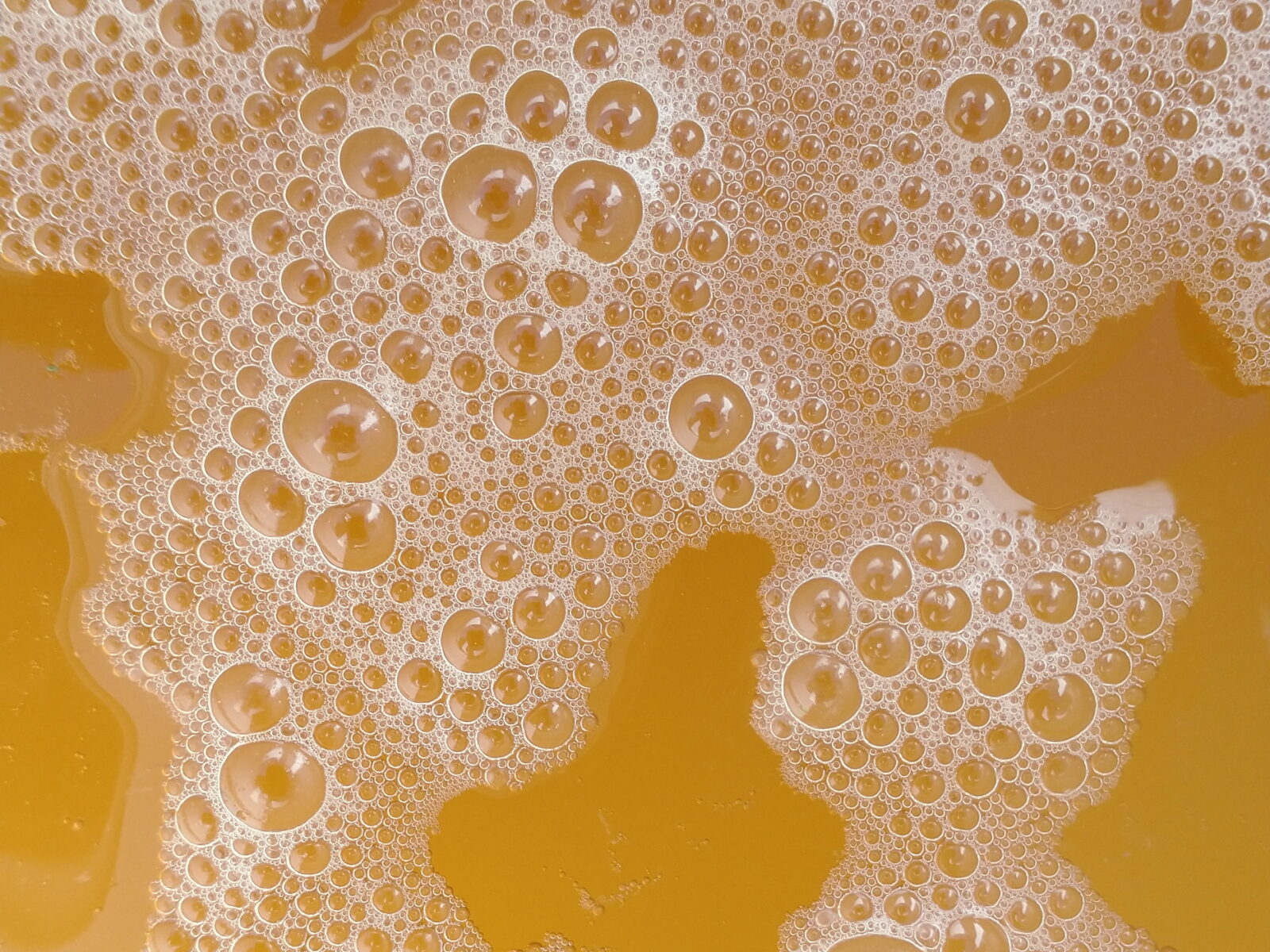
Milk is beautiful, swirling, white bubbles and ripples, constantly moving as it nourishes my body. Milk the nectar my mother generously offered me as she told me how beautiful I was. One day I chose to disagree with her and forgot how beautiful I was, I forgot how beautiful the world all around me is.
Looking back where I came from, now I understand that seeing beauty is a choice. Does that make it any less real when we see it? When beauty is not there one moment, then reappears in the next—Is this magic, is it illusion?
Perhaps forgetting to see beauty is the illusion. It does not matter. I choose to see beauty when I can remember, so I remember Beauty is Everywhere.
I recognize the beauty in my own heart as I seek beauty, as I seek love. I can appreciate the beauty of the book’s cover and the beauty of the story inside.
Do I seek beauty, or does beauty seek me? It does not matter. Here I am living in a magical world surrounded by beauty on every scale, on every dimension. All I have to do is remember to see beauty, and then I remember.
I choose to live for beauty and then beauty appears.
How lucky I am to live in such a beautiful world. I am so grateful!
Cultivate Gratitude
Here we come back full circle to We Are Culture, because we are cultivating—we are tending. Culture and cultivate share the same roots of tending the crops, tending the land.
When we remember where our food comes from, when we see the seed germinating in the soil after a long wait, when we see a plant reach for the sky, we may remember that beauty is everywhere and that nature is sacred.
When we spend time, energy and care to grow and nurture a garden, when we harvest our very first harvest (in my case a very modest harvest), gratitude may flow out of a spring within.
When we raise chickens and are gifted that very first egg, when we look inside and see the golden yolk, gratitude may flow forth.
In that first harvest, in that initial discovery, it’s not about quantity or size, it’s not about profit, it’s about joy and appreciation for something precious, something that I couldn’t have created myself.
When gratitude flows naturally from within me, I see that the seemingly most mundane happenings are actually special, magical, they are everything in that moment.
When I find myself getting used to something, when it becomes normalized, when it feels commonplace or everyday, gratitude is harder to find. When I lean back into the comfort of a scarcity mindset, gratitude becomes even more scarce.
Now, as I write this, I am realizing that the newness of something can help me be grateful. New, not as in always seeking something novel or rare, but new as in fresh, like a child. For a child, everything is new, to be explored and appreciated, not exploited, mastered or conquered. New, like discovering a seedling or finding the first laid egg, leading to astonishment, to wonder, to appreciation.
A child’s ear catches the music. The murmuring of a stream, the sound of frogs croaking by the riverbank, the rustling of leaves in the forest, all these natural sounds are music—true music. . . . The child who is raised with an ear pure and clear may not be able to play the popular tunes on the violin or the piano, but I do not think this has anything to do with the ability to hear true music or to sing. It is when the heart is filled with song that the child can be said to be musically gifted.
Masanobu Fukuoka, One Straw Revolution
When I am cultivating gratitude in my life, I am tending to my heart’s soil.
I am tending to my love for life. I am inviting my inner child, my young boy, my teenage self, and all parts of me to join in a celebration of life through appreciation. I am inviting more wonder and astonishment for the everyday, commonplace beauty and magic that I can easily find all around me, anytime.
As I learn to cultivate gratitude, I witness the mundane transform into the breathtaking.
Like all other precious things in life, gratitude is not something that I can hold onto forever. Nor do I strive to be in an ever grateful state, an inflexible posture.
Like this season’s garden vegetables will soon wither in winter’s freezing temperatures, I often lose hold of gratitude in the messy, imperfect dance of life. This is part of the tending, the practice of letting go of last year’s season, and picking up the seeds once again when the time is right.
Then in another breath, another moment, another day, another time, I remember to cultivate gratitude. Maybe you serendipitously said something that helped remind me what I forgot.
Thank you, thank you, thank you.
And thank you dear reader, for joining me on this journey. Thank you for reading these heart words.
Recommended Reading
2 responses to “A Guiding Ethos to Live and Work By”

I love and appreciate you too, big bro. 💕🌈🪄
Thank you Melody! Love you sis 💚






Share Your Thoughts