Learn how to harvest, process and store homegrown seeds with confidence and joy.
Seed Saving for Abundance
Learn how to harvest, process and store homegrown seeds with confidence and joy.
When we align with our garden’s reproductive rhythms, we can experience the joy of witnessing and interacting with the natural abundance of seeds.
In Seed Saving for Abundance, you’ll be guided through seed harvest, cleaning and storage so you can enjoy high quality, homegrown seeds.
Until recently, most humans were tending gardens and saving seeds for planting, eating, sharing and appreciating. Let’s reclaim our human right to grow and save seeds!
Because when we align with seeds, we become more resilient, connected, nourished and empowered—This is our family’s wish for more people and communities in this beautiful world!
Why Seed Saving Matters
Seed saving grows resilience and nourishes deeper relationships with your plants, garden and community.
🌱 Adapt plants to your local conditions 🫘 Grow and process bulk seeds as food 💰 Save money and grow independence 🫶🏼 Build community through seed sharing 🌍 Deepen connection with nature’s cycles
🌱 Adapt plants to your local conditions 🫘 Grow and process bulk seeds as food 💰 Save money and grow independence 🫶🏼 Build community with seed sharing 🌍 Deepen connection to nature’s cycles
Reclaim the Ancient Art of Seed Stewardship
After completing this course, you’ll know…
* When to harvest seeds * Successful seed cleaning * How to dry & store seeds * To improve seed quality * How to save any type of seed
With 61 Lessons Step-by-Step Instructions
Including detailed photos, helpful videos and a robust resource guide.
This Course Includes
Numerous examples demonstrating tried and true methods for harvesting, cleaning and storing seeds. We offer a robust framework that you can apply to any type of seed that you want to save.
Harvesting
We guide you in timing your harvest with each plant’s lifecycle.
Threshing
Learn the ways to release seeds from your plants’ flower heads.
Winnowing
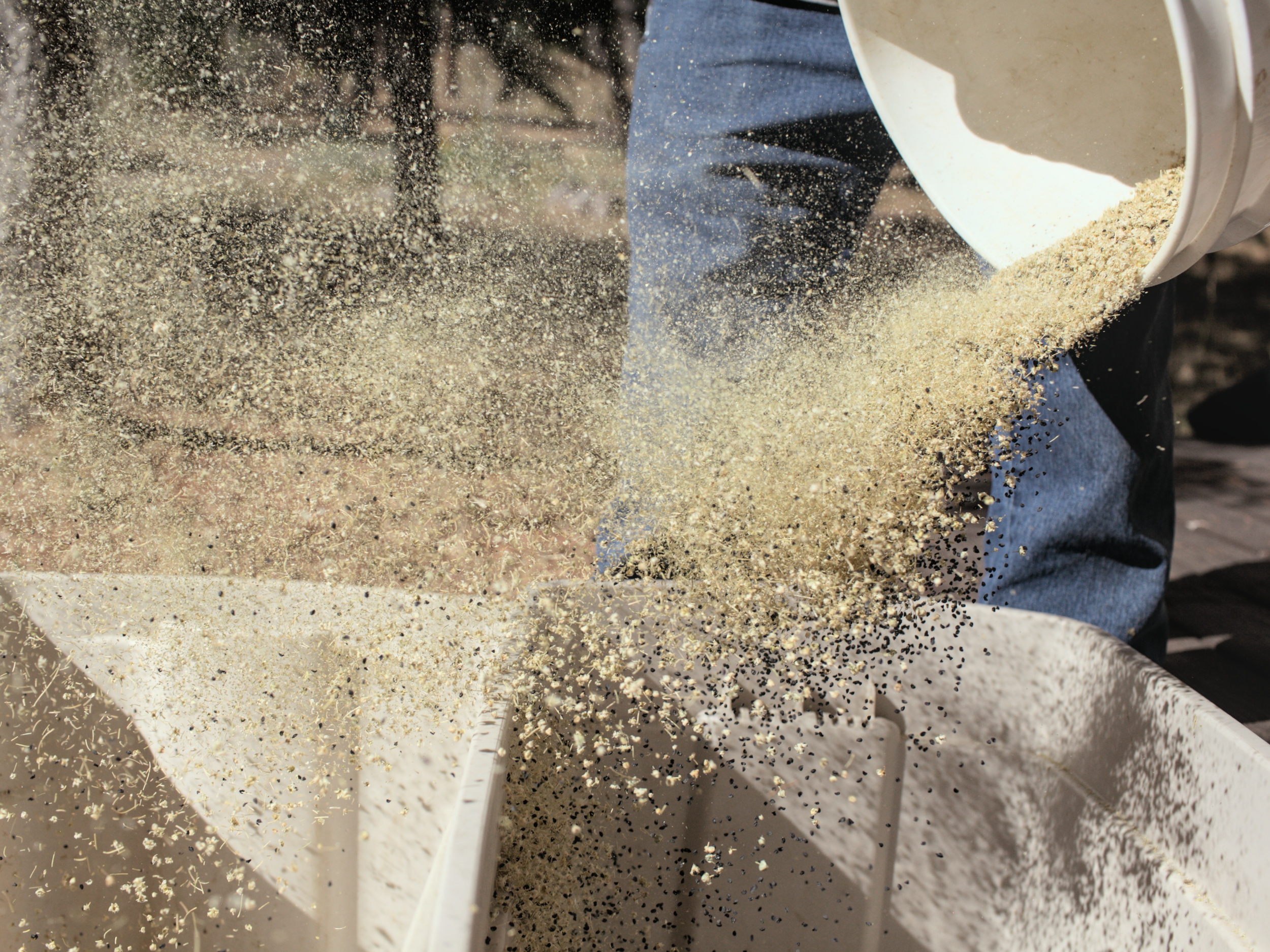
We show you how to use wind to separate seeds from chaff.
Screening
Find out how to use screens for cleaning seeds from bulky chaff.
Wet Processing
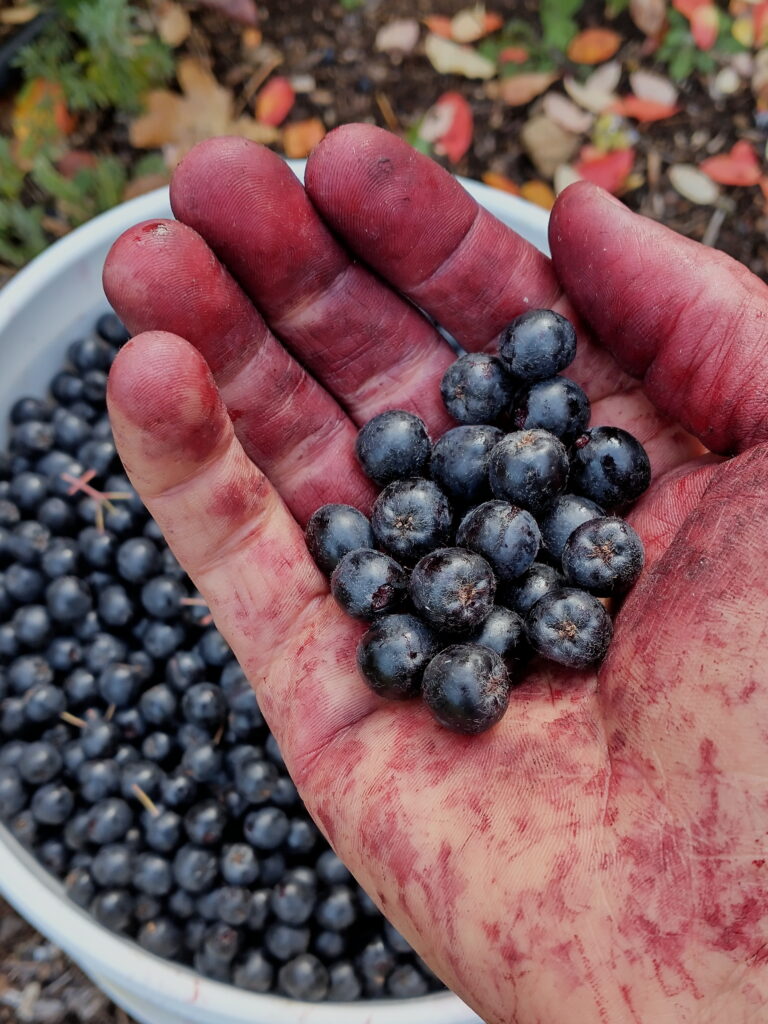
Learn to clean wet seeds like tomatoes, squash, peppers and fruit.
Drying & Storage
Know how to dry and store seeds to ensure viability and longevity.
Not Just Vegetable Seeds!
We cover a full spectrum of plant and seed types:
✓ Vegetable, herb, flower and fruit seeds.
✓ Annual, biennial and perennial seeds.
✓ Wet and dry seeds.
Meet Your Guide
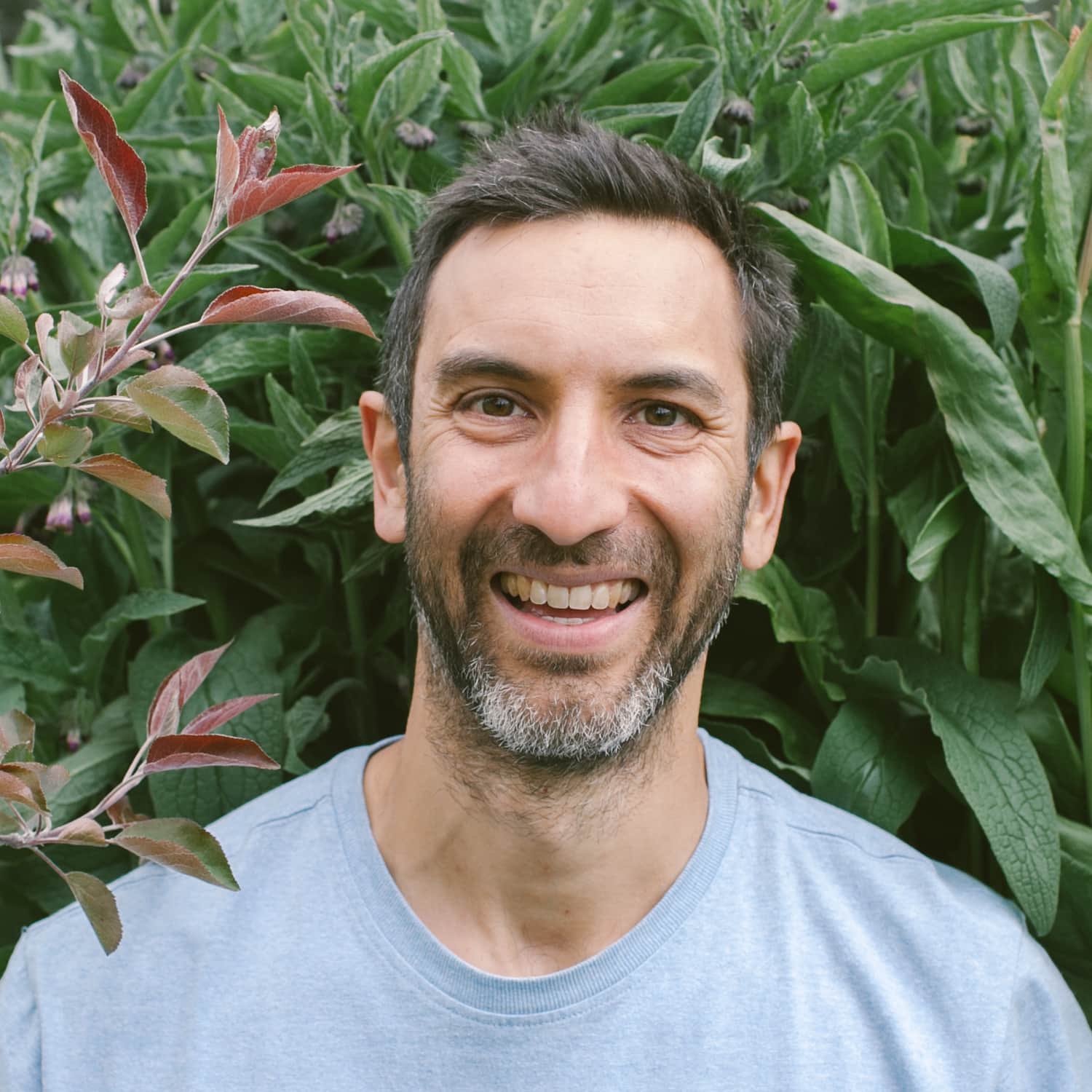
Hi, I’m Noel!
From the start of my homesteading journey I’ve had a huge passion for saving seeds. Seeds have given me so much joy through experiencing beauty and magic.
Our family has taken the opportunity to learn how to become seed savers and seed stewards. I am honored to share insights from our unique experience with you now.
Lately I’m working toward more resilience by embracing genetic diversity—and always, always learning to work with Mother Earth.
I’m grateful you’re here!
Seed Saving for Abundance is a comprehensive guide, detailing the multi-faceted process of seed production for gardeners, homesteaders and aspiring seed farmers alike. Creators Ann and Noel share their knowledge and passion for seed preservation through detailed explanations, offering helpful examples to illustrate their methodology. They skillfully anticipate many common mistakes and potential risks, offering troubleshooting suggestions that prove helpful to both beginners and seasoned seed savers. Seed Saving for Abundance is an excellent resource for all levels, highlighting the joy of saving seeds while making the process accessible and inspirational!
Ellyn Greene — Owner and operator of Wayward Acres, Oregon
The proper way to save seeds can be learned through trial and error over years of moldy or insect-ridden stores and poor harvests, or it can be learned through this thorough and knowledgeable course on seed saving. We all seek tips from those more experienced than ourselves, and this course delivers. Easily followed, well laid-out, this seed-saving course is packed with information and personal experience. It explores harvesting, preparing, and storing seeds without complicated or expensive equipment, and even shows how to easily winnow grains. Save yourself years of disappointment and take Homestead Culture’s seed saving course.
Diane C. Kennedy — Finch Frolic Garden Permaculture, Southern California
Become a Seed Keeper!
Enjoy immediate access to the entire course for life.
Wondering if this course is for you? No problem! If it doesn’t live up to your expectations, we’ll give you a full refund anytime in the 1st week of enrollment.
This course is for:
Gardeners wanting more connection with seeds.
People looking for a comprehensive guide on seed processing.
Students wanting to learn seed cleaning with low-tech, accessible methods.
Homesteaders who want to learn how to harvest, clean and store seeds as food.
Folks wanting to offer high quality seeds to their communities at seed swaps or seed libraries.
This course isn’t for:
People who don’t care about growing seeds for selling, sharing or eating.
Those who don’t value stewarding seeds.
Those not interested in relationships with seeds.
Those who don’t want resiliency through seeds.
People needing a course that teaches the ins-and-outs of plant breeding.
Large farmers who require expensive equipment.
Those that don’t get excited about a more intimate connection with garden life cycles.
Why this Course is Unique
1. Focus on Seed Processing
We go deep into seed processing how-to’s.
2. Diversity of Plant Types
Save seeds from vegetables, herbs, flowers & fruit.
3. Flexible Methods
Choose your level of tech and scale.
4. Rich Resource
Instructional tutorial and detailed reference.
5. Rooted in Abundance
Mirroring our joy, delight and gratitude for seeds.
With Bonus Classes
DIY Seed Cleaning Tools
Know the best options for homemade seed processing tools. Save time cleaning bulk seeds and save money on more expensive equipment.
The Business of Selling Seeds
Curious to explore the possibility of selling seeds from your garden? Find out if it’s is right for you with our primer on selling seeds.
Our Family’s Background with Seeds
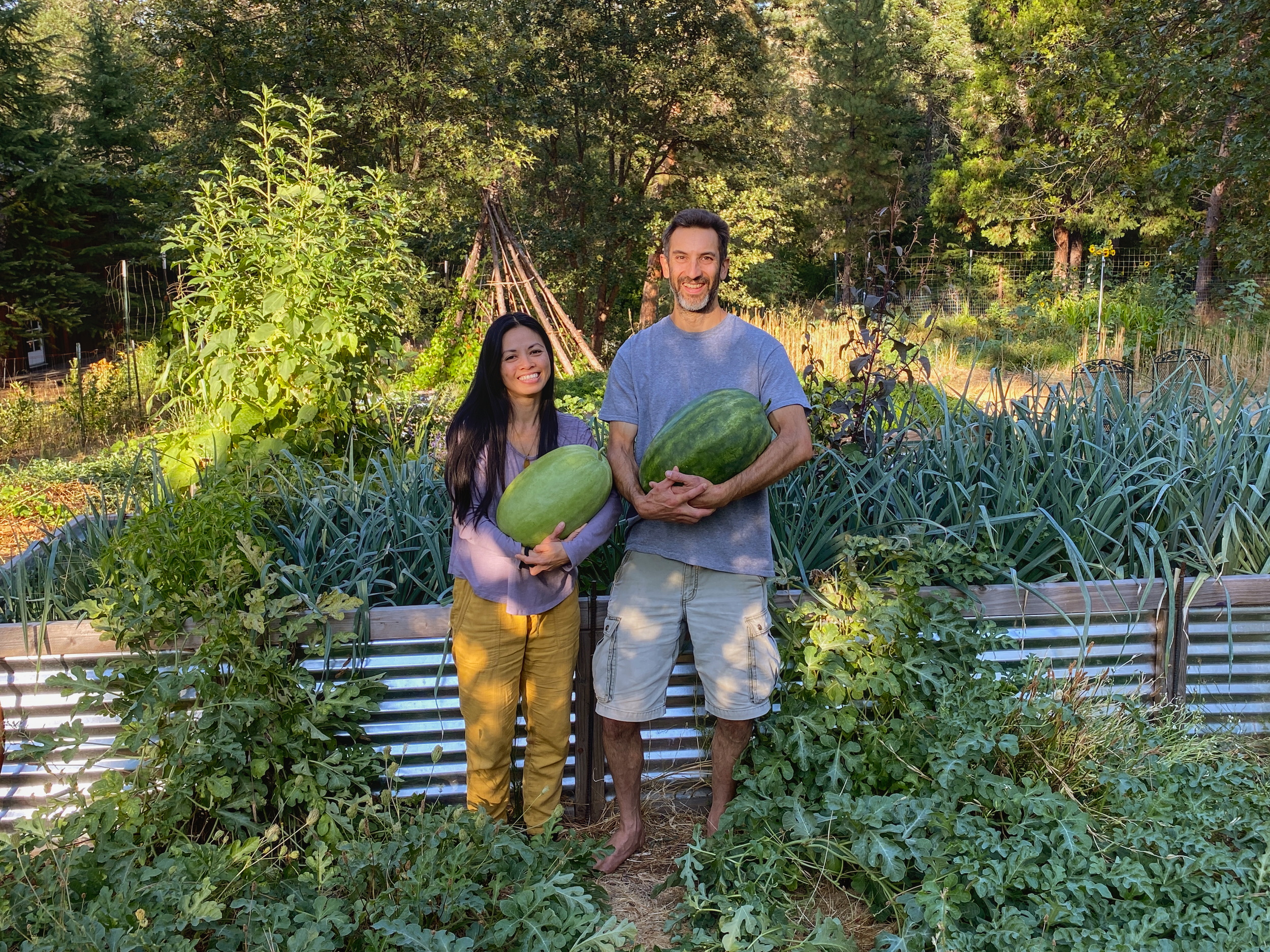
Our family has been saving seeds professionally for 8+ seasons. Saving seeds has become foundational in our seasonal activities, resulting in connection and joy!
Through seed saving, we’ve grown accustomed to having a higher quality and quantity of seeds, that we can share with family, friends and community.
Saving seeds is a family friendly activity. We’ve been including our son since he was a toddler. Saving seeds is tactile, sensory and delightful for all ages!
We want to encourage and empower gardeners and families to save seeds. We’re sharing these skills to foster resilience, independence and connection.
Noel and Ann’s Seed Saving Course is thorough, complete, and demonstrates that they’ve done their work through the seasons. Their practical tips from their own experience is super helpful and useful, and very DIY friendly. I particularly love their tips for processing so many different types of seeds. It inspires me to widen my scope of seeds that I save in my home garden! This course is easy to follow, concise, and has just the right amount of humble details to feel empowered to save seeds.
Amy Rhine — Restoration Seeds, Oregon
Seeds are the epitome of abundance. The simplest step away from the scarcity paradigm so deeply ingrained in our culture… is the act of seed saving. A powerful creative act of natural selection, simple, but profound. For beginners and more advanced growers alike, this course offers a comprehensive process, a step-by-step guide and a deeper understanding of the culture of seeds. While it’s impossible to encompass such a broad topic in a single book, video or course, “Seed Saving for Abundance” will help you take your first confident steps on a never ending path towards regeneration, abundance and love for those tiny, yet mighty heroes, the seeds.
Bobby — Small Scale Permaculture, Bulgaria
Your Seeds, Your Scale
Our seed saving methods are designed to scale to meet your needs, whether you are saving a few seeds from one plant, or bulk processing many seeds.
This course is best for:
Urban gardeners
Rural homesteaders
Seed librarians
Small-scale seed growers
Saving Seeds is A Whole Human Experience!
Seeds activate our mind, heart and body.Our senses light up as we listen, touch, taste and interact with seeds. Seed saving is an inherently creative, joyful and meaningful journey.
In Seed Saving for Abundance we set you up for success with our practical instructions, methods and examples. And we leave ample room for creativity and exploration, so that you can continue to bloom as a seed saver for years to come.
Seed saving is all about relationship with our plants! We are embarking on a journey of connection with our garden, plants and seeds—with life! The connection goes deeper and we become better seed savers with each gardening season.
Become a Seed Keeper!
Enjoy immediate access to the entire course for life.
Just completed the Seed Saving for Abundance by Noel and Ann of Homestead Culture. WOW! So impressed with the thoroughness of this online course. It covers all aspects of seed saving and storage. I am a visual learner and love hearing about lessons learned in the field (best kind of education out there). Noel and Ann have created a learning line that speaks from their experience, education and hearts.
They share with you their mentors and cite resources that they learned from along the way. There are pictures and/or videos in most lessons to make the processes clear. There are also helpful links to more in-depth information if you want to dive deeper into a particular lesson. The lessons are diverse not only in the seed saving conversation, but in budgetary diversity and geographic considerations.
Formerly a Community Farmer from Southern California now located in the South, learning to grow in a more humid environment—Noel and Ann address how to be mindful of storage when living in humid environments, and options to consider.
I have started seed saving and had concerns about the seeds I saved not being true to the parent as my plots are close together. I have been set FREE from this mind set of achieving seed “purity” as the lesson plan introduced me to Grexes and Landraces!!!
Thank you for creating such a loving impactful Homesteading Classroom that makes you feel like you are part of the family as you share with us your love of life, seed and Mother Earth.
Gloria Broming — Former Community Farmer, Tennessee
Frequently Asked Questions
How long will I have access?
This course is evergreen so you will have ongoing access! You can access the course anytime. Progress at your own pace.
Are you available for help?
Yes! We’d love to answer questions that may come up in your seed cleaning adventure. Every lesson in the course has a comment section. We suggest asking questions in the comments so that everyone can learn together.
What is the format of this course?
The materials are presented as a series of lessons, organized into modules. You can follow the course chronologically or jump around as needed. Most of the course is written with an abundance of photographs, illustrating and detailing important features of plants and seed cleaning processes. There are also accompanying videos to help demonstrate crucial details around cleaning seeds.
What if this course isn’t for me?
If you purchase the course and realize it’s not what you were hoping for, we’ve got your back. Email us within 1 week of your purchase and we’ll refund the full amount, no questions asked.
Are lessons specific to certain seeds?
This course includes many, numerous examples of saving seeds through photos and videos. In those examples, we show how to process seeds of many distinct species of veggies, herbs, flowers and fruits.
Through these examples our goal is to show how we work with seeds of various shapes, sizes, weights, and textures. By explaining how we approach a wide variety of different types of seeds, we feel confident you can take what you’ve learned and apply those skills to any type of seed you may encounter. We want to help empower you to work with any seeds that interest you.
If you find yourself working with a seed that doesn’t have similar characteristics to those in our examples, or if you get stuck processing any seed you are working with, you can reach out in the comments and we will help with feedback.
Do I need to be a homesteader?
Definitely not! This course is ideal for any passionate gardener that wants to learn the ins and outs of seed processing. Whether you are an urban gardener, rural gardener or small-scale seed farmer does not matter; the concepts and methods shared in this course are applicable and scalable to a wide range of contexts.
What is “processing seeds for food”?
This course is also intended to help families and gardeners learn how to clean bulk homegrown seed for eating. We use the techniques shared in this course to clean seeds that our family consumes.
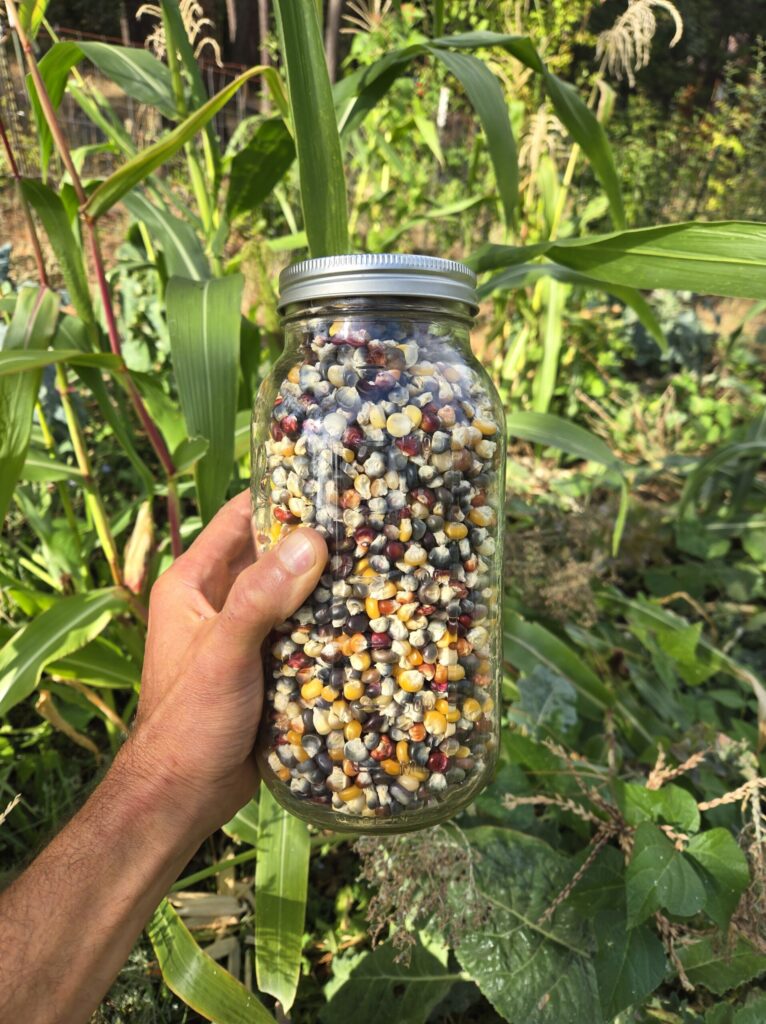
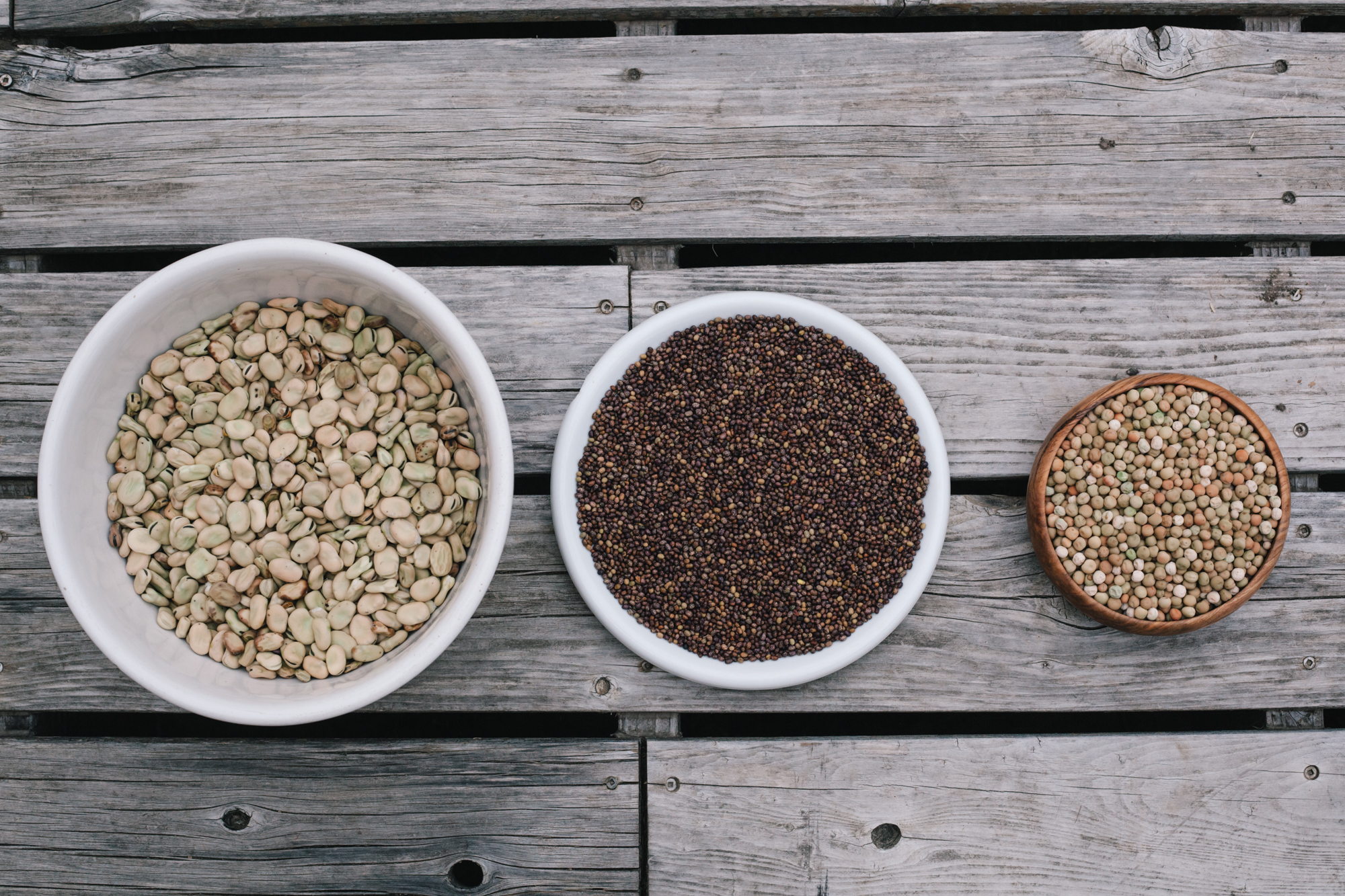
For example, we clean legumes and grains such as beans, peas, millet and corn prior to storing them in our pantry for cooking and eating. We also clean many smaller seeds to use as spices such as fennel seed, mustard seed, kale seed, breadseed poppy, onion seed, sesame seed, sorrel seed, and many more.
We’ve winnowed and screened some cracked nuts such as acorns, bay nuts and hazelnuts from their shells using the process outlined in this course. We even take some herb seeds as medicine.
What if I won’t be selling seeds?
While we do share information that can help you determine if selling seeds is right for you, the majority of the course is geared toward learning seed saving and seed processing knowledge and skills.
Gardeners benefit from learning how to clean seeds so that they can have quality seeds available for planting, as well as sharing with their families, friends and communities. We encourage students to consider donating their high quality seed to local seed libraries. And seeds make amazing gifts!
Will it help small farmers?
The seed processing methods that we share are scalable from an urban garden on up to a small-scale farm. We are sharing low-tech options for cleaning seeds by hand and without machinery (other than an electric fan and a blender or food processor).
The methods we are presenting are tried and true, having been put to the test through the ages for small farms and homesteads alike. We initially learned how to clean seeds using low tech methods from our friend Don Tipping at Siskiyou Seeds, who proves every season that while they can help in some contexts, expensive specialized equipment are not needed to clean seeds at the farm scale.
Even if you do decide to invest in specialized equipment to mechanize and speed up the processes, it’s a really great idea to learn the fundamentals of low-tech seed cleaning by hand initially:
To really embody the process.
For having backup options should machinery ever fail.
For working with smaller seed lots where larger equipment would be overkill and impractical.
As a bonus, we also offer suggestions and resources for homemade seed cleaning machines for the DIY-ers who want to save money, as an alternative to buying new seed cleaning equipment.
What supplies will I need?
Our initial investment in supplies that we still rely on was under $30. We saved money initially because many of the supplies we already had on hand in our kitchen and garden shed. The rest were mostly purchased second hand in thrift stores and yard sales. That doesn’t preclude you from buying new supplies, but it doesn’t have to be expensive or specialized.
For dry processing you will need:
Box fan with a speed dial.
Plastic containers of various sizes for holding seed heads and seeds such as: Yogurt containers, 5 gallon buckets, totes (plastic bins). For larger size seed crops used plastic barrels are handy.
Tarp or bed sheet (optional)
Screens. We use kitchen sieves and colanders that are easily found at thrift stores. You can also make your own, or purchase professional screens. Each option are outlined in more detail in this course.
Mask or bandana (recommended) for protecting your lungs from dust while winnowing.
For wet processing you will need:
Containers of various sizes: 5 gallon buckets, quart or gallon jars or yogurt containers.
Screens and/or colanders for rinsing and drying seeds.
Water.
What are your qualifications?
We have both been professionally growing and selling seeds for 8+ seasons.
Noel and Ann both attended Seed Academy in Spring 2018, taught by Don Tipping of Siskiyou Seeds.
Noel took Seed School Online in Winter 2024, taught by Bill McDorman of Heritage Grain Alliance.
We hold permaculture design certificates from The Ecology Center and San Diego Living Institute.
We have apprenticed directly with mentors at over a dozen farms (urban & rural), homesteads and permaculture gardens.
Noel has held various paying jobs at a permaculture garden, a bio-dynamic orchard and a native landscape design company.
Ann has held various paying jobs in the field of flower farming.
We have 32+ combined years of gardening experience, including two suburban gardens and three rural gardens.