Table of Contents
Seed Saving for Diversity is Heart Healing
Our garden is inclusive. Our plant companions boast diversity. Leaves, flowers and fruits sing tunes of variation. Dancing colors, textures, shapes and growth habits dazzle my senses and enhance my perception of reality.
Ann and I save seeds from much of the vegetables, herbs and flowers that we grow, but we often don’t keep different varieties separate. We let many varieties get mixed up together, in the garden and in our seed packets.
If we kept seeds from all the varieties we grow separately, it would be an organizational nightmare! We’d also have to bend over backwards making sure they don’t cross pollinate!
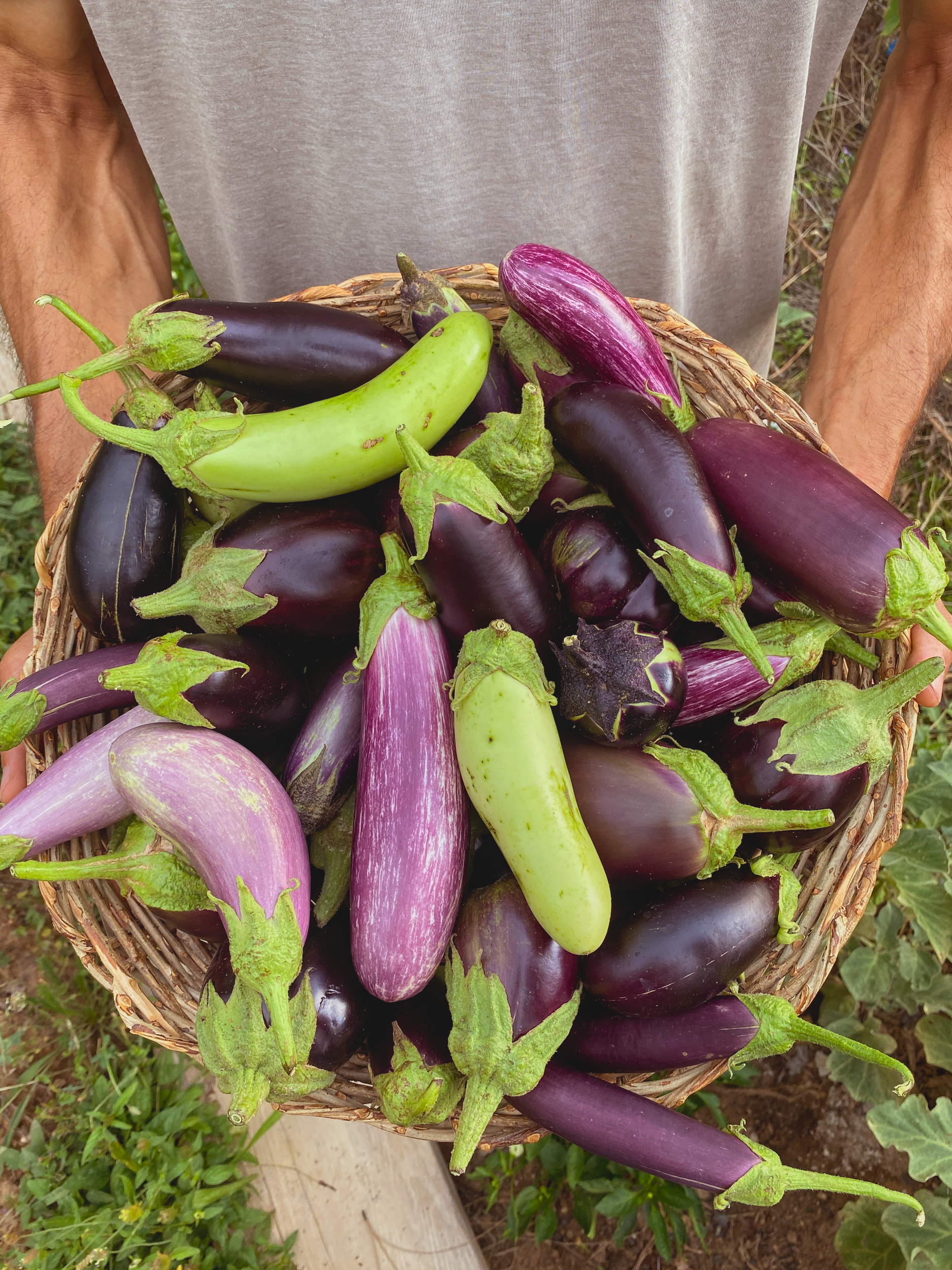
Table of Contents
Monoculture & Seed Purity
When I first heard that I could release the need for all of my seeds to grow true-to-type, I relaxed into carefree seed saving. I skipped gleefully into intuitive seed saving. I opened my heart to allowing varieties to mingle, communicate and pollinate with each other.
In contrast, there is the true-to-type way (sometimes synonymous with open pollinated). I mean this… right here, this plant. This plant is what you get when you save the seed and replant it. It should always look just like this, taste just like this, grow just like this. When you save seeds and you get this plant again and again that’s what we’re after with true-to-type.
True-to-type culture values uniformity and sameness. True-to-type culture is resistant to change and discourages surprises.
I love true-to-type seeds. Really, I do love them. And…
There is the long shadow that our mono-culture casts on our lives, our habits, our rituals, our thoughts. Mono-culture affects how we perceive the world! Mono-culture affects our relationships with everything around us.
Mono = same. Our mono-culture loves same. Same, same, same… we worship same.

Same variety of wheat in all the same cereal boxes, same political parties, same language, same belief system, same products to consume, same institution—no matter where you live. No, that’s so boring! Same-culture breaks so many natural laws! We are saming ourselves away from the nature of this beautiful world.
Ok Noel, reel it in. Let’s get back to the seeds.
Well, here’s the problem I see in every gardening community now, and I can’t unsee it. Inevitably in the seed saving conversation, I hear the same statement: “You can’t save seeds when you grow two different varieties next to each other, because they won’t grow true-to-type.”
Can’t is a four letter word. Seriously! Where’s the nuance in “can’t”? Where’s the “and”? Where’s the creativity, mystery, experimentation, discovery?
Changing My Cultural Lenses
I lost a good deal of mine along the way. My six year old son reminds me that I started out very curious. I was a true scientist, surely, as he is, as his young peers are. Children constantly query what is in front of them. They experiment, test hypotheses and record their observations to memory and in their bodies. Not with pencils and paper.
No, the little ones are scientists by heart.

My son is constantly inquisitive, as are all children—so naturally! But I lost so much inquisitiveness, curiosity and wonder through hearing so many “can’ts” and “sames” during my formative years. Repetition is real! Mono-culture was the water I swam in, the air I was breathing.
I am claiming my re-sponsibility. I am re-crafting my ability to respond, or answer back—to life! To seeds! To culture!
I am un-can’ting myself. I can save seeds from two varieties that grow near each other. I can experiment in the garden. I can open my heart to seed saving with nuance, without recipe, with reciprocity, with curiosity. I can embrace my varieties changing and becoming different over time through seed saving.
This is inviting change into my field of perception through a dance with seeds.

Fear in Seed Saving
Yes, there are some of you reading this right now and saying “but there are good reasons for those seed saving can’ts”. And I agree.
For real! I cover some of the most common cross-pollination pitfalls that seed savers will want to avoid in my free crash course into seed saving.
Squash, for example, is a bit more advanced, when it comes to saving crossed up seeds. Squash, especially Cucurbita pepo varieties, which includes acorn, delicata, many pumpkins, spaghetti squash, zucchinis, summer squash and gourds, can be troublesome when allowed to hybridize without forethought. Let me tell you, our family really doesn’t want to eat an acorn squash with spaghetti squash texture.
For this reason, squash is the one example I hear repeated often. A seed saver will grow a squash seed they saved. Maybe in their first season, maybe after years of saving squash seeds—one year they end up growing a squash from seeds they saved. And that squash turned out to be unappealing in some way.
But then—unfortunately many of those seed savers extrapolate one uncomfortable experience and assume all cross pollinated seeds are going to be horrible—forever—and never save seeds that aren’t true-to-type again.
This is where fear creeps in.
I’ve heard variations of this statement many times: “I grew seed I saved from a squash I loved and the result was a mutant squash!”
Excuse me, no. The squash is not a mutant. This is a cultural value or belief against that which is different. I may not enjoy the flavor or texture of the squash I grew, and that is OK. But that squash is still a miracle of life.

Valuing Hybrid Seeds
When my parents conceived me, they rolled the genetic lottery and I showed up. I could have been any other expression out of infinite possibilities, but here I am… me. I am a hybrid Columbian American and European American. And going back in each of those lines of ancestry there were certainly many other hybrids.
I am a hybrid human. I am not a mutant, and if someone thinks I am mutant for being a hybrid, just because I don’t conform to their standard of what kind of human they like, I’m sorry but they are racist.
Just opening up myself to the possibility of saving seeds from natural occurring hybrids in my garden is healing. Even if I don’t save those seeds. Just carrying this knowing is like a balm to my heart.
This is healing cultural traumas and wounds that I didn’t even know I was carrying—through seed saving, of all things! What a heavy burden to carry, to be expected to feel like I should fit in, conform, be the same.
I very much dislike how the industrial seed giants produce hybrid seeds and lock farmers into dependency for their seeds and chemicals. I very much dislike how the conventional practice of growing industrial hybrid seeds trashes our environment and disrespects all life, including human farmers and human consumers of industrial food.
Even still, industrial hybrid seeds are not bad. Plants grown from industrial hybrid seeds are not “mutants”. They are still life worthy of love. They are still living beings. They are unfortunate victims in the culture that follows a linear path directed by greed and domination.
A hybrid is not a hybrid.
The process of creating industrial hybrids is so different than how hybrid seeds occur in our gardens. One is based in philosophies of control, greed and domination, the other is just plain natural thanks to the bees and the wind.
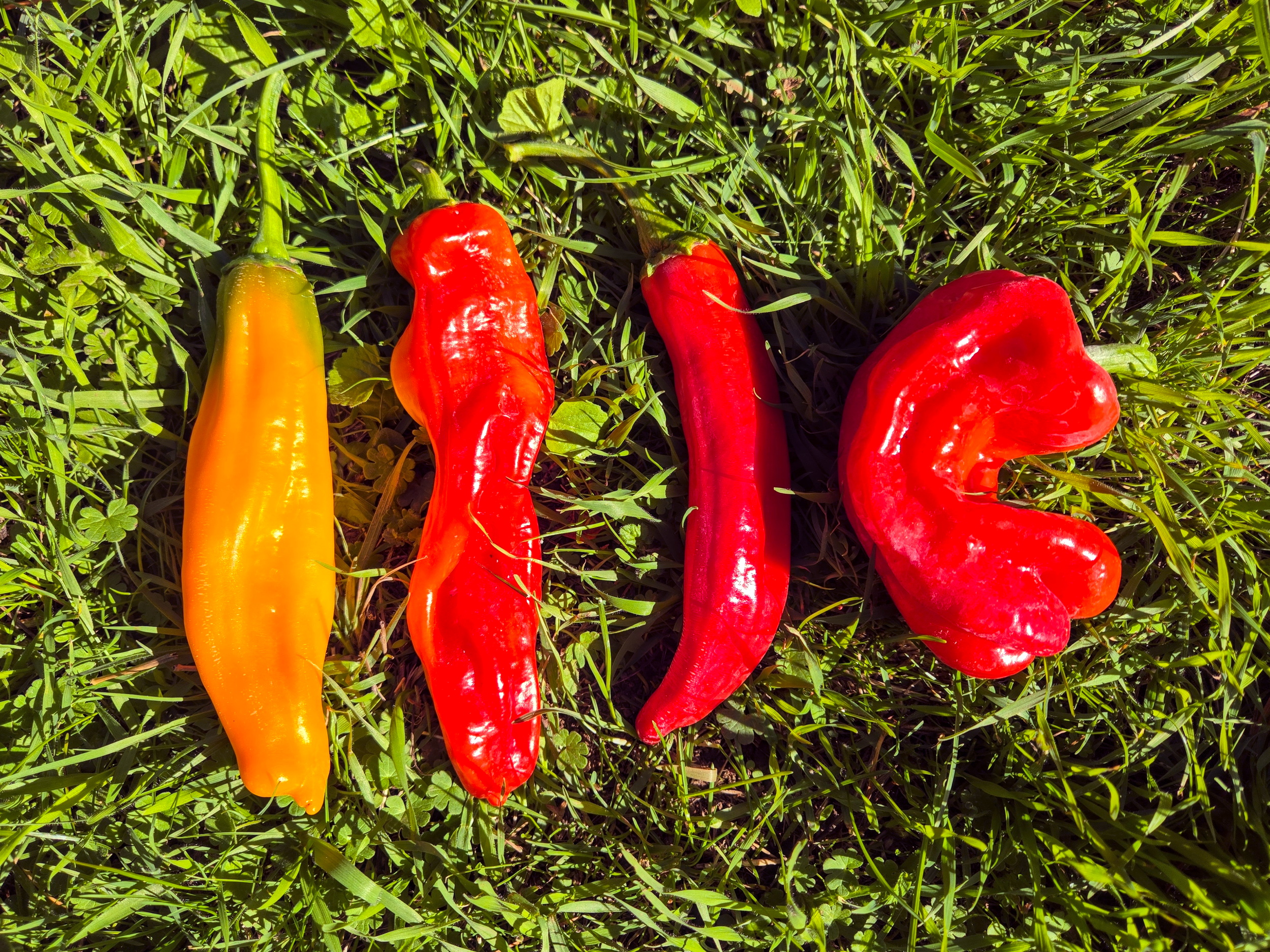
Over the years I’ve grown sweet peppers that have apparently crossed with other sweet peppers. I also grew hot peppers that slowly crossed with other hot peppers. Peppers cross fairly readily, but not every seed I plant will be crossed. Some of next years plants will look the same, some will be a bit different. I am embracing letting the peppers shift and change over the seasons, as I learn what qualities I want to encourage as a seed saver.
Heart Healing Through Seed Saving
I am inviting my senses to the process of seed saving as I learn what plants interest me, what peppers taste better, what colors I like. I don’t take lengthy notes about my observations. I am a scientist by heart, learned from my son’s example.
I am engaging in friendship with these plants, in relationship. I don’t take books of notes on my friends. I ask them questions, get to know them, and see who I want to save seeds from. Who are my plant besties?
I am heart healing through seed saving.
I invite you to consider embarking on a journey of discovery through seed saving. Somewhere along the way, you may find that saving seeds from different varieties of plants grown near each other will invite you to deepen your relationship as you open to new possibilities!
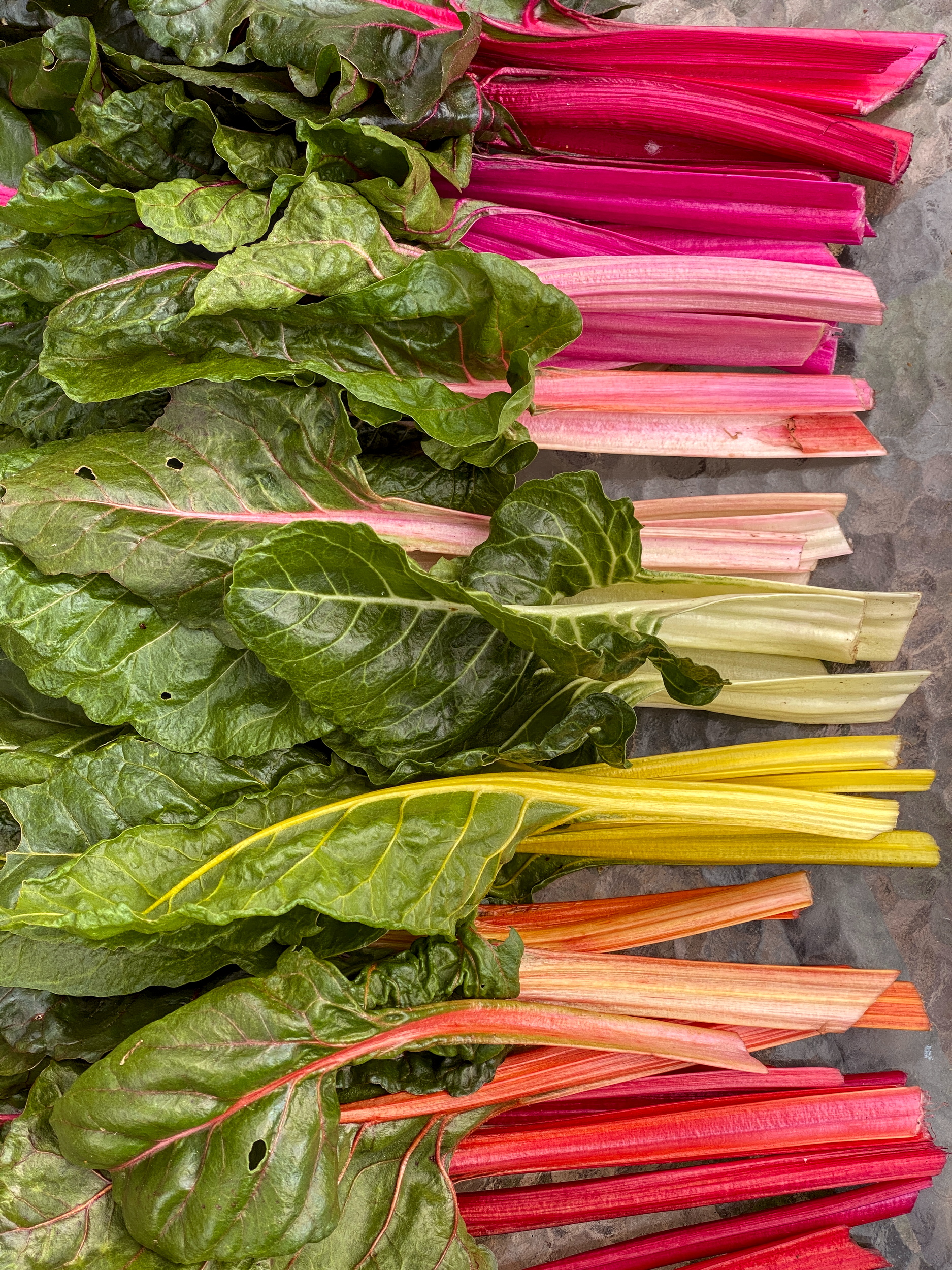
This practice is at the heart of adaptation gardening (aka landrace gardening), which encourages us to broaden our palette to include more genetic diversity in our gardens. Embracing genetic diversity in seed saving comes with many benefits.
When sibling plants are no longer “the same” (aka uniform, or true-to-type) we get to know everyone as individuals. Our family enjoys tasting, meeting and otherwise getting to know each plant through our senses, to discover who we want to save seeds from. Some individual plants call out to us and attract us!
Letting go of control when we are seed saving, allowing cross-pollination between varieties, and promoting genetic diversity in our garden offers new possibilities for joy, discovery and inclusivity as we recreate, redefine and rediscover our family’s culture through seed saving.
This is why our family embraces genetic diversity in our garden, why we allow natural occurring hybrids to occur, and why we proudly offer seeds of mixes, grexes, and landraces in our seed catalog.
More diversity in our food brings us nourishing joy. More diversity in our flowers brings us appreciation for nonconforming beauty. All the while, diversity is also helping our seeds adapt to local conditions, providing us more garden resilience. The icing on the cake is getting a chance to take a part in shaping seed culture by doing what we love. It’s a win-win-win.
Recommended Reading
- Seeds of Diversity: 5 Reasons to Embrace Genetic Diversity in our Gardens
- Grex: Seeds for Diversity and Change
- Landrace Gardening: Becoming Seeds of Place
- Our Family Deals in Seeds
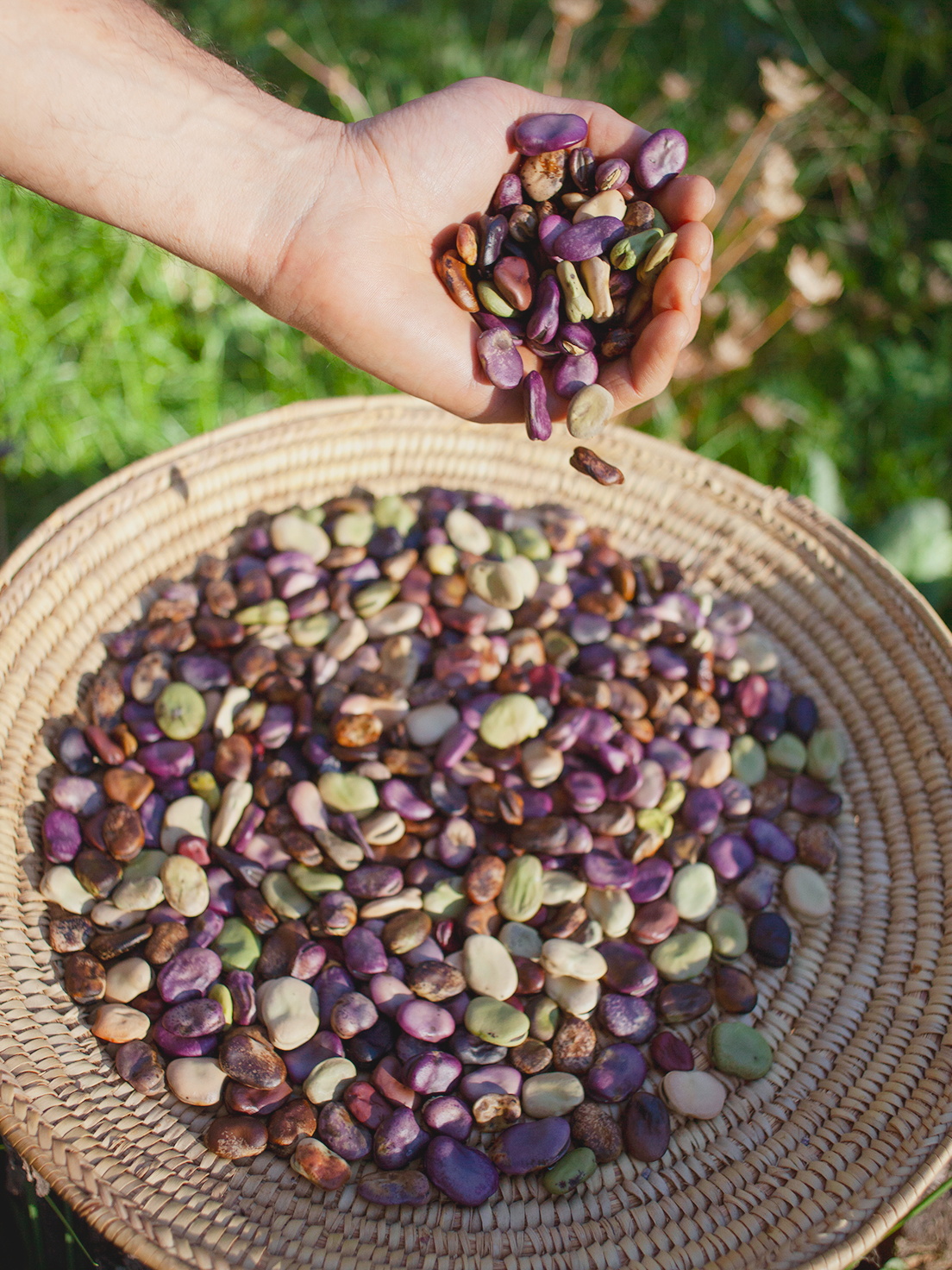
Free Seed Saving Crash Course
Up your seed saving game in our free video: Seed Saving Made Simple We designed this presentation to help you have confidence knowing how to save seeds from your garden.
Free Seed Resources
We’ve put together a collection of stories, education and inspiration around gardening, living and working with seeds. They are all free and openly available for you to read and explore. Enjoy!
2 responses to “Seed Saving for Diversity is Heart Healing”

Hey Noel, sounds like you have read the book Landrace Gardening by Joseph Lofthouse. If not I highly recommend it. You can find it at goingtoseed.org I think.
I bought your oh my okra grex and the ones I planted came right up in spite of it being still too cool. I will be back for more seed later. Thanks, bobby
Hi Bobby,
Thank you for your thoughtful comment! Yes, I have read Landrace Gardening and it was very influential in my seed saving. I now consider it a required read for any new or experienced seed savers, because what we learn in conventional seed saving is only part of the story.
Amazing, I am so glad you had good experience with our okra grex! Glad to hear they germinated well. Thank you so much for your support!






Share Your Thoughts