
Table of Contents
Hybrid Seeds: The Good, Bad and Ugly
You’ve heard of hybrid seeds and perhaps you’ve grown hybrid seeds in your garden. But what exactly are hybrid seeds? Are they good or bad? Should we embrace hybrid seeds or rally against them?
The topic can be confusing because hybrid seeds mean different things to different people. Today I am sharing my thoughts and understanding of hybrid seeds to help clear things up. In this article we explore hybrid seeds both culturally and biologically. What are the various roles of hybrid seeds in nature, in breeding, in commerce and in the human gardener’s heart?
Table of Contents
What Are Hybrid Seeds?
When two varieties of the same species of plant cross pollinate, the seed they produce is referred to as hybrid seed. When the hybrid seed is grown out, the offspring include genes from both parent plants.
When most people talk about hybrid seeds, especially hybrid seeds in seed catalogs, we are talking about intentional cross breeding of two distinct varieties in the same species. Such as hybrid corn, zucchini or tomatoes for example.
Hybridization is not limited to annual plants. Perennial shrubs, trees and vines can all be crossed to create hybrid seeds too. But when gardeners refer to hybrid seed we are usually talking about annual vegetables, flowers, grains and herbs.
Hybrid seed is sometimes referred to as F1 seed, which is a nerdy way to label the first generation offspring of a hybridization between two distinct varieties. You might see ‘F1’ in a seed catalog to denote that the seeds are hybrids. The F in F1 refers to filial, which means offspring, child or generation. So F1 literally means the 1st generation after hybridization.
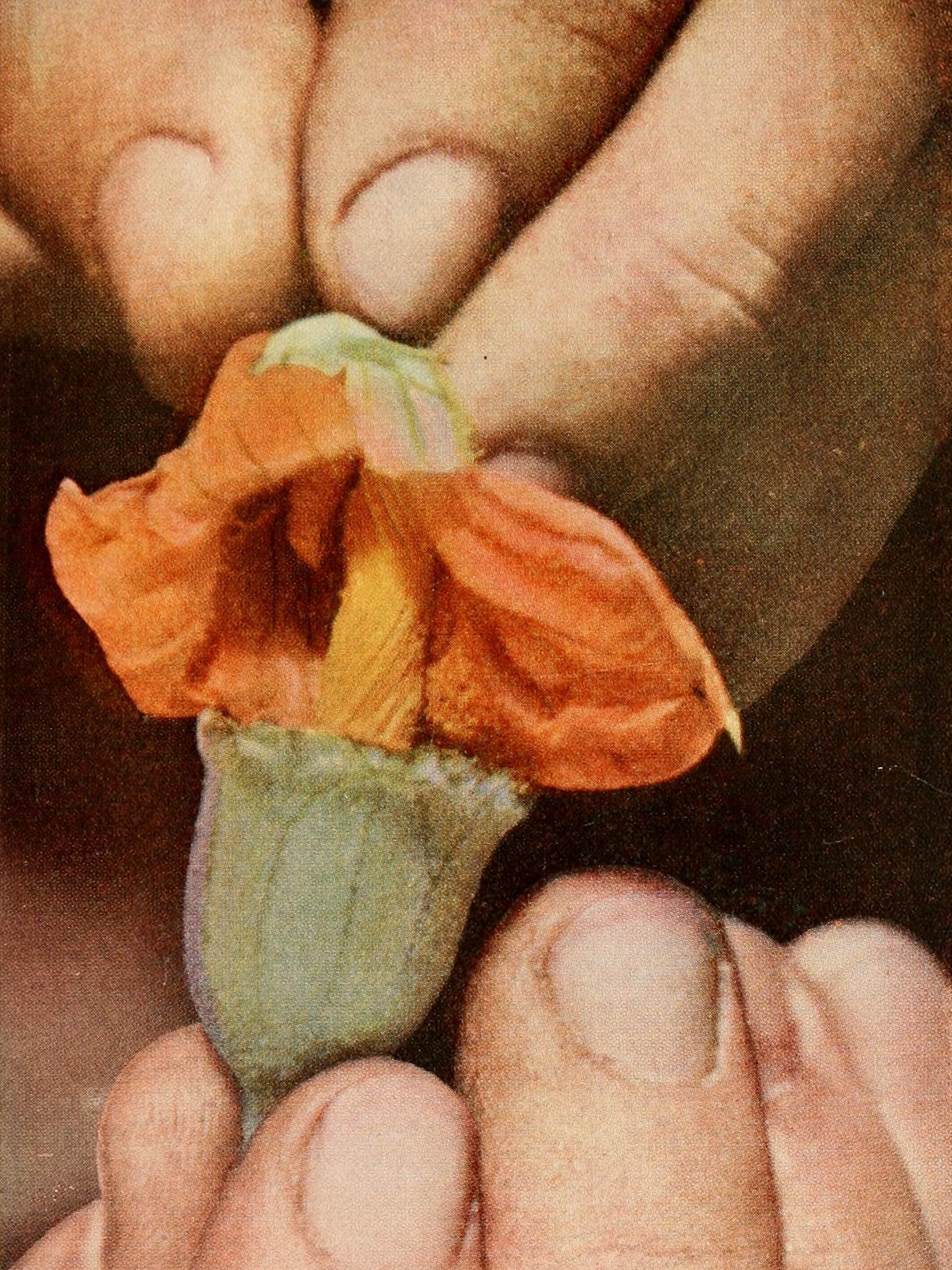
Hybrid seed is created by controlling the pollen from one variety to pollinate another variety. Flowers can be pollinated with pollen collected from the other variety’s flowers. In some types of crops this is often done by hand, so that humans become the pollinators, taking over for the bees and other insects.
Wind pollinated plants are the exception to that. For example with corn, the tassels or male flowers are removed the mother plants so that they can only receive pollen from the other variety, ensuring cross pollination.
After the controlled cross pollination is complete and the plant makes seeds, they are called hybrid seeds.
Why Grow Hybrid Seeds?
Many gardeners love to grow hybrid seeds, over heirloom seeds for example, because they offer valuable traits. Here are some of the reasons why we might choose to grow hybrids:
Hybrid Vigor
Hybrids are often known for hybrid vigor, which refers to the vigor of a plant’s growth. Hybrid offspring don’t always have more vigor than their parents, it can also be less. Professional plant breeders and astute seed savers often specifically look for the offspring with so that gardeners can enjoy that trait.
New and Exciting
Many modern plant breeders are breeding for the next new exciting plant to offer to the world. Gardeners get excited about new plants they haven’t seen before. That new colored pea, a brand new flower variety, variegated leaves or a distinct tomato for example can be irresistible and exciting.
Uniformity
Hybrid seeds can produce uniform plants which is especially helpful for farmers who need uniformity for market expectations and convenience of mechanical processing, transportation, etc. Many gardeners also prefer uniformity. While heirloom seeds can be quite uniform, it is also common for some heirloom varieties to have at least some low level of variability among plants.
Yield
Many hybrids are developed to produce higher yield in terms of number of fruits or pounds. What gardener doesn’t want more yield from their plants?
Disease or Pest Resistant
Hybrid varieties can be bred to have more disease or pest resistance than heirloom varieties that are available.
Hybrids Feed the World
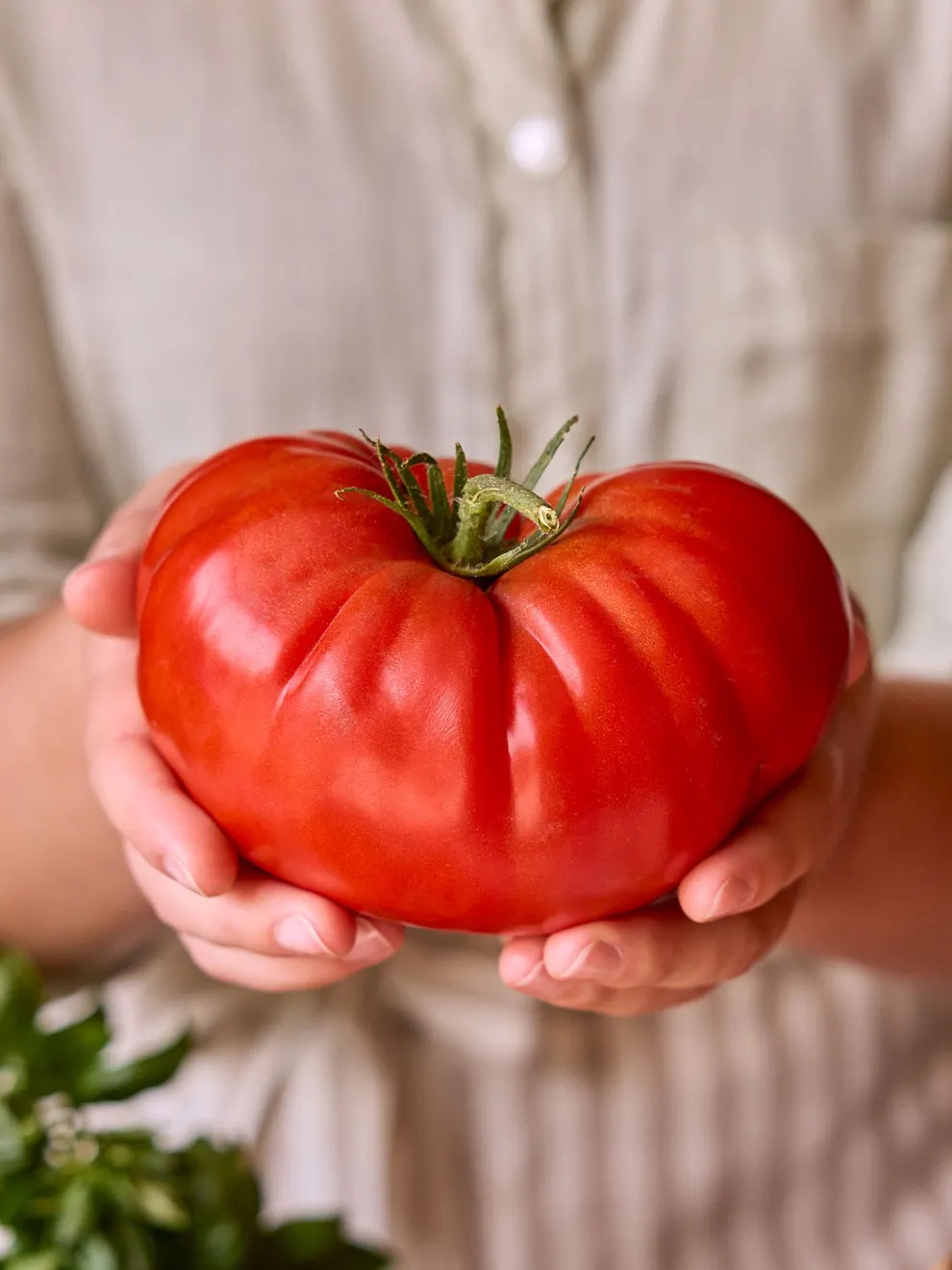
Today we live in a world where hybrid seeds feed the majority of our global human population, not to mention most of our livestock. Our industrial food system as we know it today wouldn’t be possible without hybrid seeds.
Common hybrid seed grown vegetables include: Hybrid tomatoes, corn, broccoli, cabbage, cauliflower, carrots, peppers, onions, squash, cucumbers and spinach.
Common hybrid seed grown grains include: Hybrid corn, rice and sorghum.
Common hybrid seed oils, proteins, starches and fillers include: Hybrid soy, sunflower seeds and corn; (Used for many processed foods and cooking oils)
The industrial food system heavily relies on hybrid seed for higher yields to maximize profits, uniform ripening for machine harvesting, uniform fruit or vegetables for machine processing and shelf stable qualities to manage long distance shipping.
If you only eat organic food you are still eating many plants and grains grown from hybrid seed. While not all organic food available through the industrial food system are hybrids, most are. The organic food industry prefers hybrid vegetables and grains for all the same reasons as the non-organic food industry.
The industrial hybrid seed industry has tricks for producing hybrid seed on massive scales much more efficiently than hand pollinating flowers, most often through male sterility. However some hybrid seed crops, especially high value crops, are hand pollinated on scale.

Are Hybrid Seeds Bad?
The answer to this question is both nuanced and subjective. Frankly, it depends.
I’ll start here: I am a hybrid human. My mother is mixed Caucasian descent and my father is Colombian American. Call me mixed, mutt or hybrid. I am proud to be a hybrid human born out of love. Both of my parents come from ancestors of mixed heritage and while our lineage is somewhat abstract, we can assume they are born from lines of many hybrids. My son is a hybrid between myself and his mother who is Vietnamese American.
I don’t think hybrid humans are bad… I think we are great! We represent genetic diversity, diverse culture and diverse thought. Some eugenics folks or cultural purists may consider hybrid humans bad. OK, I am not necessarily against them keeping their gene pool to themselves, as long as they aren’t hurting anyone else in the process.
Likewise, while hybrid seeds are sometimes demonized, I don’t consider hybrid seed bad. I think we need to talk about the context under which hybrid seed is bred, grown and sold or shared to know if we are in favor of supporting that cultural practice or not.
For example many, if not most, heirloom seeds started with a hybridization between two different plants. Whether past hybridization between two plants were intentional or not, some gardener or farmer noticed a plant that stood out from the rest of the patch. And because it had some quality that was desired, or better in some way, seeds from that hybrid were saved. Over time and after many generations of seeds regrown and saved, those seeds became an heirloom variety we know today.
In traditional cultures there was often, and still is, the common practice of exchanging seeds between villages and across regions in order to share genetic diversity for everyone’s common benefit. When new seeds from a few valleys over are planted with our valley’s seeds, hybridization will inevitably occur. I think about this as a slow, graceful, deliberate movement and interchange of genetics across large regions.
Today in our modern context we have the industrial hybrids which are grown for the reasons mentioned above in “Hybrids Feed the World.” This is where more nuance comes into play. While it is wonderful that hybrid seeds can feed the world, they often come with some significant hidden costs. It is up to the eye of the beholder to decide if those costs are worth it.
The Hidden Costs of Industrial Hybrid Seeds
Industrial hybrid seeds are interwoven with the industrial food system. The industrial food system as a whole has many hidden costs including deforestation, hastening climate change, rampant use of fossil fuels, toxic chemicals harming the environment, unethical treatment of plants and animals, and so on. However, for the sake of this article I’ll limit this discussion to the hidden costs of industrial hybrid seeds specifically.
All industrial systems are tied to the need for increasing profit and we can see profit as the prime motivator for decisions that steer industries. Whether industry is private or governed by shareholders we can understand that when companies scale up, the often unsatiated need to secure more profit eventually trumps everything else. The same is true with industrial hybrid seeds.
Keep the profit motivator in mind as you read the following hidden costs of hybrid seeds:
Inability to Save Seeds
When F1 hybrid seeds are saved by farmers and grown the following season, the F2 plants will no longer be uniform and show a mixture of several if not many traits. Farmers can’t save seed from hybrids because they require uniformity for market. Gardeners often don’t want to save seeds from hybrids because they want uniform traits of the plants they favor.
Dependency
Because of the inability, or perceived inability to save seeds, gardeners and farmers are dependent on buying hybrid seeds every year rather than saving their own seed. This is especially difficult for farmers whose profit margin is reduced when the cost of expensive hybrid seed is factored in.
Lack of Genetic Diversity
Industrial commercial hybrid seeds encourage massive monocultures which have large environmental ramifications. Monocultures all over the world grow the same few hybrid seeds which means there is relatively minuscule amount of genetic diversity in our global food supply compared to where it was prior to the 20th century. In fact, since the early 1900’s we have already lost over 97% of genetic diversity in varieties of seed that are available commercially today.
Poor Flavor and Nutrition
When industrial hybrid seeds are bred for uniformity and shelf stability, other traits like flavor and nutrition are usually at a loss. Those traits should be important to the consumer but due to clever marketing, lack of choice and good looking produce most modern consumers are unaware what they are missing. But once we eat that fresh garden grown tomato or apple it’s hard to go back to the supermarket tomatoes and apples.
Lack of Ethics
This is the hardest hidden cost to swallow, for me anyway. I don’t want to support industrial hybrid seeds because the profit driven corporations don’t care about the hidden costs of industrial seed and they don’t care about the hidden costs of the industrial food system, even if it means destroying our beautiful planet and exploiting workers, consumers and animals in the process.
An Ethical Gradient of Hybrid Seeds
I don’t think hybrid seeds are bad, but we gardeners and consumers might not want to support a food system that grows hybrid seeds if their practices are causing ethical, physical or cultural problems for us.
For clarity I am outlining several different kind of hybrid seeds roughly from least ethical to most ethical. Categorizing and arranging the types of hybrid seed like this helps me make informed decisions in my garden. Of course ethics are subjective, I encourage you to come to your own conclusions.
Industrial Hybrid Seeds
We already covered industrial hybrid seeds and why their use is often quite unethical. The lack of ethics and problems around growing industrial hybrid seeds are massive in scale. As massive as the global human population and our combined consumptive power.
Commercial Hybrid Seeds
I am calling hybrid seeds developed for the home gardener or small market farmers (as opposed to large industrial farmers) commercial hybrid seeds. Developing commercial hybrid seeds are often still motivated by profit. In some cases, but not always, the hidden costs of commercial hybrid seeds are quite significant. However, the ethics of growing commercial hybrid seed depends a lot on who the producers and growers are. If they are grown industrially, by massive corporations, or on huge farms that exploit their workers, we can be sure ethics are questionable. Small farmers and gardeners aware of these issues take care to purchase hybrid seed grown by ethical producers.
Small Breeders’ Hybrid Seeds
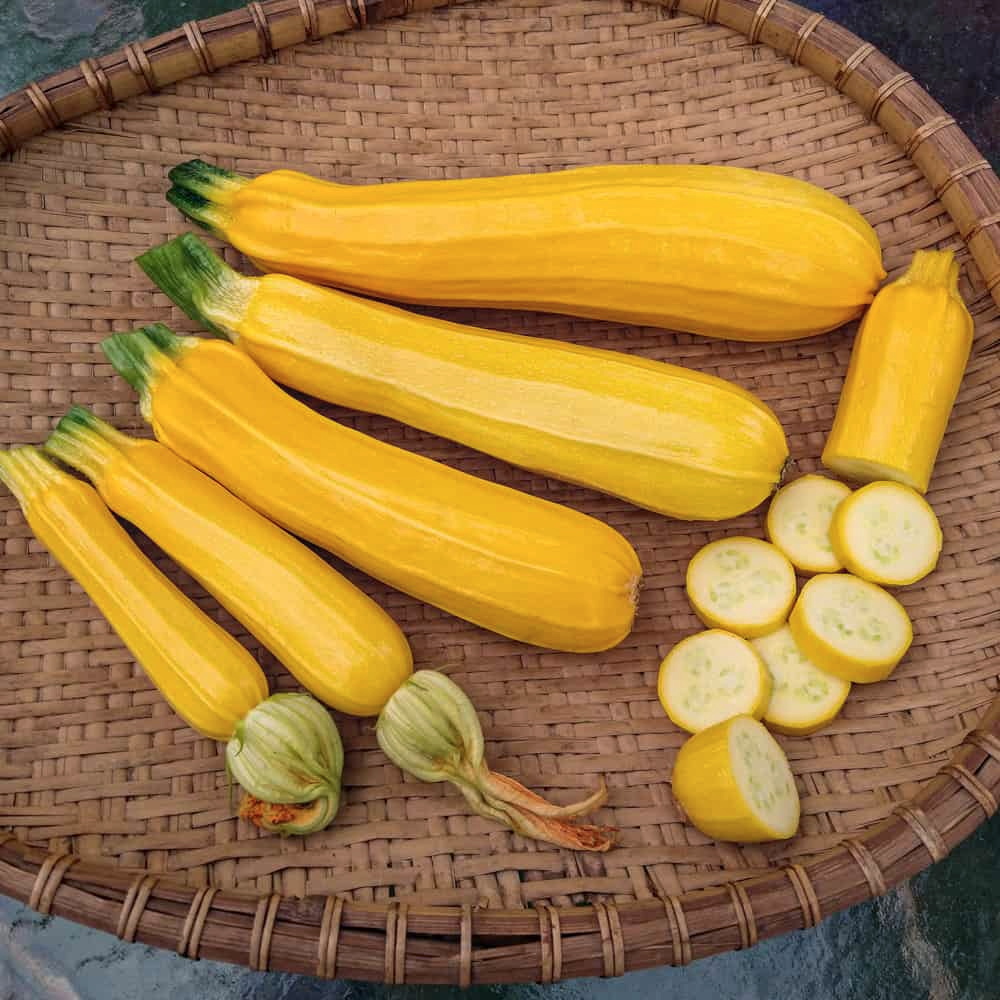
Small scale breeders embrace hybrid seeds in order to create new varieties. For example Carol Deppe’s Goldini which was developed by hybridizing Gold Rush yellow zucchini with Costata Romanesco zucchini. First it was a hybrid F1, and then she stabilized the variety after several generations of careful selective seed saving. We no longer call Goldini a hybrid since it is a stable variety.
Small scale seed breeders occasionally release their hybrid seed to the public before it is stabilized. Typically this wouldn’t be an F1 because outside of the industrial context, F1 seeds are typically rather limited in quantity. So small breeders might release an F2, F3 or F4 with varying degrees of stability or diversity.
Small scale seed breeders, like Carol Deppe, are often much more ethical than their commercial counterparts because they are more motivated by passion, rather than profit, and as a result they are often much more honest and transparent about their growing practices. You usually won’t find small scale seed breeders’ hybrid seeds in big seed catalogs, but you’ll sometimes find them released in places like Experimental Farm Network, in the breeder’s own online seed shops or through informal trading between enthusiasts.
Backyard Gardeners’ Hybrid Seeds
When backyard growers make intentional crosses or save seeds from natural crosses, these are hybrids at the most local and intimate scale. Assuming the backyard grower is already aligned with their own ethics, and especially if they are aligned with their community’s shared ethics, we can’t really go wrong with backyard hybrids if they offer delight or satisfaction to the gardener. And who knows, the backyard hybrids might eventually become a valued heirloom in subsequent seed saving generations.
Are Hybrid Seeds Unnatural?
Hybridization can happen naturally among wild plants and animals and it can also happen intentionally by humans. In fact the word hybrid comes from Latin hybrida which referred to the natural crossing between a domestic pig and a wild boar.
The rest of the natural world doesn’t have ideas of right and wrong like humans do—there are no good and bad in nature. Likewise, while there may be genetic stability of some plants in some geographical areas, there is no such thing as pure breed in nature. (That’s one of the reasons I consider myself an impure gardener.)
Hybridization occurs in nature and sometimes it is common, other times it is rare. But that’s looking at things through a human lens with our short lifespans and short attention spans. If we look through a broader lens, over say the last 500 million years, give or take, that flowering plants have been around, we can appreciate how numerous and how common hybridization has been over time.
Nature will hybridize readily given the chance. That chance might have to overcome distance between two groups of plants, but once that gap is bridged, thanks to birds, mammals, wind, water, erosion or some other force of nature moving seeds around, plants will hybridize freely. It’s up to the offspring to find out if they have inherited the traits that they need to survive.
Plants, animals, even humans as we know them wouldn’t be here today if it weren’t for natural hybridization. In fact hybridization often promotes genetic diversity and genetic diversity offers more opportunity for survival and longevity of a species.
Nature encourages promiscuity between flowers. The happy, busy bee bouncing between flowers doesn’t stop to compare two plants to see if they are the same variety or not before gathering nectar and distributing pollen. The same is true of wind who helps to pollinate wind pollinated flowers.

Can Gardeners Save Seeds from Hybrids?
“We can’t save seeds from hybrids” is actually a myth, but there are some partial truths to this statement. Let’s redefine it so that it’s more accurate:
We can save seeds from hybrids but the next generation will be more diverse.
Plant breeders love working with hybrids because their offspring offer lots of diversity. It is from those genetically diverse plants that breeders can pick and choose characteristics to encourage and foster when developing a new variety.
Backyard gardeners have been culturally trained that diversity is a bad thing. We live in a monocultural society, eating monocultural food (industrial corn, soy and wheat), living in monocultures of suburban tract neighborhoods, growing monoculture lawns. Modern humans often fear change and difference. So it is not surprising to me that we modern gardeners, generally speaking, have a fear of, or confusion around saving seeds from hybrids. I’ve heard gardeners saying rather seriously: “Don’t save seeds from those two corn varieties grown next to each other, you’ll get mutants!” Of course that fear does work in the industrial seed industry’s favor that we don’t want to save hybrid seeds. That’s more profit for their owners.
Seed expert Bill McDorman says “Save seeds from hybrids and you’ll end up on Mr. Toad’s wild ride,” with a twinkle in his eye. The ride is wild because offspring from hybrid seeds are diverse and will have different characteristics. Whether that ride is fun and exciting or scary and undesirable is up to the eye of the beholder.
When two plants are crossed together to create a hybrid, the offspring of that hybrid (F2 or 2nd generation after hybridization), while more diverse, will usually represent some mix of characteristics from both parent plants. If both parent plants were good varieties to begin with, we can expect most of the hybrid’s offspring will also have desirable characteristics, even though they won’t be identical to their parents.
Bill offers comfort in regard to saving seeds from hybrids: “After all, what’s the worst that can happen? You end up with something edible!” Some of the hybrid’s offspring may be desirable while others aren’t. Seed savers are empowered to save seeds from the offspring they prefer and compost or eat the seeds of the plants they don’t favor.
For the gardeners excited about taking seed saving a step further, Carol Deppe offers guidance and techniques on de-hybridizing hybrids in her book Breed Your Own Vegetable Varieties. If there is no equivalent heirloom or open pollinated version of our favorite hybrid variety, backyard gardeners can create that version ourselves through careful and deliberate seed saving of the hybrid variety until the traits we enjoy are stabilized.
Even if you choose not to save seeds from hybrids, I want you to know it is possible and totally fine! As long as we are informed that we are opening the gates of genetic diversity, or going on Mr. Toad’s wild ride as Bill McDorman loves to say, then we can be pleasantly surprised about the surprises we find on the other side, should we choose to take the ride.

We Grow Together
Hybrid seeds in themselves are not good or bad. Hybrid seeds in themselves are neither ethical or unethical. They are living, breathing beings just like the rest of us. Whether they occur naturally or through human interventions, hybrid seeds are part of the natural world.
We gardeners who have the know-withal and wherewithal can choose for ourselves if we want to support the industrial hybrid seed industry with our food choices, or if we want to support the commercial hybrid seed industry with our garden seed choices. I hope this article helps you have some knowledge to make more informed choices in your own life, whether for ethics or pleasure.
It is up to our heads and hearts to choose how to steward the seeds that our hands hold. To me, hybrid seeds represent diversity. They represent the future. Like all seeds, hybrid seeds are alive and hold the potential for countless new lives, and so they represent life.
As a hybrid myself, I represent diversity and the present moment. My hybrid son represents a bright future and change. My hybrid ancestors, however many there may have been, represent love and survival.
We gardeners and eaters can appreciate how all of our favorite varieties of fruits, grains and vegetables came from plant breeders, past and present, amateur and professional, modern and ancient, who saved seeds from their favorite hybrid varieties.
Many of those past hybrids are known as heirlooms today. Looking back even further, we can appreciate that the wild ancestors of all of our modern domestic food plants would not have been possible without natural hybridization occurring prior to their existence.
We have a lot in common with those wild plants of the ancient past and the domestic plants of today. We are all woven into the fabric of life. We are all capable of shaping our personal lives, yet we are completely interdependent on the entire collective life on Earth.
Just as many of the flowering plants depend on insects, even birds and mammals, to pollinate their flowers so they can reproduce, so do those creatures depend on the nectar to live. Just as we depend on the plant food to survive, so do we depend on the bacteria in our guts to make nutrition available to our bodies. Just as the plants depend on bacteria and fungi to break down organic matter so that it can absorbed into their roots…
The list of connections of interdependence goes on far beyond what any of our brightest scientists could name or recognize, far past being a list, far past what our minds are capable of recognizing, into the heart realm of wonder and appreciation. Into gratitude.
I am so grateful that plants, animals and fungi have been hybridizing long before humans were on the scene, so that we can belong to this beautiful green and blue planet as we know it. This planet and its life will be around long after we humans are gone. How lucky we are to be able to experience life as a human in this moment. It feels like a once in a lifetime opportunity.
Seed Saving for Abundance
Want to learn how to harvest, clean & save your homegrown seeds? Become empowered to grow your own seeds for planting next season, stocking your pantry, sharing with your community, or selling to gardeners.
See our course Seed Saving for Abundance for more details!
Recommended Reading
This article is one of a series on the topic of seeds and diversity. You may also enjoy reading these other related topics:
- Seeds of Diversity: 5 Reasons to Embrace Genetic Diversity in our Gardens
- Heirloom Seeds, What Are They Really?
- Open Pollinated Seeds: Out in the Open
- Locally Adapted Seeds: Apt to Thrive
- Grex: Seeds for Diversity and Change
- Landrace Gardening: Becoming Seeds of Place

Free Seed Saving Crash Course
Up your seed saving game in our free video: Seed Saving Made Simple We designed this presentation to help you have confidence knowing how to save seeds from your garden.
Free Seed Resources
We’ve put together a collection of stories, education and inspiration around gardening, living and working with seeds. They are all free and openly available for you to read and explore. Enjoy!
2 responses to “Hybrid Seeds: The Good, Bad and Ugly”

You move me to tears which opens my heart! My head is filled with good knowledge and thought provoking questions. I’m grateful your family is sharing this world with me and my family!

Hey Christine, your words remind me why I am writing this blog! Thank you so much. Your comment is helping me open my heart too. I appreciate you and I’m grateful to know you!






.jpg)
Share Your Thoughts