Table of Contents
Seeds of Diversity: 5 Reasons to Embrace Genetic Diversity in our Gardens
Gardeners and seed savers uphold and honor life in our gardens. We hold small, elegant, concise packets of life in our hands, before eventually returning seeds to the soil.
Curious gardeners are always looking to nature for guidance on how to grow plants successfully, more elegantly and with more joy. Mother Earth always does just that and we humans always have more to learn.
One of the themes that we modern gardeners are coming full circle to is health through diversity. Genetic diversity in particular can offer gardeners and seed savers more success, joy and resilience in the garden.
Please continue dear reader, and I’ll share my top 5 reasons to embrace genetic diversity in our seeds and gardens:
Table of Contents
1. Honoring Mother Earth
Mother Earth’s children are always striving to be as diverse as possible. Plants’ genetics allow similar traits to be passed down to offspring, but genetics also allows facilitate change. With every cross pollination, seedlings offer a unique expression of genes.
Change is the only constant.
Just think about all the different plants, animals, fungi and insects that you have seen in person. In our lifetime we can never see every life form that exists. There are far too many!
Every biological life form is constantly changing and evolving. With every generation, every germinating seed, change is guaranteed. If we go back far enough, every life form on earth all started from the same place, we all share the same single-celled ancestors in common some roughly 4.2 billion years ago.
And what if those long ago single-celled organisms never changed? What if new life forms never took shape? Life on earth would not be as diverse as it is today. I wonder how diverse life will be in a few more billion years… more or less? Would there still be plants? There can’t be humans without plants!
Viruses help increase genetic diversity too. Viruses exchange genes between different lifeforms.
Viruses can bring genes from other life forms, like animals, into plants for example (or vice versa). Viruses help life on Earth continue to change and shift through genetic exchange and diversity. Modern humans often only see viruses as bad, but viruses help life shape shift. If it wasn’t for viruses, humans would not have been possible in the first place. If all viruses suddenly disappeared, most life on Earth would cease to exist.
Whether we see diversity as good or bad are cultural values that we can place onto life. Mother Earth doesn’t see life through a value system, but she does encourage diversity. Historically, diversity has also been the norm within plants that humans have relied on.
Within any given species of plants alive on Earth today, there are often countless distinct varieties, whether they are wild or domesticated. Just think of all the different tomatoes in seed catalogs. Now imagine all the varieties of tomatoes that ever existed in the past, present and future who never even made it into a seed catalog.
It’s staggering to imagine that every village had their own unique varieties of vegetables. In some cultures every family, every garden had it’s own unique variety. Literally countless varieties of most vegetables have existed worldwide.
When we embrace genetic diversity in the garden and in our culture, we are honoring Mother Earth. We are learning to align with her ways of celebrating and encouraging diversity, not only for health and strength, but also for love.
2. Resilience & Adaptability
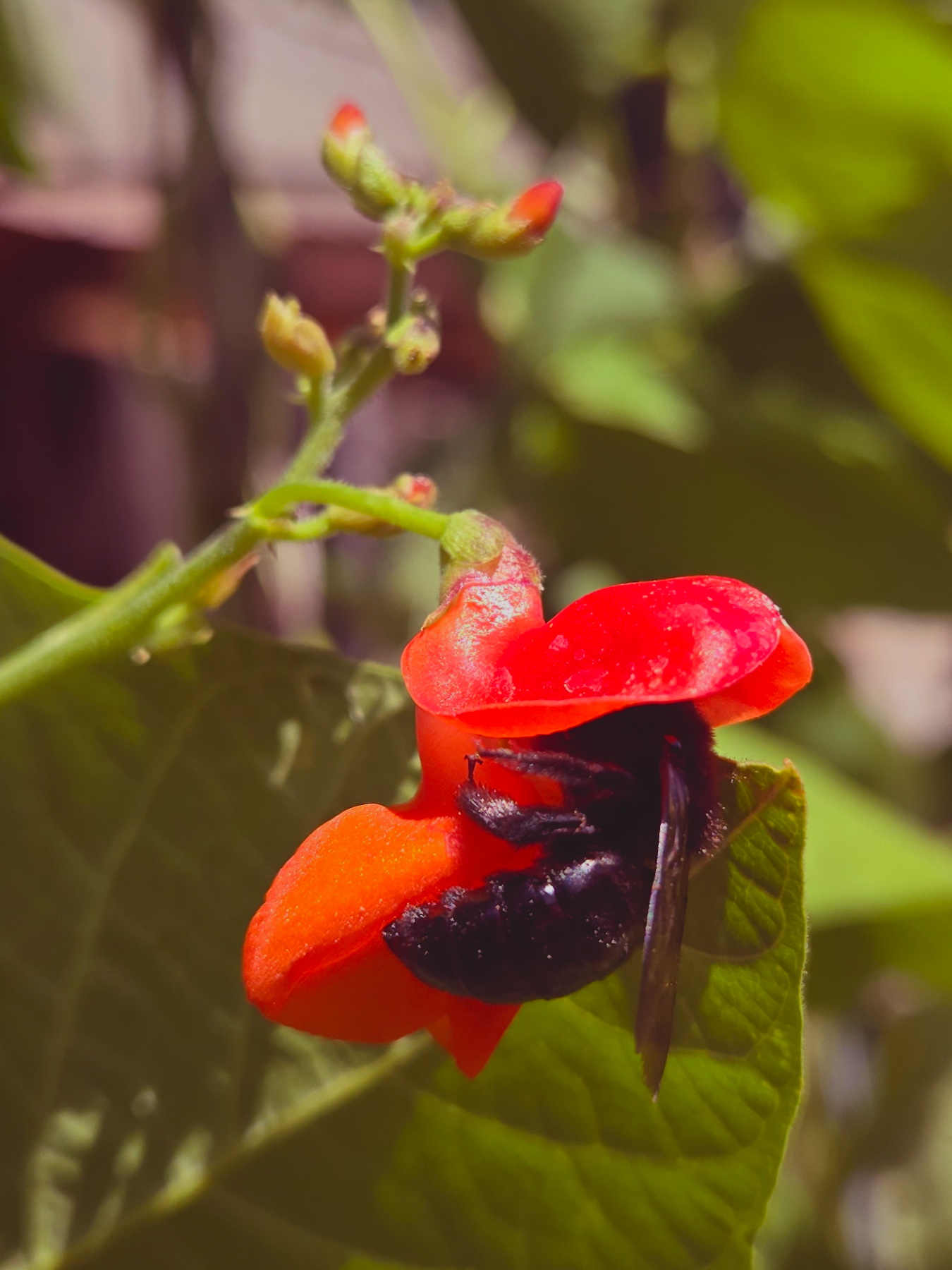
Genetic diversity offers resilience in the garden and beyond. With more genetic diversity plants can have a greater chance to adapt to challenges in the garden. As we learned in Locally Adapted Seeds: Apt to Thrive:
More genetic diversity offers greater ability to adapt.
If we are starting with seeds that are not locally adapted, having more genetic diversity helps them have a better chance to adapt faster when we save seeds and plant them each season.
Plants that are locally adapted have adapted to our garden soil, local climate, local pests and diseases and more.
When our plants and seeds are locally adapted though, they are not done. They are not finished adapting. We need to keep saving seeds each year so that they can continue adapting.
Why would locally adapted seeds need to continue adapting?
We want our seeds to continue adapting to our local conditions, because those local conditions are always changing from season to season.
Life is not static.
Climate change in particular is ensuring that ecological change happens faster and faster. Every season our culture continues to step into the unknown with regards to temperatures, rainfall, pests, diseases and more. Things are getting warmer and wilder. Some plants that thrived in past decades struggle now.
I practice Adaptation Gardening, aka Landrace Gardening, which encourages faster adaptation of our plants and seeds to local conditions. Adaptation gardening embraces genetic diversity, so that our plants can have a greater pool of genes available to help them adapt.
One specific benefit of adaptability is the greater ability to prevent total wipe-outs. Have you ever had a total crop failure? I have! Some seasons a crop may struggle to produce a yield. One year it might be tomatoes, the next might be beans, or potatoes, or something else.
Pests, drought and disease are some of the more likely factors to cause crop failures. When our plants have more genetic diversity, some plants may have what it takes to survive, perhaps even thrive, while others struggle or die.
When conditions are tough and some of our plants manage to survive and make seeds, replanting those seeds year after year will result in locally adapted plants that can thrive.
Gardening with genetic diversity gives our plants a better chance to survive, adapt and thrive… and continue to adapt as our Earth’s climate continues to change.
3. Greater and Broader Nutrition
It turns out the genetic makeup of the food we eat has a huge impact on nutrition and nourishment.
It is a common belief that when we grow the same vegetable in an organic garden with good soil biology, it will be healthier for us than the same vegetable grown in conventional farming (aka industrial farming). Well, this is not quite true, as I learned from listing to an interview with Julia Dakin of Going to Seed.
Julia went looking for evidence to back up the “common knowledge” that the practice of growing vegetables with good organic practice has a direct correlation with increased nutrient density. Surprisingly she found this was not the case, after reading a report by the Bionutrient Food Association. They surveyed citizen scientists all over the US and Europe, including data, crop samples and soil samples, and covering both organic and conventionally farmed produce.
I read a report to confirm that everything I was doing was on the right track. It was put out by this organization to show that regeneratively farmed produce was higher quality than conventional farmed produce. That seemed like a no-brainer to me. Of course, I’ll read this to show that I’m right. . . .
So I read this report and got to the end and it said that they couldn’t conclude that there was any relationship to how we grow food and the nutrient density of that food. So they said no obvious relationship between the relatively simple measurement of soil biological activity and any of the food quality measures, no obvious trends by antioxidants, polyphenols, or minerals.
Julia Dakin, Wild Nutrition: Seed Saving for Wellness, The Urban Farm Podcast
After reading this conclusion in the report Julia was astonished, because everyone knows that organically grown produce is more nutrient dense, right? How could this report be correct?
The Bionutrient Food Association also made their data available, so Julia decided to pour through the data herself and find the relationship between organically grown food and nutrient density. But she ultimately came to the same conclusion.
And then she found the link to greater nutrient density, but it wasn’t growing practices.
The factor that most greatly influences nutrient density is genetics.
I did start finding patterns of nutrient density and they were regulated by genetics. So color, variety, once you started sorting by variety within a species, you’ll find giant differences. Giant, like 200 times. You could have red lettuce next to the green lettuce, growing in the same soil, same climate, same everything and one could be 200 times higher in antioxidants than the other. And 200 times, if you think about that as a percentage, is 20,000%.
So since then I’ve been convinced by other studies that I’ve read that you may be able to find a difference in increase in nutrient density by 10%, maybe even 25% when you’re using really high quality soil with a lot of biological activity. But when you’re talking genetics, 20,000%, that’s a lot more.
Julia Dakin, Wild Nutrition: Seed Saving for Wellness, The Urban Farm Podcast
This was a huge revelation for Julia and when I heard it, it was a huge revelation for me too. I am not going to stop good organic practices in our garden though, because there are a slew of direct and indirect benefits associated with organic gardening.
However, now I am going to pay a lot more attention to genetics in my food. As Julia mentioned in the interview there are so many variables that can affect nutrient density, and we don’t have to reach for them all, but “eating the rainbow” is one way to ensure we have well rounded nutrition thanks in part to the phytonutrients represented by different colors.
Eat the rainbow, a relatively recent phrase that is becoming well known in our lexicon, points to food colors having an impact on nutrition. A wider variety of plant colors in our diet, especially but not just darker colors, offer greater health benefits.
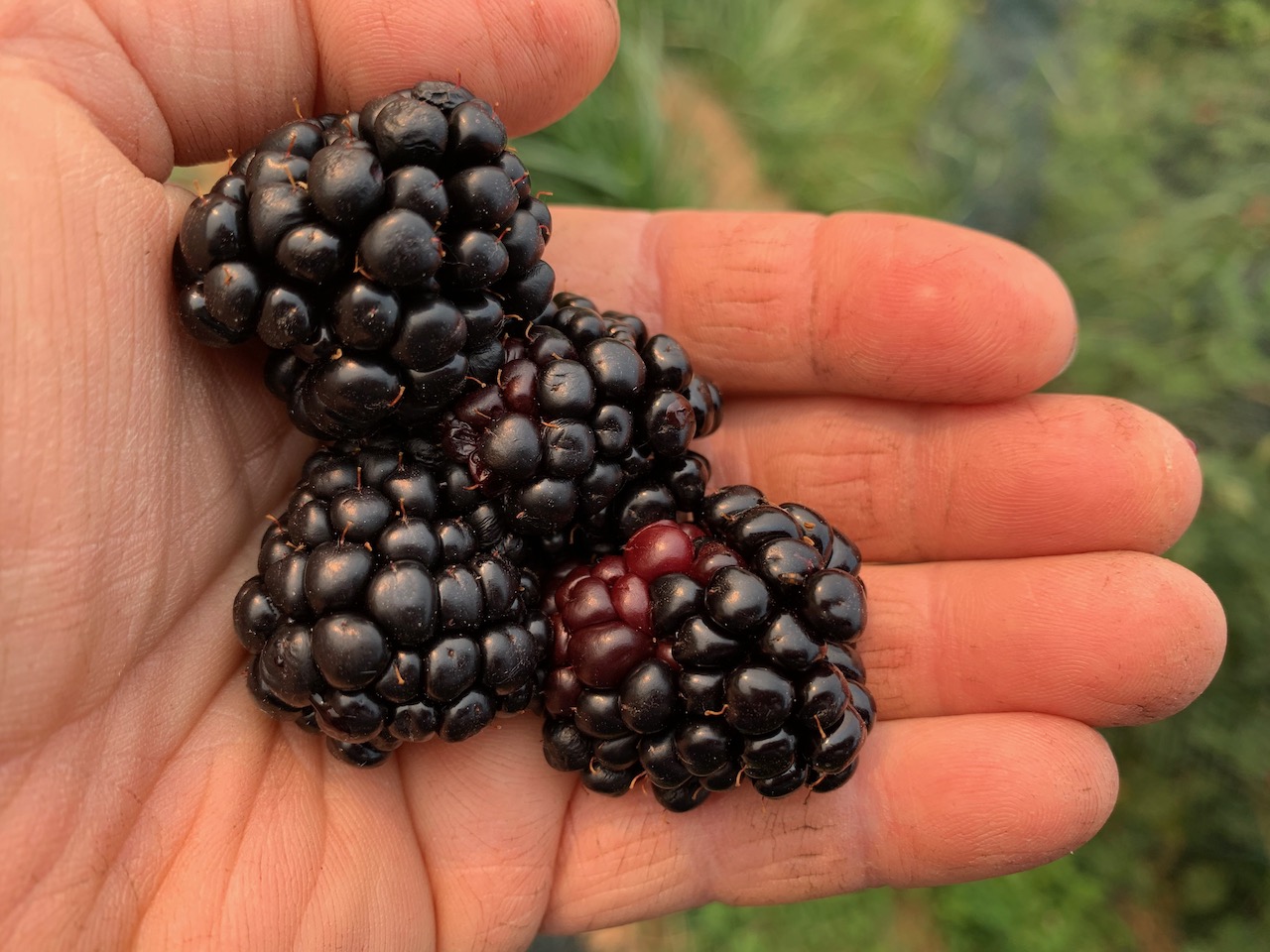
So it is suggested to eat all the colors on a regular basis. For example: tomatoes for red, squash for orange, peppers for yellow, kale for green, blueberries for blue, purple cabbages for indigo, blackberries for violet. Then mix and match other veggies and fruits with varying colors with seasonality, availability and your preference.
And that’s only looking at color, just one of countless variables and distinctions possible.
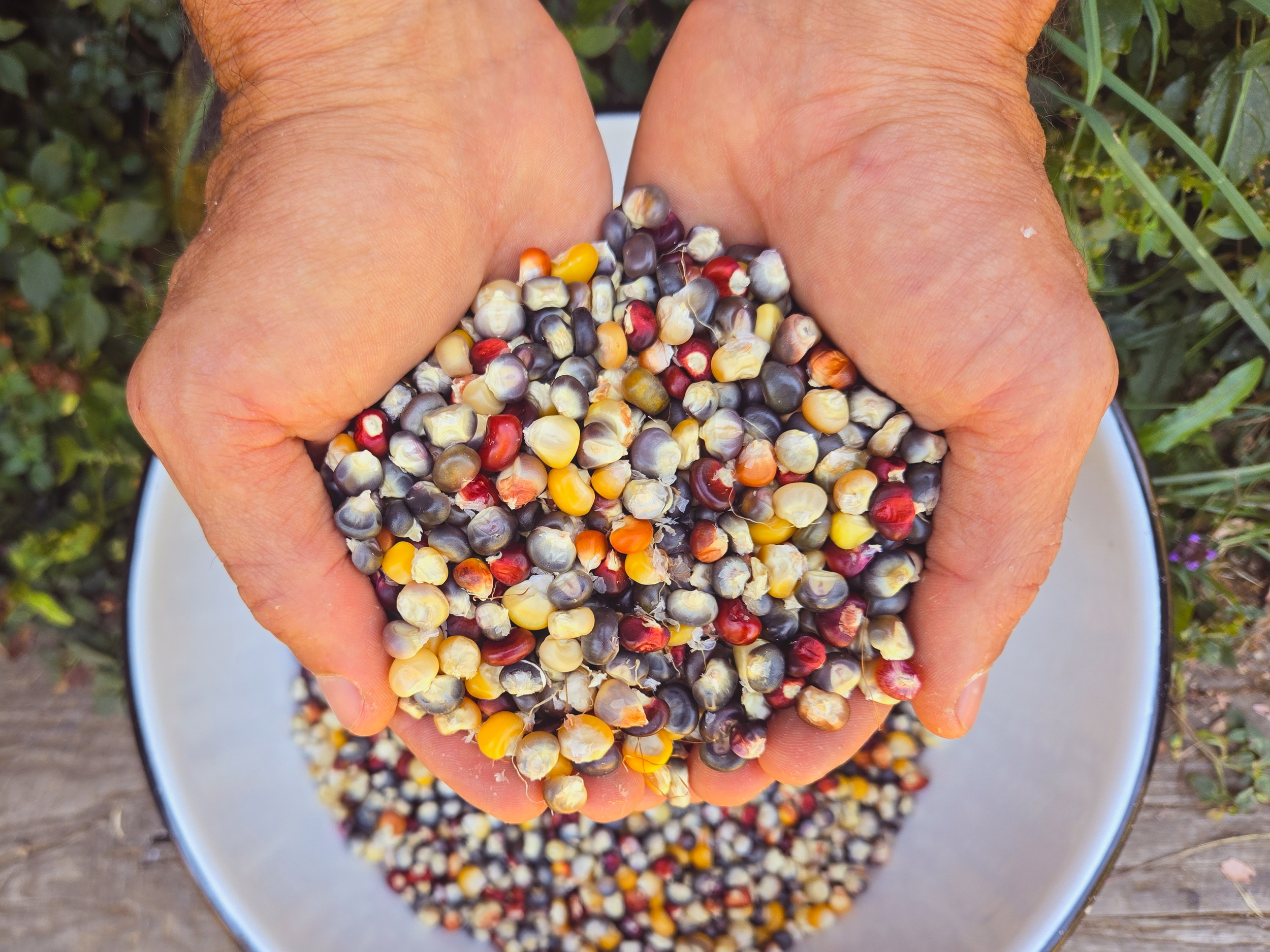
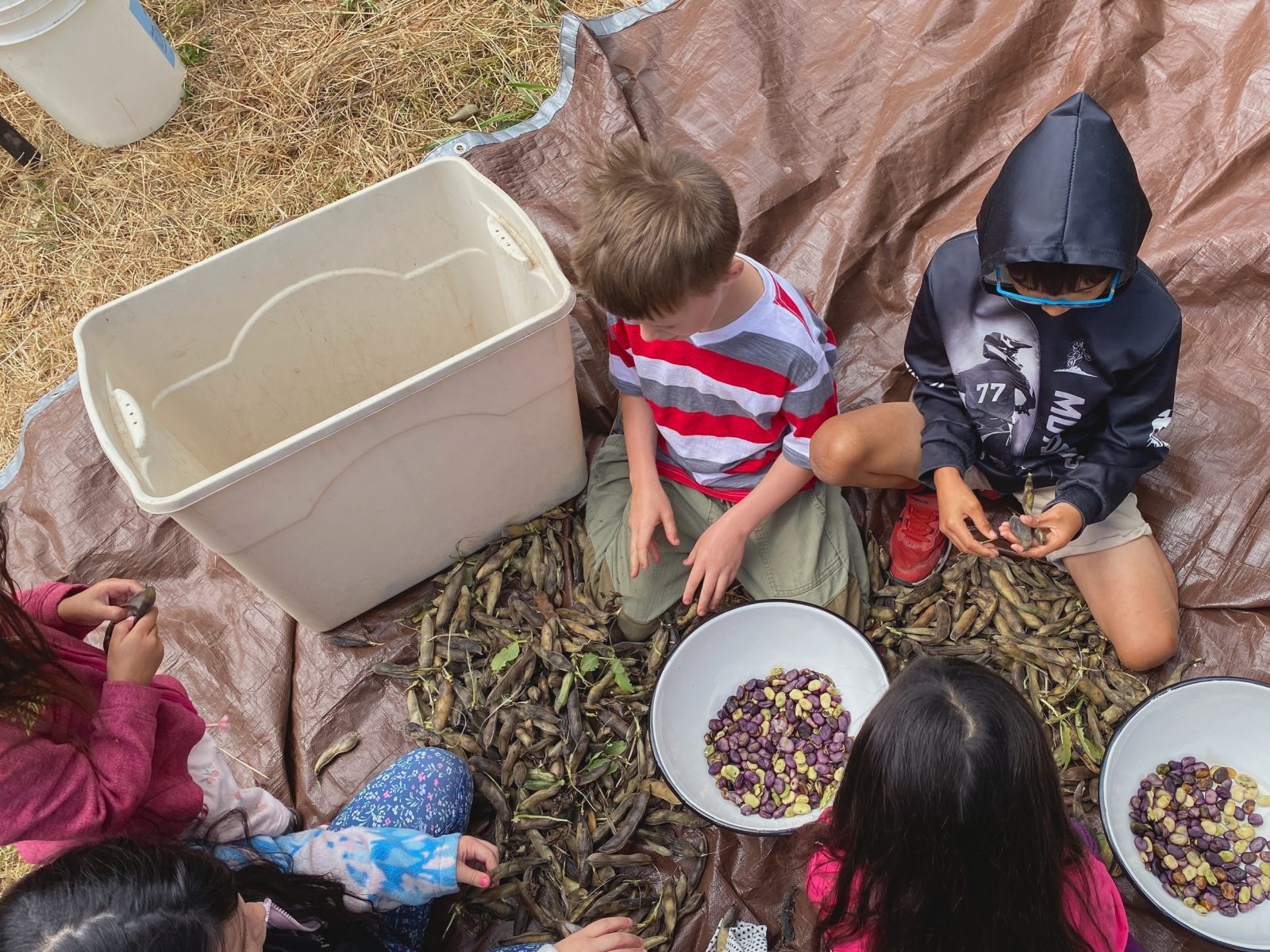
When my corn and beans are all mixed up and express a rainbow of colors, I imagine that I am accessing a much wider range of nutrients than if I ate just one variety with one color. It makes sense to me that each variety will have a slightly, or sometimes greatly, different nutrient profile based on their unique genetics.
When we grow grexes or landraces, every single plant is a distinct variety because they are all genetically unique.
We can choose to save seeds from the plants that look healthiest, but also plants whose fruits, leaves and stems have richer, brighter and darker colors. Those colors often taste better too.
Some scientists or businessmen may say: “Hey, let’s find THE most nutritious vegetable in it’s class and breed that as a variety so that we can tout it as a superfood.”
In contrast, the folk answer to gaining diverse nutrition is to embrace diversity in our diets. Rather than looking for the holy grail, we can trust our eyes, tongues and other senses to guide the way.
We can also incorporate more diversity of minerals into our diet by eating more herbs and leafy vegetables. Our ancestors were likely eating at least dozens of kinds of herbs and greens in large amounts on a regular basis. They didn’t just eat one kind of leaf, like kale, and stop there.
So we can include genetic diversity on our plates in several ways:
- Eat diverse kinds of foods — e.g. Many kinds of vegetables, greens and herbs instead of just a few.
- Eat a diverse range of colors and flavors in our fruit & veggies — Eat the rainbow. Eat all flavors, not just sweet and salty. Bitters for the liver! Eat many diverse species, not just a few.
- Embrace diverse genetics within each species of plant we eat — Not just one uniform variety.
4. Healthy Gene Pools
You may know that it’s not a good idea to make babies with your cousin, let alone your siblings, because it limits the family gene pool. Within just a few generations of inbreeding, genetic problems are likely to come up.
The same is true with plants.
As seed savers we want healthy, wide gene pools. The modern seed industry is a bit funny in this regard, because it encourages narrow gene pools by requiring plants to cross pollinate with their siblings and cousins in order to keep a variety distinct and uniform.
What!?
Those seeds are called open pollinated or true-to-type seeds. We covered this in detail in Open Pollinated Seeds: Out in the Open.
Most seed breeders and seed farmers are smart folks and are well aware of the risk of inbreeding depression in open pollinated or true-to-type varieties. In order to prevent inbreeding depression, seed growers must adhere to a minimum population size. That is, a minimum number of plants they must save seeds from.
Even still, plants grown from open pollinated seeds, including heirlooms may not have the same vigor as hybrid seeds (hybrid vigor). That’s why a some organic gardeners still prefer to grow some hybrid vegetables in their gardens.
On the other hand, grex and landrace varieties do not face as much risk of inbreeding depression. Seed savers and seed growers can get away with lower minimum populations when growing more diverse varieties, because the gene pool is likely much wider. Genetic diversity continues to remain diverse over time, especially if there is a regular influx of new genes (outside seeds) each season.
When we allow plants to hybridize freely within a mix, grex or landrace, and then when we save and plant their seeds, some, perhaps even many, of our plants are likely to show hybrid vigor.
These are some of the reasons why I embrace adaptation gardening, and why I am growing and saving seeds from more mixes, grexes and landraces:
- My plants have more genetic diversity.
- I can save seeds from less plants if space is limited.
- My plants adapt faster.
- I enjoy some hybrid vigor.
In summary, my genetically diverse group of plants are more likely to have a healthier gene pool over time, than if I grew plants from just one true-to-type, open pollinated variety and saved seeds from just those plants year after year.
5. It’s All About the Individuals
When we grow a group of plants that have genetic diversity, we are gardening with a group of individuals.
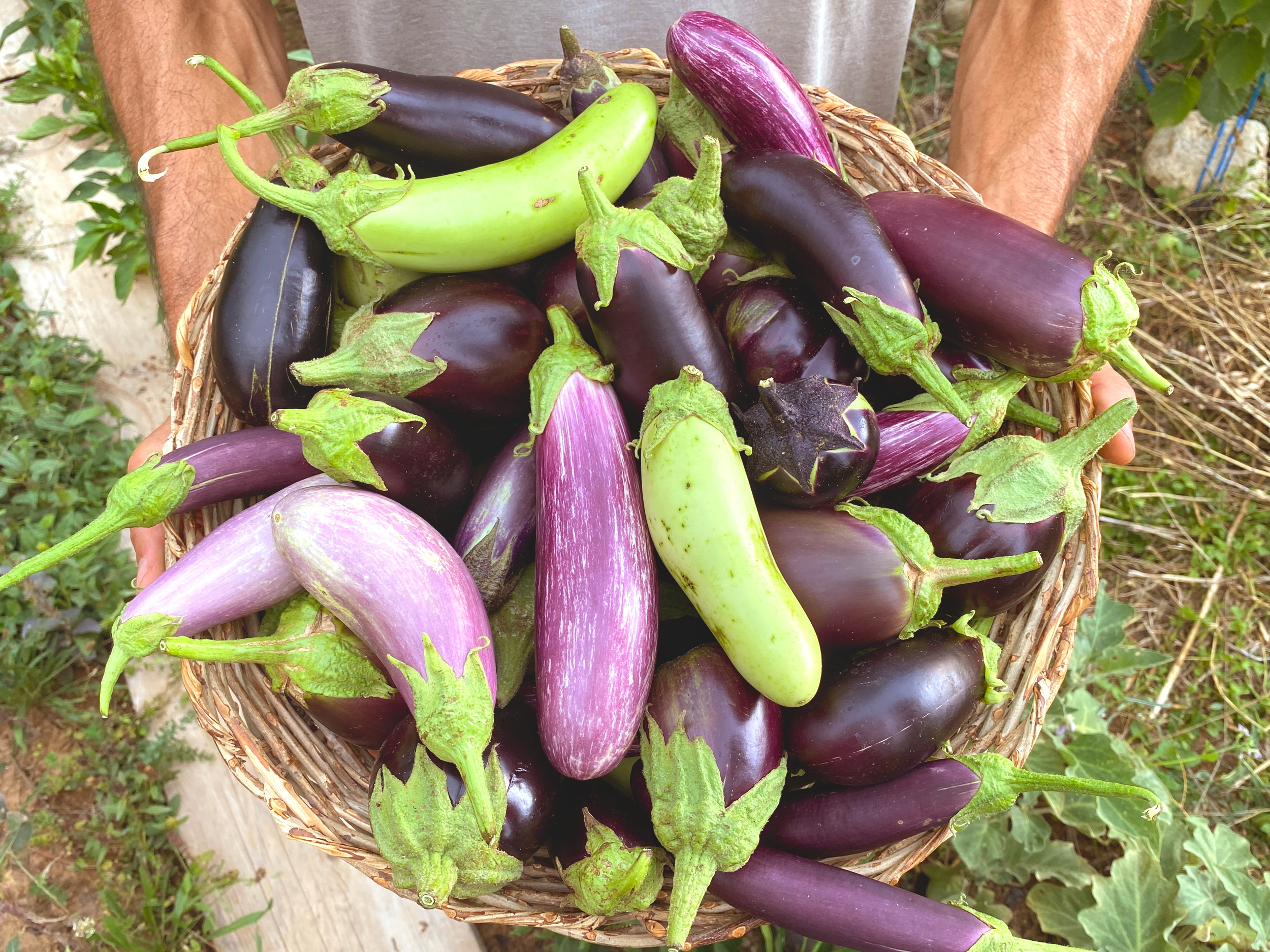
A diverse variety, grex or landrace will have a gradient of appearance, taste and growth habits. In other words, each plant represents its own variety. We are talking about a diverse bunch of plants here, not a group of plants that are nearly identical.
When we grow a genetically diverse group of plants, when we save seeds from genetically diverse plants and when we re-grow those seeds, we are embracing diversity. We are embracing individuals.
We are not asking or expecting the plants to be the same. We are embracing that they are all different and unique. We are encouraging and uplifting a group of unique individuals.
In typical open pollinated varieties, seed breeders and seed savers usually discard the odd plants that stands out from the bunch, or if the plant is allowed to live, maybe they won’t save seeds from the oddball. Thus eliminating even the slightest variability from the variety’s gene pool when it arises, which accordingly continues to narrow the gene pool.
But that oddball, referred to as an off-type by the seed industry, is the unique individual, the one that is different. How do we know that unique plant doesn’t have the right combination of genes that will allow it to be more resilient in our garden? Maybe we should call it a yes-type instead!
Instead of fearing, discouraging or eliminating the unique individuals, we are embracing those individuals when we garden with genetic diversity. We are recognizing that more individuality is healthy for everyone involved (See reasons #1-4 above for the why.)
Uplifting the individuals, embracing change and celebrating diversity. This is what Adaptation Gardening is all about.

Diversity of Seed Savers
We humans are diverse too!
We have diverse thoughts, creative expressions, philosophies, beliefs, practices and trades. Unless our family has been inbreeding for a few generations, we are genetically diverse too. I myself am a hybrid of hybrids and am proud of it.
On the other hand, for all of our genetic diversity, we humans all have so much in common. We all belong to Mother Earth, and depend on her for our survival and well being.
Those of us gardening and seed saving are embracing direct relationship between ourselves and Mother Earth through soil, plants, beauty and nourishment. When we save seeds we are honoring ourselves as children, community members and custodians of this planet. With saved seeds in hand, we are honoring what’s come before and what’s yet to come.
Seeds represent a trinity of time—the past, present and future.
Our time harvesting and saving seeds in this present moment is just a brief slice of time in the tapestry of relationships going back millennia. Likewise, the seeds we hold today represent the future survival, nourishment and joy of humankind.
As many unique individuals, let’s embrace our collective diversity. And let’s also remember how much we all have in common. We all walk the same Earth, breath the same air, drink the same water, have the same dependence on plants for life and feel the same love.
Happy seed saving friends!
Seed Saving for Abundance
Want to learn how to harvest, clean & save your homegrown seeds? Become empowered to grow your own seeds for planting next season, stocking your pantry, sharing with your community, or selling to gardeners.
See our course Seed Saving for Abundance for more details!
Recommended Reading
This article is one of a series on the topic of seeds and diversity. You may also enjoy reading these other related topics:
- Heirloom Seeds, What Are They Really?
- Hybrid Seeds: The Good, Bad and Ugly
- Open Pollinated Seeds: Out in the Open
- Locally Adapted Seeds: Apt to Thrive
- Grex: Seeds for Diversity and Change
- Landrace Gardening: Becoming Seeds of Place

Free Seed Saving Crash Course
Up your seed saving game in our free video: Seed Saving Made Simple We designed this presentation to help you have confidence knowing how to save seeds from your garden.
Free Seed Resources
We’ve put together a collection of stories, education and inspiration around gardening, living and working with seeds. They are all free and openly available for you to read and explore. Enjoy!
2 responses to “Seeds of Diversity: 5 Reasons to Embrace Genetic Diversity in our Gardens”

Beautiful!
Thanks You!!
Hey Terry, I’m glad you enjoyed this article. Thank you for the positive reflection and nice vibes! Happy gardening :)







Share Your Thoughts