Table of Contents
Grex: Seeds for Diversity and Change
Grexes are starting to pop up more often in seed catalogs lately, alongside heirloom and hybrid varieties. Grexes are coming up more in conversations around seeds and diversity. Let’s weave ourselves into that conversation!
OK I’ll level with you. You don’t need to understand what a grex is to grow out a variety of grex seeds in your garden and enjoy their beauty, diversity, adaptability or resilience. On the other hand, it’s a conversation worth having because our understanding of seeds, varieties, genetic diversity are changing.
Perhaps these conversations can even lead to changing beliefs and values about our culture. So I invite you to join the conversation about grexes and their seeds!

Table of Contents
What is a Grex?
A grex is the offspring and subsequent generations of two varieties that have hybridized together.
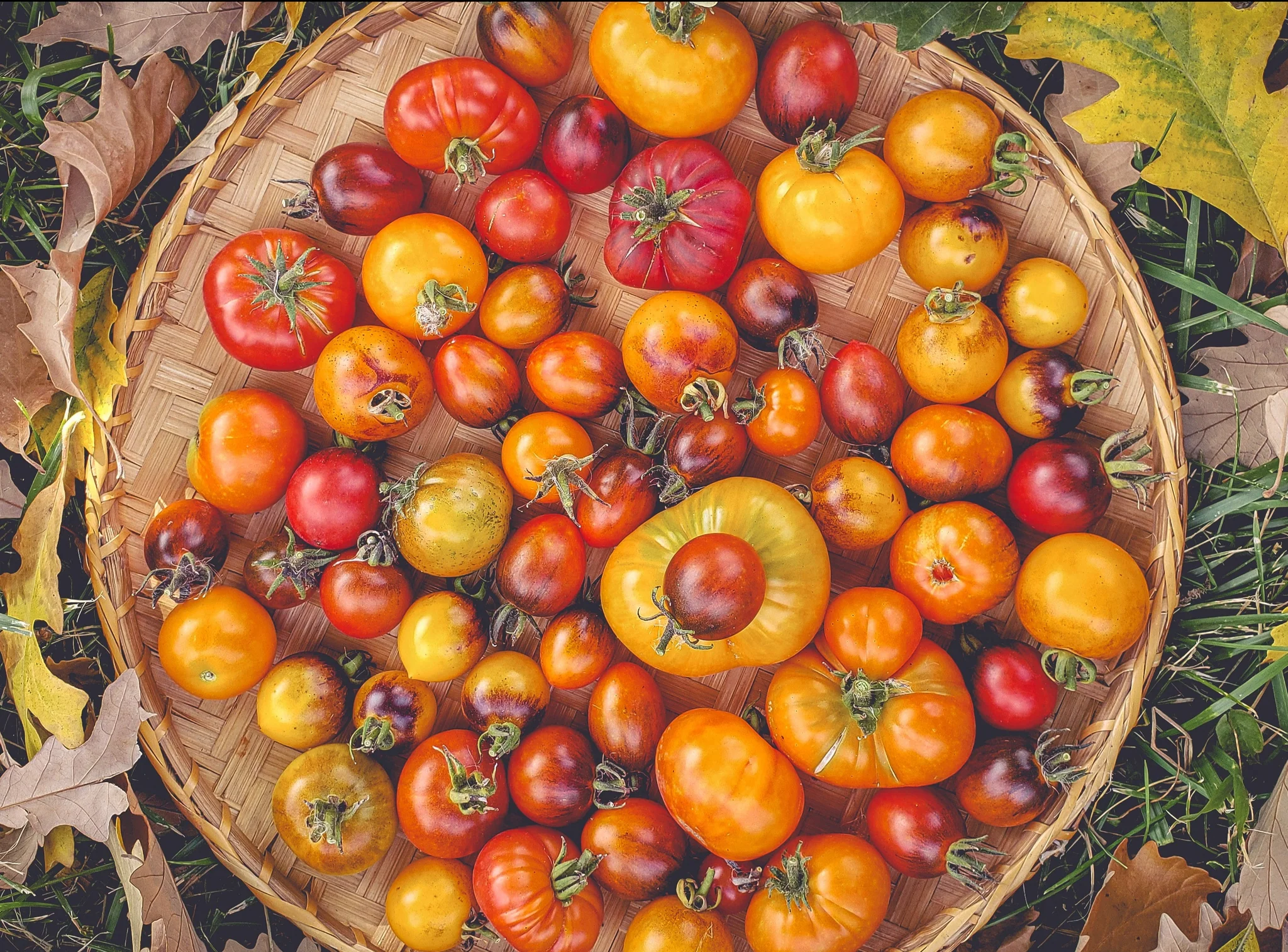
A grex is visually more diverse than a standard garden variety. Grexes usually start with at least two individual varieties that have hybridized. The hybridization might have been natural or accidental through open pollination or perhaps it was intentionally cross pollinated by hand.
Either way, the hybridization often results in future offspring with very diverse characteristics, or traits. Over the following seasons the grex’s breeder, seed saver or steward will select seeds from plants that have qualities that are desirable.
Grexes are usually maintained with a multitude of different traits such as colors, sizes, shapes, textures etc. When you grow seeds from a grex, you’ll see some variation between each of the plants.
In contrast, heirloom and modern varieties that grow true-to-type have been selected for uniformity. Over time the true-to-type selection process gradually eliminates everything else from the gene pool and encourages uniformity. Every seed we plant from a true-to-type variety results in plants that more or less look and grow the same.
Grexes express a wider spectrum of diversity because breeders are selecting for several or many traits among a population of plants, rather than specific traits from one or two very specific plants, for example.
As gardeners, to see and experience the diversity in a grex, we have to grow a group of the grex’s plants from seed. If you only planted one grex seedling you’d only see one possible expression of the grex. When you grow a group of grex seedlings you’ll see diverse individuals.
The amount of diversity that we experience in our gardens is a direct result of how the grex was stewarded by the breeder: Some are mildly diverse while others are wildly diverse.
Grexes vs Mixes
We carry several grexes and mixes in our seed catalog. You’ve likely seen mixes and perhaps even grexes in other seed catalogs. But what’s the difference? At first glance they may look the same. They both offer diversity not available in a single true-to-type variety.
Many seed companies offer mixes. Especially in flower seeds. Seed mixes are seeds from several distinct varieties that have been mixed together in some proportion. Those varieties are often grown separately and if you grow their seed they will grow true to type. But the seed company can create a new product by mixing those distinct varieties together. The result is a mix of colors when you grow that flower mix. You can find veggie and herb mixes too.
Mixes don’t have to be grown separately. In fact our family’s mixes are often grown together and mixed up in the garden. We save seeds and we call them a mix. We don’t call them a grex because they haven’t hybridized enough to be a grex.
Grexes, on the other hand, require that there have been hybridization between at least two distinct varieties. The botanical definition of grex states that every individual plant (or seed) in a grex is an ancestor of a single hybridization.
My personal definition of grex is a bit looser and perhaps mirrors the “street” usage of the word which is not always as precise. I expand grex to allow for multiple hybridizations. I also allow for inclusion of individuals that have not necessarily hybridized yet. In other words my definition of grex allows for hybridization as well as some mixing too. This looser definition also allows for works in progress.
My definition of grex is not pure, nor is it perfect, but that suits me because I am an imperfect, impure gardener. I think it’s all good when there is transparency about what a specific variety is offering and where the grex stands, in terms of its stewardship.
This mixing, blurring and impurity is also where grexes start to overlap with landrace or adaptation gardening, which coincidentally is the topic of an upcoming article, so stay tuned for that.
Grex Examples
It’s easier to grok a grex by looking at some examples. Here are a few examples of grexes that our family offers in our seed catalog:
Potato Onion Grex
We grow a potato onion grex from seed each year. In case you’re not familiar, potato onion is a perennial onion that multiplies like other bunching onions. Unlike other bunching onions, potato onions have nice size bulbs. Think shallots but larger. Our potato onion grex is one of the most popular varieties in our catalog.
As a grex the onions are visually diverse showing colors of white, brown and red. They are also diverse in their growth habits, size and shape. Each year I select seeds for the grex from onions who are strong growers, but also for diverse traits.
Learn more about Potato Onion Grex

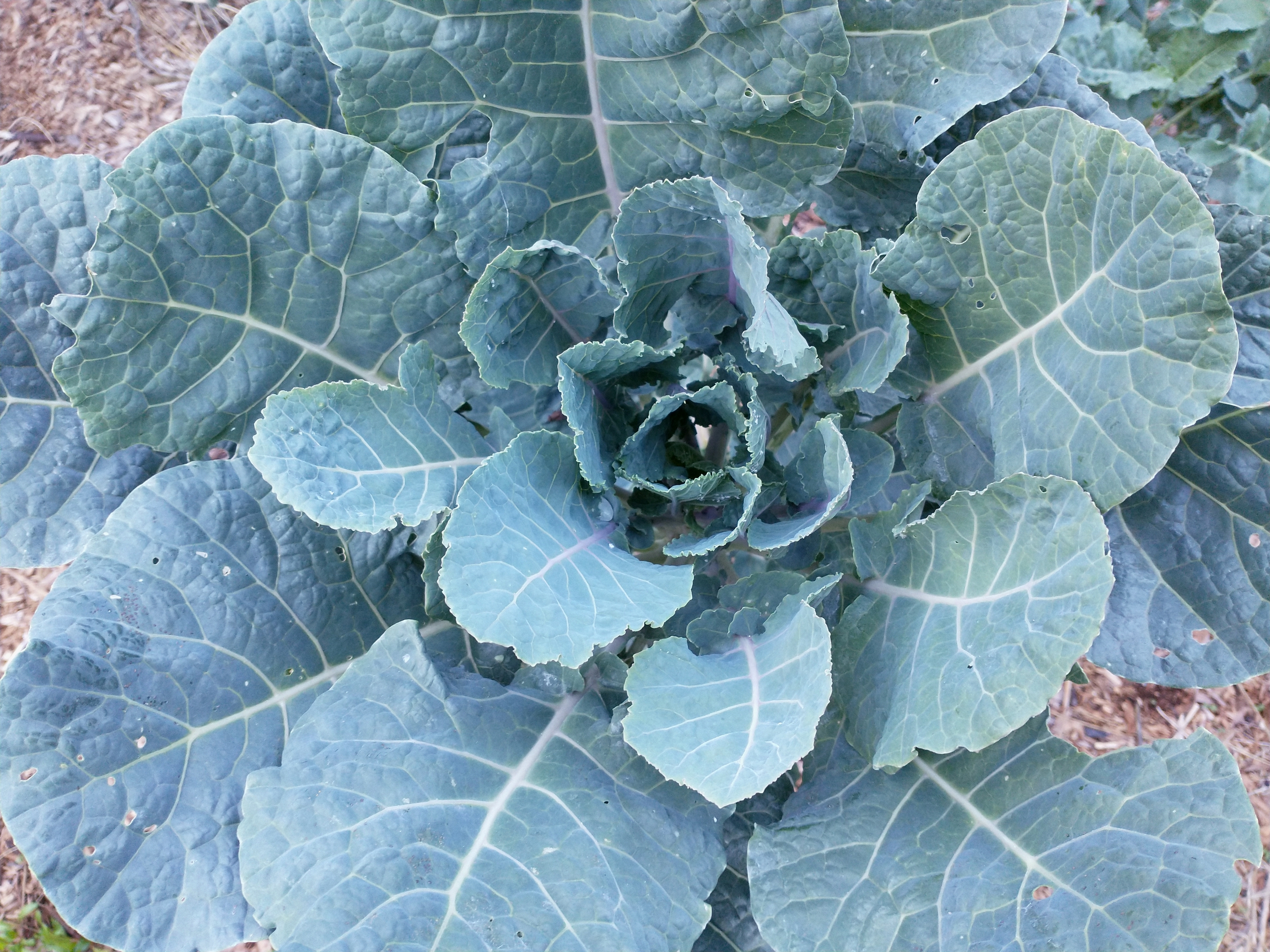
Homesteader’s Kaleidoscopic Perennial Kale Grex
This perennial kale grex is another popular variety in our catalog for its diversity, resilience, adaptability and beauty. Our good friend Chris Homanics bred this variety for perenniality first but also maximum diversity and beauty. Along the way he made sure to put his grex through a lot of trials to make sure it was cold hardy and drought hardy.
Now Homesteader’s Kaleidoscopic Perennial Kale Grex is our family’s favorite kale for practical and sentimental reasons. We weren’t surprised to learn that it has become many other gardeners’ favorite kale in recent years too.
Homesteader’s Kaleidoscopic Perennial Kale Grex is a true grex with many original hybridizations and is maintained with a wide gradient of diverse traits. This perennial kale grex has quickly proven itself quite adaptable and quickly adaptable to various conditions and climates across the entire North American continent. Truly, while still relatively new to the scene, Homesteader’s Kaleidoscopic Perennial Kale grex is bound to become an heirloom in the future based on its surge of popularity with gardeners who grow it.
Learn more about Homesteader’s Kaleidoscopic Perennial Kale Grex
Columbine Grex
Columbine is a favorite flower at our home for her unique delicate whimsical beauty, cold tolerance and early blooms, drought hardiness, love of shade, deer resistance and perenniality. Ann has spent 6 seasons collecting seeds from various varieties of columbine.
As the initial columbine plants have become established and have proven themselves in our challenging garden conditions, Ann decided to continue growing their offspring each season. Now those first plants are grandparents and becoming great grandparents. Over three generations later and this unique population of columbine flowers is well into grex-hood.
Learn more about Columbine Grex

Festive Fabio Fava Bean Grex
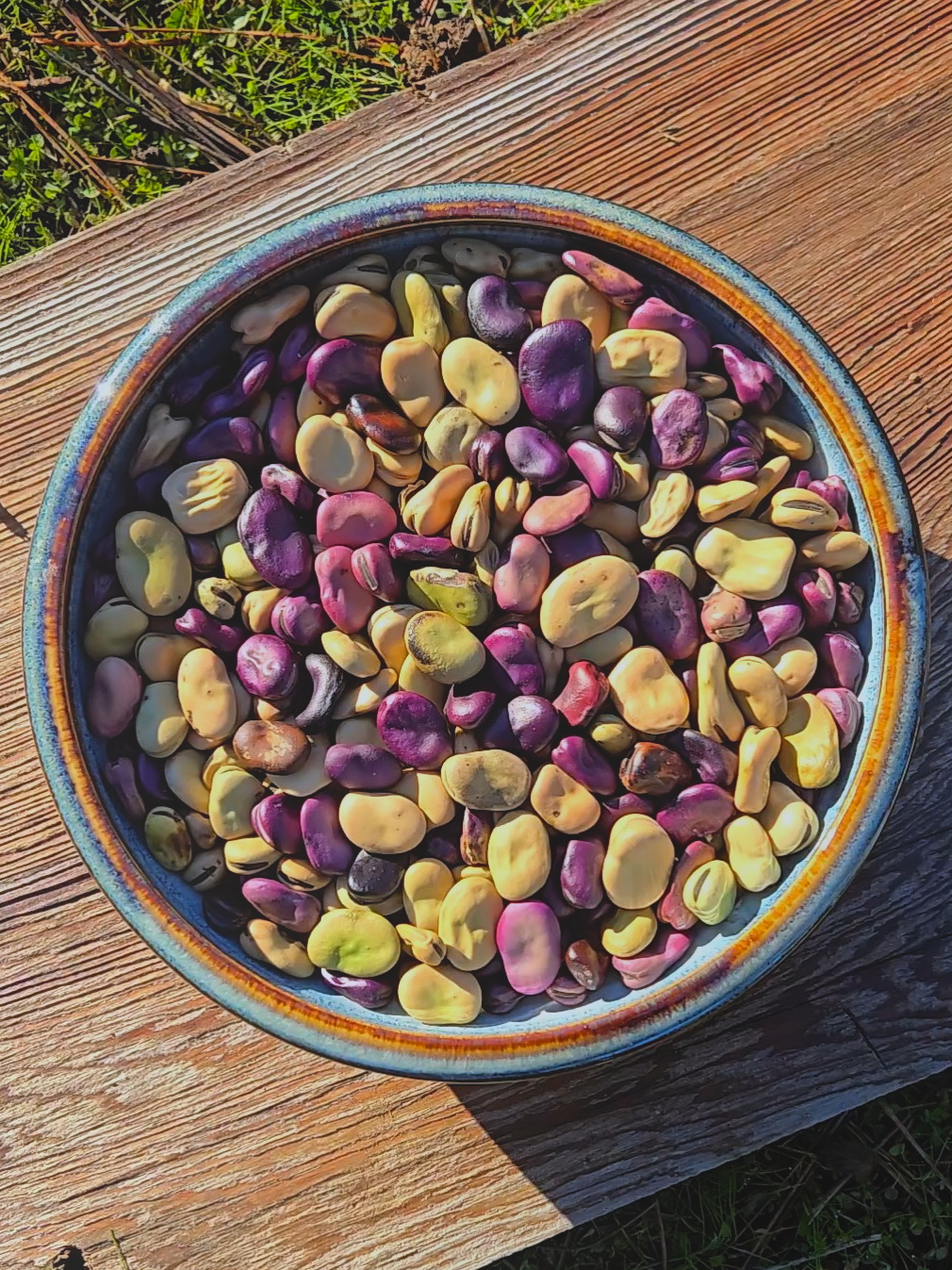
I really enjoy growing fava beans for a number of reasons including their cold hardiness and ease of growing and tending compared to most other beans which must be grown in the summer. But my favorite reason to grow fava beans is for their beauty and diversity.
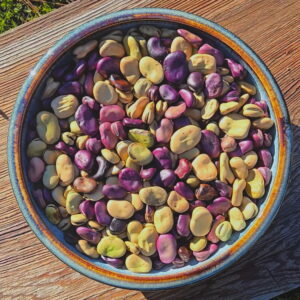
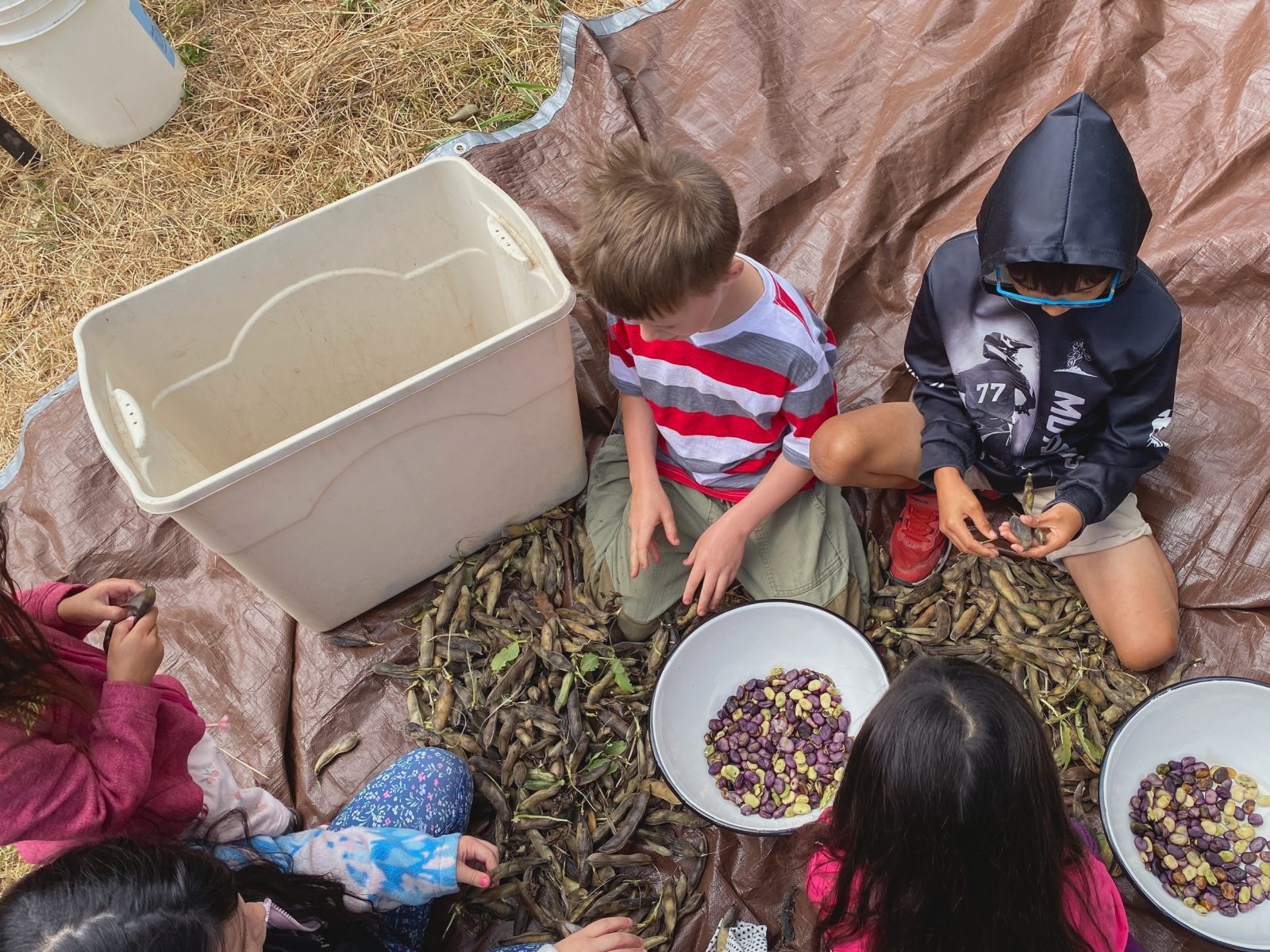
Fava beans is my first experience growing a grex. Not only did I first start off growing Joseph Lofthouse’s fava bean landrace, but I added more varieties of fava beans to the mix to increase not only genetic diversity, but also aesthetic diversity of the beans themselves. Over the years this grex has become so beautiful and distinct that I decided to give it a name and start sharing it with the world.
Learn more about Festive Fabio Fava Bean Grex
Rudbeckia Grex
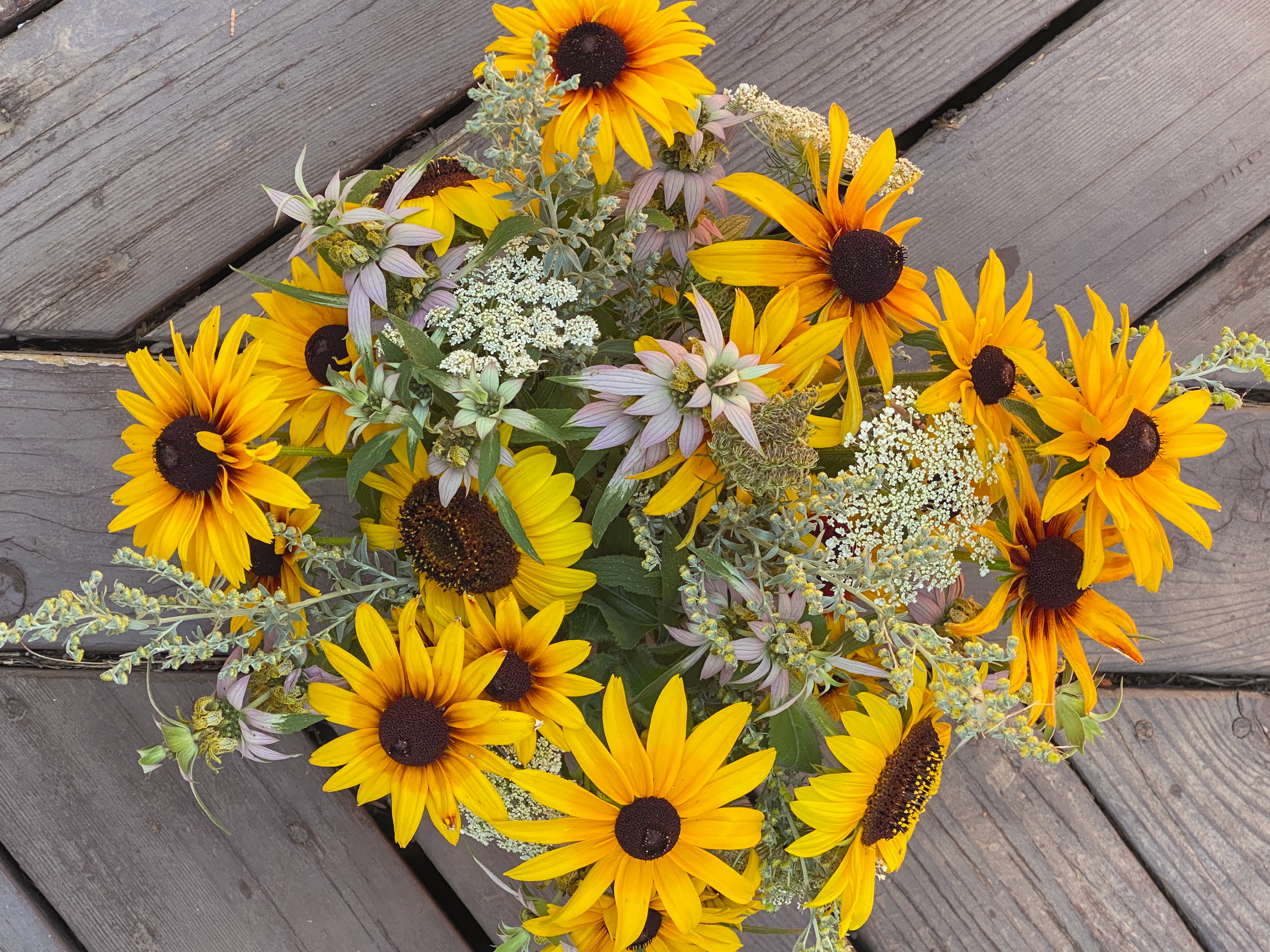
I’ve enjoyed seeing Ann’s rudbeckia grex take shape over the years as she combined a diverse range of rudbeckia varieties together and allowed them to cross pollinate. In true open pollination fashion the bees readily hybridize the sunflower family beauties.
Ann allows rudbeckia to volunteer readily and also encourages seedlings from her favorite plants. Several generations into the grex and the result are a range of colors and patterns. Some flowers are singles while others are doubles. Because they are perennials Ann allows multiple generations to grow side by side. The result is a spectrum of rudbeckia flowers from flowers that look like the original varieties to hybrids of hybrids that have become their own flavors. This grex is truly unique!
Learn more about Rudbeckia Grex

Valerian Grex
Valerian is a favorite herb for sleep aid in our family. We also love growing valerian for late winter “lettuce” whose leaves are going full strength in the cold early spring before any of our lettuce is even close to being harvestable. But I especially enjoy the beauty of valerian’s flowers that are individually subtle but as a group are impressive and inviting.
I decided to combine a handful of valerian varieties in our garden and allow them to cross pollinate freely. We are several generations into this grex and I enjoy seeing subtle diversity in leaf forms and growth habit. Leaves are light green to green-purple. Flowers range from white to light pink and some plants flower in their first year while others take 2 or 3 years to begin flowering.
Learn more about Valerian Grex

Rainbow Swiss Chard Grex
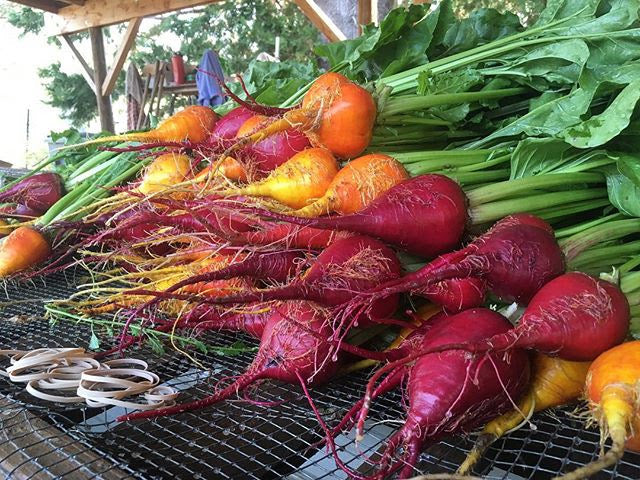
While most swiss chard varieties come in a single color, rainbow swiss chard comes in a full spectrum of colors including white, green, yellow, orange, pink and red. The leaf stems and flower stalk are especially brilliant with color and the leaves also vary in color from light green to dark red.
We grow from our inter-crossing rainbow chard population each season. Since the plants are allowed to cross with each other there are always different shades and hues being expressed.
Learn more about Rainbow Swiss Chard Grex

We have more grexes and mixes! Check them out here…
Our Future is Grex
Our family’s future is looking very grexy.
We caught the grex bug and have recently started a fair number of veggie, flower and even some herb grexes. We are growing experimental grexes for our own enjoyment and personal education around breeding and seed saving. We are also starting our own grexes to embrace the genetic diversity and adaptability that they offer, because locally adaptated seeds are so important.
Some of our grexes-in-progress may even make their way into our seed catalog in the coming seasons if we feel they are valuable, unique or special enough to share forward. If that interests you, be sure to get on our mailing list to hear about new additions to our catalog in coming seasons!
My Top 5 Reasons to Grow Grexes
There are a number of good reasons to grow grexes. Some of them should already be apparent to you by now if you’ve read this far.
Here are my top 5 reasons to grow grexes in any garden:
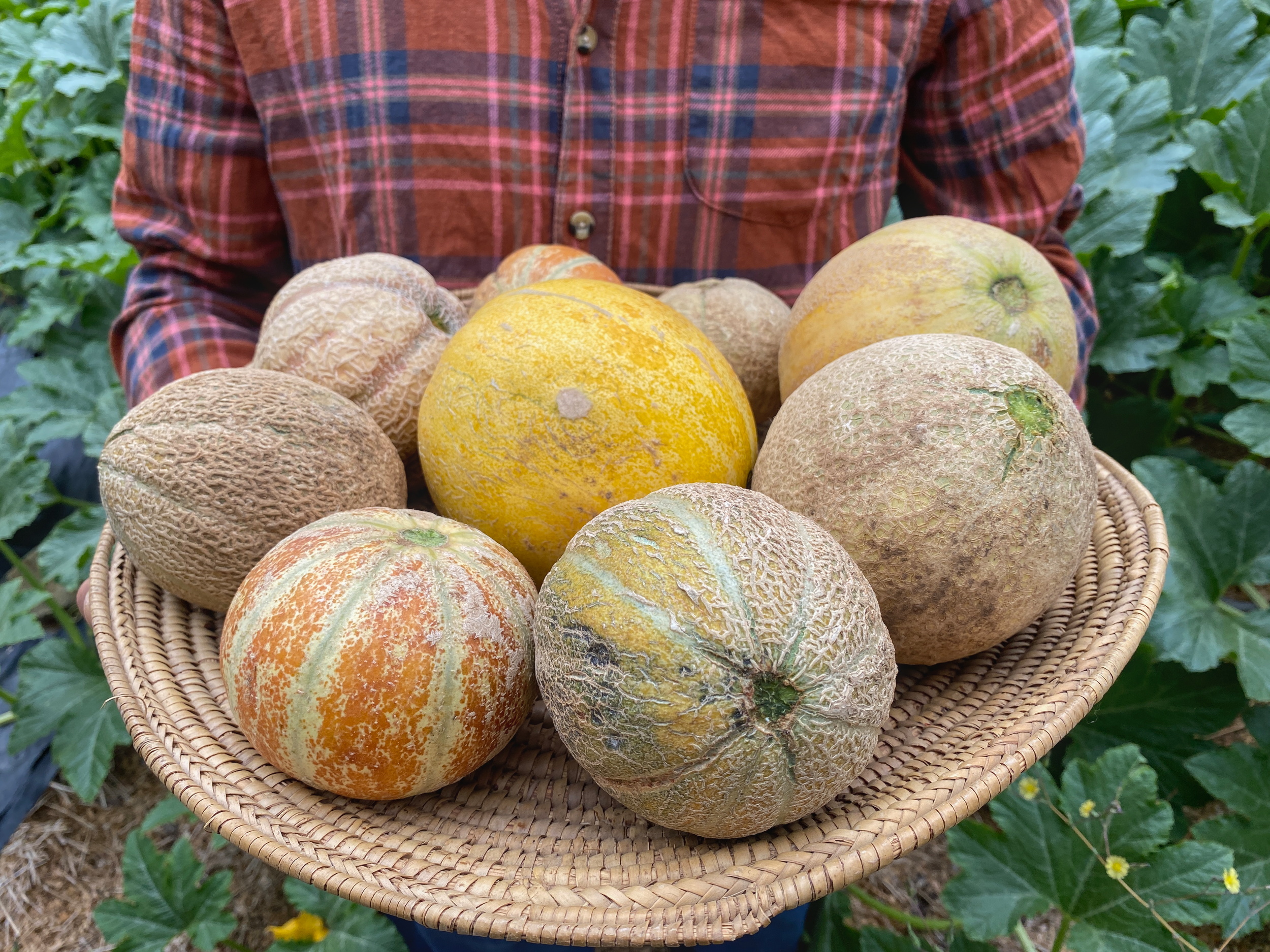
- Adaptability. Grexes have more genetic diversity than the average garden variety. As a result they have more genetic capacity to adapt to various conditions. If you save seeds from the best plants in your grex, your plants will likely adapt to your garden conditions more quickly than varieties that grow true-to-type from seed.
- Diversity. Genetic diversity represented in grexes results in all kinds of diversity from visual, textural, and flavorful diversity to diverse growth habits and survival capabilities.
- Beauty. There is beauty in each individual plant and there is beauty in a group of plants. If you find diversity and different colors and shapes beautiful then you will enjoy growing grexes for diverse beauty.
- Value. Similar to mixes, grexes can offer more value with the purchase of a single seed packet that will result in a gradient of plants, rather than having to purchase multiple different varieties to enjoy more diversity.
- Discovery. Diversity is fun and exciting. Since grexes are made up from hybrids of hybrids, you will always be meeting a unique plant that no one else has met before. While some characteristics may be similar within the range offered by the grex, the plants you grow will be distinct. Growing grex seeds is an adventure!
A Brief History of the Grex
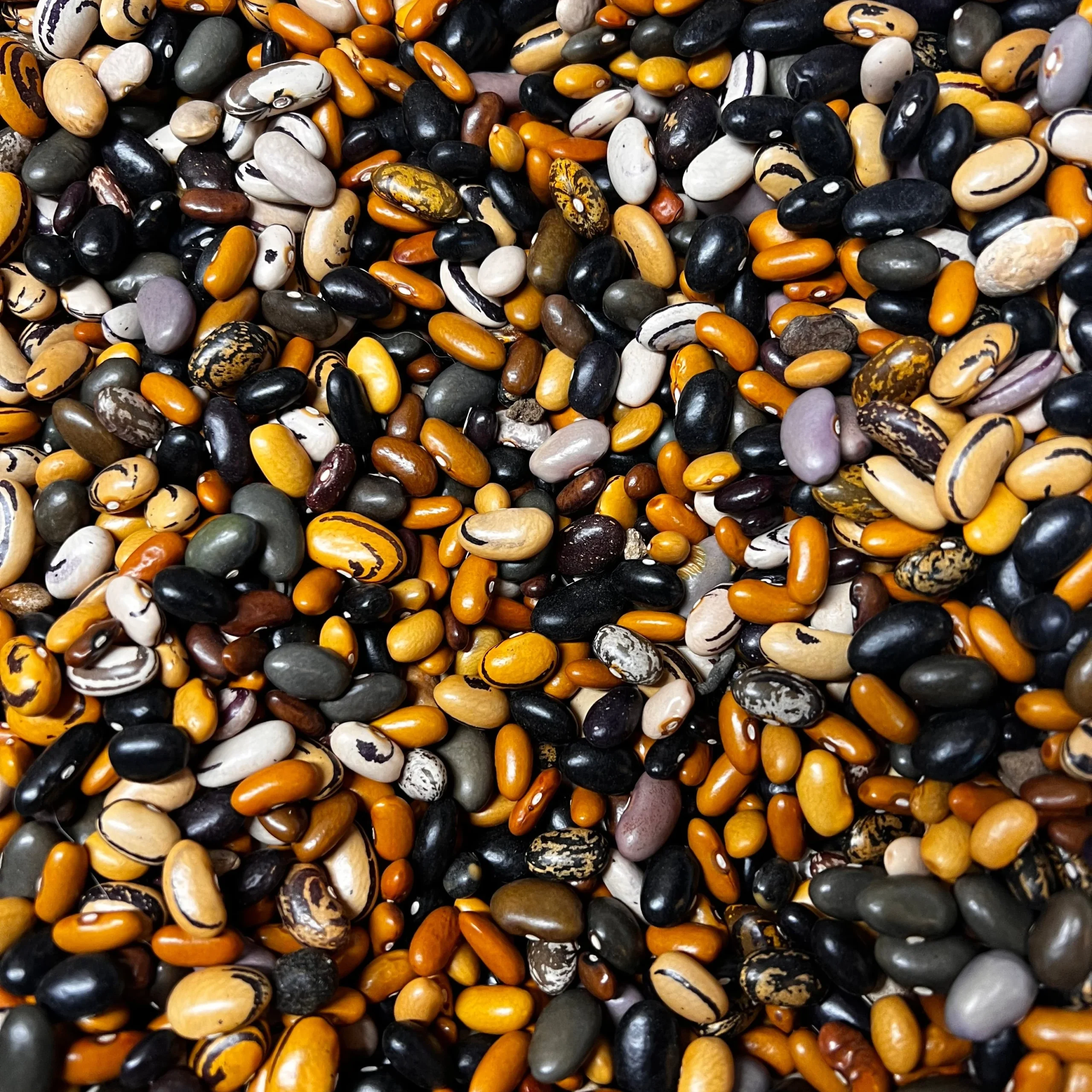
Going way back, the word grex has Latin roots and originally referred to a flock or herd of animals with common ancestry.
More recently in the 1940s-1950’s, orchid breeders started using “grex” to refer to orchid hybrids. It became an accepted botanical term and was used to refer to shared offspring of a hybridization between two orchid varieties.
Eventually “grex” became used by professional breeders, botanists and taxonomists, especially when tracking lineage from hybrids was important.
First Modern Commercially Available Grexes
More recently, the word grex has taken on popularity in amateur breeding, seed saving, and seed catalogs. Some of the first examples of modern grexes to come onto the scene in seed catalogs in the 1980’s-1990’s include:
Three Root Grex Beet: Bred by Alan Kapuler of Peace Seeds in the 1980’s and derived from hybridizing three distinct beet varieties: Crosby Egyptian, Detroit Dark Red and Lutz Saladleaf.
Double Red Sweet Corn Grex: Bred by Frank Morton of Wild Garden Seed in the 1980’s and derived from crossing red sweet corn varieties.
Rainbow Chard: Bred by Alan Kapuler of Peace Seeds in the early 1980’s by combining and hybridizing various swiss chard varieties with a range of colors including red, golden, pink, white and orange and allowed them to cross pollinate and hybridize in an open pollinated fashion.
Grex Popularity Is On the Rise
These days in the 2020’s grexes are on the rise. There is a growing popularity of grexes with younger seed growers, amateur breeders and seed savers. For all the reasons listed earlier, grexes are fun and exciting.
While there are not a lot of grexes to be found in large corporate seed catalogs yet, grexes are on the rise in smaller seed catalogs, especially niche and specialty seed catalogs and offerings from younger farmers who are faster to shift or adopt new trends.
Grexes are exciting and fun. Gardeners are starting to catch on to the wisdom and joy of growing grexes. Gardeners have long enjoyed trying new varieties of veggies and flowers. Now with the rise of modern grexes, gardeners have even more choice. Sometimes more diversity can be found in a single packet than might be experienced by growing numerous distinct varieties.
I don’t see this trend slowing down anytime soon. Grexes are fun, new, exciting and empowering.
Seeds For Our Hearts
Like the original Latin word grex meant a flock of animals, so do we modern humans flock. We flock in families and we flock in social tribes.
I see value in belonging to a flock, or a community, even though I am a black sheep. I see value of genetic diversity in our collective culture. I appreciate diversity in our culture, even if I don’t understand or agree with it all. As I become more self confident in my own views and place in this world, I become more accepting of diverse thought and beliefs, rather than fearing or feeling the need to subjugate them because they don’t align with mine.
In our modern culture we are products of several generations that have valued the nuclear family thus seperating families from other families, resulting in loss of the village. Our great nation of the United States of America was essentially founded not only on independence, but also on racism, which resulted in separating diverse groups of people from each other. We also ended up separated ourselves from nature and from the land.
They tried to separate me from you.
They tried to separate my heart from the rest of me.
But who are “we” and who are “they”? The answer to those questions may not be easily found.
These are some of the reasons why our family chooses a modern homesteading lifestyle today. Rather than looking for a “they” to point our fingers at for the world’s problems and challenges, we are learning to embody the culture we want to live in. We are trying to close some of the gaps that we inherited.
We choose to live with meaning instead of without in separate boxes. We choose to embrace togetherness. We crave oneness with the land, with our community, with the world around us. We choose to embrace and cultivate diversity within our own selves and within our relationships.
We choose heart connections.
It is interesting that in this time of so much grief and division there is also so much great joy in coming together, healing and dreaming. In Homesteading is Zone Zero for Social Change I referenced the old idea that the apocalypse is simultaneously destruction and death while it is also the birthing of something new.
It turns out our culture also separated death from birth, so we see death as the end of something finite. But it is also the beginning of something new—a new life, a new vantage point, a new way of being, or a new world perhaps.
I look at some of the youth of today and find great joy and hope because they are making such beautiful, meaningful change sourced from love and generosity, while at the same time destruction and hatred are simultaneously playing out. I identify with both the love and the hate, and in that identification, in that bringing together, I find some choice is revealed.
To me, the rising popularity of grexes in seed catalogs, especially those that offer seeds from young farmers and young seed breeders, represent our collective desire for positive change. Grexes represent our culture learning how to accept and appreciate diversity in our modern context. Grexes represent togetherness, as opposed to separateness.
Grexes also represent personal empowerment, both in and outside of the garden, because we can embrace wholeness. We can embrace inner and outer diversity instead of pushing away differences.
Grexes have a special place in my heart’s garden because they are teaching me how I can more fully appreciate my own inner beauty and diversity. I can value my own distinct and diverse traits for newfound value and strength rather than discarding them as different, unwanted or weak. This is the garden I want to cultivate and tend.
I wish you many blessings of beauty, joy, wisdom and connection in your garden.
Seed Saving for Abundance
Want to learn how to harvest, clean & save your homegrown seeds? Become empowered to grow your own seeds for planting next season, stocking your pantry, sharing with your community, or selling to gardeners.
See our course Seed Saving for Abundance for more details!
Recommended Reading
This article is one of a series on the topic of seeds and diversity. You may also enjoy reading these other related topics:
- Seeds of Diversity: 5 Reasons to Embrace Genetic Diversity in our Gardens
- Heirloom Seeds, What Are They Really?
- Hybrid Seeds: The Good, Bad and Ugly
- Open Pollinated Seeds: Out in the Open
- Locally Adapted Seeds: Apt to Thrive
- Landrace Gardening: Becoming Seeds of Place
Free Seed Saving Crash Course
Up your seed saving game in our free video: Seed Saving Made Simple We designed this presentation to help you have confidence knowing how to save seeds from your garden.
Free Seed Resources
We’ve put together a collection of stories, education and inspiration around gardening, living and working with seeds. They are all free and openly available for you to read and explore. Enjoy!
4 responses to “Grex: Seeds for Diversity and Change”

Hi Noel,
thanks for sharing your thoughts with the world – and me! I like that you try digging deeper…I started hybridization some years ago just having fun and to see what happens. I liked the diverity very much I got. I grow fruit trees and berry bushes from seed; gooseberries are the best because of their different colors and hairing of the berries. I got amazing results. I got every “variety” ever existed (and be described in catalogues) from one single shrub!
For me the diversity – I call it individual diversity or diversity of individuals – have one more reason to grow: Surviving of life depends on individual diversity, so “Nature” works on diversity, “invented” sexual reproduction, among other things, to mix up things, to get more and more diversity of different individuals…
So we should maintain as much diversity of our crops as possible (and useful) just for safety reasons…
In political sense: Humanity consists of individuals; the individual, individuality, is the most important, for surviving, for adaptation (some individuals survive), creating new ideas and lifestyles. Human rights are rights to protect the individual.
As conscious individuals, we can recognize that we are social beings who must cooperate with other individuals to build a world of (more) freedom (from drudgery and suffering)…
I will keep on reading your thoughts!
Jürgen/Juergen
Jürgen, thank you for your thoughtful reply. The hybrid berry projects you mention sounds really fun and worthwhile. Gooseberry diversity… wow what you described sounds incredible! I am assuming you did manual pollination, but if it was open pollinated, even more wow! I just planted some gooseberries this season and you’re getting me excited to grow their seeds when they produce. I too love growing perennials, including trees, from seed.
I love hearing your thoughts about diversity of individuals. This is such a great way to explain the concept! It’s a perfect parallel between human society and plants… its a natural pattern for healthy ecosystems, so why wouldn’t we want to repeat that pattern in our culture? I may borrow that description of individuals to explain landrace in the future, it’s too good not too!
Have a beautiful day :)
Calling it ‘grex’ sounds like a marketing term for smaller inexperienced seed farmers to sell seed packets without putting in the time and effort, or developing the knowledge to breed new stabilized varieties TBH. However, the value here for me comes from using rare varieties with traits that have disappeared from commercial seed; desirable traits for home gardeners that have disappeared due to industrialization of agriculture. That’s why I selected the potato onion grex seeds. Great traits for home growers, but almost disappeared due to the mechanization of onion harvesting. You can’t get those traits from ‘grexing’ Walmart seeds.
Hey Micah, thanks for sharing your feedback! It sounds like you might have some experience with breeding? I agree with what you’re saying, and I also see a lot of nuance in the subject. I’m sure I qualify in the smaller, less experienced seed grower category you referenced and I’ll be the first to admit what I don’t know. I’ve been intrigued by the idea of grexes for a while but my understanding of what they are and what they mean to me has shifted over time. It wasn’t easy for me to initially understand the difference between grex, landrace and hybrid swarm, for example. That is a big part of why I am writing this series of blog posts, to help other people understand these terms around defining and categorizing seeds that have so much nuance and cultural weight and emotion behind them.
I appreciate that you value uplifting and sharing stories around breeders who put in a lot of years of work to develop valuable varieties. Their work is so valuable! At the same time I appreciate any stories or independently grown seeds that can get more gardeners excited to grow their own food and save their seeds, because we need more local food and seed savers at every scale in every region for our health and resilience. Because words are never perfect, to me the words we use is less important than the transparency around what a seed grower is offering.
I’m excited for your potato onions. Have fun and enjoy the unique variety! We are still enjoying cooking with our onions from 2024 :)









Share Your Thoughts