Table of Contents
Open Pollinated Seeds: Out in the Open
Open pollinated seeds are scattered through seed catalogs. The phrase “Open pollinated” is intended to help inform gardeners what kind of seeds they are getting and how they were grown. There’s only so much information a two word label can offer about the farmers who grew the seeds, yet there is a lot of cultural information packed into Open Pollinated seeds or (OP) for short.
Gardeners often care about quality and consistency with plants grown from purchased seeds. A growing number of gardeners are concerned with supporting farmers who make decisions that align with their ethics. How does open pollinated seed come into play here?
Join me friend and I’ll share how the term open pollinated has come to be in a changing world. You’ll walk or roll away knowing how to make more informed decisions about the seeds you bring into your garden. In the end I’ll invite us to sow seeds together for a beautiful future.
Table of Contents
What Are Open Pollinated Seeds?
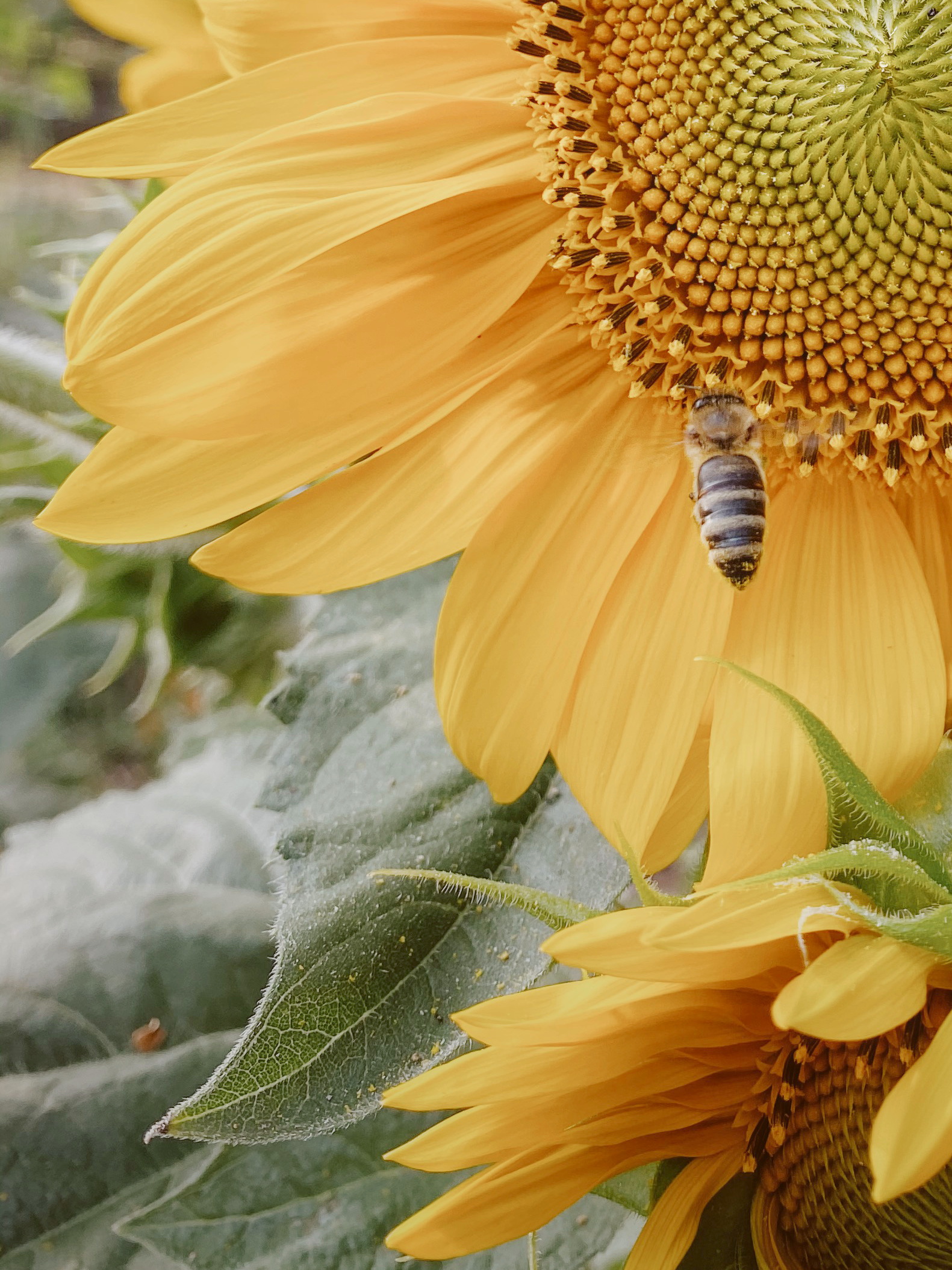
Plants are open pollinated when their flowers are allowed to exchange pollen without human intervention. Open pollinated seeds are a result of natural exchange of pollen between flowers thanks to bees, insects, wind and rain.
This is how flowers of wild plants are pollinated in nature—without human intervention. Likewise, most backyard seed savers will step out of the way and allow the beautiful flowers to do their thing before saving seeds from their favorite plants. So we can assume that most seed savers are saving open pollinated seeds.
However, when we use the term open pollinated we are usually referring to seed sold on the market to home gardeners and small farmers.
OK, since flowers pollinate naturally already, why do we need to label some seeds open pollinated?
Open Pollinated Seeds vs Hybrid Seeds
Here is another definition of open pollinated seeds that is easy to remember and perhaps more relevant to most gardeners:
Open pollinated seeds are not hybrid seeds.
Open pollinated is a term that came into use sometime around the 1930’s to 1950’s as a direct result of the rise and dominant use of hybrid seeds in agriculture. As we covered in Hybrid Seeds: The Good, Bad and Ugly, seeds saved from hybrids will not grow true to type.
Seeds that grow true to type offer predictability with regards to plant size, shape, color, taste, texture, etc. In other words, their traits are stable or uniform. In contrast, seeds saved from hybrid plants do not grow true to type. Hybrid plants’ offspring are unstable with regards to characteristics of plants and fruits. Their traits are varying or inconsistent.
At the time of the early-mid 20th century when industrial hybrid seed was coming on the scene in a big way and taking over, it really mixed things up in a lot of ways, including seed saving.
It is impossible to save seeds from hybrids and still enjoy uniform, consistent traits when those seeds are planted the next year.
Prior to that time, practically all seed available was open pollinated and growing practices, one could argue, were more natural. The term open pollinated, or open pollinated seed, came about with the growing need to distinguish traditionally grown seed from a sudden inflow of hybrid seeds to the market.
Hybrid seeds are not open pollinated because pollination is intervened by human hands, machinery, chemicals or genetic engineering. Pollination of hybrids is closed or restricted, not open.

Open Pollinated Seeds vs Heirloom Seeds
Heirloom seeds is a more recent term, coming out of the 1970-1980’s with growing concern over the seed and food industries becoming larger and more consolidated, with the rise of GMO seed and ecological damage from industrial farming.
Heirloom seeds are older lines of seeds, often passed down for many generations, having stood the test of time for half a century or longer. Unlike hybrids, heirloom seeds do grow true to type year after year.
So heirloom seeds and open pollinated seeds have this quality in common. Neither are hybrids. All heirloom seeds are grown in an open pollinated manner, or without human intervention with regard to pollination. I’m sure there are some exceptions to this statement because nothing is absolute, but we can generalize here. (I’m thinking of the greenhouse tomato growers who twang their twines to help pollinate tomato flowers in the absence of wind.)
Some seed companies market heirloom seeds synonymous with open pollinated seeds, since all heirlooms are open pollinated. However this leads to confusion for consumers and gardeners, understandably because not all open pollinated varieties are heirlooms.
For example, there are always new distinct varieties of seeds coming on the market every year. New varieties are often developed by professional and amateur breeders alike. Seed companies love to offer new varieties with distinct traits because consumers love to grow and try new plants, vegetables and flowers. Sometimes it’s kinda like fashion trends.
By definition, new varieties are not heirlooms because they have not stood the test of time for generations. However new varieties can be grown open pollinated. Let’s recap:
Heirloom seeds are open pollinated, but not all open pollinated seeds are heirlooms. Heirloom seeds and open pollinated seeds are not hybrids.
Open Pollinated is Not An Open Door
Here is an interesting nuance with open pollinated seeds. It is not as open as I originally thought it was. Seed farmers practice isolation which means that they keep two varieties of similar crops separate from each other to avoid cross pollination.
If two varieties of broccoli, for example, are grown near each other and allowed to flower and set seed, their seed would have some amount of cross pollination, resulting in some hybridization. Since most seed consumers expect uniformity and stable traits, seed growers carefully practice isolation in their fields, more or less aiming for pure varieties.
Isolation sounds a little lonely, and it is at least from a genetic perspective, if not socially (yes, plants can talk to each other!). My original assumption was that isolation was less important when plants are open pollinated (e.g. open borders), but in practice this is not true.
Generally open pollinated seeds grow on plants that are open to pollen from other plants in the same variety, but not open to pollen from other plants in different varieties.

Open Pollinated Seeds and Genetic Diversity
There are a lot of good reasons to keep plant lines separate with regards to pollination in order to maintain distinct varieties. Isolation is not exactly new and was practiced by traditional cultures. For example some native American cultures grow several distinct varieties of corn at the same time, and have done so traditionally, so that they can have different corn for different culinary and cultural purposes. They isolate their corn varieties to keep them distinct.
Isolation helps us keep different heirlooms and other varieties distinct and preserved, for example. When varieties have significant cultural value it makes sense to maintain them in this way—open pollinated, but not near other open pollinated varieties if they may easily cross.
As discussed in Heirloom Seeds, What Are They Really?, keeping different varieties isolated from each other is essentially blocking the inflow of new genes into a variety. This causes the risk of genetic bottlenecks which can cause inbreeding depression when a variety’s gene pool becomes too limited. Responsible professional seed growers and seed savers take care to reduce the risk of inbreeding depression in order to maintain a relatively healthy level of genetic diversity within the variety.
Open Pollinated is Not An Exclusive Practice
As we covered earlier, open pollinated seeds are not hybrid seeds. However, technically hybrids’ subsequent generations can be open pollinated too. In other words we can save seeds from hybrids and then grow those seeds out in an open pollinated way.
We won’t get uniformity as a result, but some adventurous seed savers do just that and enjoy diversity of traits as a result. May gardeners are skeptical of saving seeds from a hybrid, but if we look at this from another angle the story changes.
I grow all my food organically and make compost from my food scraps which is spread around the garden each season. One day I notice a volunteer squash plant that is growing really, really well. Eventually the first squash ripens and it is delicious! But I don’t recognize the variety as one I grew last year.
Aha! That volunteer must have come from the seeds in the squash I bought from the store last winter! What I didn’t realize immediately though, is that the squash, while organic, was a hybrid variety.
I decide to save seeds because it tastes good and grows really well in my garden. When I saved seeds I didn’t interfere with the pollination and it may have even crossed with yet another squash plant because I wasn’t isolating this squash vine from my other squash vines. Hence, my seeds were open pollinated because I did not interfere with the pollination and let it happen naturally, and still they are hybrid and may continue to hybridize.
This is not usually the intention when we are using the term open pollinated. As described earlier, open pollinated usually means “not hybrid.” I almost didn’t share this story because I don’t want to confuse you or dilute the term open pollinated. Still, I feel it is important to share this story to help show the various ways open pollinated can be interpreted, if not practiced.
In fact these nuances confused me a lot when I started learning what open pollinated meant. So I hope this story helps clear up the nuances for you too!

Gardening in A Complicated World
You are, I take it, a modern gardener just like me. I sympathize with you because I know what you may be facing. Not only have many of our families been disconnected from gardening and farming for at least a few generations, but now we have to learn what seeds to buy and grow. It can be challenging for the mind and heart at times.
What’s good? What’s bad? What should I do?
In practice open pollinated usually means “Not industrial hybrid seed”. But in the story I just shared above we can see that open pollinated is not a perfect label by any means because it is general enough that it can lead to different interpretations.
Before industrial hybrid seeds were the next big thing for captains of agricultural industries, and eventually the monolithic chemical companies who now own them, (the self proclaimed saviors of global hunger) just about everything was open pollinated.
The term open pollinated is not certified or governed or held to any standard. It is up to each seed company and seed farmer to choose how to define and practice open pollination. Just as hybrid seeds are not good or bad (Hybrid Seeds: The Good, Bad and Ugly), open pollination is neither good nor bad.
More of us moderns are waking up to massive ecological and cultural problems caused by industrial farming, including industrial seed farming, whether or not it is open pollinated. More and more of us are becoming compelled to support ethical seed farmers who align with our personal values.
Sometimes there are veils over seeds. Effective marketing can make it hard to see who is ethical and who is not—Marketing makes products and companies look really, really good from an ethical standpoint. How can we know the truth? It can take a lot of research and digging to really know.
I suggest saving yourself the grief and trouble and support bio-regional and small scale seed farmers. Small scale and bio-regional seed farmers are usually very transparent, easy to reach and imbue their work with blood, sweat, tears and lots of love. Not only do they deserve support for their hard work to do what’s right in the face of highly competitive, commoditizing industrial seed farming, but we get to enjoy noticeably higher quality seeds, more community resilience and a stronger local economy.
Talk to a seed farmer and they’ll gladly share intimate details about their growing practices and their deep relationships with seeds, plants, soil and life. They’ll tell you why their heart calls them to this work and why they feel it is so important for our world to have seed stewards. The seed resellers? They cannot.

Let’s Pollinate Together
Open pollination is how nature works and how traditional cultures have practiced seed saving for millennia. While I appreciate my domestic comforts, when I say I want a more natural lifestyle, what I really mean deep down is that I want to learn from nature how I can be a more whole human.
Healing literally means to become whole again. Since our culture is so disconnected from nature, including our own bodies, emotions and spirits for goodness sakes, we are all in the process of healing.
I grew up in a monoculture but I am learning to appreciate cultural diversity and diversity of thoughts and beliefs. I am learning to be more open, like an open pollinated flower.
Part of my healing practice is learning to loosen the grip inside me, that holds tight onto comfortable beliefs and worldviews, so that I can be more open to receive nourishment from the life around me, including human kin such as yourself, dear reader, as well as the more than human kin that live all around and inside of me.
It’s not easy and I won’t pretend that I am already completely open. I am in the process of opening my heart and beliefs more to this complicated world that can sometimes be so easy to hate or fear. I am learning to appreciate the nuances, the dance with life, the beautiful rainbows that I hadn’t seen before when I was looking through the black and white lenses that were handed to me.
I hope when I look at you next time I can keep my heart open and see your heart with less judgement, so that I can receive your heart pollen, in a metaphorical sense. So that we can more readily and openly cross pollinate within our culture.
We are creating seeds together every day, whether we are conscious of it or not. Whether we are intentional or not. Let’s create seeds intentionally together.
We are the living ancestors of tomorrow. Every thought I have, every action I take has influence on the culture around me. How influential those seeds become in the greater context is not for me to know or decide. Either way I am claiming my responsibility as a child of our Earth.
I assume that I am a drop in a massive ocean. The heart inside this little drop is equally massive, as love is all that ever mattered, it turns out, whenever I take off my black and white glasses. We are all heart-drops in this Earth ocean together.
We are at once the flowers and pollinators in the countless subcultures as numerous and diverse as ourselves, creating tomorrow today with every breath, thought, action and seed we sow. Won’t you open to the bees, friends, and throw your pollen to the wind with me?
Seed Saving for Abundance
Want to learn how to harvest, clean & save your homegrown seeds? Become empowered to grow your own seeds for planting next season, stocking your pantry, sharing with your community, or selling to gardeners.
See our course Seed Saving for Abundance for more details!
Recommended Reading
This article is one of a series on the topic of seeds and diversity. You may also enjoy reading these other related topics:
- Seeds of Diversity: 5 Reasons to Embrace Genetic Diversity in our Gardens
- Heirloom Seeds, What Are They Really?
- Hybrid Seeds: The Good, Bad and Ugly
- Locally Adapted Seeds: Apt to Thrive
- Grex: Seeds for Diversity and Change
- Landrace Gardening: Becoming Seeds of Place

Free Seed Saving Crash Course
Up your seed saving game in our free video: Seed Saving Made Simple We designed this presentation to help you have confidence knowing how to save seeds from your garden.
Free Seed Resources
We’ve put together a collection of stories, education and inspiration around gardening, living and working with seeds. They are all free and openly available for you to read and explore. Enjoy!




Share Your Thoughts