Table of Contents
Landrace Gardening: Becoming Seeds of Place
Landrace seeds and landrace gardening are surging in popularity these last few years, and for good reason. Landrace gardening a traditional seed saving practice being revived by modern gardeners. Landrace gardening helps our plants become more resilient and simplifies seed saving. Landrace gardening is fun, exciting, embraces diversity and encourages stronger communities too.
Landrace gardening is a new phrase to describe an old practice, the traditional ways of stewarding seeds. We are solving cultural challenges one seed at a time in our gardens, while reviving some of the old ways of saving seeds in our modern cultural context. Landrace gardening is perfect for the modern homestead garden.
So what is a landrace and what is landrace gardening? I’m so glad you’re curious to know… alright, let’s go!
Table of Contents
What Are Landraces?
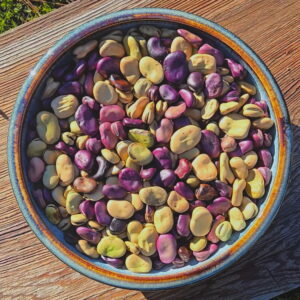
A landrace is a traditional variety of plant (or animal) that has been stewarded by humans in the same region for many generations. Over time that race, community, or extended family of plants have become adapted to the local region, climate, soil, and other local factors.
Genetic diversity helps plants adapt to their environment more readily. More diversity often means faster adaptation, so humans embracing and encouraging genetic diversity is an important component of landraces. So, what is a landrace?
A landrace is a genetically diverse population of plants, stewarded in community and adapted to the local landscape over time.
Traditional villages and communities rely on landrace plants and seeds for sustenance. Their landrace varieties have been stewarded carefully to ensure the community’s longevity in the years ahead.
Landrace varieties often contain far more diversity than we are used to seeing in modern varieties today.
Modern varieties of plants usually exhibit uniformity.
On the other hand…
Traditional landraces exhibit varying degrees of diversity.
The diversity is due in part to seed swapping. In contrast to our modern western culture, traditional cultures know the value of regular sharing between families and between villages. The gift economy applies to everything, but sharing seed is one of the most important practices to ensure mutual nourishment and resilience.
Seed swapping between families might happen with regular visits. Seed swapping can happen through gifts or tokens of appreciation. Seed swapping between villages or across neighboring regions might happen with annual inter-regional seed swap events or marriages.
The constant inflow and outflow of plant genetics both at the family scale and at the regional scale insures that local populations of staple crops would not suffer from inbreeding depression.
In contrast, our modern food system relies on a highly inbred monoculture lacking diversity.
It’s important to recognize that landraces were the only way that seeds and plants were grown and tended in traditional, pre-industrial cultures. According to Google Books, the word “landrace” was pretty much non-existent until around the 1920’s which coincides with the rise of industrial agriculture. Apparently we needed a word to describe the old, traditional way of saving seeds to differentiate it from the new industrial way.
In summary, landrace plants and seeds are stewarded by traditional cultures, are adapted to the region in which they are traditionally grown and embrace genetic diversity for a thriving culture.
What is Landrace Gardening?
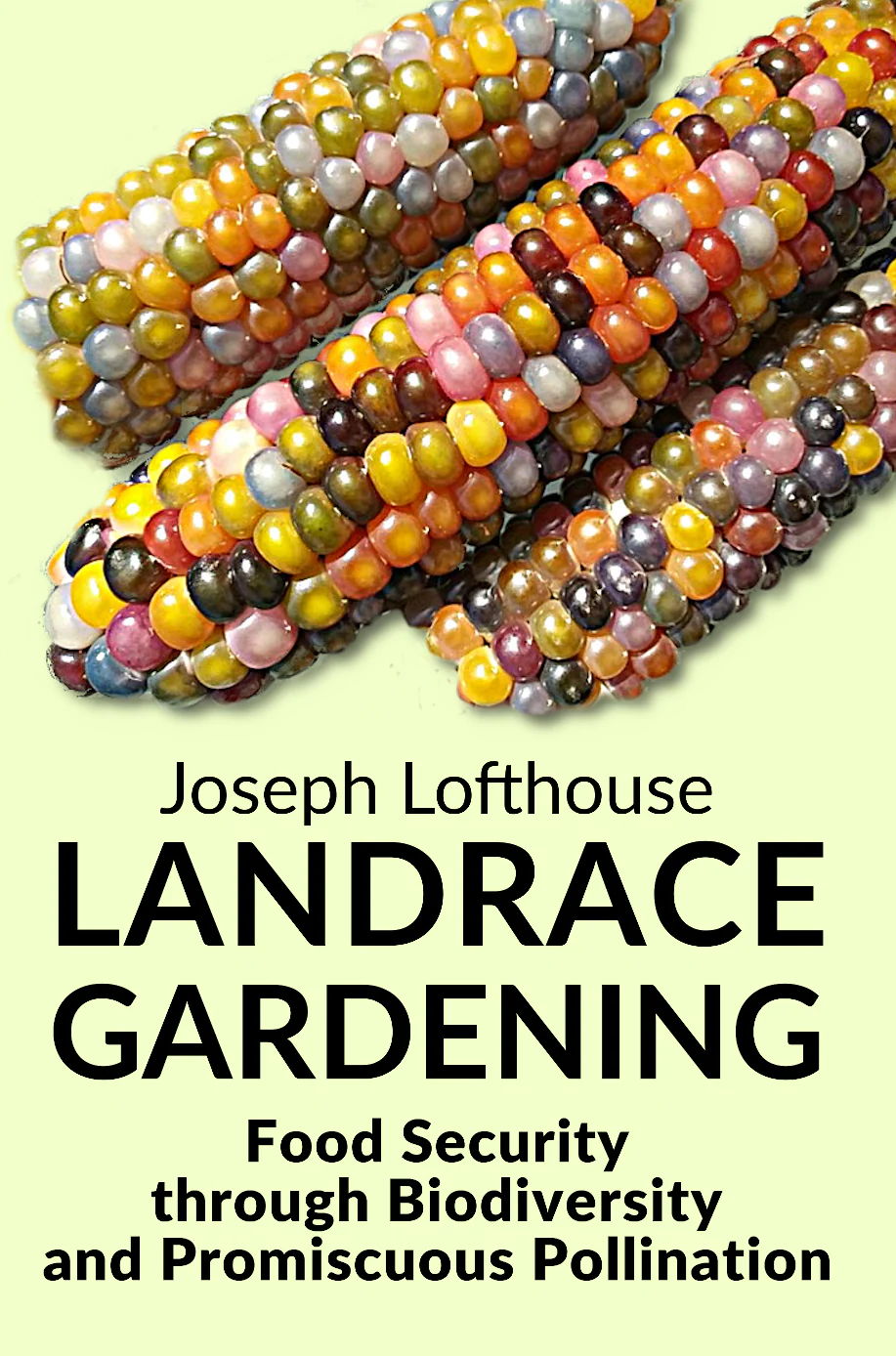
While landraces have been part of traditional human culture for millenia, landrace gardening is a relatively new term coined by seed farmer Joseph Lofthouse in his book Landrace Gardening. Through his examples, Joseph encourages gardeners to embrace the landrace style of seed saving by inviting genetic diversity and community into our cultural practices. Landrace gardening embraces traditional wisdom around seed saving.
When we are landrace gardening, we strive to create and maintain new landrace varieties in our modern cultural context, while adapting seed saving wisdom from the traditional cultures.
Recognizing that most of us moderns do not belong to an intact traditional culture, we, generally speaking, do not have access to long standing local landrace varieties. Most of us do not maintain traditional varieties. And if we do maintain an heirloom variety, we are most likely growing it outside of its original context where it had originally adapted.
A primary goal of landrace gardening is to quickly adapt plants to a garden’s local conditions through simple seed saving practices. One of the unique aspects of landrace gardening is that it encourages combining several, if not many varieties of the same species (corn or squash for example) and allowing the varieties to cross pollinate naturally or with assistance, in order to build up genetic diversity.
In contrast to open pollinated varieties, landrace varieties are promiscuously pollinated. This means that we are not only leaving the flowers open to pollinators, but we mingling varieties and allowing inter-variety pollination to happen.
Open pollinated varieties are kept separate so that pollinators cannot cross-pollinate.
On the other hand…
Promiscuously pollinated landraces mix varieties together to encourage cross pollination.
Seeds are saved from many individual plants, including plants that look different from each other. We gardeners have favorite plants, but we still want to include seeds from a range of plants to maintain a healthy level of genetic diversity.
In other words, we are saving seeds from the general population of plants to ensure genetic diversity, while we also save seeds from our favorite plants who produce most abundantly and look and taste the best.
Through this simple, but very wise seed saving approach, we are stewarding our landrace varieties to maintain genetic diversity and we are encouraging them to adapt to the local environment, which in this case is our gardens.
When we are landrace gardening we are
Landrace gardening is the traditional method of growing food. It is based on survival of the fittest. Landrace varieties are locally adapted, genetically variable, and promiscuously-pollinating.
Joseph Lofthouse, Landrace Gardening
Landrace gardening is a phrase that was introduced by farmer Joseph Lofthouse in his radical book Landrace Gardening. If you enjoy this article I highly recommend you pickup a copy of the book. I consider it required reading for new seed savers because it simplifies or eliminates all the complicated rules around seed saving. Rules are cultural constructs, not natural laws. Landrace gardening is more aligned with natural rhythms and encourages a healthier culture. I consider Joseph Lofthouse the Masanobu Fukuoka of seed saving and his book Landrace Gardening is just as revolutionary now as One Straw Revolution was in the 70’s.

Landrace Gardening is Communal
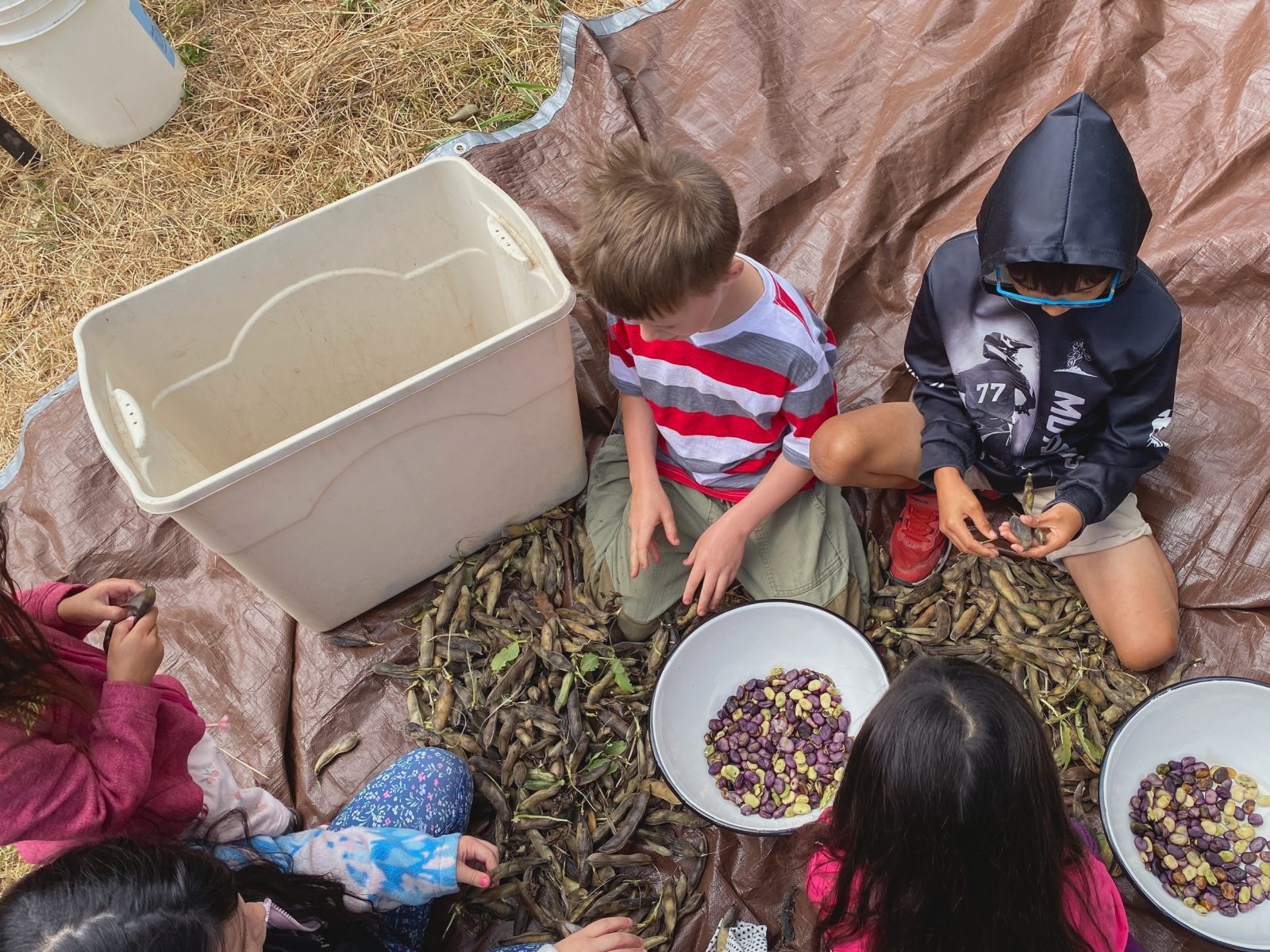
To me, landrace gardening infers community. Traditional cultures steward their landraces with exchange of genetics. In the same spirit, landrace gardening strives to include community in exchange of seeds through seed swaps, swapping with friends, seed libraries, purchasing seeds, etc. The exchange goes in both directions for mutual benefit.
In our modern context we don’t have the ubiquitous connection to all of our peers through gardening and swapping seeds that most traditional cultures, or village cultures, rely on.
So we are re-learning how to create new landraces and share them in our communities to strengthen not only our own resilience but also community resilience. In his book Landrace Gardening, Joseph Lofthouse has given us beautiful examples how he has taken this to heart in his own community.
As a farmer, Joseph Lofthouse embraces growing seeds he receives at community seed swaps, rather than steering clear of them because of the uncertainty around how they were stewarded, uncertainty about who saved them, or uncertainty whether they had crossed with another variety.
He drops that uncertainty and embraces diversity and community. He asks his customers to return squash seeds to him from the squashes that tasted the best. He gifts his seeds to friends and community.

Cultural Significance of Landrace Gardening
The landrace community has taken Joseph’s examples to heart and there is a vibrant growing movement around this new way of saving seeds. But landrace gardening goes far beyond seed saving. Landrace gardening is helping us heal cultural wounds and traumas through seed saving and shifting values.
Purity vs Interchange
Our culture has an unhealthy obsession with purity and those values spill into our relationships with seeds. Seed savers are hyper sensitive around cross pollination. I have heard gardeners say things like: “You can’t save seeds from corn that was grown next to another variety. You’ll get a mutant.” And I’ve seen a man dig up his germinated corn seeds to avoid cross pollination after hearing this comment.
Darn, he was so close to embracing diversity!
Similarly, many gardeners have heard “You can’t grow an apple from seed, it won’t come true-to-type.” Well, the latter half of that statement is true.
We have become obsessed with true-to-type when growing plants from seeds and saving seeds, and while there is a place for it in maintaining heirlooms, we are excluding a rainbow of possibilities. We have become afraid of allowing our plants to hybridize. We have become afraid of impure seed.
This is the kind of thinking that leads to racism.
Racism!? Isn’t that going a bit far?
Well, isn’t that what we’re doing when we don’t allow two races to mix or cross pollinate when we are saving seeds?
Isolation refers to the practice of isolating two varieties by a minimum isolation distance so that they won’t cross-pollinate, in order to save genetically pure seed. When the seed is unintentionally cross-pollinated, the seed is sometimes referred to as contaminated.
Yeah, why would I want seed that is contaminated!? But this label is a cultural value. In contrast, landrace gardeners consider cross-pollinated seeds golden opportunities because genetics are exchanging information. When genes are exchanged, new possibilities arise—our playground widens.
Living in fear is unhealthy and striving for purity at all costs is unhealthy, which are why I prefer to be an impure, imperfect gardener and why I embrace landrace gardening.
Yes, I still grow and maintain some heirlooms or true-to-type varieties, but it’s not the only way to save seeds, nor is it necessarily the best way to save seeds, depending on our context. Let’s just put it this way:
Were those heirloom seeds passed down in my family? Do I come from a culture that grew and valued this heirloom variety? Do I live in the place where this variety originated?
[An heirloom] may have been the perfect variety for one family or tribe, that lived a very long time ago, in a place far, far away. Because heirlooms are from a far different place and time, they often lack the genetic toolkit to deal with modern conditions.
Joseph Lofthouse, Landrace Gardening
It’s not that other culture’s heirlooms are bad or useless, but they may not serve us as well as they served their traditional seed stewards, sometimes centuries ago, in a far away region. By growing someone else’s heirloom, we may be missing out on the possibility of more locally adapted plants today.
Today’s landrace may become tomorrow’s heirloom.
Diversity and Seed Saving in Small Gardens
Conventional wisdom says: Small gardens can only grow one variety of a plant if they want to save seeds. If you want to save seeds from more than one variety in the same season, you’ll need to isolate your varieties somehow to avoid cross pollination.
Isolation is difficult if not impossible in smaller gardens. Even if we grow one variety our close neighbor may grow another. And many gardeners love diversity. So how are we to save seeds? We are left with the choice of buying our seeds every year if we save seeds in the conventional way. Or we have to go way out of our way to avoid cross pollination with isolation distance or physical pollen barriers like cloches or hoops.
Landrace gardening frees us from this limitation. We can have diversity and save seeds too, even in small gardens! I don’t know about you, but I find this incredibly freeing! I don’t want more rules… I love having less rules and more freedom.
Individualism vs Community
In our modern context we have lost the village culture where everyone relies on their collective community for everything, for survival and for well being. Because our nuclear family units, our hyper domestication, our hyper individualism, our separateness from each other and our separateness from the natural world, our collective population is suffering an unnaturally great amount of mental and physical health issues that have unfortunately become normalized in our modern culture.
Landrace gardening encourages healthy interactions between plants in our garden’s community through co-mingling and cross pollination. Likewise, landrace gardening weaves us human gardeners closer together in our local community through communal seed saving and seed swapping.
Landrace gardening encourages healthy connections between humans and plants, as well as between humans and humans. Landrace gardening helps our communities strengthen and become more resilient over time.
Overcoming Challenging Conditions with Landrace Gardening
Landrace gardening allows us to help plants adapt to our local conditions faster and more consistently than if we were working with one single, uniform, true-to-type variety. Adaptation is important on many levels, but in general our plants become healthier and stronger when they are adapted to our garden and our climate.
Every garden and every region has different conditions that are unique. If everything grows well and easy in your garden every year, then you are lucky. Most of us have at least several challenges that we face every season.
Diseases, drought, imperfect soil structure, imperfect watering, difficult pests are just a few examples of challenges we may face as gardeners. It’s also worth mentioning, we want our plants as capable of adapting to climate change as possible!
When our crops become adapted to our local conditions, they will become more resilient in regards to those challenges and will have better chance to thrive despite the challenges.
For example our family’s biggest challenges are: soil that dries out very fast, low organic matter in the soil, and abundant part-shade. Through landrace gardening we are stewarding our plants to become more adapted to these conditions. Our plants are becoming healthier, stronger and produce more abundantly with each passing season as we save seeds and as they adapt.
Landrace crops frequently grow under subsistence level conditions without costly inputs such as herbicides, pesticides, fertilizers, or weeding. For gardens with extreme growing conditions or pests, landrace crops may provide the only reliable harvests.
Joseph Lofthouse, Landrace Gardening
Inviting Diversity With Landrace Gardening
Landrace gardening embraces genetic diversity because we are regularly or occasionally bringing in new seeds that were grown in other gardens or farms. If we like the new plants we can let them mix and hybridize with our landrace population.
Higher levels of genetic diversity allow for ongoing adaptation, resilience and malleability. So when we are landrace gardening, we invite diversity into our varieties and gardens, rather than trying to keep things uniform or separate.
Diversity allows us to embrace the “survival of the fittest” phenomena that happens in nature. We can embrace the stronger plants in our diverse population and not save seeds from the weakest plants. This shifts the population toward strength and resilience over time. Sometimes the weakest plants can’t even make seeds and they are weeding themselves out.
To start a new landrace we can acquire diverse seeds in many ways:
- Picking up seeds at seed swaps
- Checking out seeds at a seed library
- Collecting seeds from gardens we visit
- Asking friends for seeds
- Purchasing seeds from a seed catalog
Once we are growing our landrace we can maintain a higher level of diversity by selecting seeds from plants with varying characteristics, including plants that we recognize as hybrids from plants we grew last season.
We are combining varieties together and allowing them to mix and hybridize freely. As more mixing and hybridizing happens, the plants may resemble the original varieties less and less over time. We will no longer refer to those plants as variety so-and-so. Now they are a landrace, or becoming a landrace.
Landrace gardening actually allows for many hybridizations to continually happen within the population each season. As long as genetic diversity is healthy, and especially if we keep a steady stream of new genetics flowing in over time, the landrace can continually benefit from hybrid vigor each season. With landrace gardening we can enjoy local adaptation, hybrid vigor and plants with diverse characteristics all in one variety!
Landrace Gardening is Imperfect
We think of an heirloom or a true-to-type variety as being done. Truthfully, heirlooms are constantly adapting and changing, as I explained in Heirloom Seeds, What Are They Really?). But we usually think of heirlooms and true-to-type varieties as fixed or constant. We expect them to be the same year after year, and we don’t save seeds from plants that don’t conform.
In contrast to growing heirlooms, landrace gardening is imperfect. Landrace seeds are a work in progress. We are not looking for a finished outcome. We are stewarding a dynamic, flowing, changing group of plants season after season.
This is relationship.
But what about community? My landrace variety may not initially be well integrated into my local community. It may not even be grown by most of my neighbors. So how can I call it a landrace if it is only grown in my garden and not the whole region, much less my neighborhood?
This is a work in progress.
Again, I must embrace imperfection because we are in an imperfect context. We lost the village and we are trying to rebuild, recreate, renew healthy ways of life and gardening in a new, modern, imperfect context.
This is healing.
So we leave room for imperfections. As seed stewards we can steer a landrace in a relative direction we’d like to see, but we are far less specific and exacting about the outcome we want. We are prioritizing overall health and resilience of our plants over perfection.
Our ancestors didn’t have a choice. Prior to industrial agriculture and global trade, all traditional cultures had no choice but to be sustenance gardeners. They relied on their landraces and wild-tended food for sustenance and nourishment. Flavor and beauty came second.
Yet, we can taste deliciousness and see beauty in many traditional heirloom varieties still available today. I can only conclude that landrace gardening allowed those traditional cultures to thrive so that they had the luxury to strive to include excellent flavor and beauty in their lives.
We moderns are lucky in that we don’t have to rely on our gardens for sustenance. Hopefully that day will never come. But if it does, I hope our family will have some landrace varieties well adapted to our local conditions, and I especially hope that many other folks in our community do too, so that we can all be more resilient together.
Our work is cut out for us. We are far from being there, which is another aspect of the imperfection implicit in landrace gardening. This is a work in progress and we are all learning together how to thrive as modern humans. In the meantime…
I am so grateful for abundant food available in every grocery store and I am cherishing every seed the my garden produces.
Landraces vs Heirlooms
Most heirlooms and other varieties that grow true-to-type are uniform and much less genetically diverse than landraces. Because they have less genetic diversity, true-to-type varieties are less flexible and less resilient. With less genetic diversity they are more brittle in the face of adversity, generally speaking.
With more genetic diversity we can recognize unique individuals in the landrace population. Each individual is unique and is given a chance to adapt to our garden. Unique individuals cross pollinating with each other can create a myriad of new genetic combinations over time.
Landraces embrace the diversity of individuals. This is broad genetic diversity.
In contrast…
Most heirlooms and true-to-type varieties value uniformity. This is narrow genetic diversity.
With narrow genetic diversity, as the gene pool narrows, inbreeding depression is a very real risk and larger numbers of plants are needed to maintain a minimum level of diversity. With broad genetic diversity, inbreeding becomes less of a risk.
Often when we start a new landrace, we are bringing heirlooms together to mix, cross-pollinate and adapt together, rather than separately. Their adaptation can be stronger and faster together.
My friend Nick Routledge of The Agrarian Sharing Network recently joked:
“A landrace is where heirlooms go to die.”
It’s funny because it’s true. While funny, this is wise and telling, referencing the landrace gardening phenomenon that is happening in experimental gardens across the world. When you mix an heirloom up with other varieties, it eventually ceases to exist, while something new is born. It is not good, nor is it bad.
An heirloom has value as an heirloom, while a landrace has value as a landrace.
Bill McDorman, expert seed farmer, seed steward, teacher and elder got hooked on landrace gardening too in recent years, because he sees the wisdom in this approach. Bill says: (and I’m paraphrasing)
“I’ve been doing it wrong for 40 years. I have all these seeds from so many varieties that I’ve collected over the years. They’re just sitting there on the shelf collecting dust. There’s no way I can plant and maintain them all! Now I’m freeing myself of the burden. I’m mixing them all together and spreading them in the garden. I’ll save seeds from whatever grows well… it’s an adventure!”
In response to climate change, Bill also admits:
“We don’t know what varieties are going to thrive in our gardens as the climate gets hotter, weirder and more extreme. Just mix the seeds of different varieties up together and see what thrives. One of those plants may very well be best suited for the conditions in your garden. And people always ask me how will I know what variety it is? It doesn’t matter! We don’t have time to waste. If you find a single plant that’s doing well in your garden despite the challenges, save those seeds! Those seeds are gold.”
Landraces vs Grexes
In the article Grex: Seeds for Diversity and Change I hinted that that there is gray area between grexes and landrace gardening. Depending on your perspective their may be a lot of overlap or none at all. The choice is yours.
In case you’re not familiar with grexes yet, here is a recap of the definition we came to in the article linked above: A grex is the offspring and subsequent generations of two varieties that have hybridized together.
If you keep saving seeds from a grex’s offspring you can continue to maintain some relative level of diversity. Maximizing that diversity will give the grex more ability to adapt to local conditions.
So if a grex is grown, seeds are saved and grown again year after year, it can become a landrace. If that is my intention, then I am landrace gardening.
In practice, especially in landrace gardening circles, the terms grex and landrace are sometimes used interchangeably. It makes sense to me, these terms can have a lot of overlap in practice.
Each of these terms also have a lot of nuance and they can take time to flesh out and understand. That is one reason why I am writing this article. I want to help define and distinguish these different styles of gardening and seed saving for folks that care to know the differences.
On the other hand, don’t stress using the terms interchangeably if you are unsure of the nuances. A purist may scold you, but I’ll know what you mean. We’re all learning as we go! Words are subjective and imperfect, which is why transparency, questions and dialog are important.
A grex is a bunch of varieties growing together. To create a grex, plant approximately equal amounts of seed from different sources and varieties. It is common to plant together the seeds from 5-50 varieties to make an original mass cross, which is called a grex. Over time, a grex becomes a new proto-landrace.
Joseph Lofthouse, Landrace Gardening
Landraces vs Wild or Feral Populations
Wild or feral plants that are growing on their own, whether they are native plants or introduced, are not landraces. We can call them wild populations or feral populations.
A population of plants and their seeds must have human stewardship to be considered a landrace. However, wild populations can become a landrace through human tending.
For example we offer a wild mustard landrace in our online store. In 2018 our family fell in love with these mustard plants that grow wild in disturbed soils in our region. They are beautiful, their leaves taste good and their seeds are a great condiment. Since they are wild, they do well in challenging conditions and thrive in great soil. So I invited the plants into the garden, saved seeds and continued to do so ever sense.
Every season I encourage the mustards to self seed in our garden. I also collect seeds and scatter them where I’d like to see more mustard growing. The best plants proliferate, but the overall population is still represented. I call it wild tending the plants in our garden.
While they started out as wild, now they are semi-feral and semi-domesticated. They depend on exposed soils and good garden soil to thrive in our gardens. Our family is in relationship with these plants.
I feel good about calling this variety of mustard a landrace because we have been stewarding the seed for 8 years now. The plants were already locally adapted with a range of genetic diversity. We embrace as much of that diversity as we can in our garden and the plants are continually adapting not only to local conditions but also our garden conditions.
We also offer purslane landrace seeds that I am tending in a similar way. Purslane happens to be one of my favorite vegetables and it grows like a weed. What could be better than that?
A gardener’s dream.

How to Grow A Landrace from Seed
So how can we start growing a landrace in our gardens?
A) You can do what I just explained and invite a wild or feral population of plants into your garden. That’s one option, if you happen to find a wild plant that you love! Optionally you can add new genetics from the same species to your wild landrace.
B) Perhaps the easiest way to grow a landrace is to acquire seeds of an existing landrace, such as purchasing a landrace variety from a seed company. As you save seeds from the landrace, season after season it will become more adapted to your local conditions. The biggest value in growing someone else’s landrace vs a true-to-type variety, may be its ability to adapt to our conditions much faster due to the high level of genetic diversity it already embodies.
C) Maybe you want to start your own landrace! This is a bit more challenging but the passionate gardener will learn a lot about seed saving, adaptation and genetic diversity through landrace gardening.
There are two main ways to start a new landrace:
- Start small with one or two varieties of the same species and grow them together, encouraging promiscuous pollination. Every season or so, add one or more new varieties to your population and allow them to mix and cross. Over time the genetic diversity will grow and you can slowly steer the population in the direction you want it to go by saving seeds from all but the worst or least favorite plants.
- Start big with several or many varieties of the same species and grow them together, encouraging promiscuous pollination. This is the fast track to genetic diversity but might take more planning up front to find the varieties you want to include. After that first season you can continue adding new varieties every season or you could lay off and add new genetics only so often since it’s already likely quite diverse to begin with.
The easiest plants to grow as a landrace are crossers (aka out-breeders), or crops that prefer to cross pollinate with other plants. Examples of vegetable crossers include: corn, squash, brassicas (kale, broccoli, cabbage, etc), melons, watermelons, spinach, cucumbers, radishes and tomatillos. Lots of flowers are crossers too! Its advised to start with one of these types of plants for your first landrace project because you’ll likely have a high level of crossing which will ensure faster adaptation.
Save seeds from most of the plants you grow each season. Also save seeds from your favorite plants that are more robust, healthier or taste or look better. You might give a bit more emphasis to the favorites when you plant your seeds next year, but be sure to grow seeds from the rest of your population too, so that you can be sure to maintain a relatively high level of genetic diversity.
Joseph Lofthouse suggests this rule of thumb when planting each season:
10% new genetics + 80% last year’s population + 10% last year’s favorites
This ensures some preference for your favorite plants are always represented while maintaining a high level of diversity which will insure better chance for adaptation and continued overall health of the population from year to year.
Further Your Education Around Landrace Gardening
If you enjoyed this primer in landraces and landrace gardening I highly recommend reading Joseph Lofthouse’s Landrace Gardening. If money is tight check it out at a local library or purchase the black and white student edition which is very affordable.
While there are some advanced concepts in the book, I found it very easy to read. I read most of it in one evening. Its a small book, but it’s packed with valuable wisdom that’s easy to digest.
In contrast, other seed saving books are often far more numerous in pages and because of all the rules that need to be covered, conventional seed saving books are slower to digest.
If you are a new seed saver, I don’t discourage you from learning the conventional route, but if you are excited to play and experiment in the garden and if you like the idea of less rules, more creativity and more genetic diversity, do yourself a huge favor and read Landrace Gardening!
I sometimes follow the conventional approach and I also follow landrace gardening. Which path I choose depends on the crop, what I want to accomplish and my mood. I am finding that understanding both approaches helps me become a better overall seed saver.
Going to Seed
Going to Seed is a non profit organization created with the mission to offer free education around locally adapted seeds and landrace gardening. Their free (by donation) course Adaptation Gardening is a beautiful companion to Joseph Lofthouse’s book Landrace Gardening. If you’re interested in these topics, get on Going to Seed’s mailing list and check out their online courses. They also have a community forum dedicated to adaptation/landrace gardening and offer a one of a kind annual seed share/mix program. I highly recommend Going to Seed!
We Are Becoming People of Place
Homesteading requires us to root in and connect with the land.
Homesteading and gardening can be selfish and myopic. We can mirror the dominant extractive culture as we garden in our little corners of the Earth. We can want, demand, even force the land to produce for us.
But…
If we are seeking something better, if we are seeking organic, sustainable, or regenerative practices, if we are following permaculture, biodynamic or seeking more natural ways to live, or if we don’t subscribe to any of those labels (because labels are so damn limiting and sometimes people are downright dogmatic about the way they use them), if we can’t turn away from more natural invitations, if we are craving a less forceful way of living, if we want to heal damage caused by cultural problems in our modern world, if we really start listening to the land, if we humble our egos and our desires so that healing can take place, if we are quiet enough to listen to our hearts, if we slow down and temper our thirst, our habit for instant gratification, if we hold reverence for the land and other than human beings all around us—maybe we can have a real chance to connect, to co-steward, to co-create, to root in, to ground with Mother Earth…
Maybe we can have a chance to pass on something beautiful, something of significance, something precious.
We modern humans are awkward and fumbly, re-learning to appreciate Mother Earth’s gifts, because it’s so easy to forget every moment is filled with miracles. Even if you remind me of the miracles ever present, so obvious in front of my nose, point them out for me to see again, I may nod my head in agreement without remembering, without admiring the beauty, without experiencing the deliciousness of it all. I may fool myself into thinking I know it all too well as I nod my head.
Please keep reminding me and I’ll remind you when I can too. Gently, please. We need reminders, we need love, acceptance, forgiveness, so that we can keep dancing with life.
We are a work in progress… we are not done, humans are not the pinnacle of life, we are not a finished product ready to roll off the assembly line. We are microscopically small players in an intricate, interconnected web, too massive and complex for any person or people to understand and comprehend. We are like ants scurrying along in a huge forest. But as small as we are, as limited as our ant-like perspective is, we can admire, allow ourselves to become astonished and hold big gratitude.
The pattern is repeating on every level. As the universe and our milky way are a work in progress, so too are we, so too are our gardens, breathing, flowing, changing season to season, shifting, dancing, flickering. The seeds we hold in our hands at the end of the season, and again in the beginning of the next, are familiar friends, becoming closer relatives over time, more valuable than gold, and changing season to season, breathing, shifting, flowing, dancing through the garden with us. Together we are weaving in and out of the soil, in and out of the seasons, in and out of dreams.
Planting a seed, we place a piece of our hearts into the soil, sometimes whispering sweet blessings or words of encouragement, or just feeling love for the seeds and the plants that bore them last season, or holding excitement in our hearts for new possibilities, remembering what some small, fleeting, beautiful moment we rejoiced over last season felt like—maybe it was the vibrant growth and leaves that seemed to wave “hi” from across the garden, or the delicious flavors, or radiant blooms—maybe it was all those small moments woven together into a feeling, a love for the garden that no words can explain.
Then again, perhaps we were busy and focused on our planting task and forgot to be present with the seeds at planting time, perhaps we rushed to finish and checked it off the list, running off to the next. Perhaps we were still frustrated about that jerk on the road or preoccupied about the bill we have to pay or the errand that needs to get done.
And through it all, through our struggles, our pain, our exhaustion, our disconnectedness, the seeds and the plants are not judging us. The plants are patient and grounded. Sooner or later they will remind me to slow down and breath, to be here in this place, in this garden, of this Earth.
We modern homesteaders are working, living really, to become people of place and it is a messy, slow process. It looks different for everyone, for every community, for every garden. No two gardens should look the same! Funny enough though, new houses these days all look the same. Maybe we think our gardens should look the same too. But gardening is personal. Gardening is creative! Gardening pulls us towards reciprocity.
Gardening is intimate.
We are holding seeds filled with genetic codes. We call them codes because scientists measure, sequence, label, dissect, test, analyze and conclude. It’s good work, but it’s not everything, not even close. Now we think we know, but we don’t know. We forgot we don’t know.
Seeds are magic.
Mix the seeds together and let them dance. This is landrace gardening. We are letting go of needing to know everything about gardens, seeds, varieties and hybridization. A little knowledge can go a long way… and then we can let go. We can invite our hearts to plant and save seeds. We can dance with our plants and seeds in and out of the seasons as they shift and flow. We aren’t pinning down a specific variety, we are stewarding a landrace and embracing uncertainty so that we can align with magic.
We modern gardeners and homesteaders are learning to become people of place. We are learning to steward seeds of place. It’s a slow and messy process… we are awkward and fumbly and that’s OK, because really, where else is there to be?
We are coming home.
Together.
Seed Saving for Abundance
Want to learn how to harvest, clean & save your homegrown seeds? Become empowered to grow your own seeds for planting next season, stocking your pantry, sharing with your community, or selling to gardeners.
See our course Seed Saving for Abundance for more details!
Recommended Reading
This article is one of a series on the topic of seeds and diversity. You may also enjoy reading these other related topics:
- Seeds of Diversity: 5 Reasons to Embrace Genetic Diversity in our Gardens
- Heirloom Seeds, What Are They Really?
- Hybrid Seeds: The Good, Bad and Ugly
- Open Pollinated Seeds: Out in the Open
- Locally Adapted Seeds: Apt to Thrive
- Grex: Seeds for Diversity and Change
Free Seed Saving Crash Course
Up your seed saving game in our free video: Seed Saving Made Simple We designed this presentation to help you have confidence knowing how to save seeds from your garden.
Free Seed Resources
We’ve put together a collection of stories, education and inspiration around gardening, living and working with seeds. They are all free and openly available for you to read and explore. Enjoy!
2 responses to “Landrace Gardening: Becoming Seeds of Place”

Amen!
Noel, I like your words, although it sounds a little bit like a preacher at the end, but reminds me also at Dusty Springfields great song “Son of a preacher man”… So, thumbs up!
One word to the definition of “landrace”. You write “Landrace: A race of plants adapted to the land.” I think a landrace is a race (population) of heterozygous, mixed-breeded plants. Because heterozygosity (genetic diversity, the diversity of allele combinations) is the basis for adaptation.
Diversity is first and fundamental, adaptation second… So, there is no difference between grex and landrace, adaptation gardening and landrace gardening. All depend on heterozygosity, mixed-breeding, cross-pollination, the diversity of allele combinations, in one word: on individuality…
Haha thanks for pointing that out. I definitely did not plan to sound like a preacher, but I understand now because I had strong feelings when I wrote that last section. I love to regularly use my blog not only for sharing knowledge, but also a creative outlet and expression of ideas and feelings around our culture through a homesteading lens… usually around what I am currently “digesting” or my take on it.
I keep writing to help move through my own healing, my own understanding of the world, but also explore different stories about what I see. I don’t expect anyone else to take on my thoughts or ideas, but if it helps somebody in some way, then that’s even better than the joy I got out of writing it.
I see your point about grexes and landraces being the same. I also see a lot of people using them interchangeably and I can see why. Still I feel there is some use to differentiate them since the words have different origins and original meanings, they also have different uses in practice, depending on “the individual” or who is using the word. I am pretty sure in the adaptation gardening crowd, many people use the word to mean the same thing. But what about outside our community? Do the words have different meanings?
Again, I love your explanation around individuality. Yes, let’s strive to have more heterozygosity in our plants for all the reasons!!! (And good point about that italics about landrace, I’ll revise it thanks to your suggestion)







Share Your Thoughts