Table of Contents
Locally Adapted Seeds: Apt to Thrive
We don’t often see mention of locally adapted seeds in seed catalogs, because large seed companies serve gardeners over great geographic areas. We will hear about locally adapted seeds from our local seed farmers and long time seed savers.
What does it mean for seeds to be locally adapted and how do locally adapted seeds affect or benefit our gardens? Those are the questions we aim to answer here today. Give me a few minutes and I’ll share everything I know about locally adapted seeds and why you might want to get on the bandwagon!
Table of Contents
What Are Locally Adapted Seeds?
Locally adapted seeds have been grown, saved and re-grown in the same local context, for at least several seasons, resulting in plants that more readily survive and thrive. Plants and their seeds have the miraculous ability to adapt to their conditions over time.
Gardeners and farmers enjoy locally adapted seeds because they grow better in their gardens and have a better chance at surviving in the face of adversity. When seeds become locally adapted, the differences are sometimes subtle, but in many cases locally adapted seeds are clearly superior to seeds grown far away, especially in less than ideal conditions and soils.
What Are Seeds Adapting To?
Seeds can adapt to all kinds of local conditions including:
- Local climate
- Drought stress
- Soil fertility
- Soil types
- Insect pressure
- Disease pressure
These are the conditions that gardeners care the most about because they have the most impact on how plants grow in our gardens. There are countless other variables that seeds are adapting to. Some we can name, many more we cannot. Just because we can’t see or label them doesn’t mean they don’t exist.
Seeds are magic. They live in the seen and unseen worlds.
For example, seeds can adapt to gardening styles. How and when we plant, water, and tend our plants can have an affect on how their seeds are adapting to our garden and gardening style.
Do seeds adapt to our love for them? When we talk and sing to our seeds, do they adapt to those conditions? Do they adapt to our voice, our breath, our hands?
How do Seeds Adapt?
In nature, plants and seeds are always adapting without human intervention. Biologists call this process natural selection. Whether we view the process as passive and random, or active and intelligent, it is clear that plants are constantly adapting over time.
Smaller changes are happening season to season while larger changes happen over millennia and epochs. Natural adaptation is how we get plants in the same species adapted to different conditions. Like how the dandelions in my lawn are naturally more adapted to our region’s climate compared to the dandelions growing in hotter and drier, or colder and wetter climates, simply because they have already been growing here for at least several hundred years.
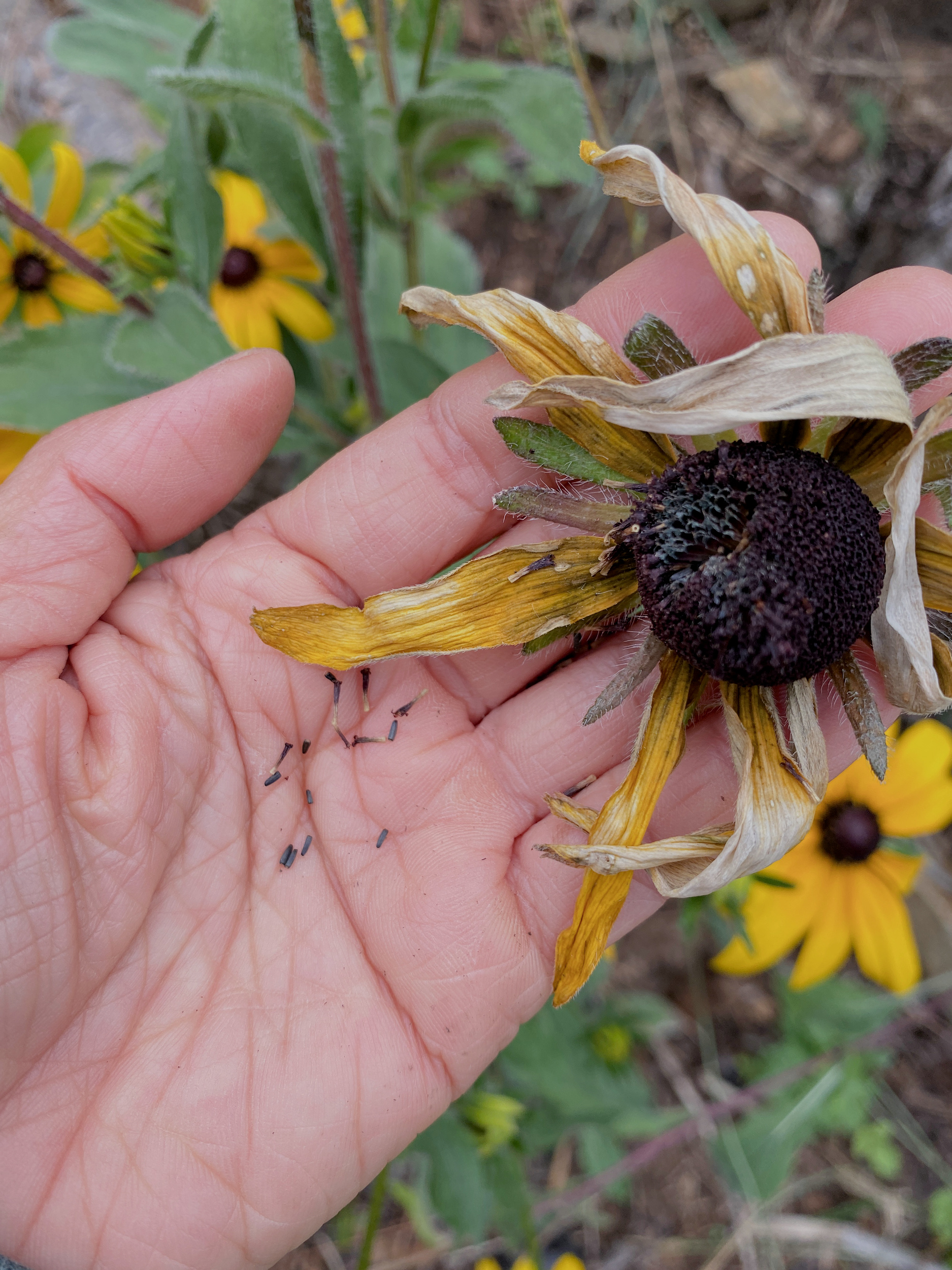
Gardeners can encourage local adaptation through seed saving. Simply by saving seeds, the plants we grow can adapt to our garden’s conditions. Through epigenetics plants can send messages to their offspring about the conditions they encountered.
Mothers can encode their seeds with information about local growing conditions so that their children have a better chance to survive and thrive. For example, if the plant struggles with drought stress, it may offer information to its offspring to give it a better chance to deal with drought.
Science calls this epigenetics, I call it magic.
We gardeners can also influence and steer adaptability through careful seed saving. We can save seeds from the plants that do the best in our garden’s conditions. We are selecting for the traits we want to see in the following season.
When we plant seeds there is an aspect of genetic lottery. While each plant in the same variety may be quite similar, there are always differences, whether observable or not, whether subtle or obvious. When we save seeds from our favorite plants, or the plants that did the best in our local conditions, we are steering the genetics to become more locally adapted.
Locally adapted seeds are based on relationships.

Local is Relative
Every garden around the world has different conditions. We actually have different conditions from our next door neighbor, but often those differences are very subtle. We usually have huge differences from someone on the other side of the country or globe.
What do we mean by local? Local can apply to different scales:
- Garden
- Neighborhood
- Watershed
- Region
In general, the closer to home they have been grown, the more adapted they are to our garden’s conditions. The further away we obtain our seeds, the less adapted they will be.
Gardens in the same neighborhood will have the same climate, but there will be subtle microclimate differences. The soil profile will be slightly different. The microorganisms in the soil that partner with our garden plants will be slightly different. Every condition will vary.
While industrial farmers may farm a huge piece of land as a monoculture, as architects may design suburban neighborhoods as uniform building blocks, the underlying natural conditions are anything but uniform. Natural conditions are always varying, dancing, shifting, learning, moving.
As we move further away from home, the conditions become more noticeably different, to us and the plants. Soil types, microbiology, climate and every other condition is different.

Benefits of Locally Adapted Seed
Health and Performance. When we grow locally adapted seed we usually get plants that do better in our garden than their non-local relatives. This means we can enjoy healthier plants, more food and bigger flowers.
Reliability. Plants grown from locally adapted seeds helps us have more consistent and reliable yields, when we are growing plants for food. Locally adapted seeds have a better chance to survive in tough growing years, especially if they’ve been through something similar before.
Resilience. When we grow local seed we are contributing to a more resilient and diverse local seed shed. Local farmers and local seed savers ensure there is more local seed available, whether or not supply chains are up and running.
Flavor. Locally adapted seed can also adapt to the culture or culinary habits of a local region or a family’s preferences. Seeds are not just adapting to the growing conditions, they are adapting to us as humans!
Biodiversity. Every local seed is going to be genetically different than the varieties grown in a different locale. Even the same variety grown in two different places will have different genetic diversity. Locally adapted seeds promote more biodiversity.
Seeds Adapting vs Gardens Adapting
When we grow locally adapted seeds and when we ask our seeds to adapt to our local conditions, to our garden’s conditions, we are inviting a dialog and a dance between the garden, the seeds and ourselves.
Many modern gardeners will go out of their way to improve the soil to create the perfect loamy conditions, kill pests, eradicate disease and give plants all the water they crave. In a sense we are adapting our gardens and ourselves to what the seeds need to thrive. We don’t always take into consideration that those seeds were often grown far away and adapted to a different context.
While I don’t want to discourage anyone from building better soil, we can also ask the seeds to at least meet us halfway, through our own seasonal seed saving efforts, or by acquiring seed that has already been locally adapted from local seed savers or bio-regional seed growers.

An Experiment
Here’s a thought experiment for you. Let’s choose a vegetable to grow. I may choose broccoli because it is difficult for me to grow well in my garden conditions.
Now let’s choose a very common variety of broccoli that we can find at many different seed sources and buy the same variety from two different places. Let’s choose one packet of seeds from one farmer that has similar conditions to ours, and the other packet from a farmer that has vastly different conditions.
In my case we have hot, dry, arid summers. So I’ll choose one source of broccoli seed grow in in similar conditions. I will choose another source of the same variety of seed from a farmer in a coastal climate with more moderate, humid, cooler conditions.
In this experiment I need to be sure those farmers have been saving their own seed† from this variety of broccoli for at least a handful of seasons, if not longer, so I can have some idea what conditions the seed has adapted to.
Finally I grow both of those varieties in our garden, side by side. Theoretically the broccoli whose seed is adapted to similar conditions to our climate is going to do better. If that broccoli seed was grown by a local seed farmer and adapted to our actual local conditions it will do even better.
Learning this was a big aha moment for me because I learned that varieties are not static. The same variety may be grown and sold by dozens if not hundreds of seed growers. If they save their seeds year after year, the varieties start to diverge based on not only the grower’s selection criteria, but thousands of other variables.
† Many seed farmers don’t always save and regrow the seed they sell. Often they are given seed to grow for their contracts, seed that was previously grown and harvested somewhere else on another farm. It’s just the way the industry works when we buy seeds from larger companies. Yet another reason to support small-scale and bio-regional seed growers directly.

Adaptability
All seeds are adaptable over time. But some seeds might have a better chance to adapt in our gardens. Generally speaking seeds with higher levels of genetic diversity will have a better chance to adapt to our conditions faster.
The more genetic diversity some seeds contain, the more diverse their plants will be in the garden. More genetic diversity means plants will be more different. Differences can range from subtle to obvious. Differences can mean the difference between death and surviving. They can mean the difference between survival and thriving.
Some seed breeders and seed growers intentionally include higher levels of genetic diversity in varieties that they steward so that seeds are more adaptable—so that they have a better chance of doing well in a wide variety of conditions, such as gardens across the country where their seeds are shipped to.
More genetically diversity gives seeds more chance to adapt to our garden’s conditions, should we choose to save seeds from them every year.

Should I Only Grow Locally Adapted Seeds?
This is a great question! Should I only grow locally adapted seeds? In the past, pre-industrial and pre- cheap fossil fuels, locally adapted seeds was the norm, rather than the exception.
Now we’ve flipped that and most gardeners grow seeds that are grown far away. It’s not uncommon for our seeds to be grown thousands of miles away, even in different countries like China, where it is less expensive to grow large quantities of seeds.
Locally adapted seeds have tons of benefits for gardeners and their communities as we mentioned earlier. But it is not our only option. Today we have the opportunity to import seeds from far away. We have the luxury of being able to try so many different kinds of seeds. Some will work well in our gardens, some will not.
Choice is good. Seeds are meant to travel. They are small, light and portable. Seeds are often quite shelf stable. I personally believe in open exchange and embracing diversity of life, including seeds.
For these reasons I embrace non-local seeds in my garden for experimentation and learning, for choice, for diversity, for joy. Even still, I think more of us should grow more locally adapted seeds. A lot more! Because our gardens, our communities, and our hearts will be more resilient to anything that comes our way, whether that may be a pandemic, climate change, rise in cost of fossil fuels, etc.
Thanks to the hard work of seed farmers and long time seed savers, some regions already have access to a fair amount of locally adapted seeds. Other gardeners don’t have access to those resources and have more work cut out for them if they want to grow locally adapted seeds.
I personally believe in the ability to import seeds and then saving seeds from plants we like the best so that they become adapted over time. Especially in this time of cheap fossil fuels and relatively open trade of seeds. Especially when there are no local options already available.
Every gardener has the ability to save their own seed season after season. Simply by saving seeds we can help to adapt seeds to our local conditions.
We modern gardeners are trained to be consumers and most of us are really good at buying seed every year, especially when we are excited about plants we haven’t grown before, whether it’s a new flower or different shape or color of our favorite vegetable. Our first thought is often to buy seed.
Our culture is adapted to consuming rather than producing. During the Covid 19 pandemic many people started gardening and homesteading and started learning how to produce instead of just consume. We learned to express creativity through gardening instead of consuming someone else’s creativity. In that time our culture was adapting to the exposed weaknesses in our industrial supply chains.
I don’t think we should only grow locally adapted seeds, but I do think we should grow locally adapted seeds and support our local gardeners and farmers who do. Covid 19 left a mark on us but our culture also has a pretty poor short term memory.
Let’s choose to remember the lessons that nature shares with us when we try to control her, when our food and seeds come from too far away, when we rely too much on cheap fossil fuel, when we as a culture choose to grow food for profit over nutrition…
Mother nature is calling to us. Behind every industry, every commercial venture, every monoculture, every neighborhood, every garden, she is there. She is calling to us sweetly, patiently, lovingly, to reconnect with her.
My Motivation
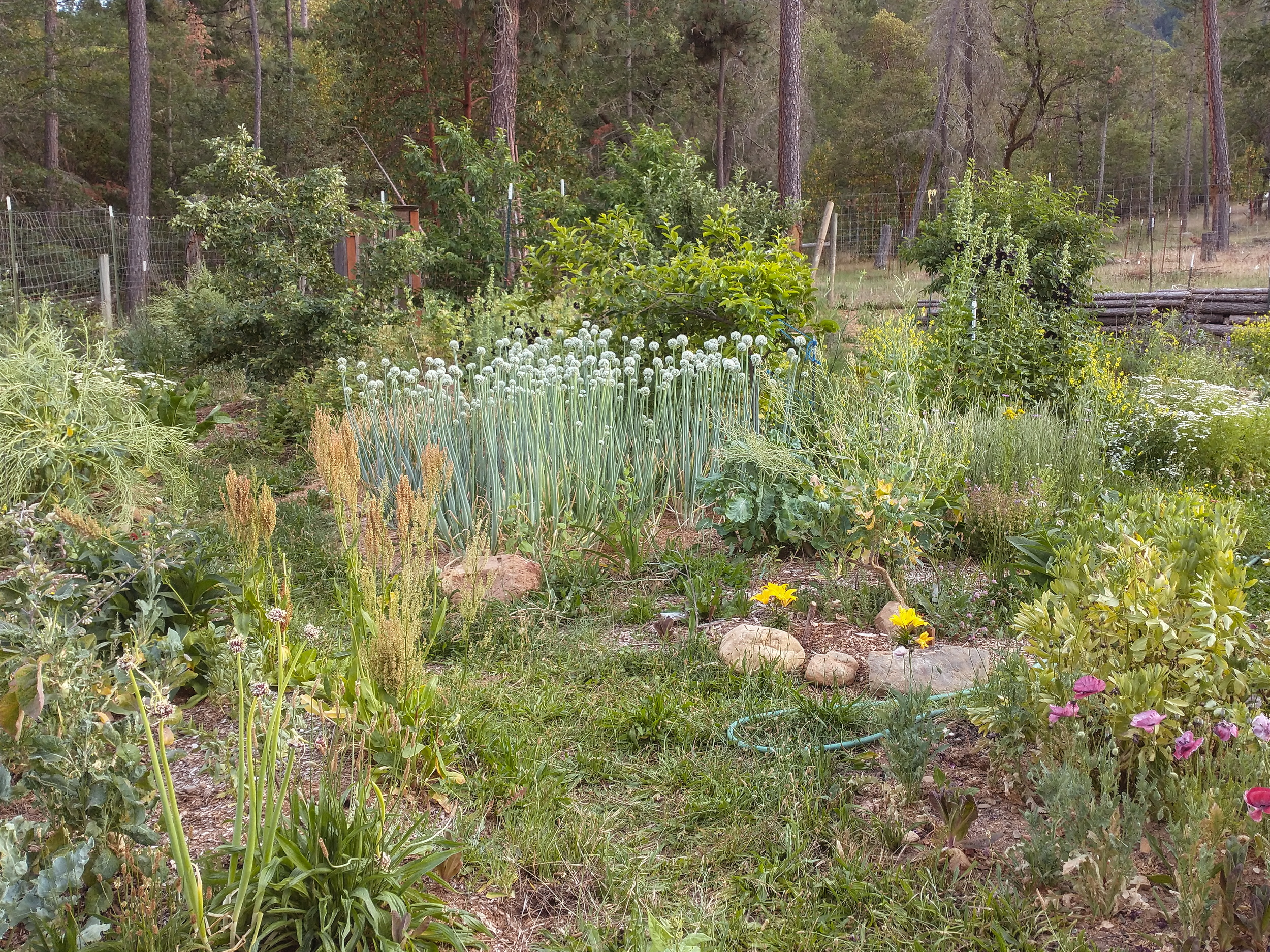
Our family sells seeds through our website to gardeners across North America. As you read this, you may in fact be across the country, or even across the world from me. So what is my motivation to encourage you to support local seed farmers or save your own seed? Isn’t this a conflict of interest with my desire to sell seeds?
I do have another interest outside of earning income, which is to live in a healthy culture. I want our children’s children to enjoy a more healthy, resilient, naturally connected, mature culture. Local seeds is one very important piece to growing that healthier culture.
As a parent I want all children to live in healthier homes that are intimately, deeply connected to the food that they eat. I want all children to enjoy connection to plants on a daily basis. I want all children to be able to enjoy natural beauty both in and out of the garden.
When I dream of this healthier culture I see that it benefits us all, even if it means that less seeds need to be sold because there are millions, if not billions of local seed savers across the world. This is the way it used to be pre-colonization, pre- dependence on industrial food systems, pre-monoculture.
Billions of Locals
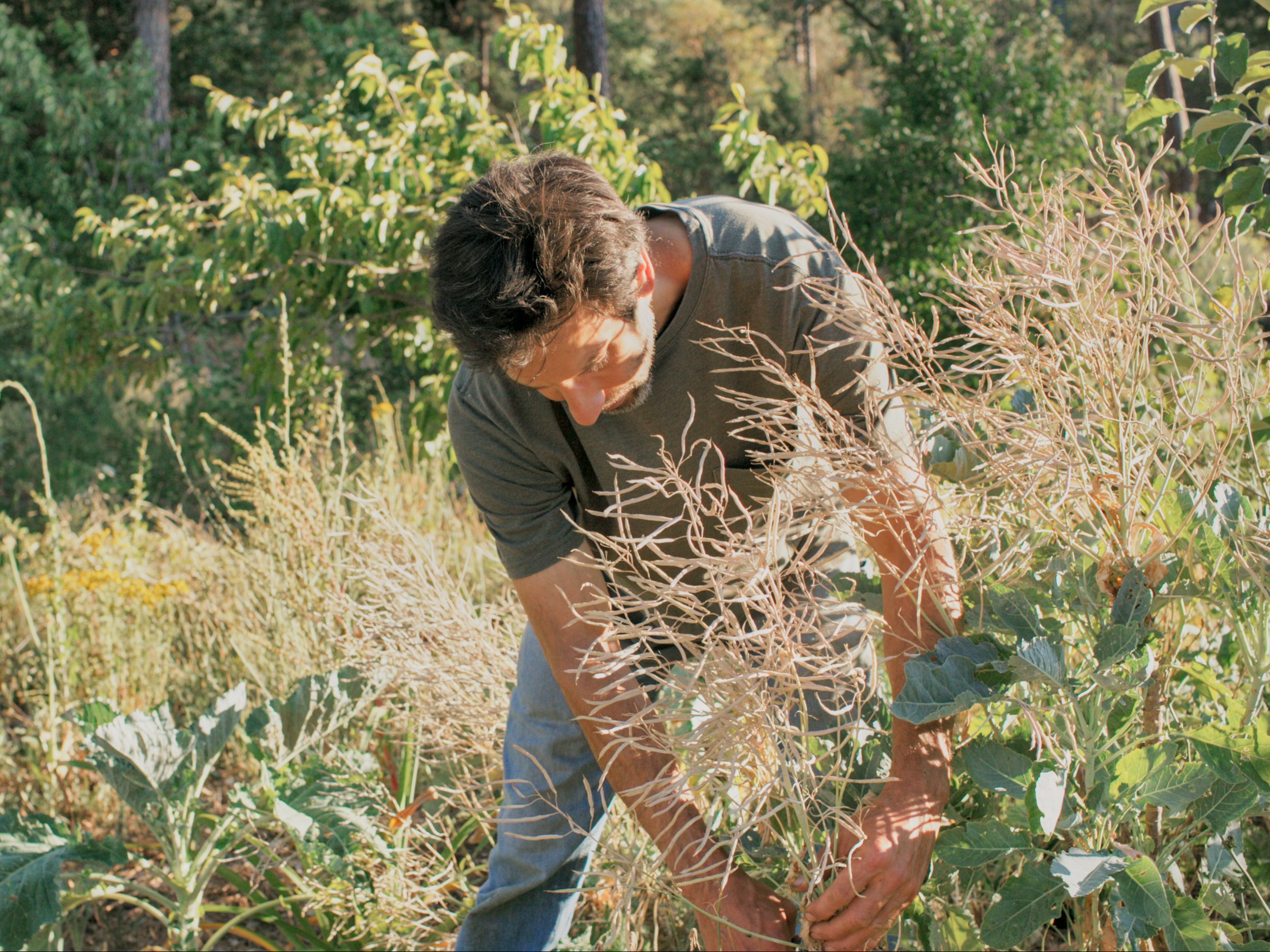
Our world is now populated by about 8.2 billion humans. Imagine if most families were gardening and saving seeds every season. Imagine all the locally adapted seed that would result. Imagine the resilience, health and independence our global brothers and sisters would enjoy if there were 1 billion seed savers?
I’ll settle for millions of new seed savers.
We can do it, clearly, because our ancestors all did it before. Not that long ago either. There may come a time when we are forced to save our own seeds again due to exhaustion of non-renewable resources such as fossil fuels, or some inability of industrial food system to support us.
In the meantime we are dependent on a giant food system that grows food in monoculture to feed our world. I am grateful for this monoculture food system because while it is functioning it means I don’t have to rely on the food I grow to survive.
Right now I have room to learn and adapt.
Our industrial system affords me the time and space to learn, to experiment with different plants, to play in the garden and to re-connect on my own terms. Our ancestors did not always have that luxury. Some years were times of scarcity with regard to food.
In those times, seeds were always sacred, across all cultures, because we recognized how important seeds are to our survival and our ability to thrive as a culture. We recognized our connection and interdependence with these intelligent, green life forms we call plants. We recognized the magic of the unseen forces behind life and growth.
Seeds are sacred.
Seeds are magic.
Seeds are life.
In the times past all seeds were locally adapted, or in the process of adapting to local conditions, through careful, reverent seed saving. Through dancing with life. Through tending and cultivating sacred seeds.
Perhaps each one of us has sacred responsibilities to Earth, as conscious humans. Perhaps we are meant to help tend and steward seeds so that this dance can continue.
Let’s bring seeds back into our field of view. Let’s bring the responsibility of tending seeds back from the massive monocultural fields, back into our backyard gardens where we can be attentive, caring, nurturing, loving with our plants and their seeds.
Let’s bring saved seeds out of warehouses and back into our homes carefully tucked away in safe places, honored on shelves and held in our hearts, before being lovingly planted back into Mother Earth.
Let’s bring our joy of seed saving to our neighbors and friends, even if they are not gardeners, so that they can see the transformational magic that seeds offer through our smiles and love.
Cultures are adaptable over time just as seeds are adaptable with each passing generation. Even in one single generation plants can share their experience, through seeds, so that their offspring can have a chance to be more adapted to the local growing conditions.
Likewise we humans can adapt in a single lifetime.
Each of us has the ability to choose to reconnect to nature, with seeds, with each other, with our own hearts. We are always adapting to our cultural ecosystems. We can choose to steer our adaptation in one direction or another, just as a seed saver can steer seeds to become more locally adapted.
Let’s support each other in steering our local cultures to become more adapted, resilient, diverse, radiant, cooperative, nurturing, joyful and loving.
Seed Saving for Abundance
Want to learn how to harvest, clean & save your homegrown seeds? Become empowered to grow your own seeds for planting next season, stocking your pantry, sharing with your community, or selling to gardeners.
See our course Seed Saving for Abundance for more details!
Recommended Reading
This article is one of a series on the topic of seeds and diversity. You may also enjoy reading these other related topics:
- Seeds of Diversity: 5 Reasons to Embrace Genetic Diversity in our Gardens
- Heirloom Seeds, What Are They Really?
- Hybrid Seeds: The Good, Bad and Ugly
- Open Pollinated Seeds: Out in the Open
- Grex: Seeds for Diversity and Change
- Landrace Gardening: Becoming Seeds of Place

Free Seed Saving Crash Course
Up your seed saving game in our free video: Seed Saving Made Simple We designed this presentation to help you have confidence knowing how to save seeds from your garden.
Free Seed Resources
We’ve put together a collection of stories, education and inspiration around gardening, living and working with seeds. They are all free and openly available for you to read and explore. Enjoy!
2 responses to “Locally Adapted Seeds: Apt to Thrive”

Good Morning Noel, Ann, River
Coincidental that I spent the morning sorting through my bean seed, deciding which will be best and where and when to grow in my garden. There is something about planting beans that I find connects me to my earliest gardening experience, as a little bitty, watching my grandfather tend his plants in what was then rural land near Philadelphia. He would use a hoe in the steaming northeast summers, while wearing a sweater vest, tie and button down shirt. Clearly, growing food has been passed down to me! Epigenetics indeed!
Thanks for your heart felt words on seeds and magic… ~Dana
Dana, wow how fun to go through your bean seeds! Nothing like touching and sorting beans to make me feel like a kid again too! Thanks for sharing that beautiful memory of your grandfather planting and tending beans, albeit over dressed for the occasion. You were born to garden! You are living up to your namesake as well. I am looking forward to going through my beans this week, it’s that time! Much love.






Share Your Thoughts