


Description
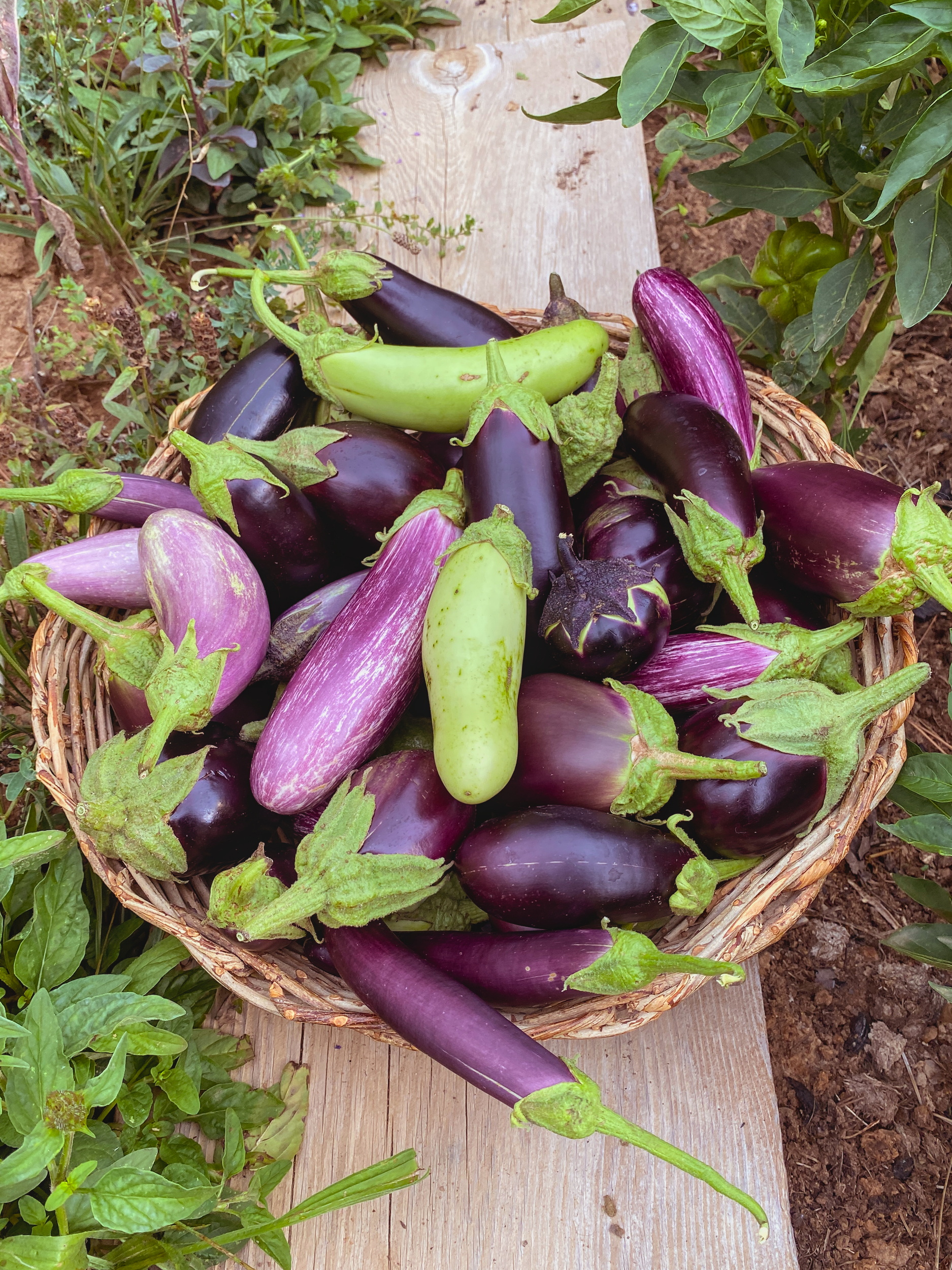
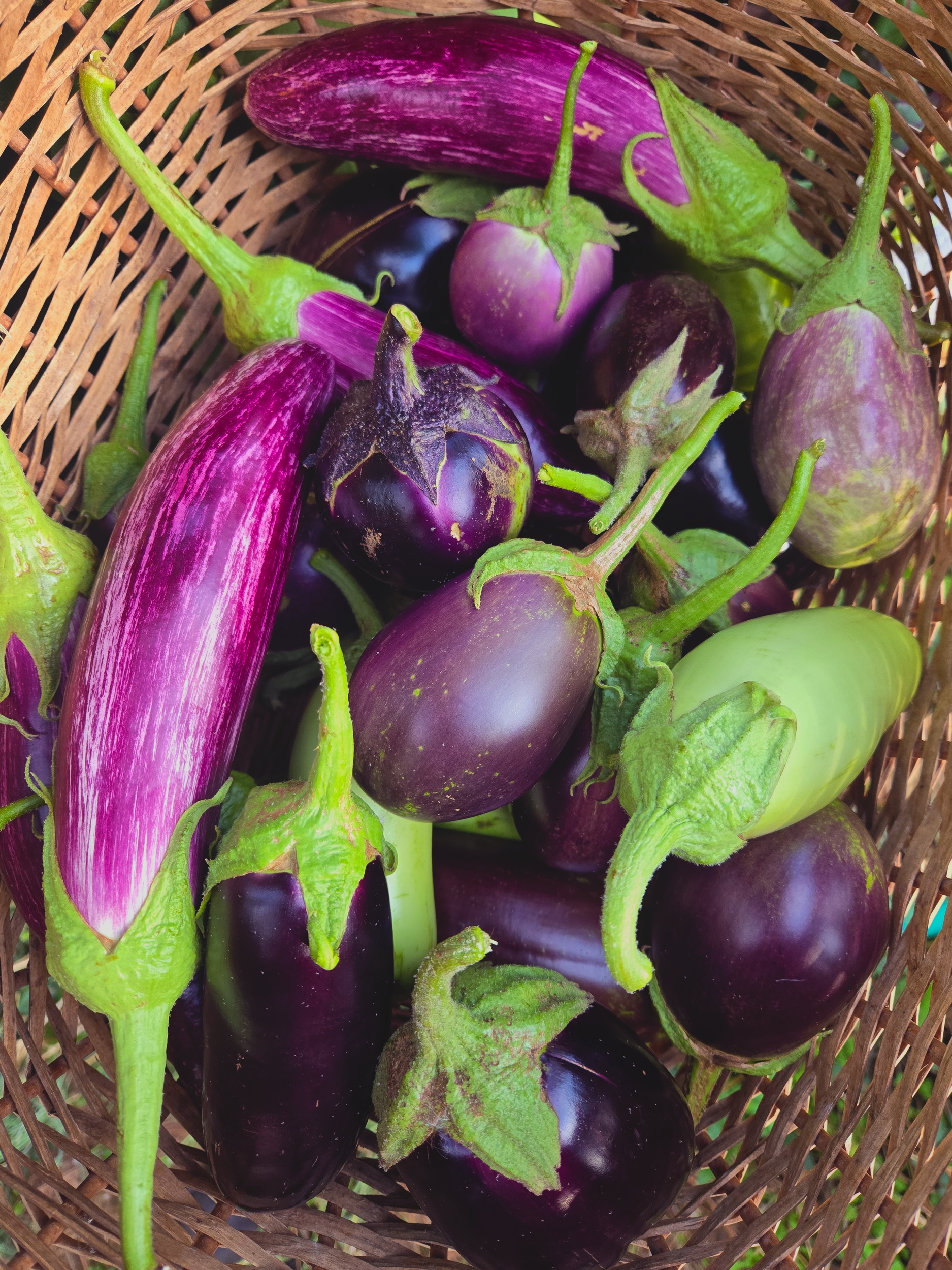
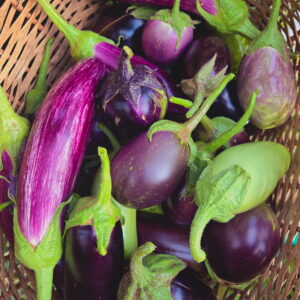
If you like eggplants and you appreciate diversity, then you’ll love our Scrambled Eggplant Mix! I took a bunch of varieties of eggplant, scrambled them up and this mix is the result.
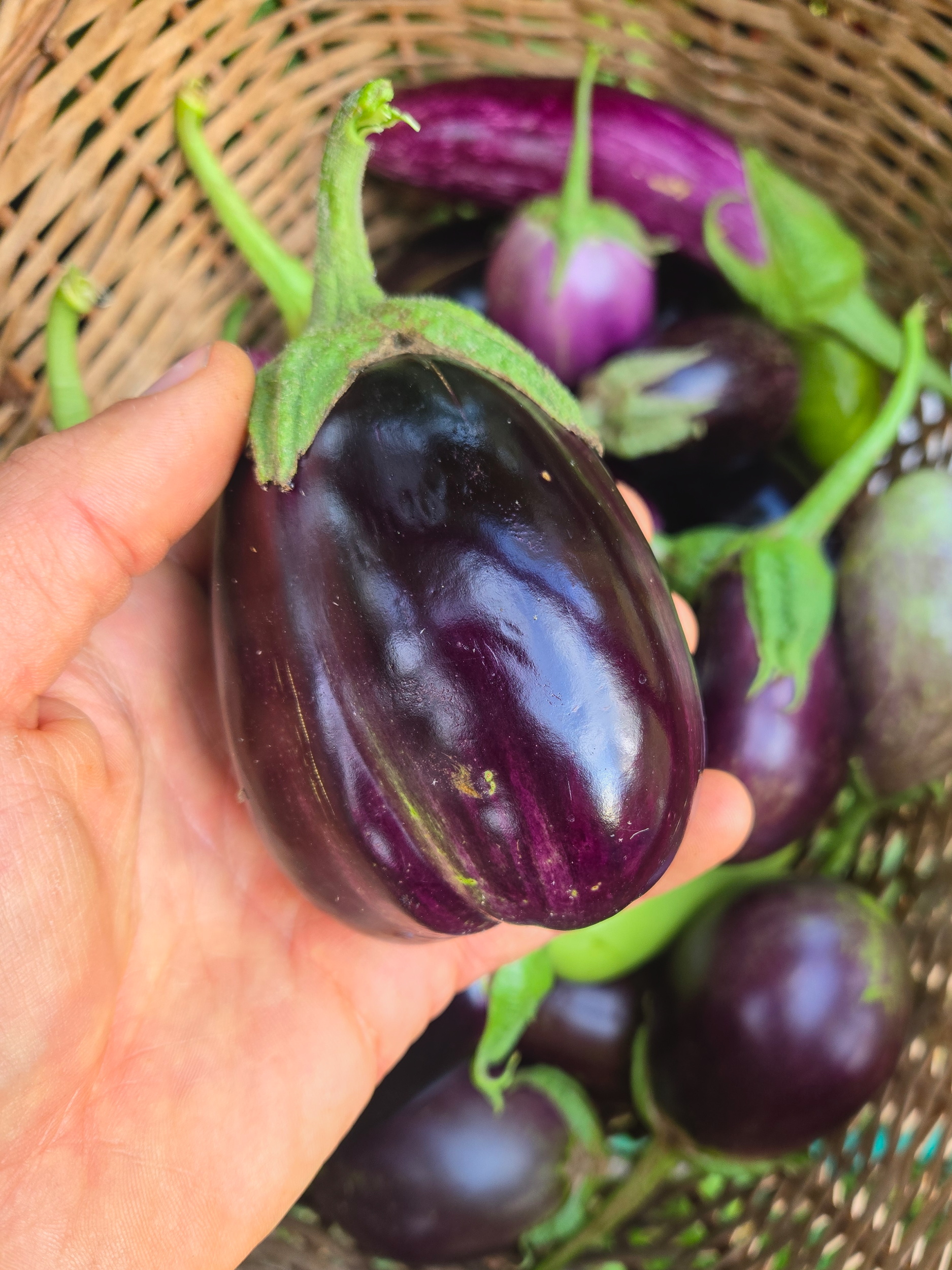
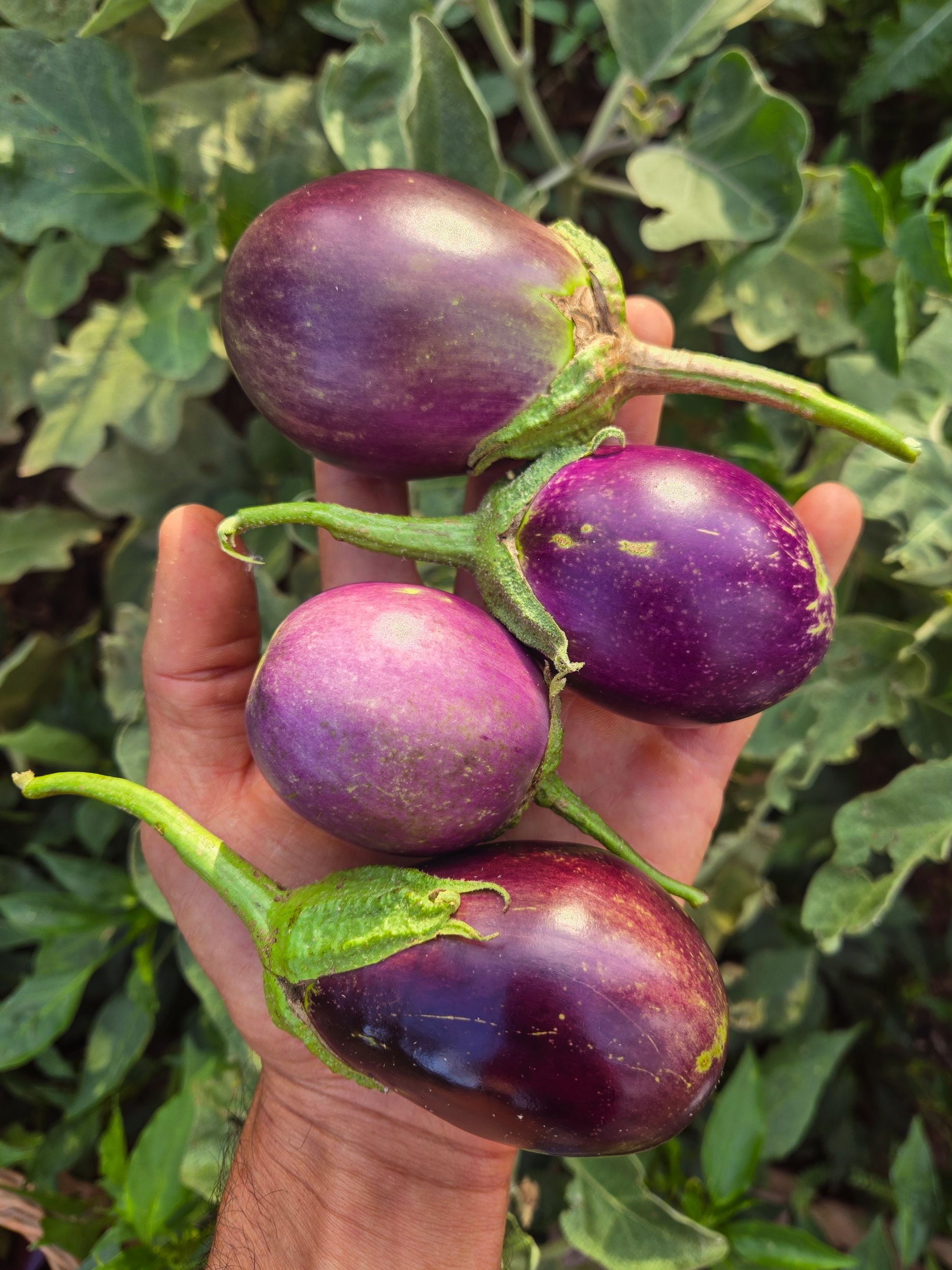
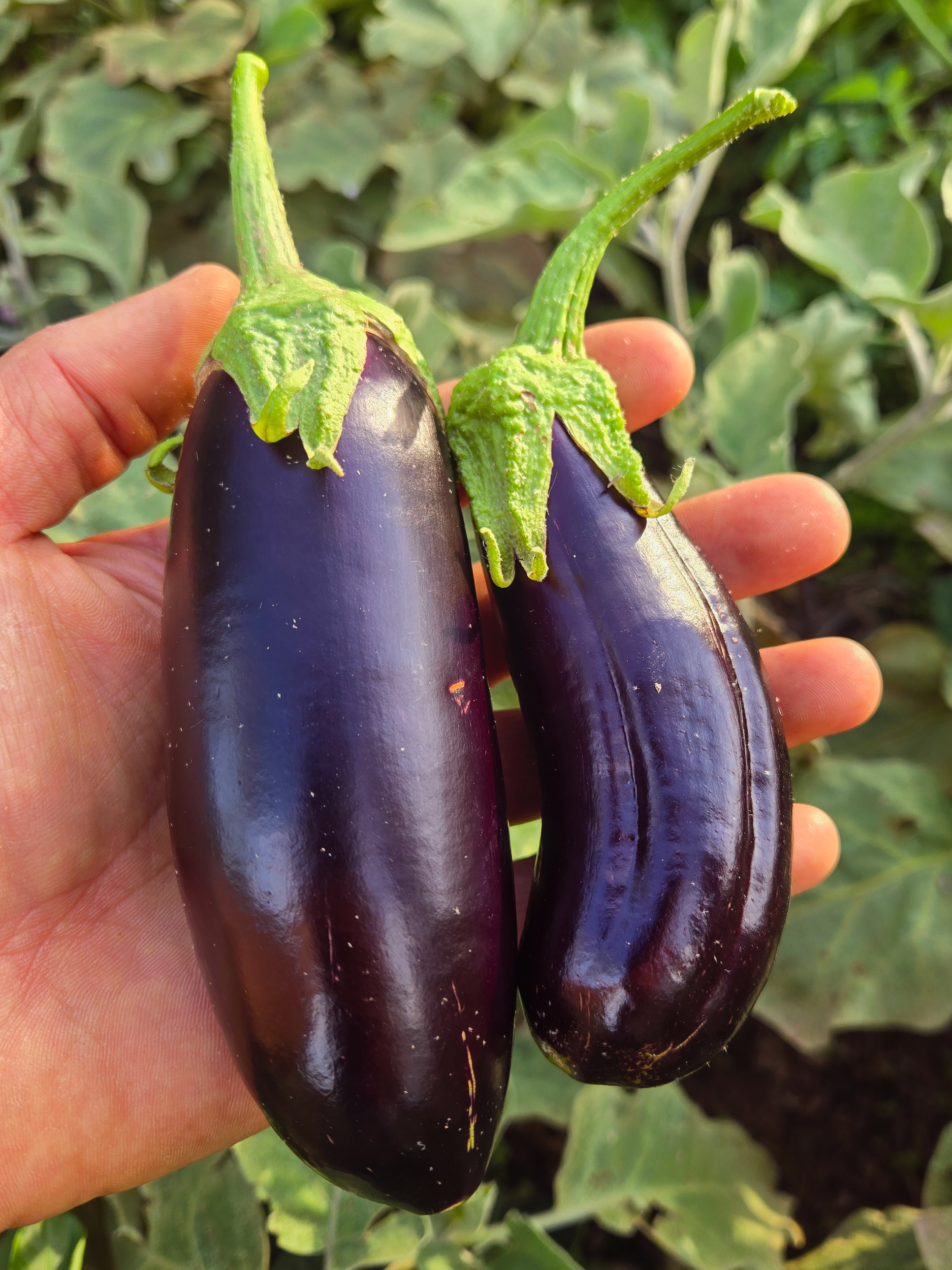
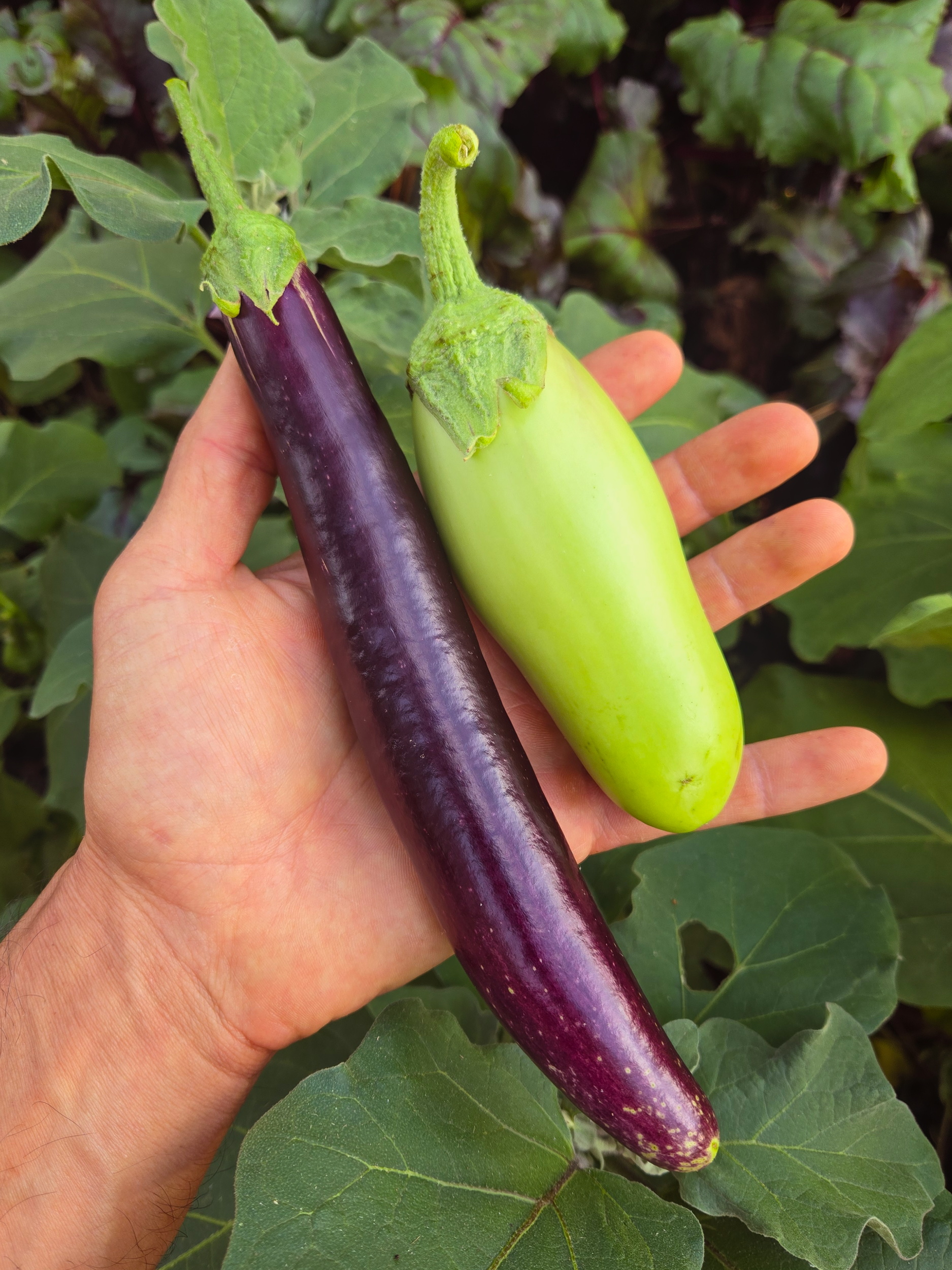
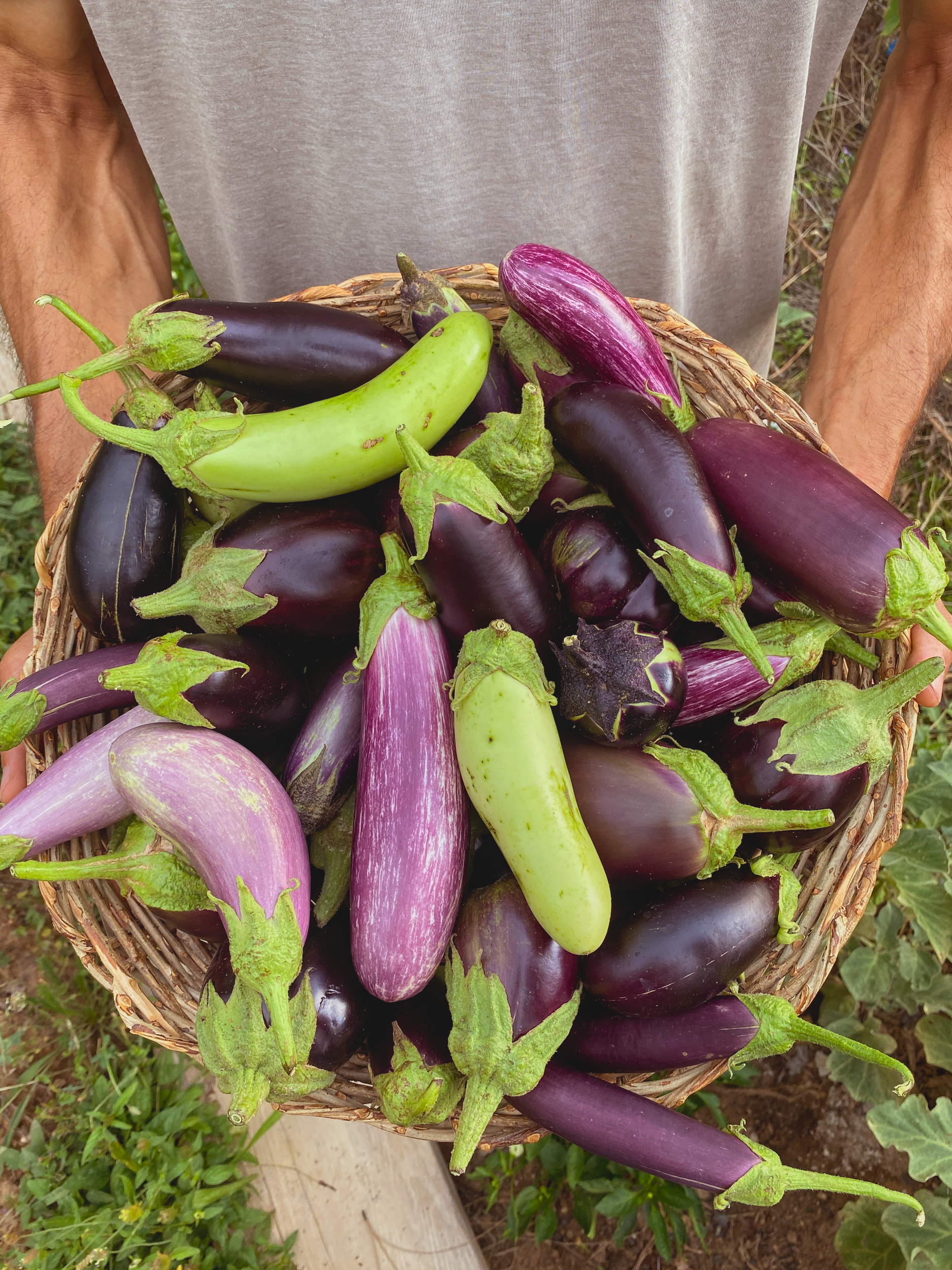
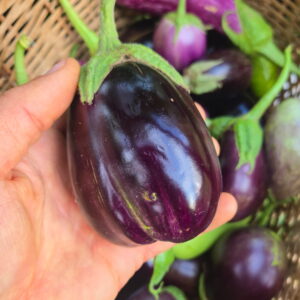
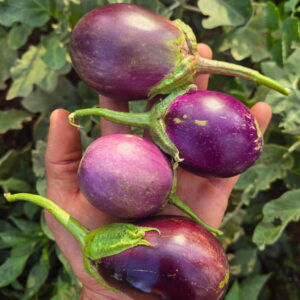
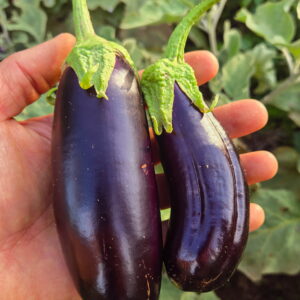
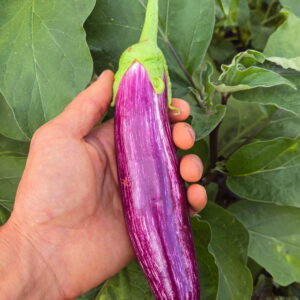
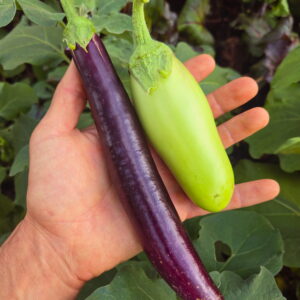
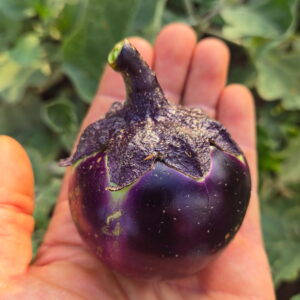
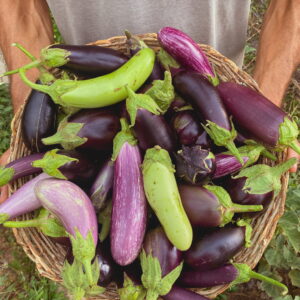
Included in this mix are eggplants of various shades from dark purple to light green and striped to boot. Shapes and sizes vary from small egg shapes to long and skinny to fat and bulbous. Come harvest time, I absolutely love the diversity of fruits, it makes for a beautiful harvest basket and just as gorgeous inside on the kitchen counter.
Perhaps by this point it goes without saying, that I am also encouraging and selecting for maximum diversity and beauty.
The Scrambled Eggplant Mix is such a fun project because its encouraged me spending more time with the eggplant plants, flowers, bees and of course the fruits themselves.
As a nightshade, I love that eggplant plants seem to be naturally somewhat more drought tolerant than their tomato and pepper counterparts.
In the kitchen we love to cook eggplant in all the ways. Curries are a favorite! We also enjoy eggplant quite a bit in stir fries. Grilled eggplant never disappoints. Baba ganoush is a lot of fun for the whole family and our 6 year old son loves to eat it with chips and carrots.
Eggplant, otherwise known by many English speakers as aubergine, is a plant cherished the world over. The more we grow and eat eggplant, the more we begin to understand why eggplant has been so readily adopted by many cultures.
Eggplants are substantial in the amount of fruit they produce by weight and offers a unique, soft, sometimes silky texture to all kinds of foods. The beautiful nature of eggplant’s flesh is that it is not only mild in flavor but it can absorb other flavors into its somewhat absorbent, yet rich texture. Whether marinating, cooking in oil, or blending with other ingredients, eggplants are wonderful companions to other flavors.
I’ve been growing seeds for this eggplant mix for 3 seasons. Varieties added to this mix over the years include: Ping Tong Long, Syrian Black, Badenjan Sesame, Bitinjan Battiri, Chi Yei, Astrakom, Tonda di Manfredonia, Northern Eggplant and more.
I’m being quite particular which fruit I save seeds from. Throughout the summer I’m on the lookout for the plants that not only grow vigorously but also start producing fruit early. I’m also selecting seed from the plants that produce most prolifically. One of the unique traits of this mix is that I am selecting seeds from plants whose flowers have stigmas long enough to protrude from the anthers, so that there is more chance of cross pollination from insect activity to encourage faster adaptation to local conditions, both in my garden and also in yours.
If you’re an eggplant lover and looking for some fun in the garden, I invite you to try the Scrambled Eggplant Mix. I’m excited to share these special seeds with you.
Details
Lifecycle: Perennial in frost free climates, otherwise grown as annual
Lifespan: 2-5 years
Hardiness zones: 9-12 (USDA)
Habitats: Unknown in the wild
Plant size: 3 ft wide x 3 ft tall
Light: Full sun to part shade
Soil: All soil types, well draining soil preferred
Water: Regular moisture preferred
Seed Starting
Eggplant can be direct sowed but gardeners in colder zones usually prefer to start eggplants by seed indoors or otherwise protected, ahead of the last frost date. We start our eggplant seeds at the same time as tomato and pepper seeds, about 2 months before our expected last frost.
Sow eggplant seeds about 1/8″ deep in good quality potting soil and keep the soil evenly moist until seeds germinate. Prick out and divide seedlings once they are big enough to handle. Continue potting them up as needed until all danger of frost has passed, then plant them in the garden.
Cultivation
Eggplant will be happiest and grow larger and more quantity of fruits with rich garden soil and regular moisture. In addition to compost, we offer all of our nightshades plenty of wood ash, eggshells and bones for supplemental minerals.
Harvest
Harvesting eggplants is a bit of an art, especially with this mix because each variety can be a little different with regard to ripening time. In general, changing color itself is not a reliable indicator. I often use touch. I like to give a gentle squeeze of the eggplant. If it is very firm, it’s still under ripe. If there is a little give, or softness to the fruit then it is probably ripe or near ripe. Some varieties stay pretty firm even when ripe, so there is a bit of an art to intuiting when each eggplant are ripe.
Harvesting the eggplant itself is easy. Some fruits’ stems snap off easily by lifting the fruit up 180 degrees and pulling up. Otherwise snipping the stem with garden shears is easy enough.
Note: We definitely want to avoid eating underripe eggplants because there may be higher levels of Solanine and the fruit will taste more bitter.
Seed Saving
To save eggplant seeds, one must wait to harvest the fruit until it is overripe, past the eating stage. Eggplant fruits will usually change to more yellow or brown tones. The fruit will get larger and the skin may become softer or wrinkly. It may take up to a few weeks or longer past the “ripe for eating” stage. Then harvest the eggplants, cut them in half lengthwise and excavate the seeds with your fingers. I like to tear open the flesh, find the “seams” of seeds and run my thumb or a spoon down to scrape out the seeds. Then rinse in a strainer and spread out the seeds to dry well.



Reviews
There are no reviews yet