







Description
Okra is such a beautiful plant to have growing in the garden and this diverse Oh My Okra Grex is honoring Okra’s beauty! Our family loves to eat okra, and how wonderful because okra pods are an incredibly nourishing food.
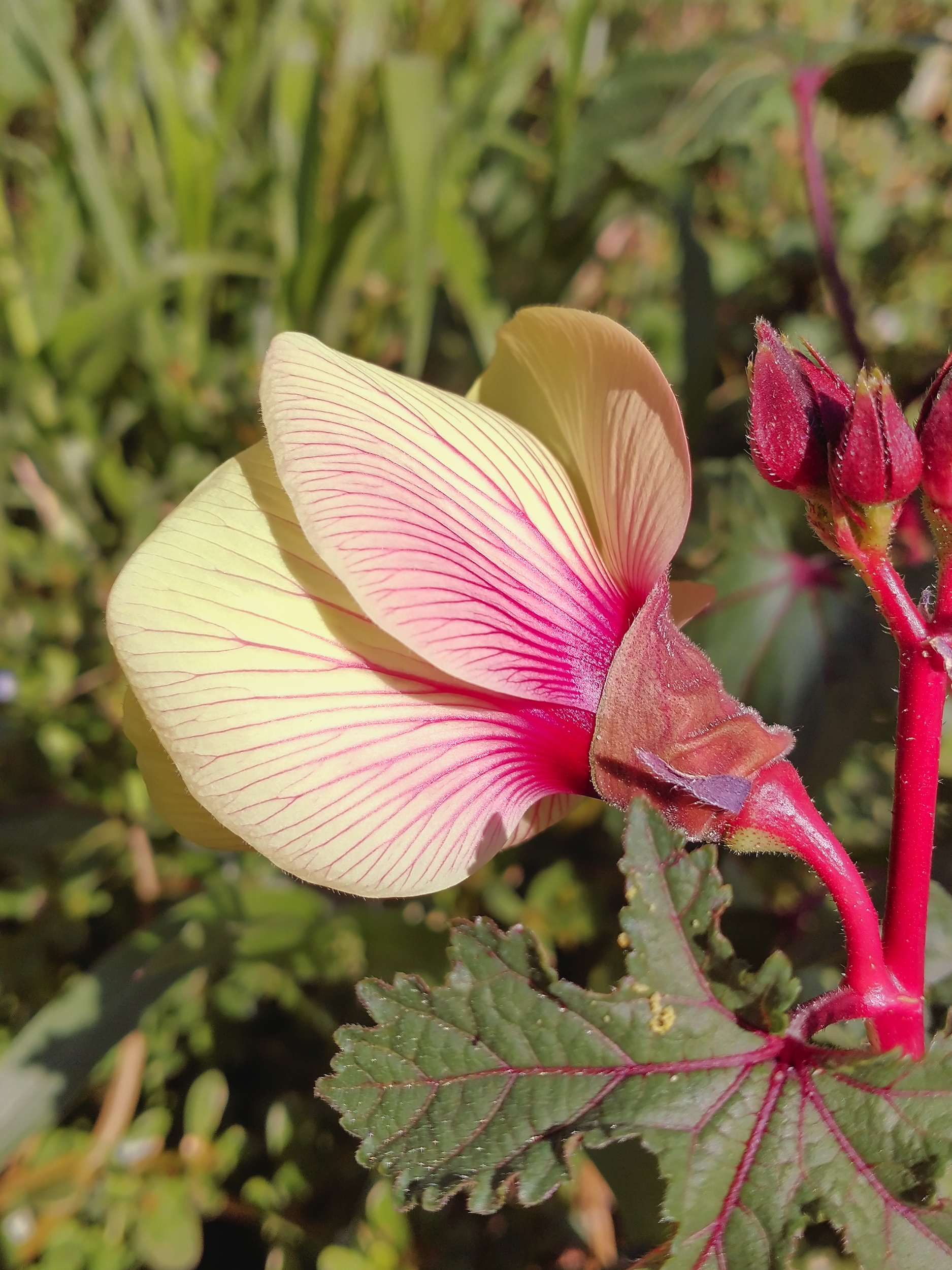
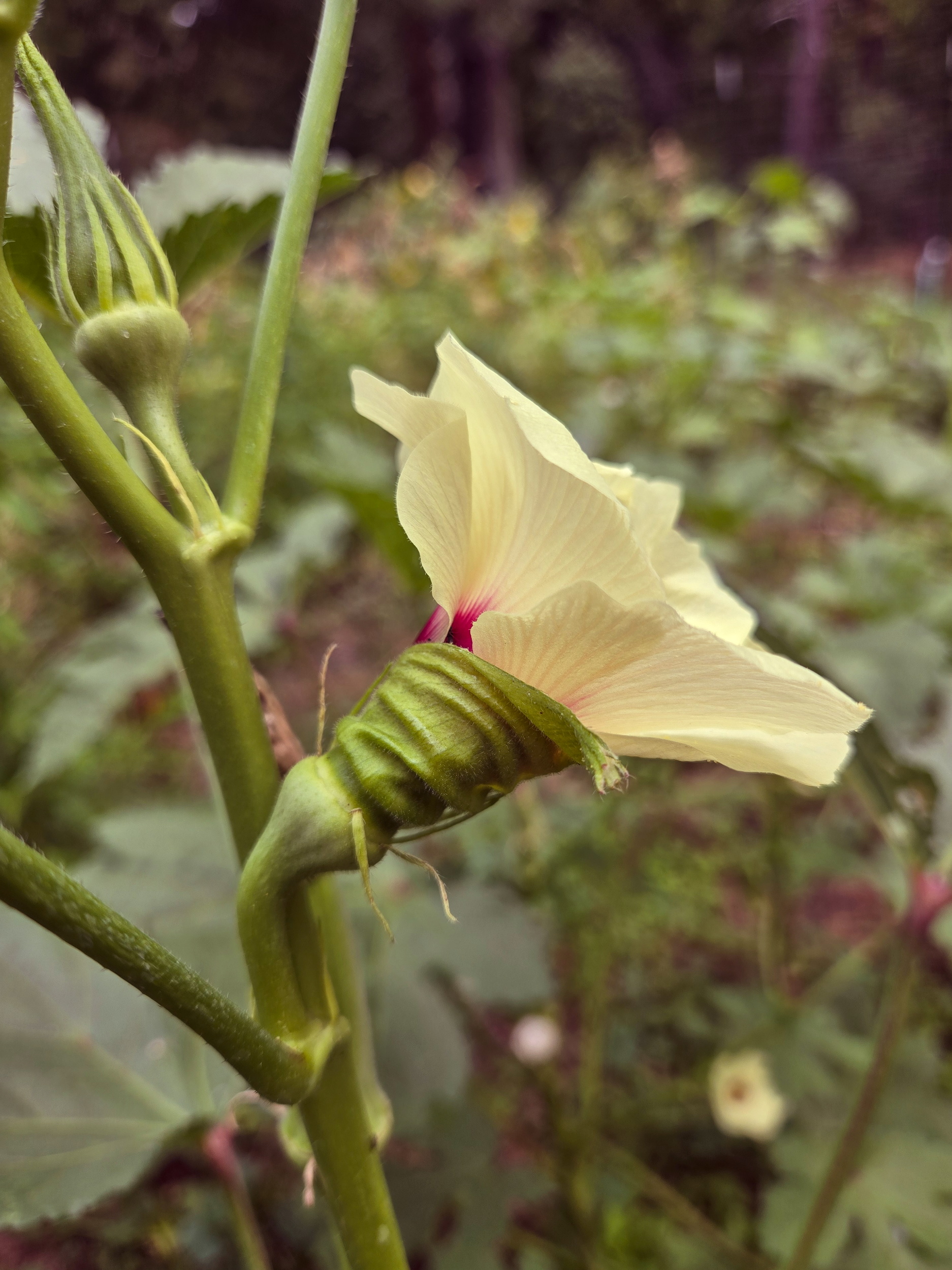
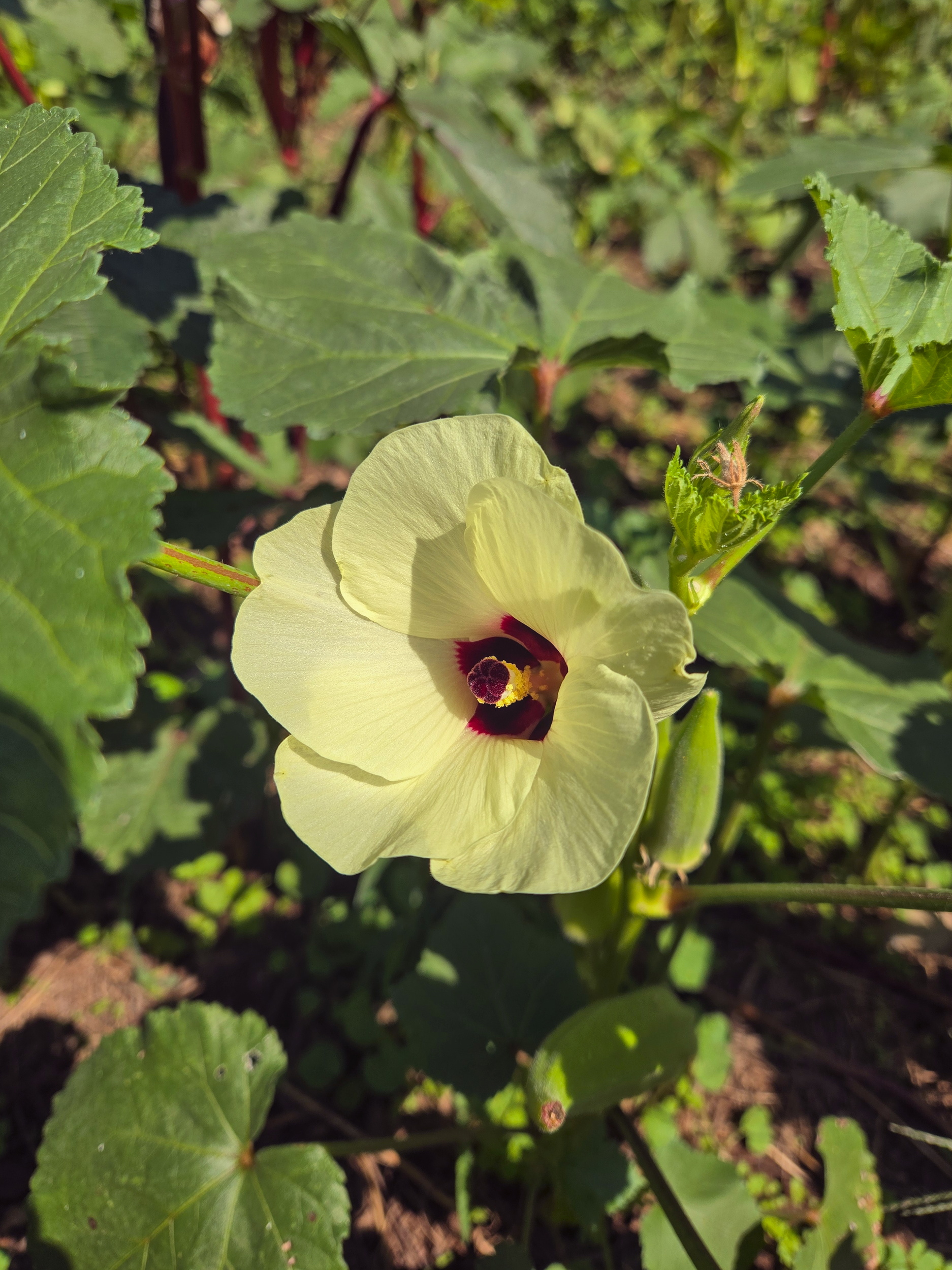
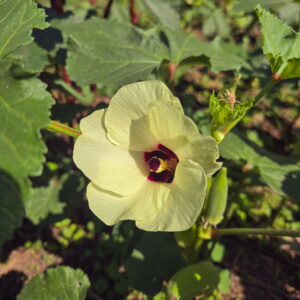
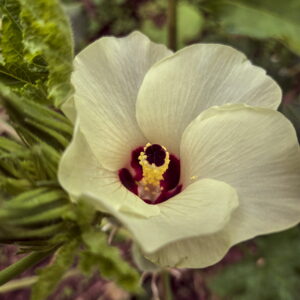
Okra’s creamy light yellow flowers with deep red/purple centers are so attractive! They are very attractive, open and hibiscus-like. It’s no surprise okra flowers look like hibiscus because they are in the same Malvaceae family, along with marshmallow, hollyhock, linden, cotton and cacao.
All these plants share the quality of mucilage too. The slimy nature of mucilage offers medicine to us in the form of nourishing food. The immature seed pods of the okra plant are what we consume for food, and the okra pods are full of slimy mucilage. Mucilage in general, aids with digestion, soothes the lining in the digestive tract, relieves inflammation, helps our body absorb minerals and retains water.
We love to eat okra in a wide variety of foods including stir fries, rice dishes, soups and stews. We’re not shy of okra’s nourishing slime and we even like to eat whole okra pods steamed and dipped into soy sauce based dipping sauce (pick your favorite sauce).
If you have a glut of okra coming on in the summer, okra pods freeze very well after a quick steaming or blanching. (Okra pods don’t dry well, they get too woody.)
Okra seeds have a high oil content and are reported to make a good roasted coffee substitute. I have yet to try this, but if you do please let us know how it turns out!
Okra leaves, flower buds and flowers are all edible as nutritious cooked greens and also contain some mucilage.
Okra stems are far to fibrous to eat, but okra stalks make excellent fiber for rope, string or other cordage, as well as paper.
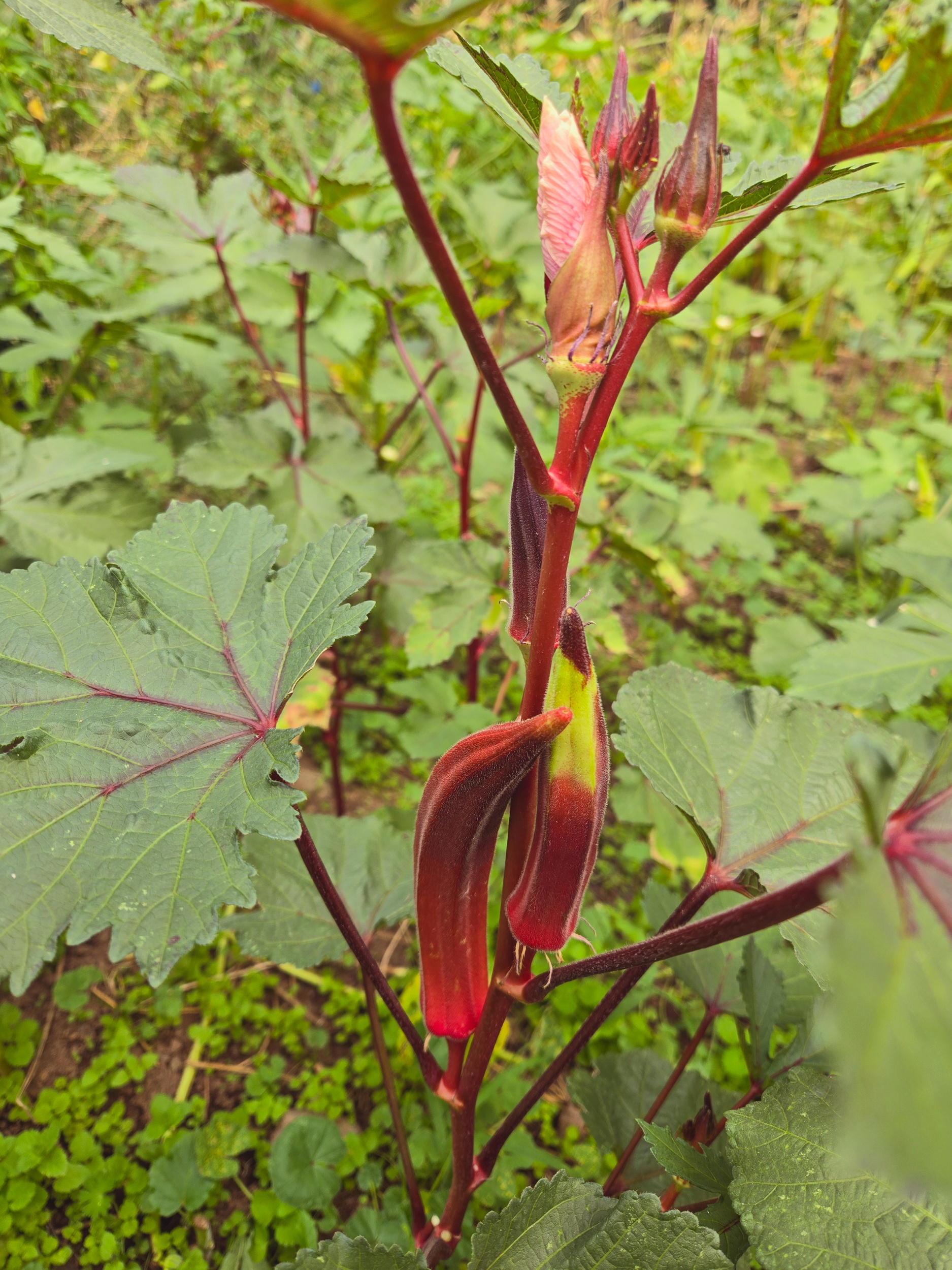
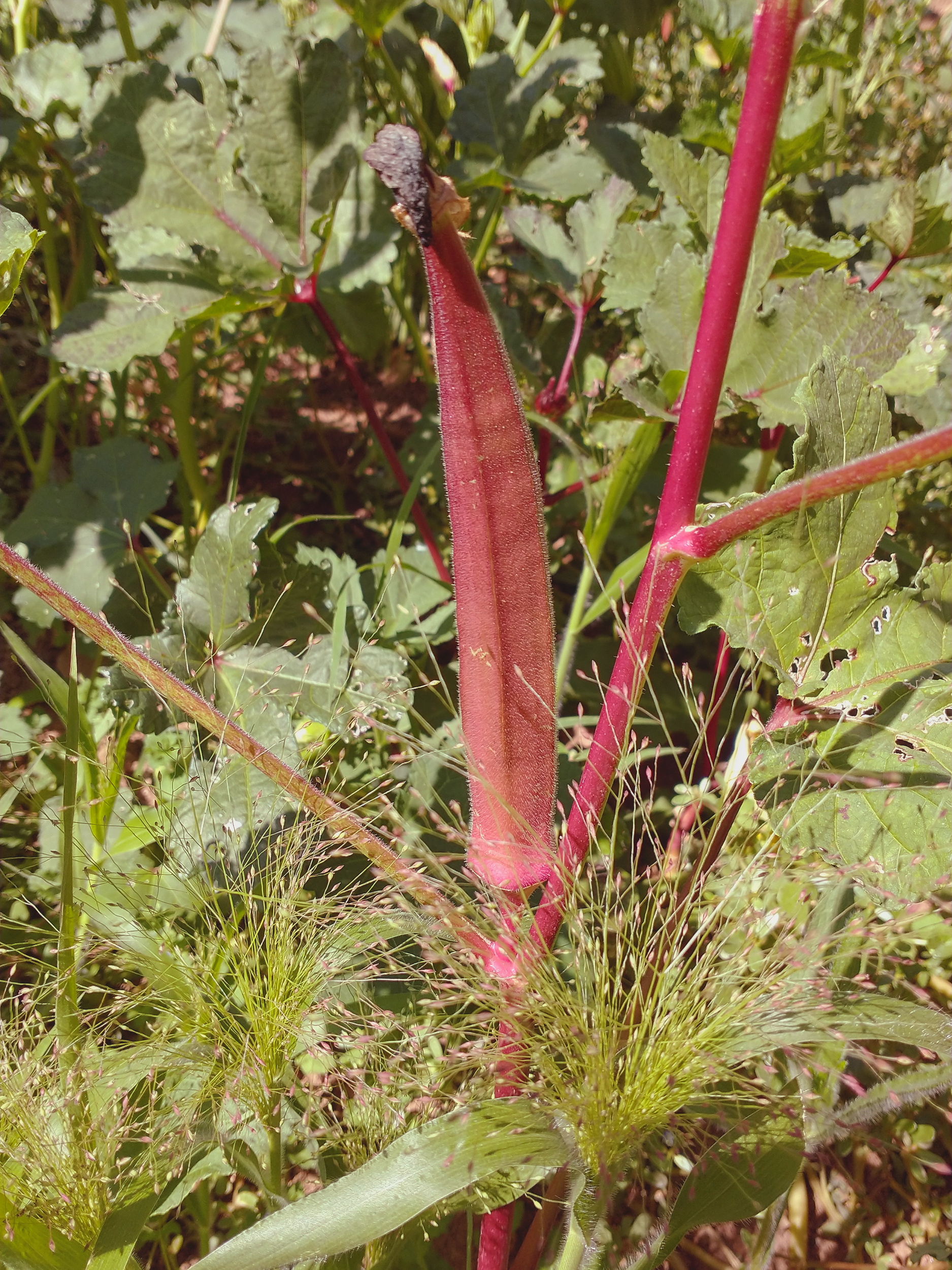
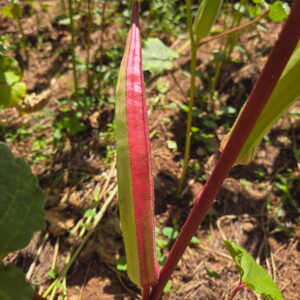
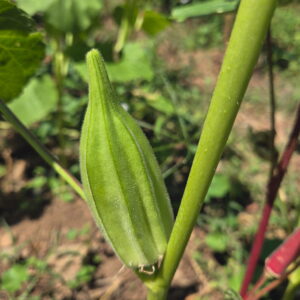
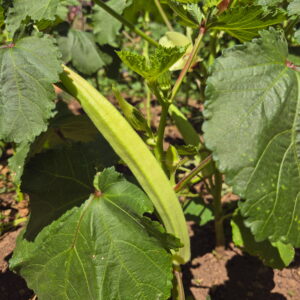
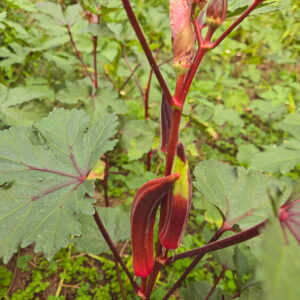
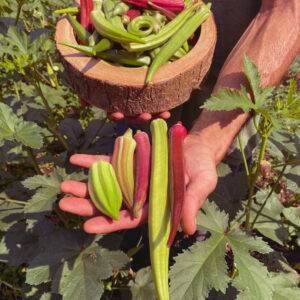
Our Oh My Okra grex displays a wide range of diversity of pods from green to red and some are a mix of green and red. Okra pods range from long to short, skinny to fat and smooth to ribbed.
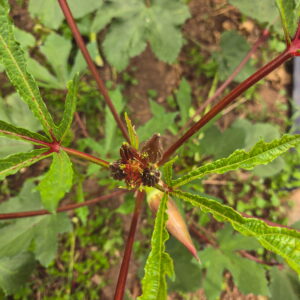
The plants themselves also display a lot of diversity. Some grow taller while some are shorter. Some plants are more branching while others are skinnier. And like the pods, plants can be green or red or a combination of both.
I’ve been growing this okra grex since 2022 by combining many varieties, landraces and grexes together in our garden to promiscuously pollinate each other. Varieties that have contributed to this grex over the years include: Ultracross Okra, Diablo Valley Landrace, Zambian Landrace, Camaroon Landrace, Aunt Hetties Red x Puerto Rico Everblush F3, Burmese Okra, Going to Seed’s Okra Mix, Le Jardin des Vie-la-joie’s Landrace Okra and others.
I’m saving seed in the Oh My Okra grex for maximum diversity and beauty. Practically speaking, I’m also saving seeds from plants that exhibit vigorous growth, early production and whose pods that don’t turn fibrous too quickly. Wimpy plants and plants who make fibrous pods are removed from the gene pool. Okra plants also have to produce well in our part-shade conditions to make the cut, so our mix will probably work well for growers with short seasons.
The high genetic diversity in this okra grex will help the plants have a better chance to quickly adapt to our garden conditions, and yours too.
If you’re an okra lover wanting to invite more diversity and beauty into your life, give Oh My Okra Grex a try, and you’ll surely be saying “Oh my!”
Details
Lifecycle: Perennial in frost free climates, otherwise grown as annual
Lifespan: 2-5+ years
Hardiness zones: 9-11 (USDA)
Habitats: Unknown in the wild
Plant size: 2 ft wide x 5+ ft tall
Light: Full sun to part shade
Soil: All soil types, well draining soils preferred
Water: Regular moisture preferred
Seed Starting
Direct sow okra seed 1/4-1/2″ deep in a well prepared bed once all danger of frost has passed. Keep the soil moist until the seeds germinate.
I found that okra seed will not germinate well in heavy soils that becomes flattened by irrigation. If you have clay soil prone to compaction, plant the seeds in the higher side or top of a small furrow mound so that the soil stays looser.
In the past I compared starting okra seed ahead in my greenhouse vs direct sowing. I found that the head start did not yield much benefit because the nights were still cold. Okra doesn’t really start growing fast until the summer temperatures pick up. Since the seed is so large, direct sowing is really the best way to go, in my experience.
Cultivation
Okra will need some careful weeding initially. Once okra gets some height to it, it will outgrow most weeds. Give okra regular moisture and rich soils and the plants will reward you with many pods.
Harvest
Once the okra plants get large enough and during the hottest part of summer, you’ll need to check for new pods every day or at least every other day. Okra pods tend to get woody and fibrous relatively quickly, so the window for picking a immature pod is one or two days maximum.
Clip immature, tender pods from the plant with garden shears. Sometimes it is possible to snap the stem by lifting the pod up.
Seed Saving
Choose the plants you want to save seeds from early in the season and let at least one pod on those plants continue to ripen until it turns brown. Brown, dry pods have fully ripe seeds inside. If you’re in a shorter season you might need to harvest your seed pod still green. In that case take them inside and spread them out to dry with plenty of airflow so they don’t dry. Split each segment of the okra pods by hand over a bowl and let the round seeds fall out.



Reviews
There are no reviews yet