



Description
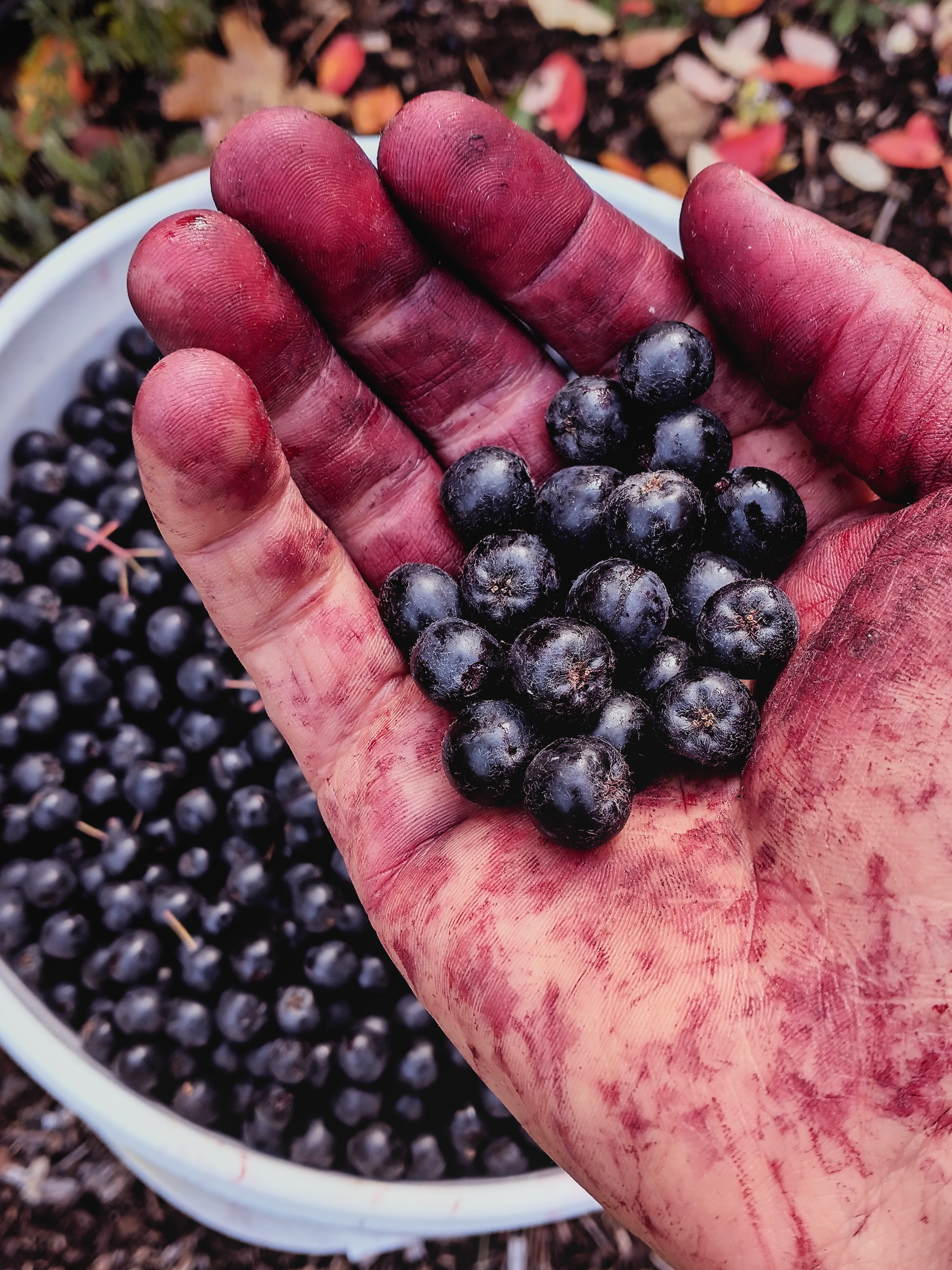
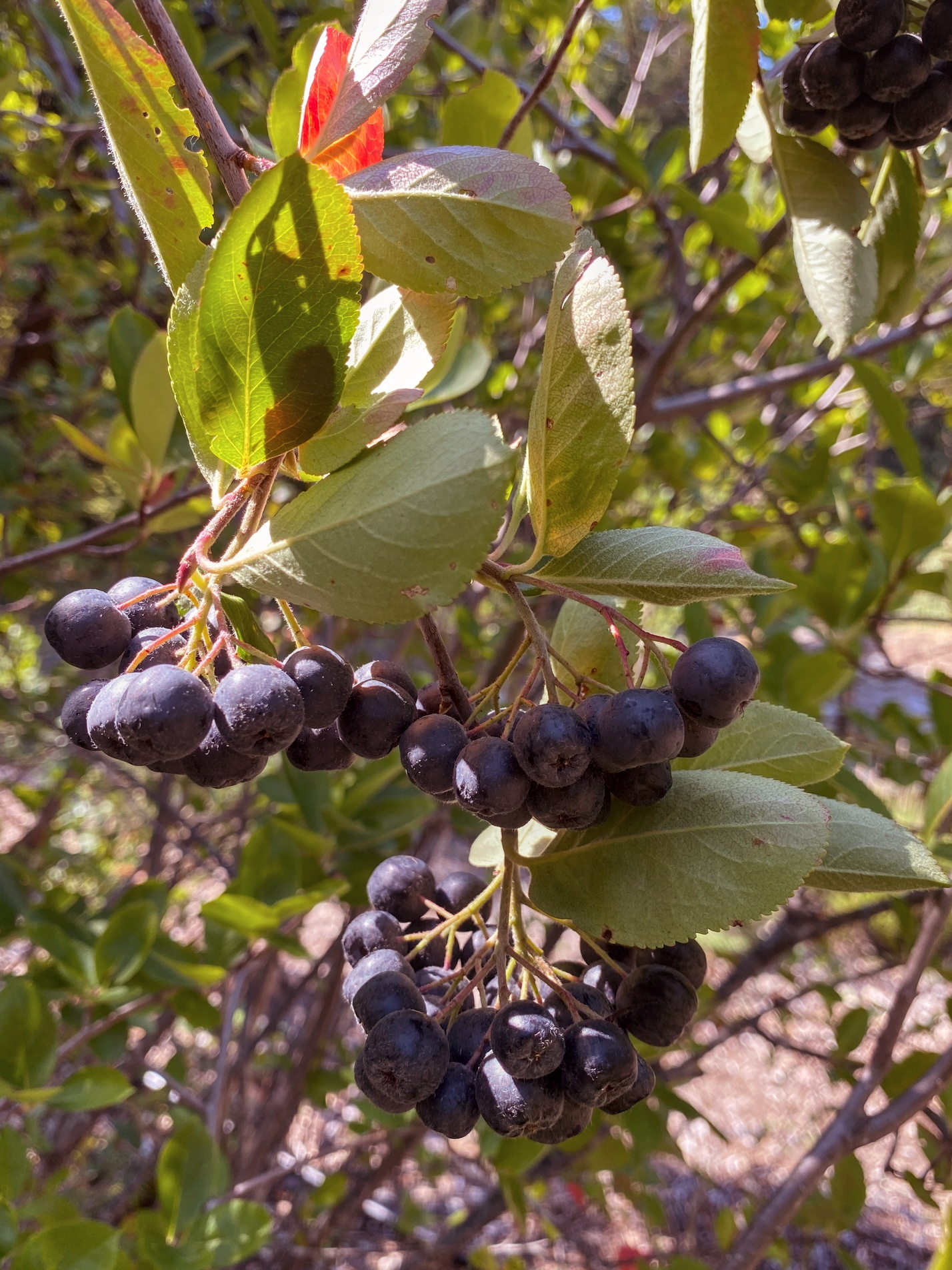
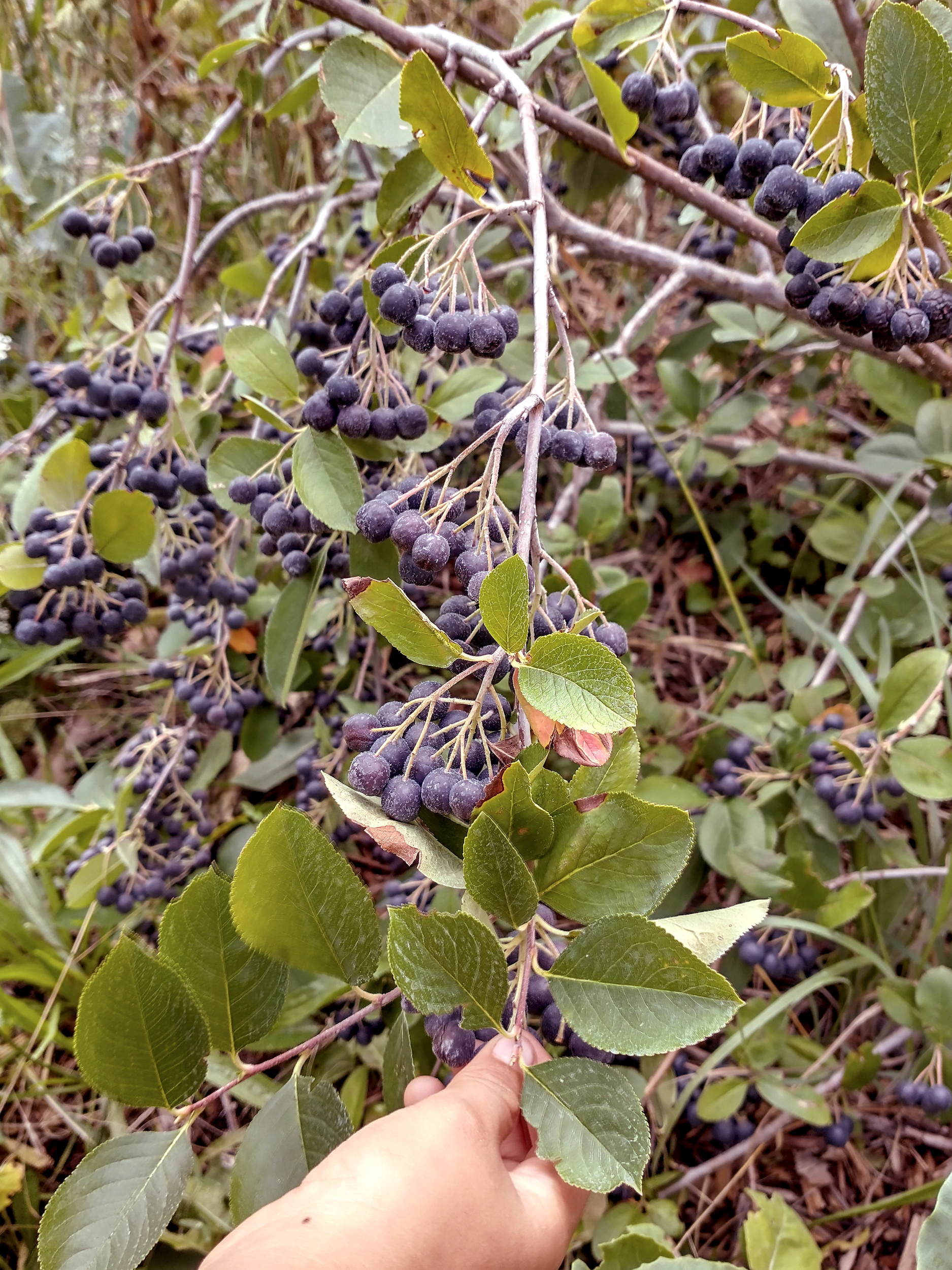
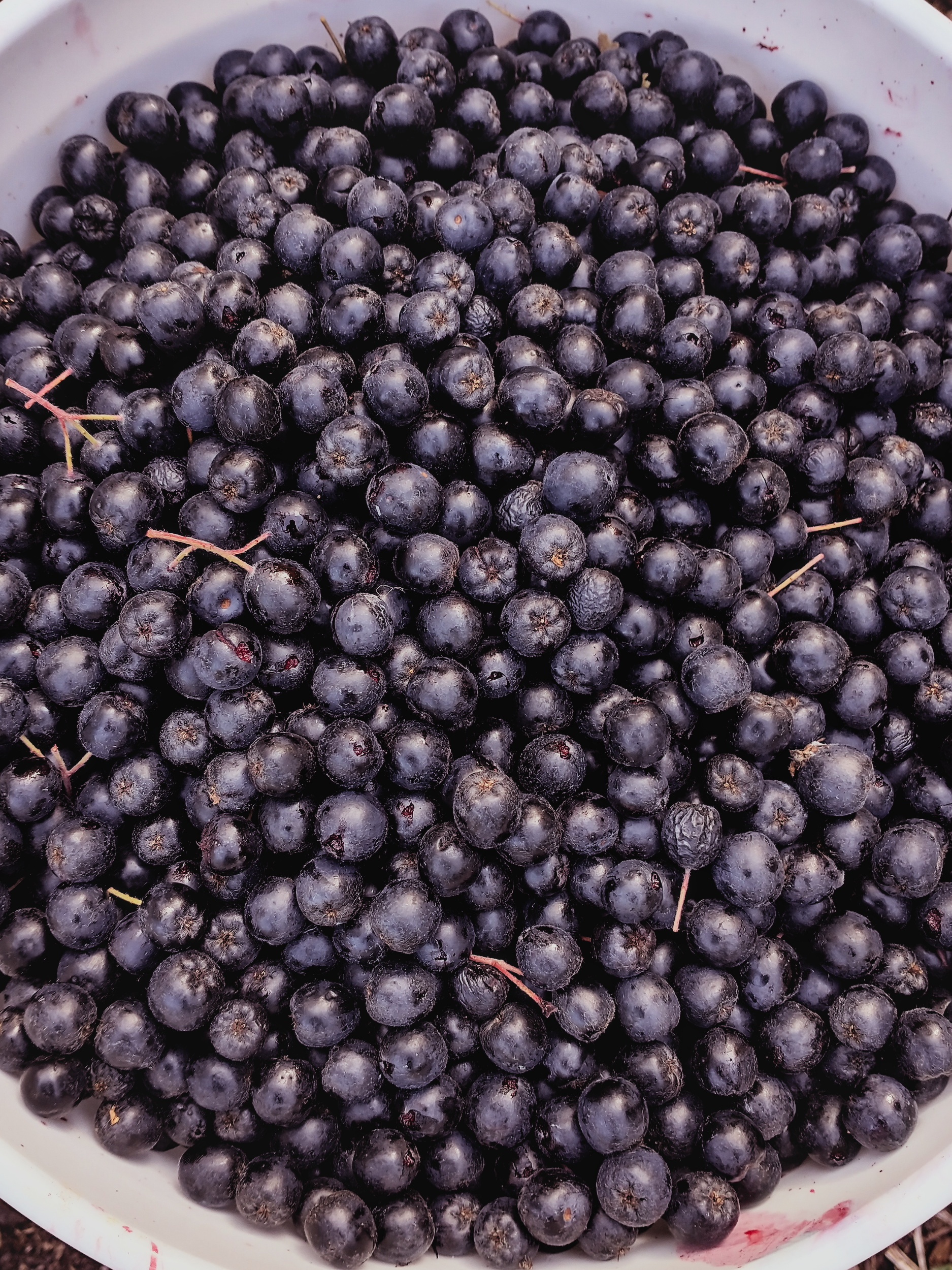
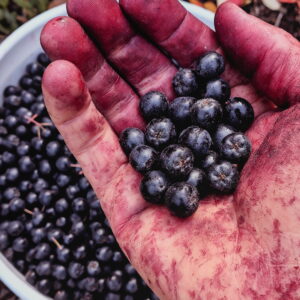
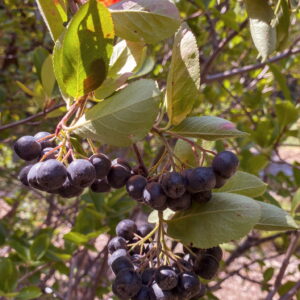
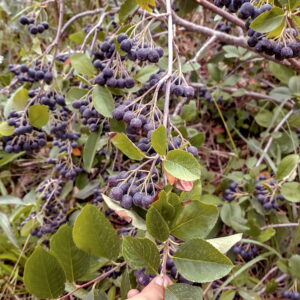
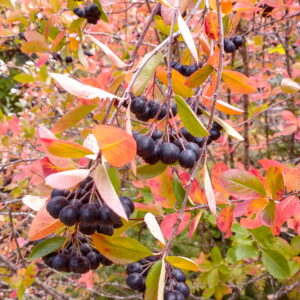
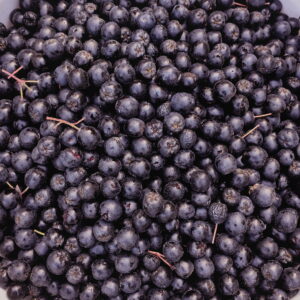
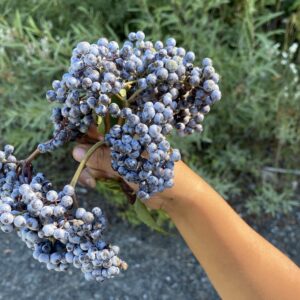
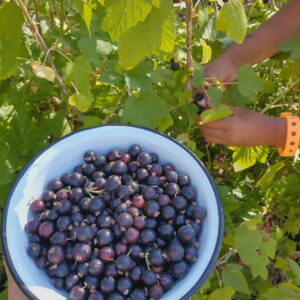
Aronia Berry is an amazing plant that deserves to be in many more gardens. Once established, aronia bushes produce copious amounts of dark purple, nearly black berries. Anyone that’s known the joy of harvesting a bucket of Aronia berries with appreciate the purple stains on their hands.
In a good year I can harvest about 5-7 gallons of berries off of a single established Aronia shrub grown in part shade conditions!
In many ways, Aronia offers abundance through joy, beauty and nourishment. The dark berries are full of antioxidants, much more than the blueberries. While we are comparing Aronia to blueberries, let’s celebrate that Aronia is not picky with soil type, does not need acidic conditions and has a much more extensive root system and won’t immediately die when it meets droughty conditions.
Furthermore, thanks to Aronia berry’s astringency, birds do not immediately flock to your Aronia bush. Say goodbye to bird netting. Yes, birds do eat some Aronia berries, but at least in our locale, if we leave Aronia berries on the bush, many will last into winter.
If you are new to Aronia, it’s worth informing you that the berries are astringent, so most of us won’t be eating them by the handful raw. The astringency might leave you smacking your lips, but I think one of Aronia’s common names choke berry is misleading and extreme. Actually Aronia is native to North America and the wild berries can range in flavor from delicious to disgusting. Cultivated varieties, like the seeds we offer, tend to be on the more delicious range of the spectrum!
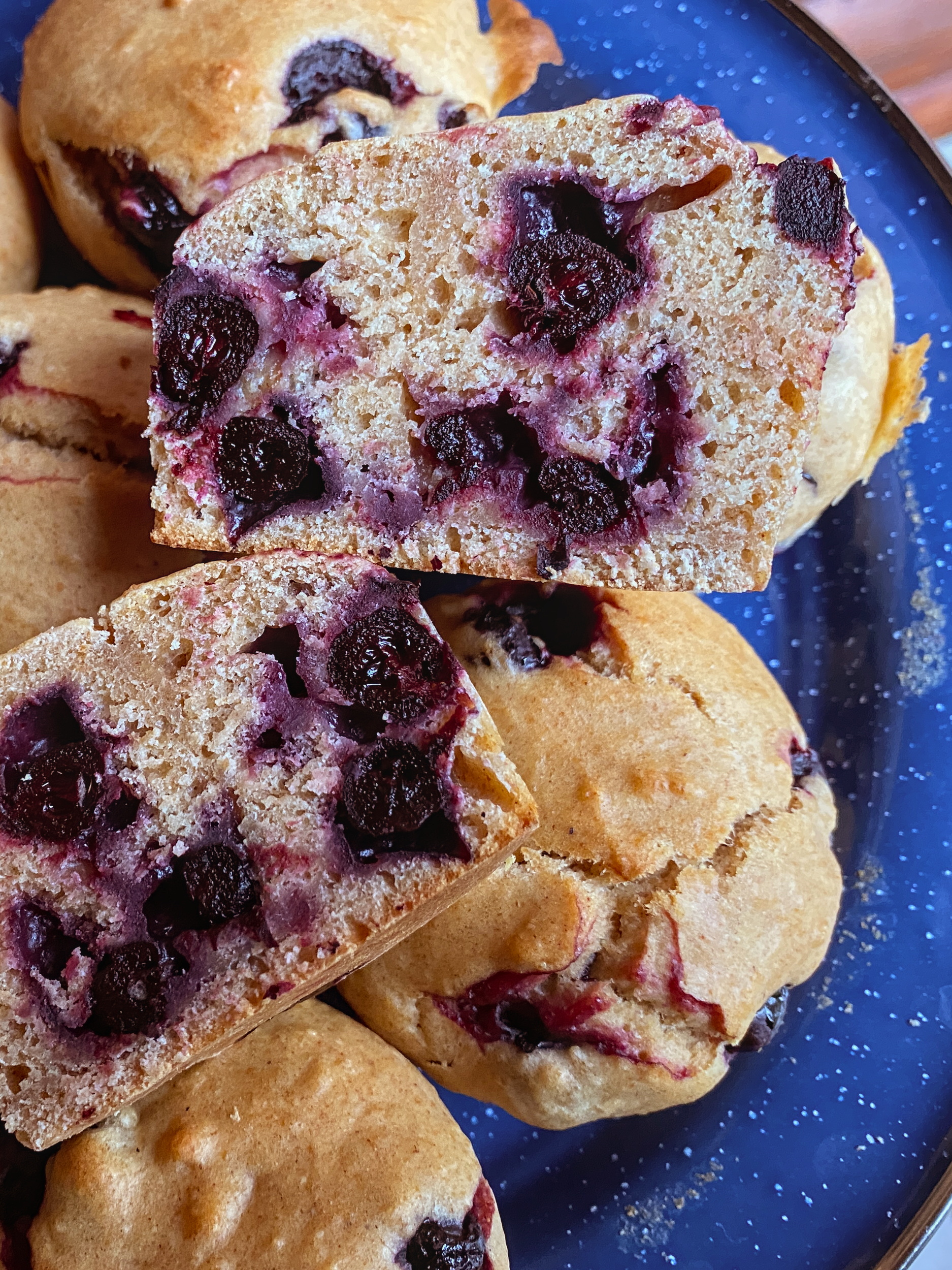
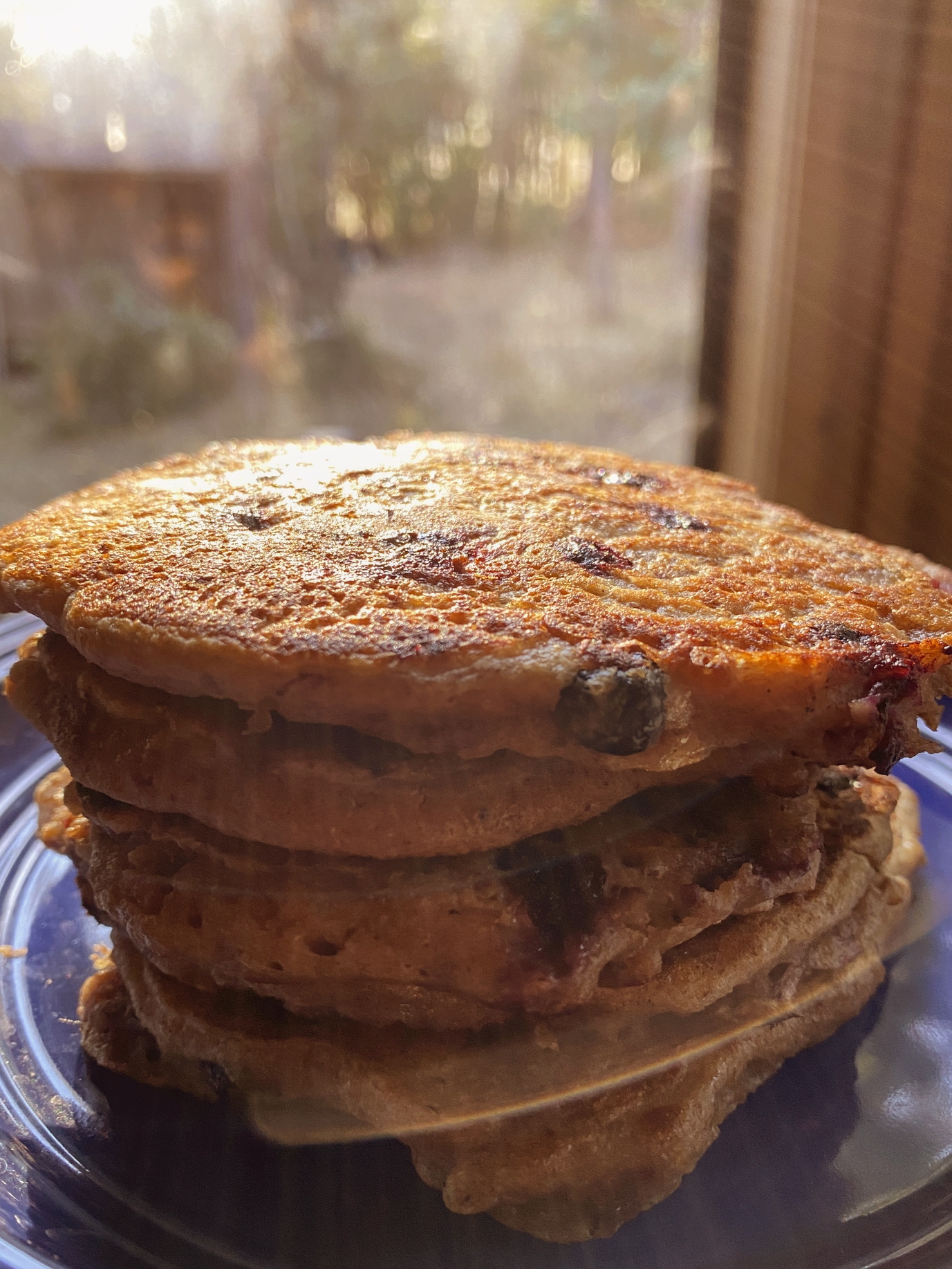
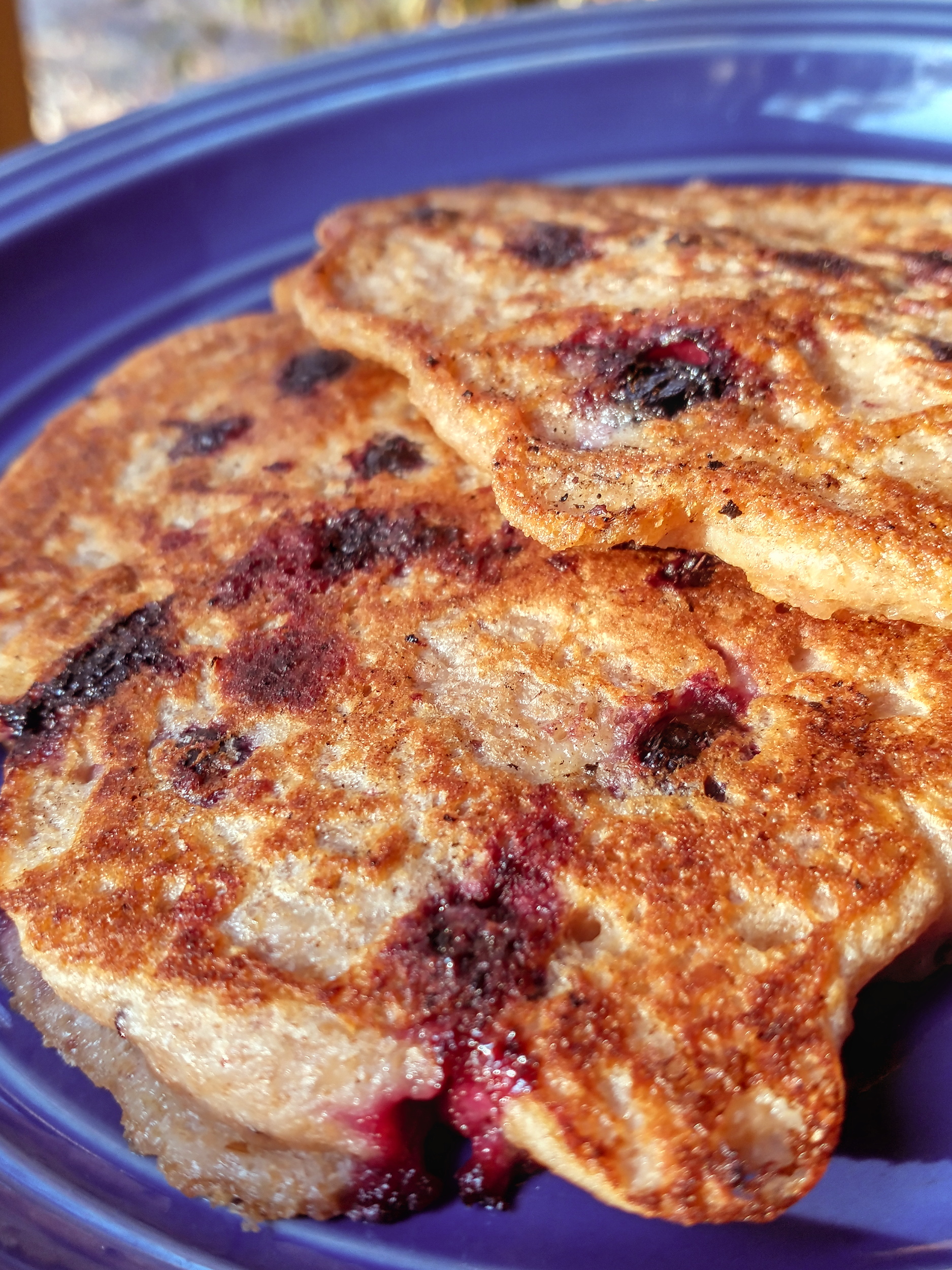
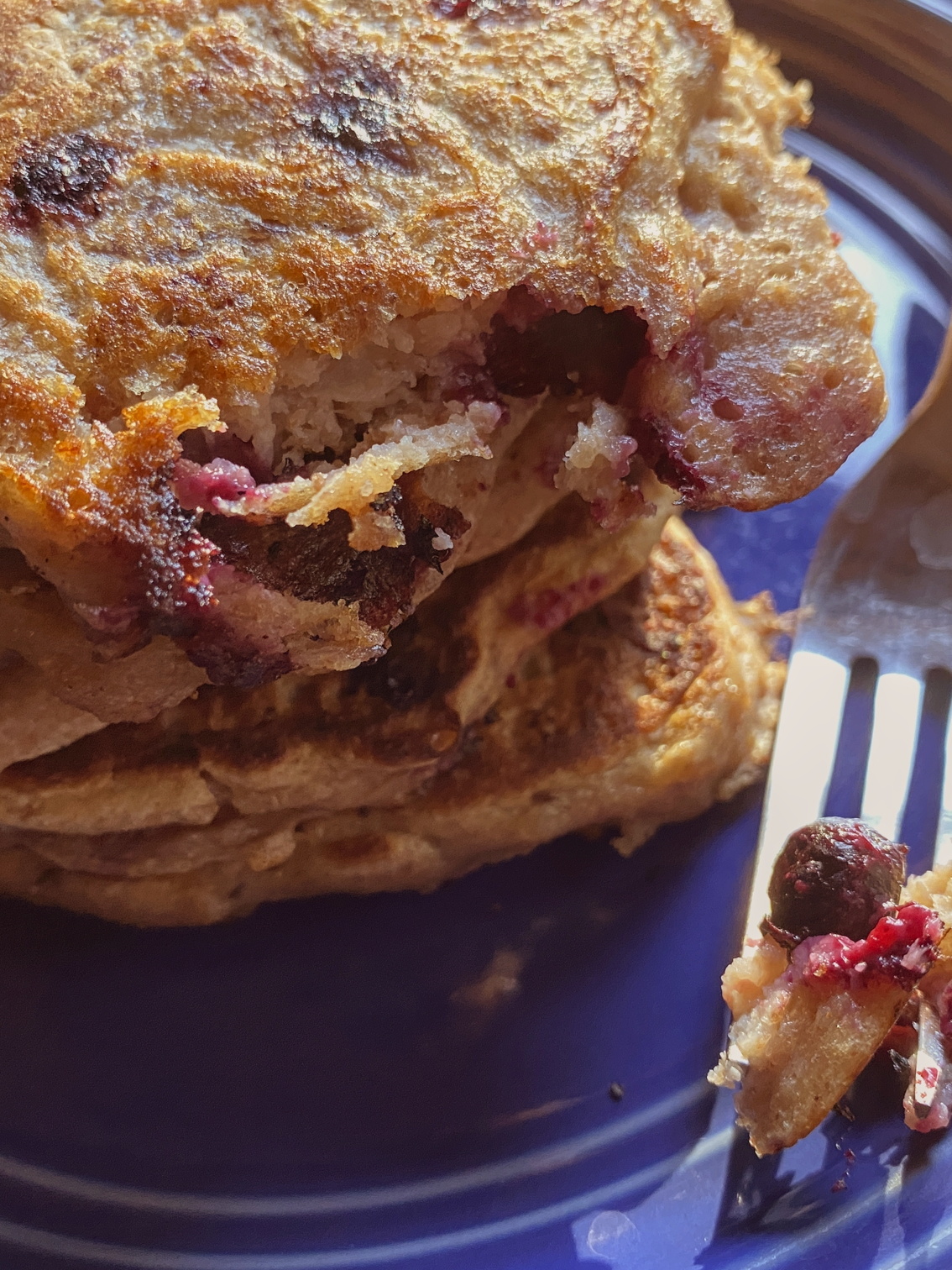
Where I believe Aronia berries really shine is in the processing. Cooking aronia berries removes just about all of the astringency and then you can enjoy their sweetness and flavor more fully. We love to substitute blueberries for aronia berries in any baking recipe. Aronia muffins, pancakes and breads are so delicious!
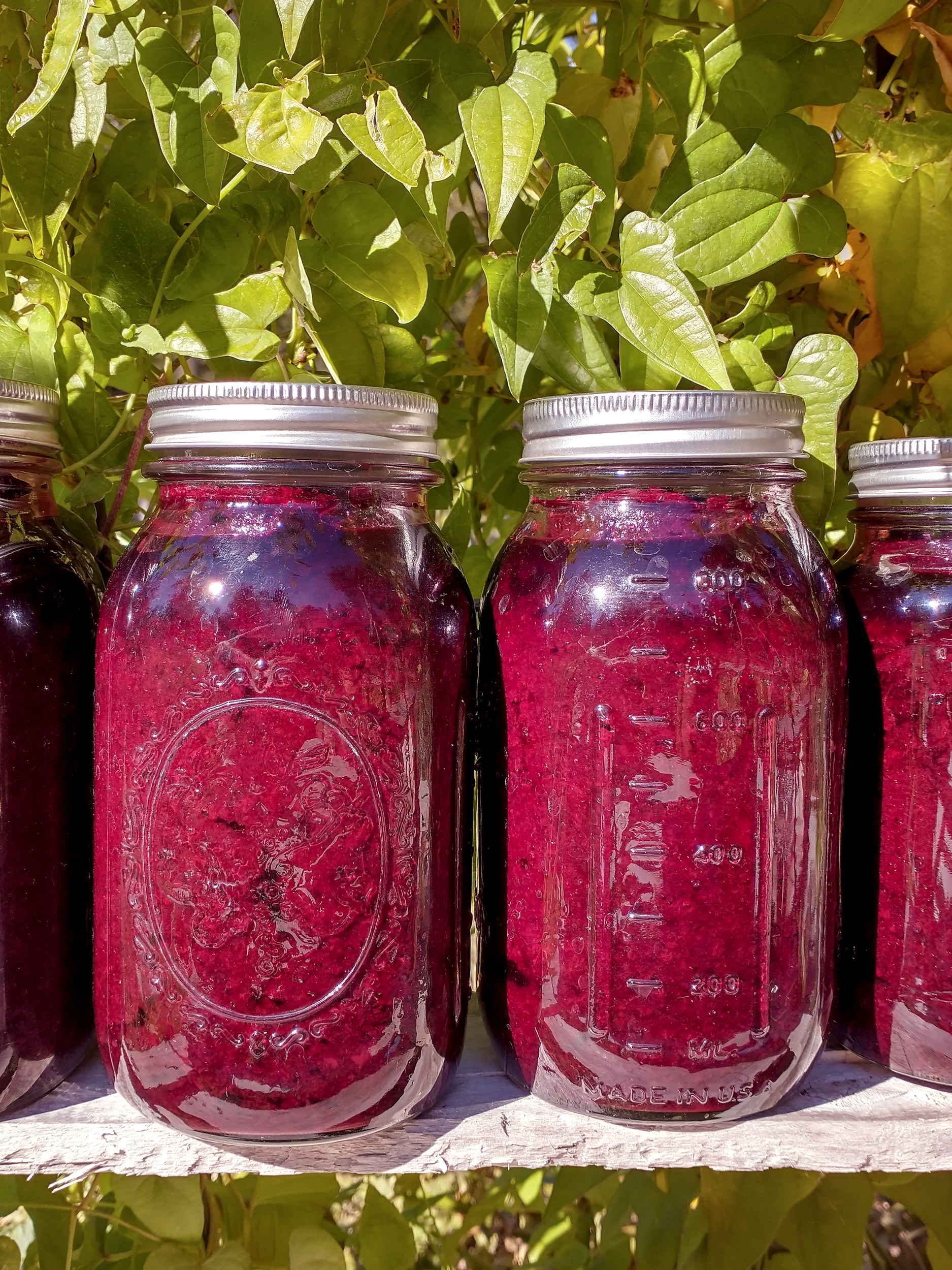
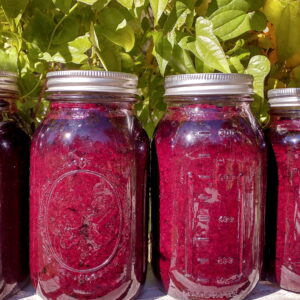
We also love to make aronia jam (or sauce), and since the berries are loaded with pectin, its a breeze to make an aronia jam without store bought pectin. We skip the sugar too and simply combine roughly half apple and half aronia and cook down on low until it reaches desired consistency.
Even though aronia might require a curious and open palate (don’t expect blueberry flavor), the most sensitive palates in our family have come to love Aronia jam and it’s become our family’s favorite. Perhaps its our bodies’ wisdom craving the antioxidants and nourishment?
Our friend Eaglesong makes a delicious syrupy vinegar from Aronia berries (and Hawthorn berries) which is delicious in salads and cooking. I highly recommend making aronia syrups and oxymels. They are versatile, nourishing and delicious.
I’d be remiss if I didn’t mention aronia wine, because aronia has become my favorite wine to make and drink. It is dark, rich and incredibly delicious, if you’re like me and enjoy the dark, sophisticated kind of wines.
Aronia berries offer a load of health benefits. They have anticancer properties, are anti-inflammatory, help with cardiovascular health and improve immunity. While aronia berries have been used for food for millennia, as of late they are being studied by scientists with great excitement for the health benefits they offer. There are many more benefits already known, too many to list here, with more benefits being discovered on an ongoing basis.
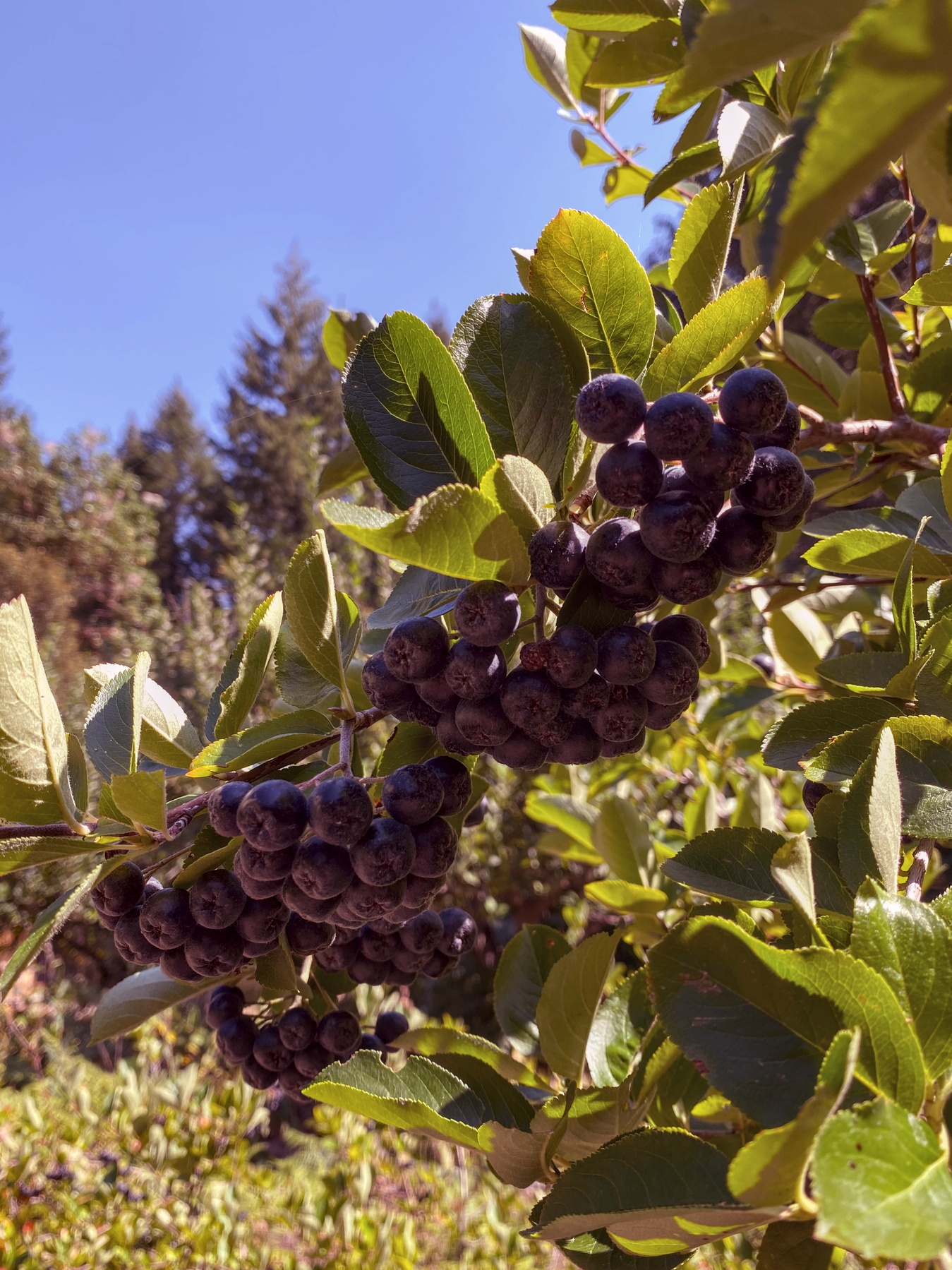
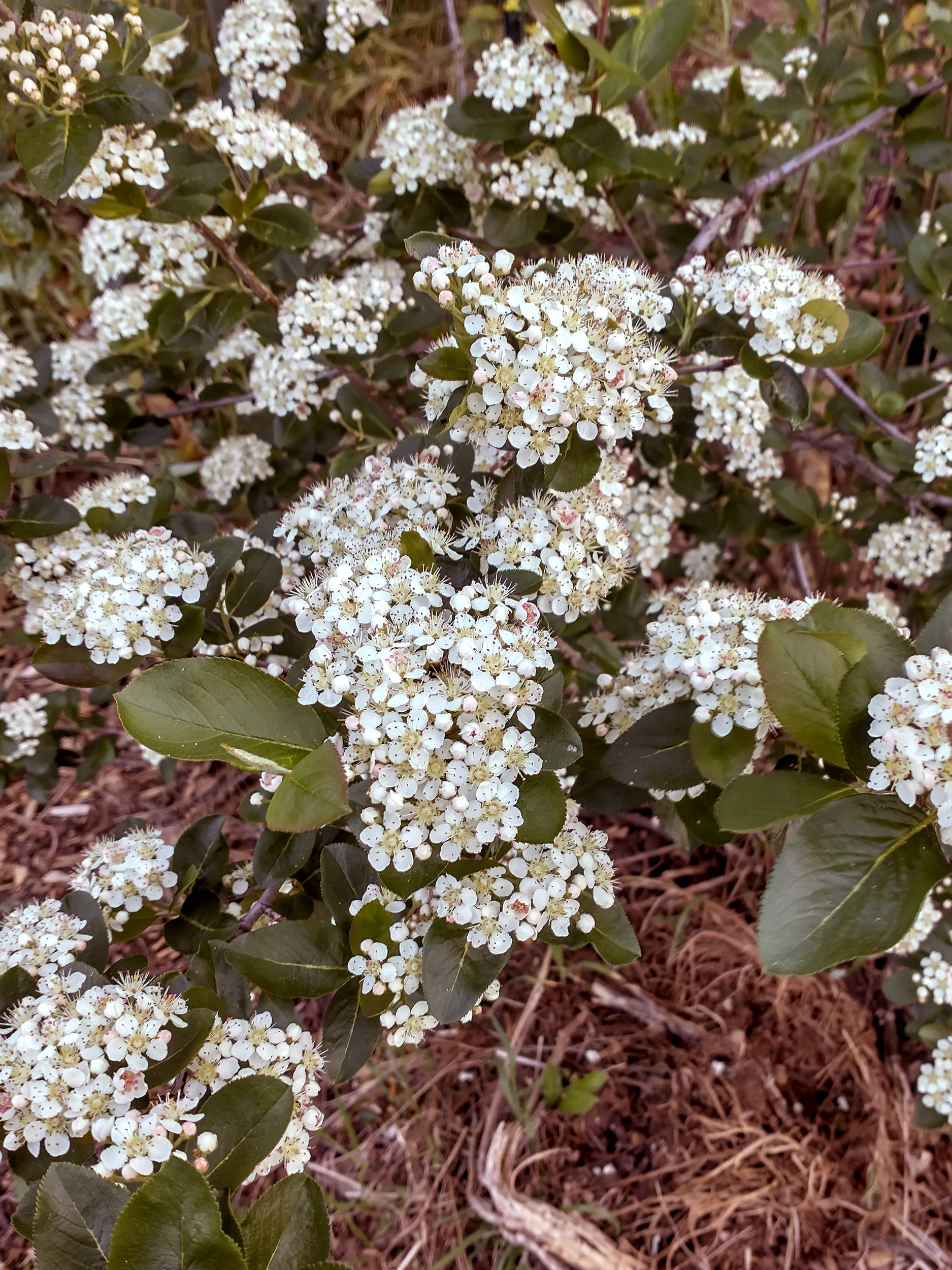
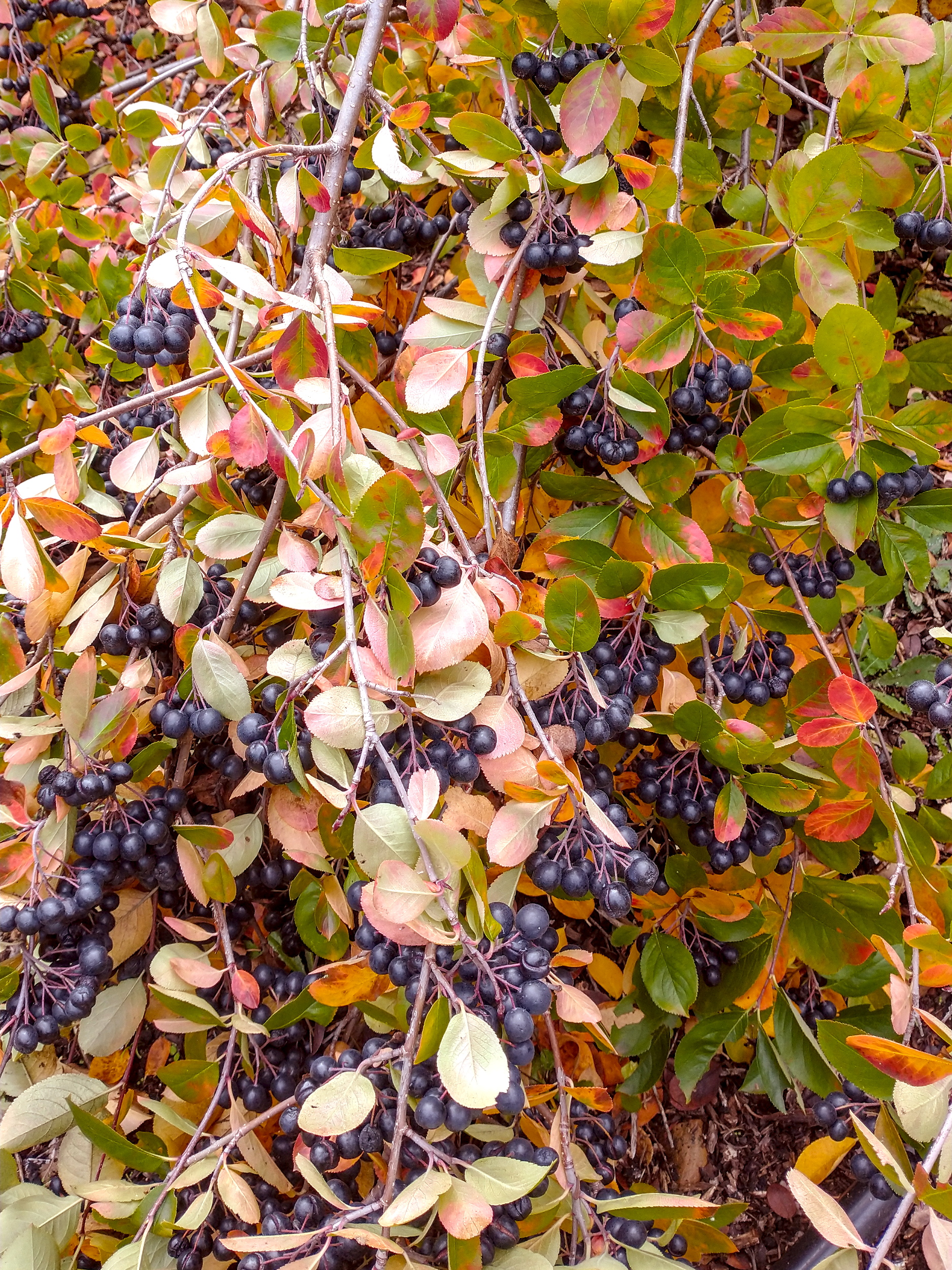
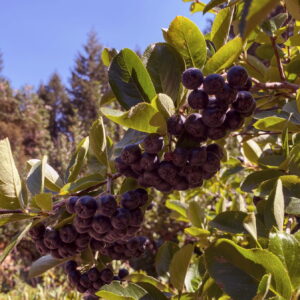
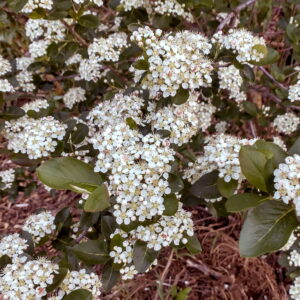
We should also talk about Aronia’s beauty too. In spring the shrub will put on a beautiful display of numerous clusters of small apple-like blossoms, white with pink anthers that are deliciously beautiful when you get up close. The flowers give way to green berries that grow through the summer. By the time the berries turn black the clusters are abundant and gorgeous, a living display.
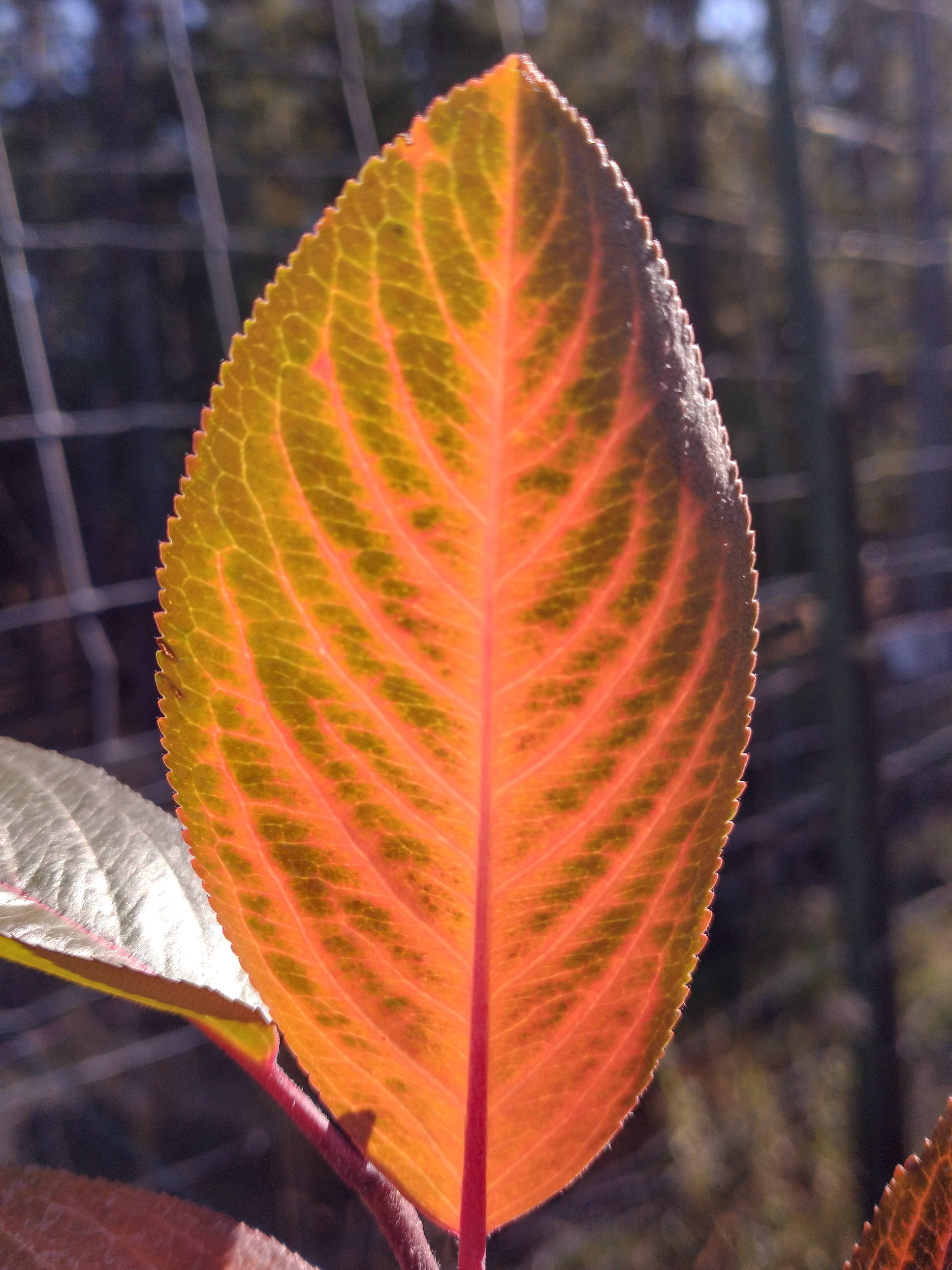
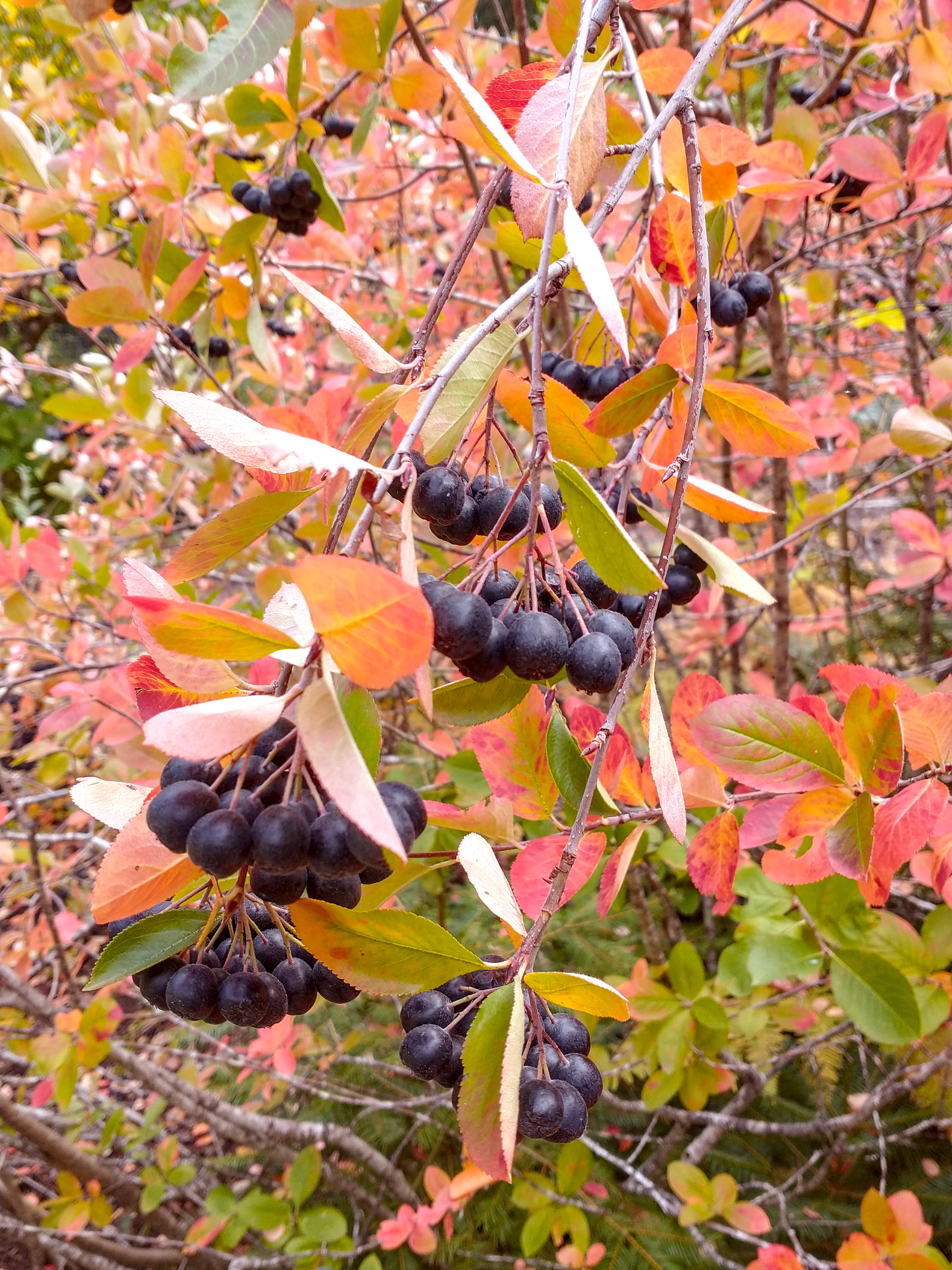
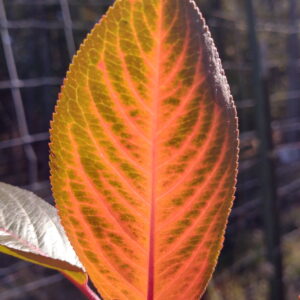
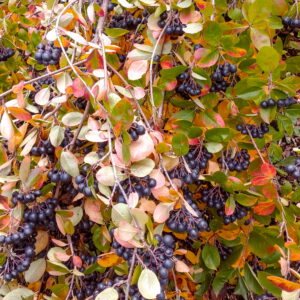
The grand finale is in the fall when the leaves turn bright, neon orange, a striking orange that is only paralleled by the sumacs, maples and poison oaks. The orange leaves really pop out on an overcast day. In fact this is one reason why aronia is popular as a landscape plant, the other being it can be easily pruned into a hedge. But unbeknownst to most aronia hedge owners, the abundant berries are as nutritious as the hedge is beautiful.
Do yourself a favor and plant some aronia berry bushes in or around your garden and enjoy abundant beauty, joy and nourishment for years to come.
Want to learn more about Aronia Berry in the garden and kitchen? Check out our free comprehensive homesteader’s plant profile on Aronia in our freebie bundle.
Details
Lifecycle: Perennial
Lifespan: 10-20+ years
Hardiness zones: 3-8 (USDA)
Habitats: swamps, woodlands, lowlands, hillsides in Eastern North America
Plant size: 8 ft x 9 ft
Light: Full sun to part shade
Soil: All soil types
Water: Prefers regular moisture, but is drought hardy
Seed Starting
Aronia seeds require cold stratification for 3 months. After seeds germinate and are large enough to handle, divide seedlings into their own pots to grow up for one season before planting in their final location.
Cultivation
Aronia is self fertile and you only need one bush to produce copious amounts of berries!
Aronia can fruit well in part shade so you have options on placement with regard to full sun or part shade. Cultivation is easy because aronia isn’t picky about soil types. We have aronia in part shade and full sun, as well as moist and dry soils. Aronia is not picky and thrives everywhere we’ve planted it. Like most plants you’ll see faster growth and fruiting with more sun and water.
Pruning aronia is also easy because the shrub continues to send up new branches from the crown and a little ways away from the crown. Established Aronia bushes respond very well to pruning. Just prune branches as needed to ensure easy harvest and the size shrub you want. I tend to prune more of the lower, horizontal branches because I don’t want berries dragging in the soil too much (the younger and lower berry laden branches tend to bend down a bit).
Like most shrubs, aronia loves mulch. We mulch with straw, woodchips, and/or leaves and aronia absolutely loves it.
Harvest
You can harvest Aronia berries as soon as they are dark and plump. However, if you are patient and wait later in the fall, you will be rewarded with sweeter berries. As first frost approaches and temperatures start to cool, the berries will develop more sugars and have noticeably less astringency. If the birds don’t bother the berries much, and if they aren’t in too dry of a spot, I sometimes wait to harvest after frost. Berries hang on the bushes pretty well, even to the point of leaves dropping from the shrubs.
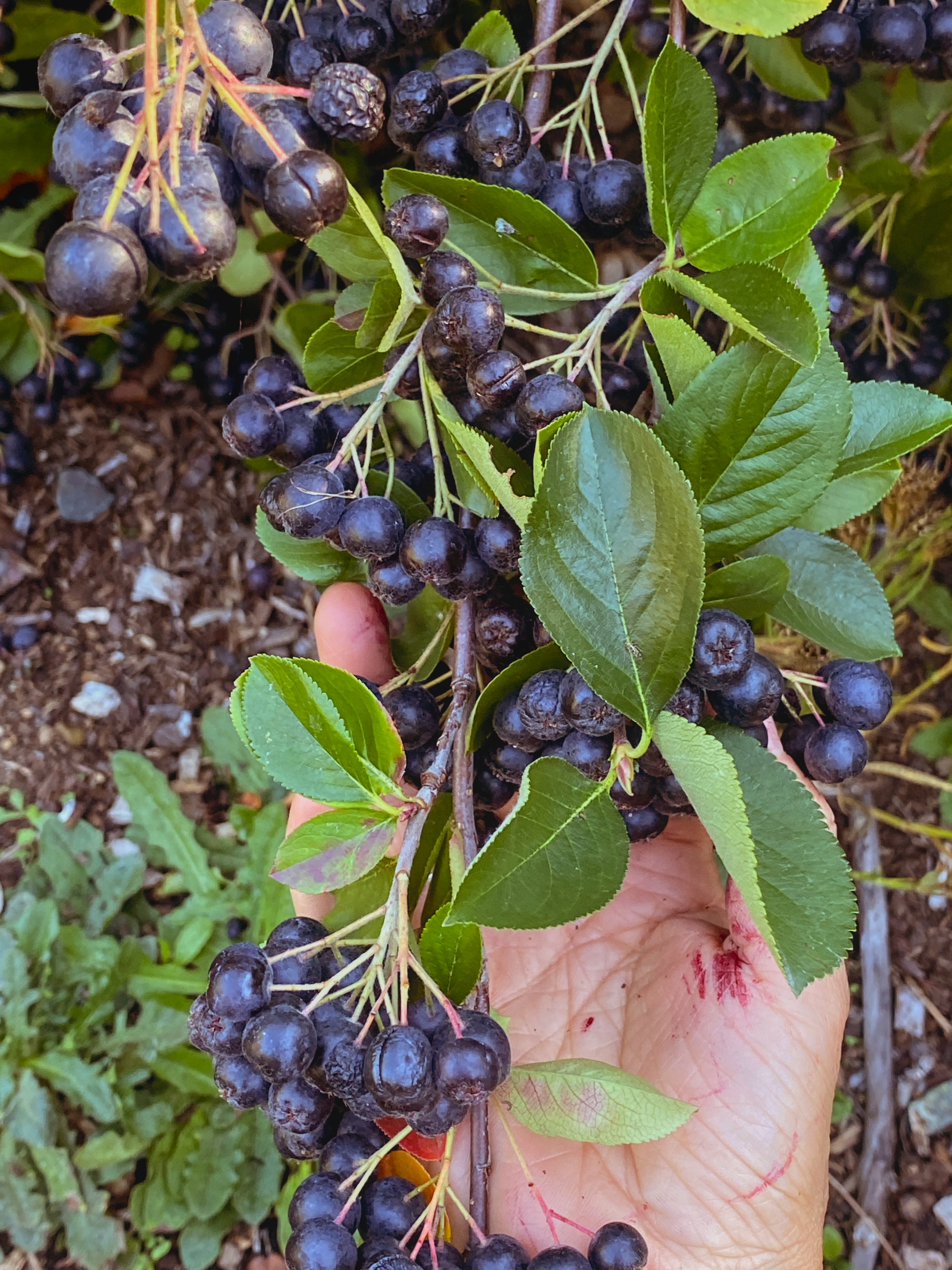
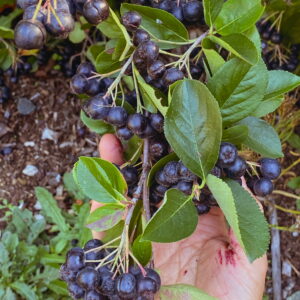
Harvesting is very easy, you can grab the berries of a whole cluster and pull them off the stems. Harvesting this way, you’ll get mostly clean berries with a few leaves or stems that will need to be picked out. The berries are pretty firm and won’t bruise easily, so just drop them into your bucket, bowl or basket.
When you pull the berries off their stems at harvest time, the berry will rip off the stem leaving a small tear in the fruit. Because aronias are astringent they won’t rot quickly, so you can leave your harvest overnight to process the next day or they’ll hold a week or two in the fridge or in a cold room before they start to mold, buying you precious time.
Alternatively if you want your berries to last longer on the counter you can clip off the berries with stems, keeping the stem intact. But its more time consuming and you’ll have more labor to de-stem the berries later.
Propagation
Aronia shrubs will spread from the base by sending up root suckers. Not to worry as it is more clumping than running habit. However, the root suckers allow us to sever and dig up rooted cuttings to clone the plant.
Layering Aronia is also very easy. Choose more horizontal branches and partially bury under the soil or moist mulch. Hold the branch down with a rock or landscape staple. After one season the branch will have grown new roots and can be severed and transplanted or potted up for a season.
Seed Saving
Aronia berries can be wet processed to clean the seeds while they are still moist. Mash very ripe berries in a bowl. Or blend very ripe berries with some water in a blender or with an immersion blender. Add water to cover and stir twice daily. Allow to ferment 4-6 days. Decant the pulp from the seeds repeatedly until mostly seeds are left. Immediately begin moist stratifying the seeds. Or spread out and dry the seeds for longer storage or sharing.


Reviews
There are no reviews yet