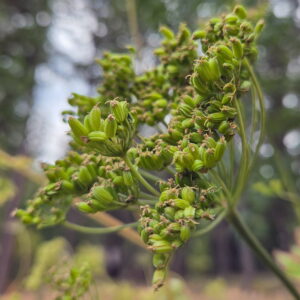
Description
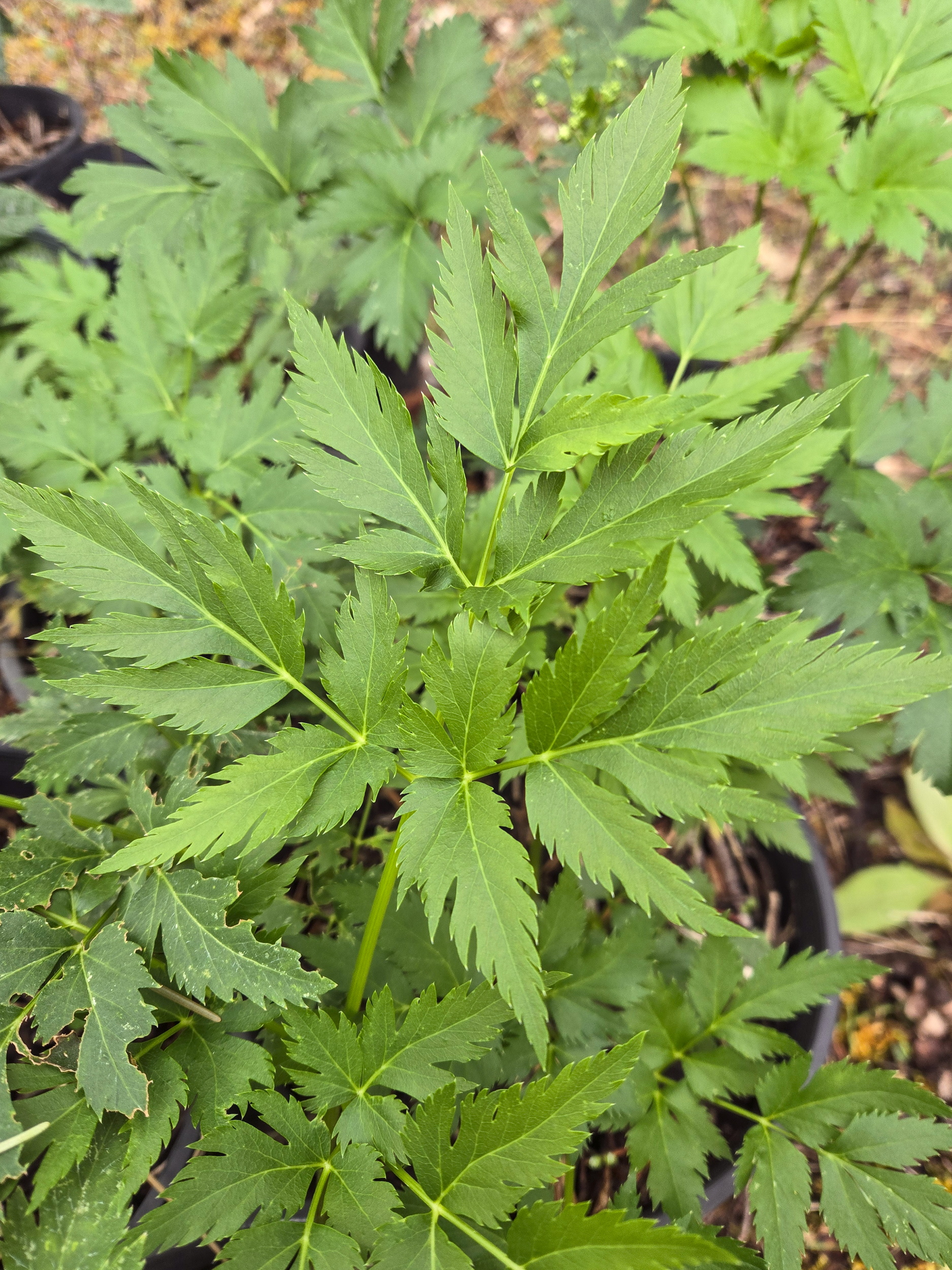
Korean Celery is a perennial celery grown for its leaves. I love that Korean Celery is a perennial because it keeps getting better and bigger each season as the root system establishes and grows. Well established plants can be several feet wide and four to five feet tall, but even as tall as 8 feet once flowering!
Korean Celery is incredibly cold hardy and will continue growing slowly and can be harvested even in the coldest months. You might even find Korean Celery leaves growing under the snow!
Korean Celery is a popular herb in Korea and is traditionally called Seombadi (pronounced somebody) in Korean. It is fairly rare in North America and we westerners are still learning about this wonderful plant, though it is starting to gain some popularity in niche gardening circles.
We grow and eat Korean Celery as a leafy herb. Korean Celery leaves are delicious and taste very much like a strong celery leaf. Some folks describe the flavor as stronger than celery leaves but milder than Lovage leaves.
If we’re comparing Korean Celery to leaf celery varieties with dark leaves, then I find the flavor analogous. But Korean Celery’s flavor is definitely stronger than more mild celery varieties leaves (e.g. Utah Tall). Korean Celery leaves also make a great substitute for flat leaf parsley leaves.
Korean Celery’s leaves lend themselves well to soups, stews, curries, pastas, pizzas, roasts, rice pilafs and much more. Try chimichurri, pesto or Korean Celery leaf infused salt as condiments.
Younger stems can also be eaten, but I find that the window before they get a bit more fibrous is short. The older stems and leaves would make a great candidate for flavoring broths.
Korean Celery leaves can be dried for convenient use in the kitchen any time of year. Korean Celery seeds are also flavorful and can be used as a spice, similar to how you might use celery or dill seeds.
Like other Apiaceae plants, Korean Celery is a wonderful beneficial insectiary plant and the showy white umbels attract myriad pollinators.
As our plants are still relatively young, we have limited seeds available for the 2026 season.
Details
Lifecycle: Perennial
Lifespan: Unknown years
Hardiness zones: 4-8+ (USDA)
Habitats: Ulleung-do island in Korea
Plant size: 4 ft wide x 4+ ft tall
Light: Full sun to part shade
Soil: All soil types, well drained soils.
Water: Regular moisture is preferred
Seed Starting
Surface sow seeds and gently press/tamp into good quality potting soil, in a flat or pots in fall or late winter. Keep moist until seeds germinate. Korean Celery germinates and starts growing in relatively cold temperatures. Germination may benefit from a 1-2 month period of moist, cold stratification.
Cultivation
Korean celery enjoys regularly moist soils and plenty of organic matter. Our plants are doing quite well in part shade and appreciate a bit of shelter from the harsh summer sun.
Like many other Apiaceae relatives, Korean Celery is prone to gopher & vole predation, so take care to plant where rodent pressure is low, or find a way to protect your plant’s roots.
Harvest
Korean Celery leaves can be harvested fall through early-mid summer. Once the plant is setting seeds it stops growing new leaves for a brief period of dormancy, before it resumes new growth from the root crown in fall.
Harvest seeds in the fall when they are ripe (see Seed Saving below).
Propagation
Korean Celery crowns can be divided when the plants are large enough.
Seed Saving
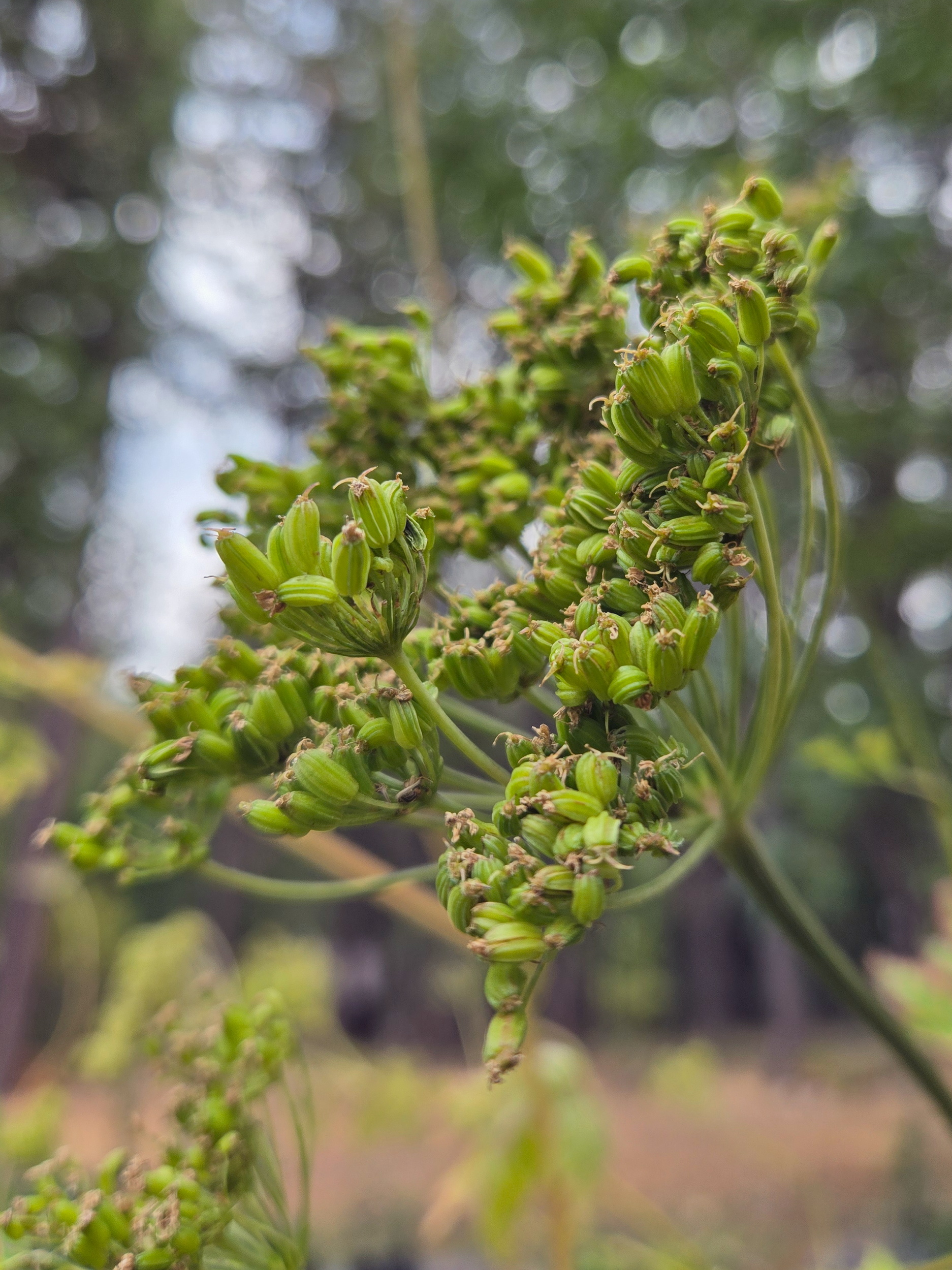
In the fall after the flowers have dried up, look for seeds to turn green to various shades of brown. A sign that the seeds are probably ready to harvest is the seed stalk/stems are starting to turn or have already turned brown. Clip off individual seed stalks into a paper bag or spread them out to dry if they have some latent moisture. Rub or pluck the seeds off the stems, then screen and/or winnow if cleaner seed is desired for eating or sharing.



Reviews
There are no reviews yet