

Description
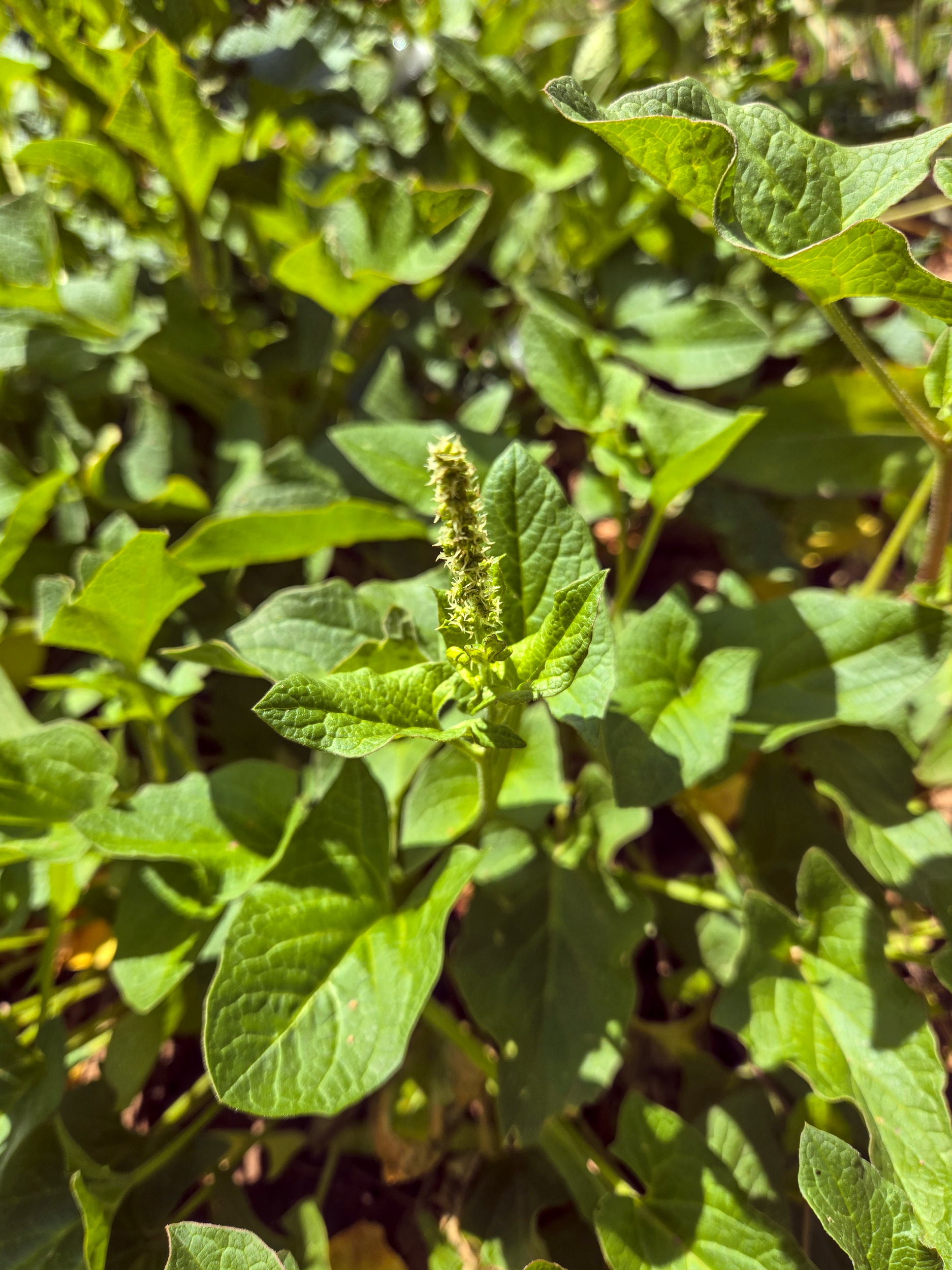
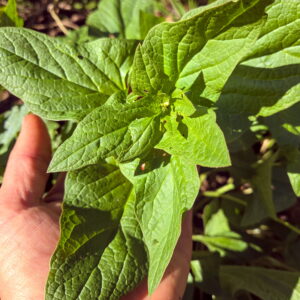
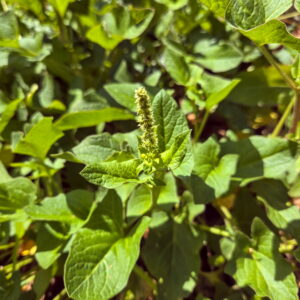
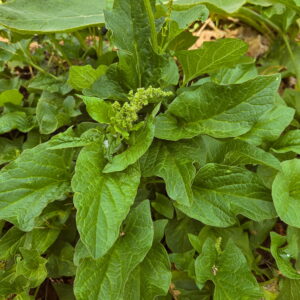
Good King Henry is a perennial spinach plant that comes back and gets better year after year! Good King Henry belongs to the same Amaranth family as spinach and so they are like cousins. But unlike spinach, Good King Henry is a perennial.
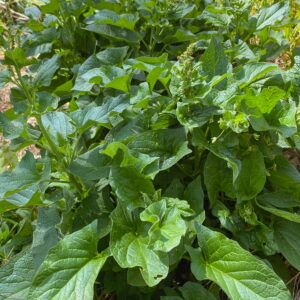
Good King Henry starts slow in its first year, but in year two and beyond you can enjoy regular harvests of the lush leaves. If you like to eat lots of spinach and like the idea of perennial vegetables, I recommend planting a decent patch of Good King Henry plants for abundant harvests!
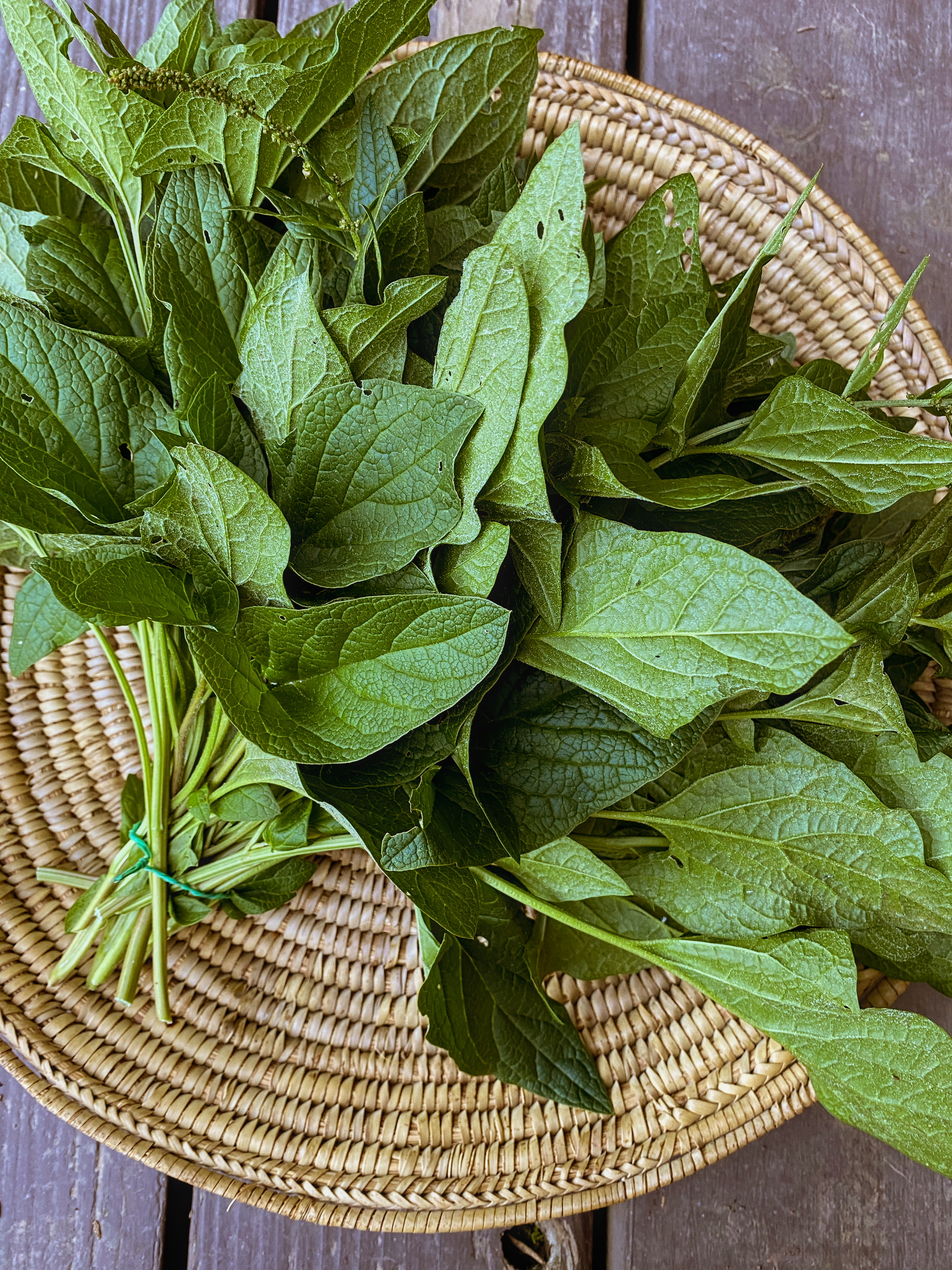
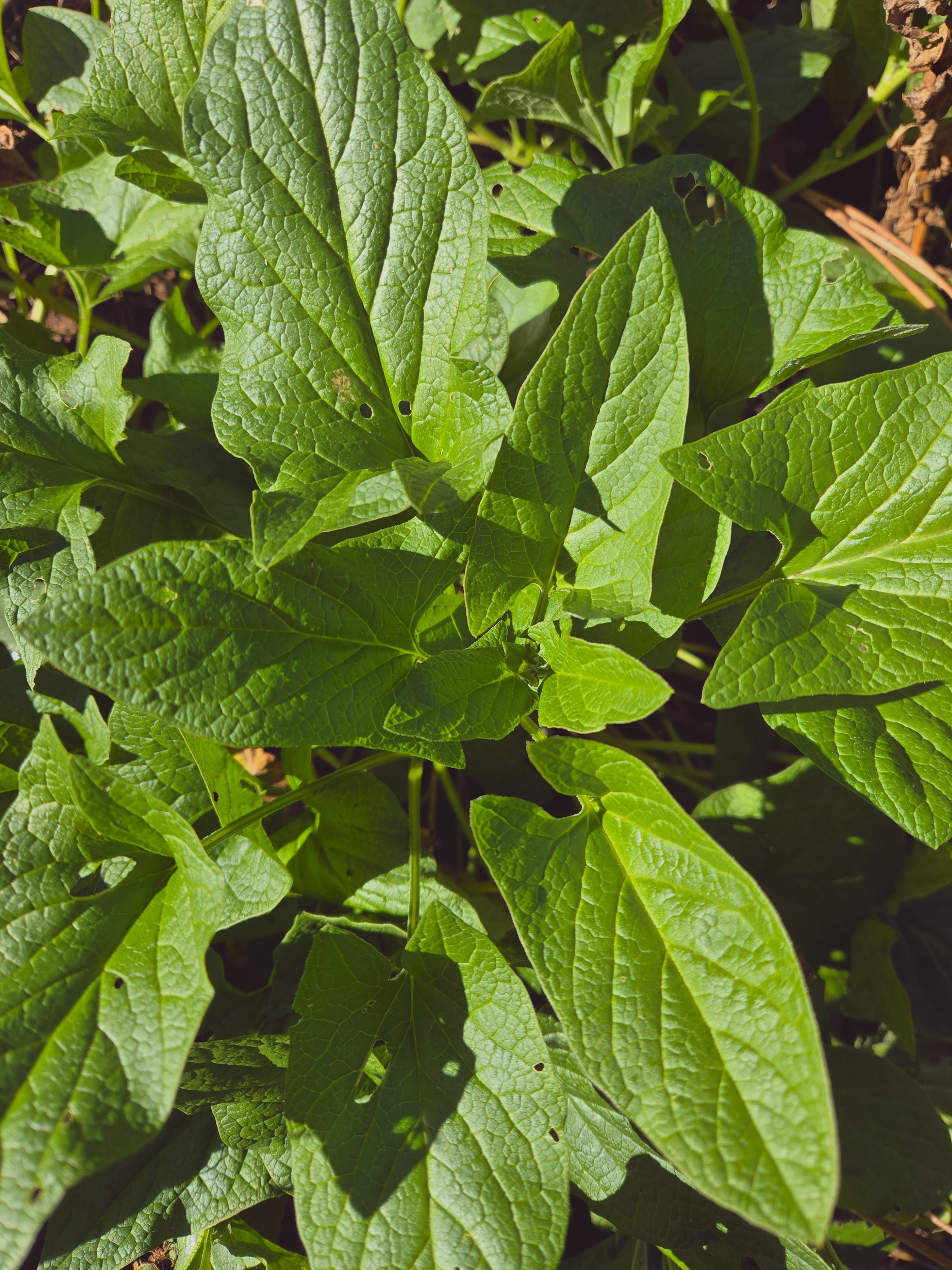
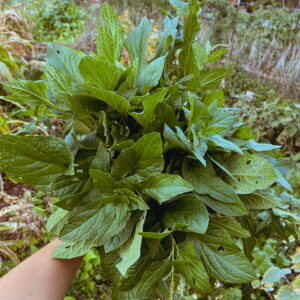
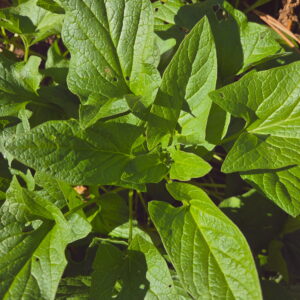
Cooking the beautiful Good King Henry leaves yields a delicate spinach-like leaf that is wonderful cooked by itself or added in a variety of foods. While the flavor and texture is not exactly like spinach, it is mild and similar enough that you can substitute it in any recipe that calls for cooked spinach.
Please note that Good King Henry should not be eaten raw in quantities because it contains oxalic acid. Most of the oxalic acids are neutralized after cooking the greens thoroughly. That’s why Rhubarb stalks are always cooked well (Rhubarb is another relative of Good King Henry). Cooking plants that contain oxalic acid in or with dairy products is another way of offsetting the antinutrient properties of oxalic acids, because dairy is high in calcium and offsets the calcium that gets bound by the oxalic acids.
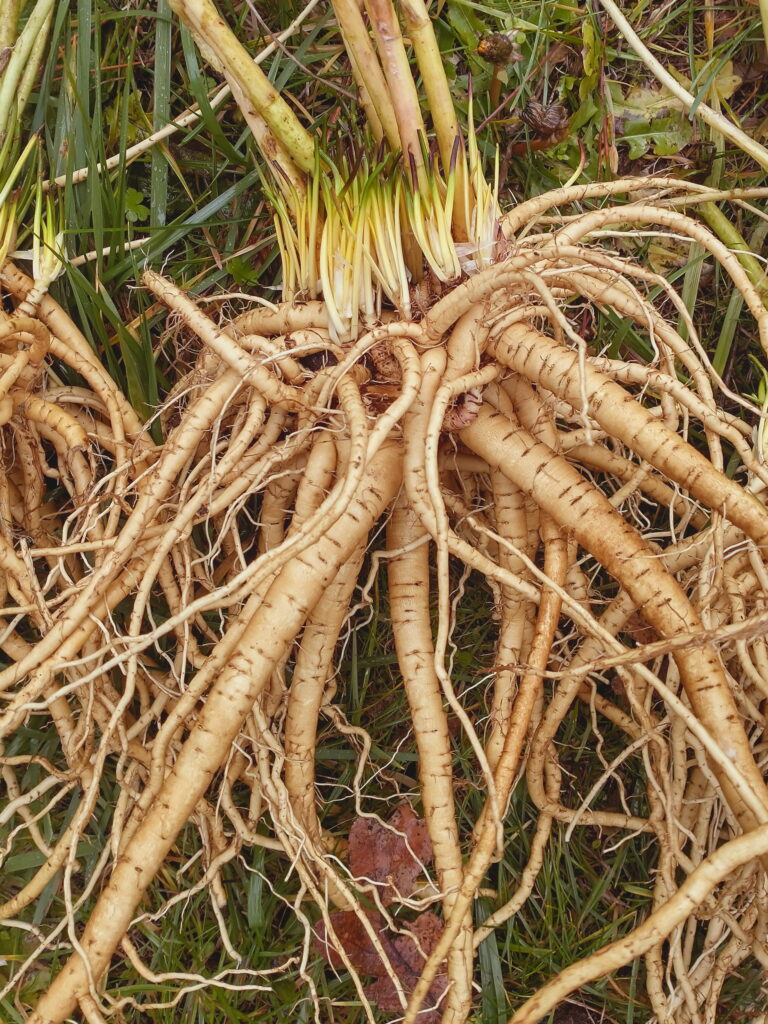
As a perennial, Good King Henry’s tap root gets bigger and fatter each year and I believe that once established, it is able to gather more and more minerals to deposit in its leaves, which is another way that perennials can often outshine annuals.
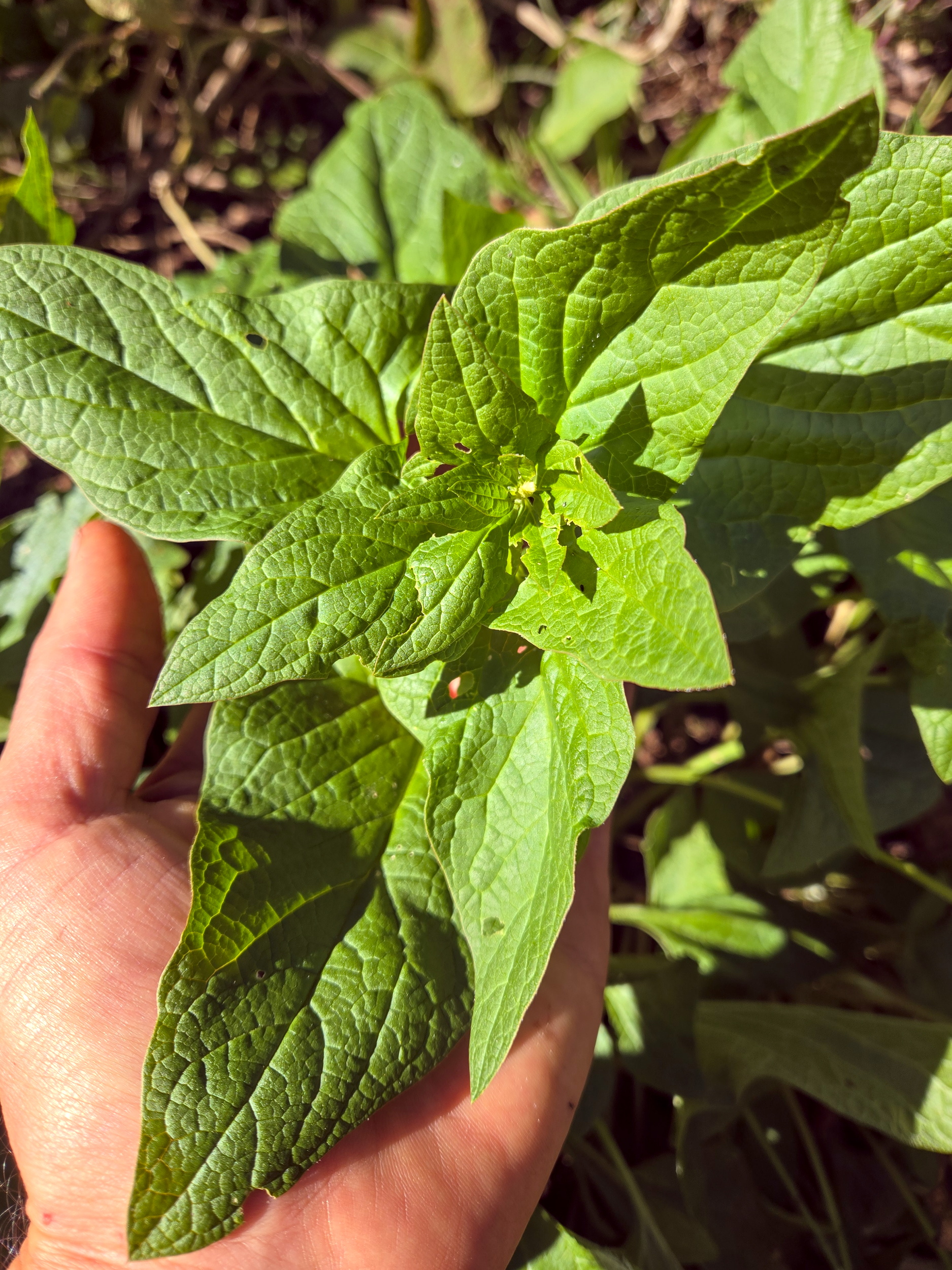
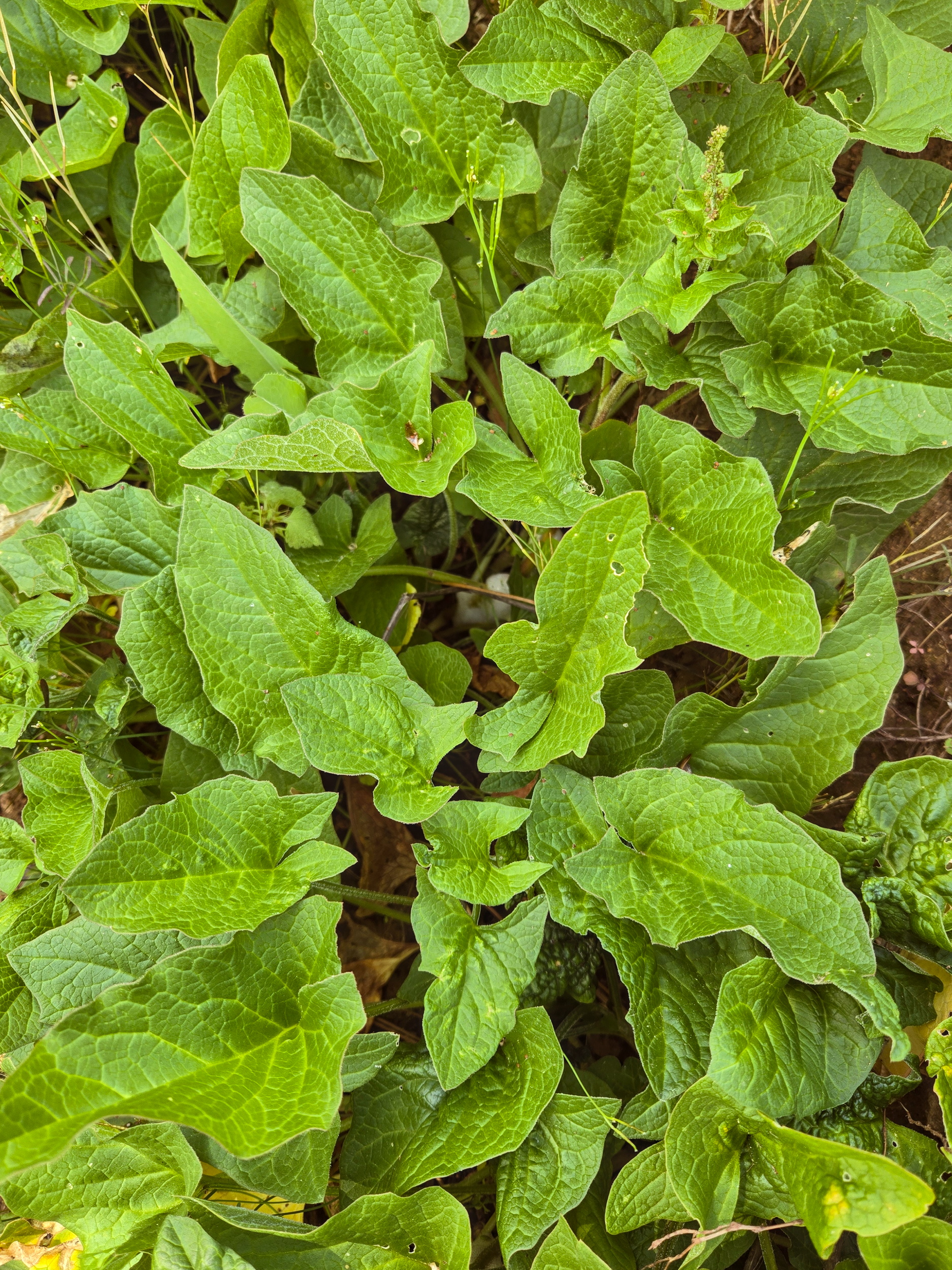
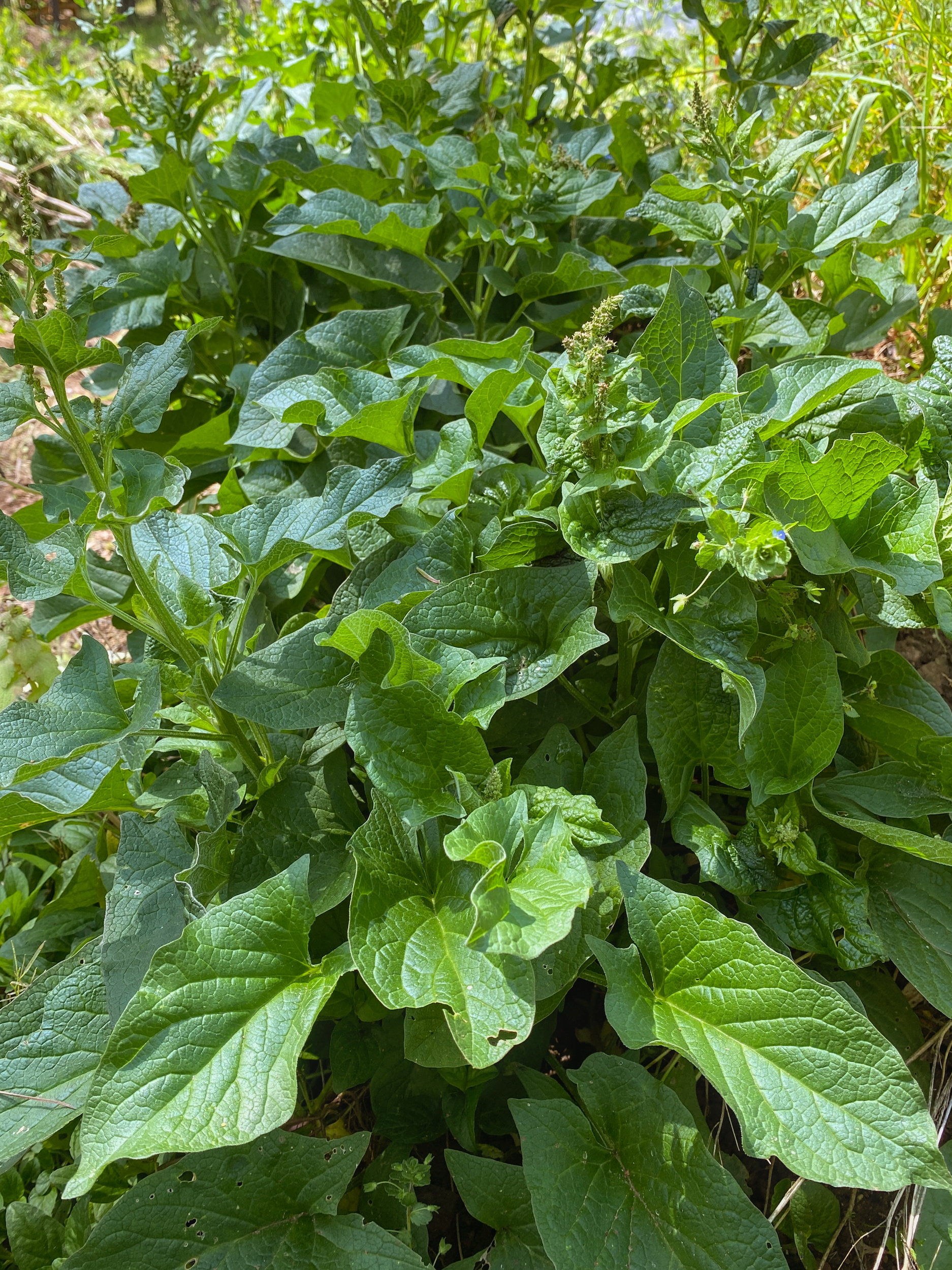
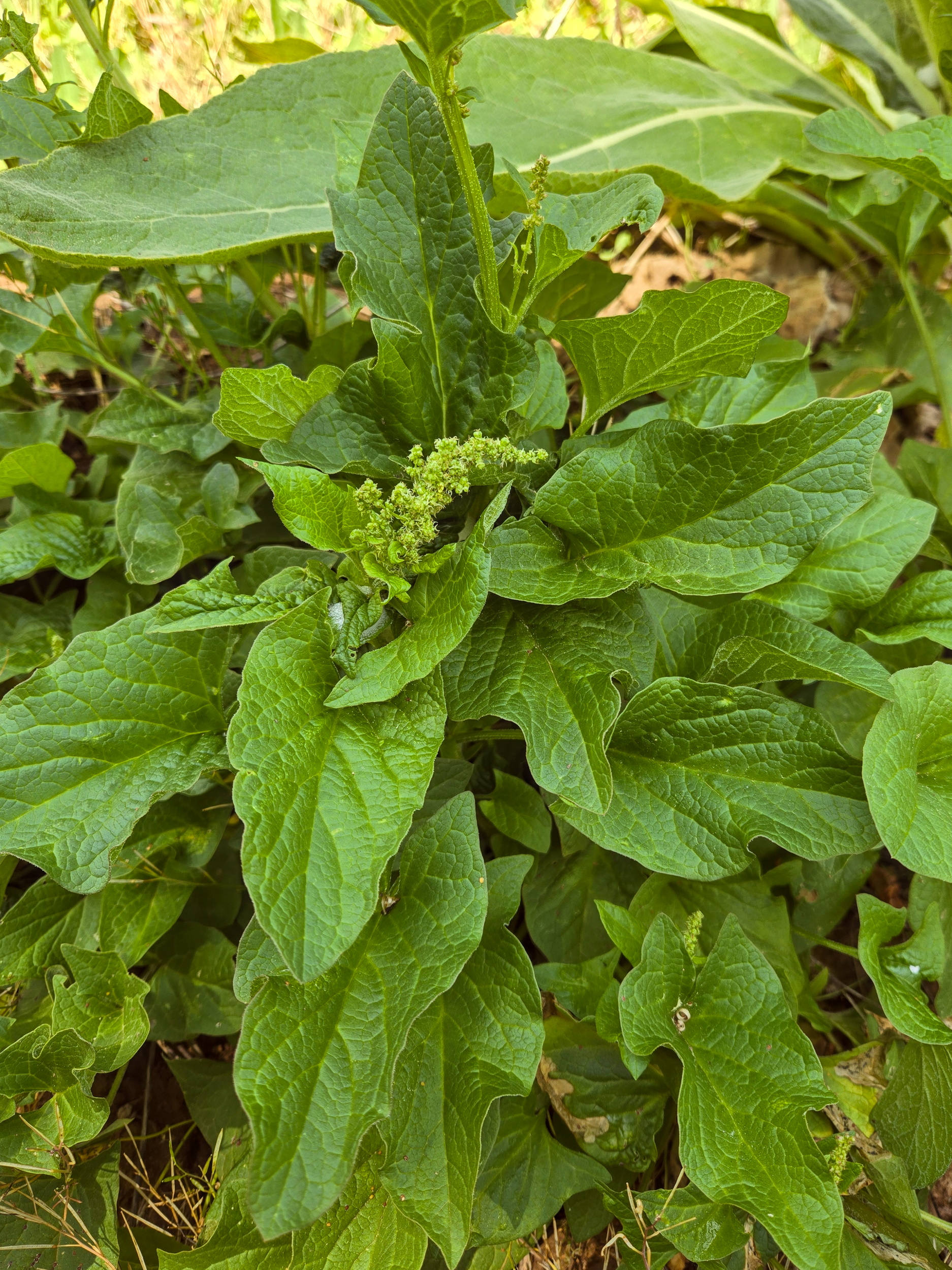
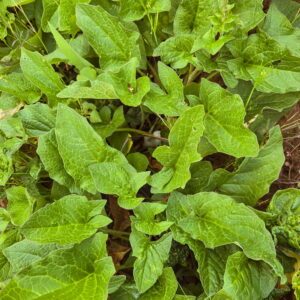
Good King Henry is an herbaceous plant with a small stature, coming in around one foot tall and wide, give or take. It fits well on edges along side taller perennials, along pathways or on the sunny side of border beds.
In the winter, Good King Henry’s leaves will die back and you might be wondering what happened to your plants, because come late winter there may be no trace left above the ground. But not to worry, they will sprout back in the early spring and reward you with new succulent spring growth and lots of yummy leaves.
I am really glad I planted a good number of Good King Henry plants in our garden and I can see why it is popular with gardeners who love to grow perennial vegetables. Once established, its a solid plant that rewards us with nutritious leaves for years to come.
Even though I’ve been diligently collecting seeds, I always surely miss some seeds here and there, and I even sprinkle some around on purpose while I am harvesting on exposed soils. Now I am enjoying seeing new volunteers starting to popup alongside, nearby and downslope of their parent plants. I’m eagerly watching as the patches fill in more, as new generations spring up behind their elders, and the beautiful “Goosefoot” like leaves fill my eyes with appreciation each season.
Speaking of seeds, Good King Henry’s seeds are quite nutritious and can be collected and ground into flour to incorporate into breads, or cooked on their own like quinoa or amaranth (both of whom belong to the same Amaranth family). Just like amaranth and quinoa, Good King Henry seeds contain saponins and should be soaked and rinsed prior to cooking to remove their saponins.
The young shoots of Good King Henry can be harvested in the early spring when they reach about 4-5″ and cooked similar to asparagus, hence the plant’s other common name Poor Man’s Asparagus. One doesn’t have to be poor to enjoy Good King Henry shoots and they are certainly delicious as their own vegetable! But don’t take too many from each plant and allow plenty of shoots to continue growing to make leaves so the plant can thrive all season.
I’m excited to share our homestead garden-grown Good King Henry seeds with you!
Details
Lifecycle: Perennial
Lifespan: 5-10+ years
Hardiness zones: 4-8 (USDA)
Habitats: Pastures, roadsides, fields in Europe
Plant size: 1 ft wide x 1 ft tall
Light: Full sun to part shade
Soil: All soil types
Water: Prefers regular moisture
Seed Starting
Good King Henry requires a period of 8-10+ weeks of moist, cold stratification to unlock dormancy and germinate successfully. I stratify my Good King Henry seeds outside through the winter for 3+ months of cold stratification. Good King Henry seeds require light to germinate. Surface sow and tamp, or just barely covers seeds (no more than 1/8″), in good quality potting soil or seed starting medium. Keep seeds moist until they germinate.
Divide and pot up the seedlings in taller pots (they have long tap roots) for their first season, or plant them in their final positions directly if you can dedicate to keeping the plants well weeded their first season while they are smaller.
Good King Henry has some reputation for being difficult to start from seed, even when proper stratification processes are undertaken. I can relate to these reports, because when I first tried to grow Good King Henry from seed I experienced no germination. I tried seed from two other sources before the third seed germinated well. However in the same season the prior year’s Good King Henry seed also germinated.
I learned two lessons: 1) Don’t throw away perennials seed that doesn’t germinate. Give seeds another season or two in case they need extra periods of stratification to unlock their dormancy. 2) Fresh seed seems to germinate easier than older seed.
So we are committed to offering fresh seed for our Good King Henry seed in the effort to give you your best chance to germinate your seeds.
Cultivation
Good King Henry benefits from soil rich with organic matter and consistent moisture to make the lushest growth.
In our climate with hot, arid summers, Good King Henry slows down growth in the summer and leaf edges can get a bit crispy, especially in less ideal soils or where water is not as ideal. In those conditions, part shade helps the plant cope and allows for harvests in the summer.
Milder climates with cooler summers will not have this problem and continuous harvest all season is likely possible.
Smaller, younger Good King Henry plants will need careful weeding if they are planted when they are still small. In subsequent seasons, as the plant becomes larger this will be less of an issue.
While Good King Henry loves moisture, I noticed that they can handle some drought stress. While they won’t be happy and may likely even die back a bit under drought stress, if they aren’t pushed too far they will bounce back the following year. I attribute this to their tap root that goes fairly deep and gets fatter each year. I’m sure it is able to store some excess energy when times are good.
Harvest
In our climate we get two harvest windows. We can harvest leaves and young flower stalks spring through early summer. Then in the fall when the temperatures cool and the leaves start growing lushly again we get our second harvest window.
The younger leaves are the best for harvesting. They are softer and more mild in flavor, while the older leaves tend to become more fibrous, more bitter and have higher levels of oxalic acid.
To harvest, cut or pick the young shoots, younger, more tender leaves and young flower stalks from the plant.
Seeds can be harvested in the late summer and cooked as a pseudo grain. Make sure to soak and rinse the seeds well before cooking since they contain saponins.
Propagation
Larger Good King Henry plants can be divided in the fall or spring. Pot up smaller divisions to grow up for a season or plant in their final place if you can keep it well weeded and watered.
Seed Saving
Look for dried seed stalks that have turned brown and some black seeds are starting to show. Strip the seeds from the stalk into a cup or bowl. Rub the seeds together to thresh the seeds and loosen them from the bits of seed heads. Screen and/or winnow the seeds if cleaner seeds are desired.
While Good King Henry is self fertile, it is wind pollinated and having several plants growing near each other can be helpful for better pollination and more seeds.



Love your selections! Fast delivery also.
The seeds were packaged well. They are viable. Looking forward to germination.