Description
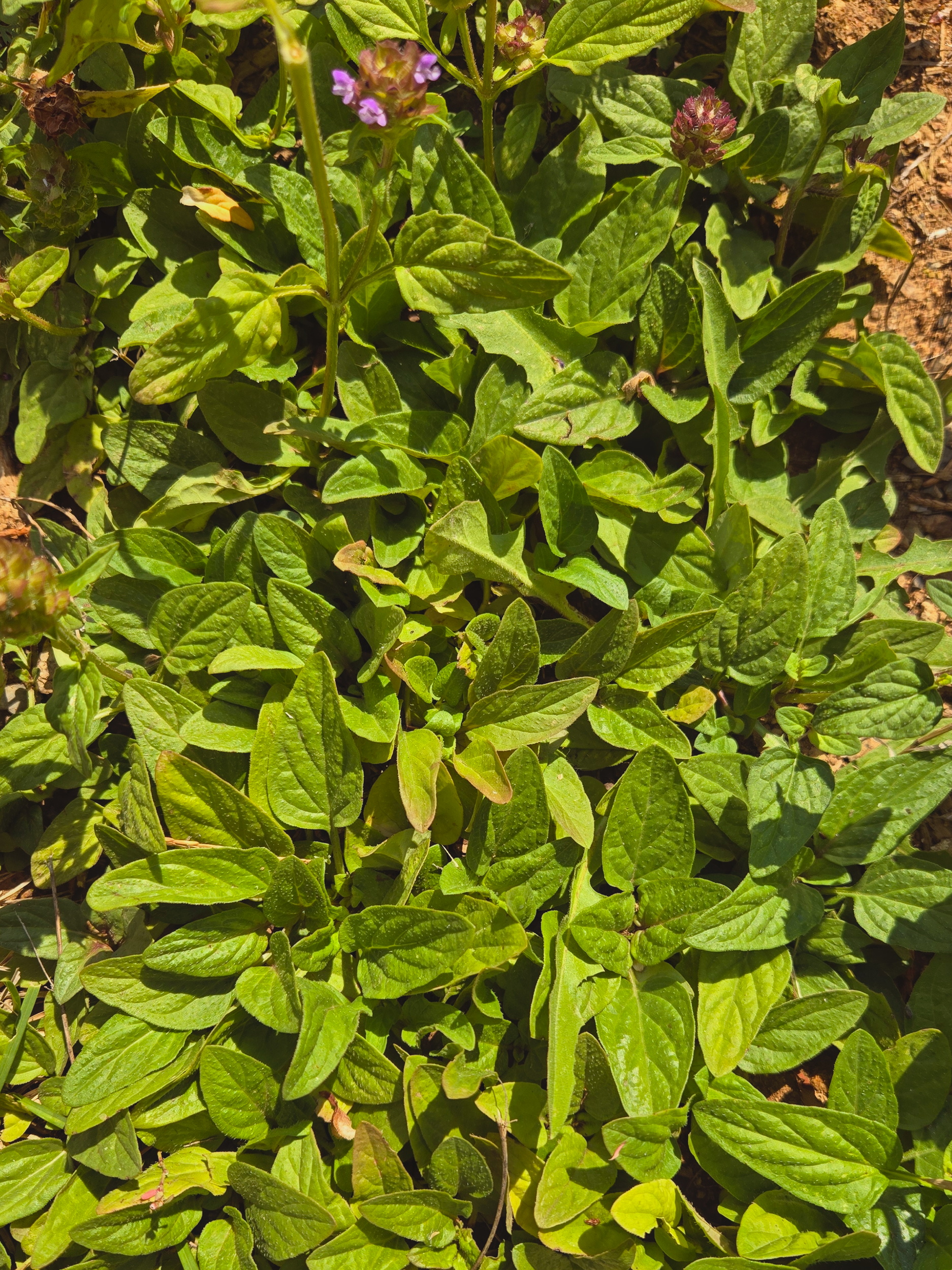
I am so grateful that Self Heal grows abundantly in and around our gardens. Despite their very small stature and low growing habit, Self Heal makes a big showy statement, especially in numbers.
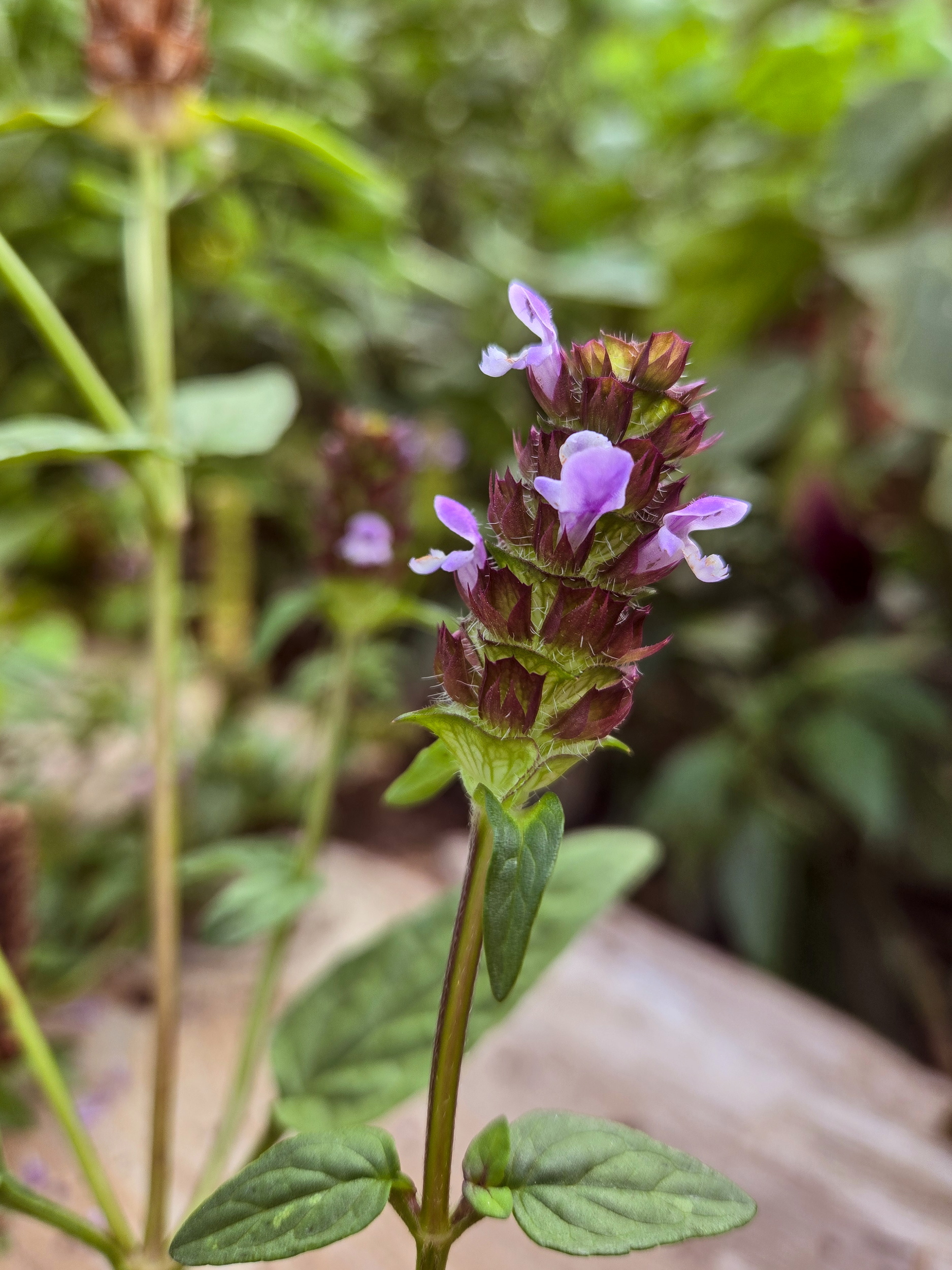
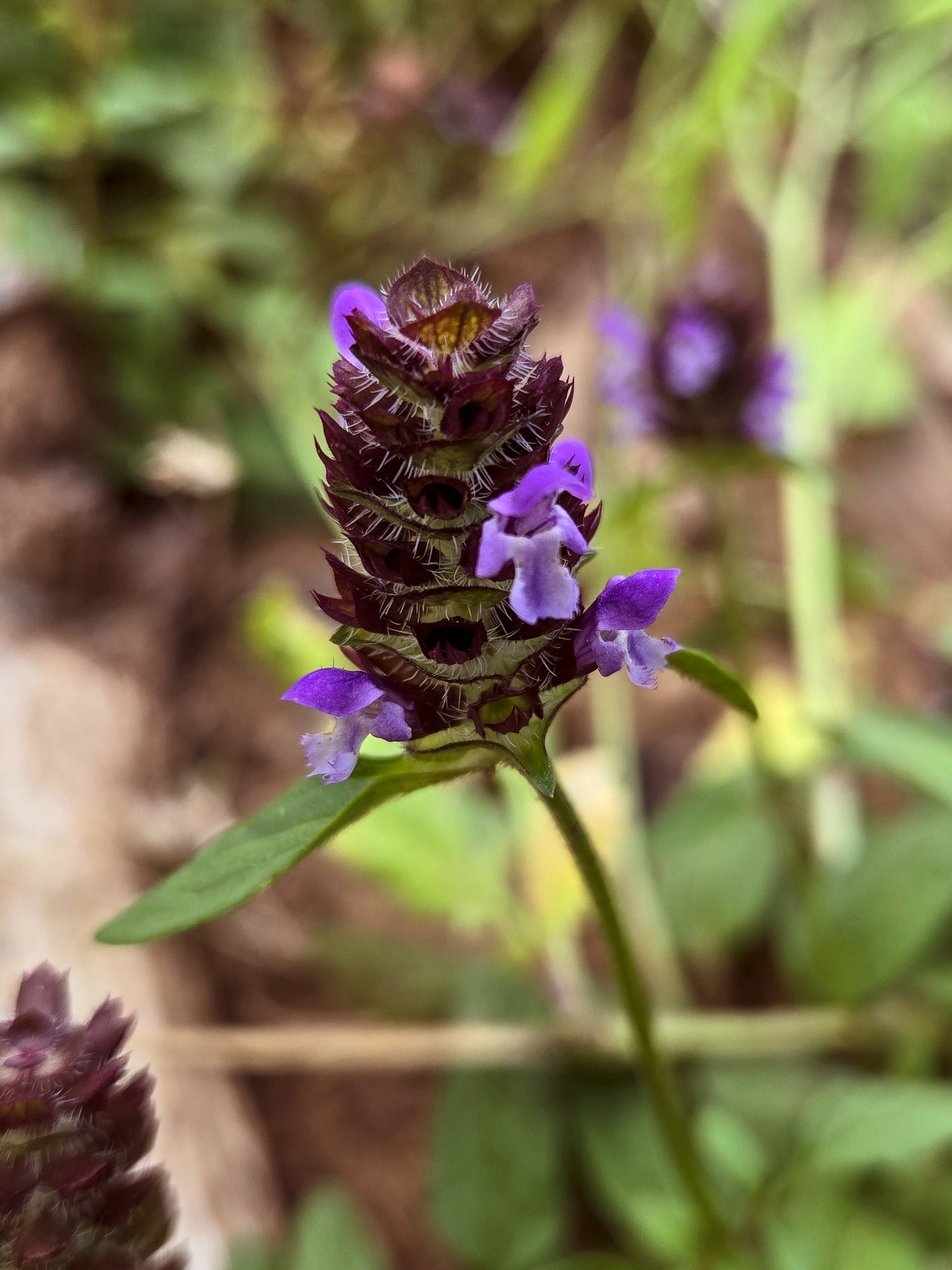
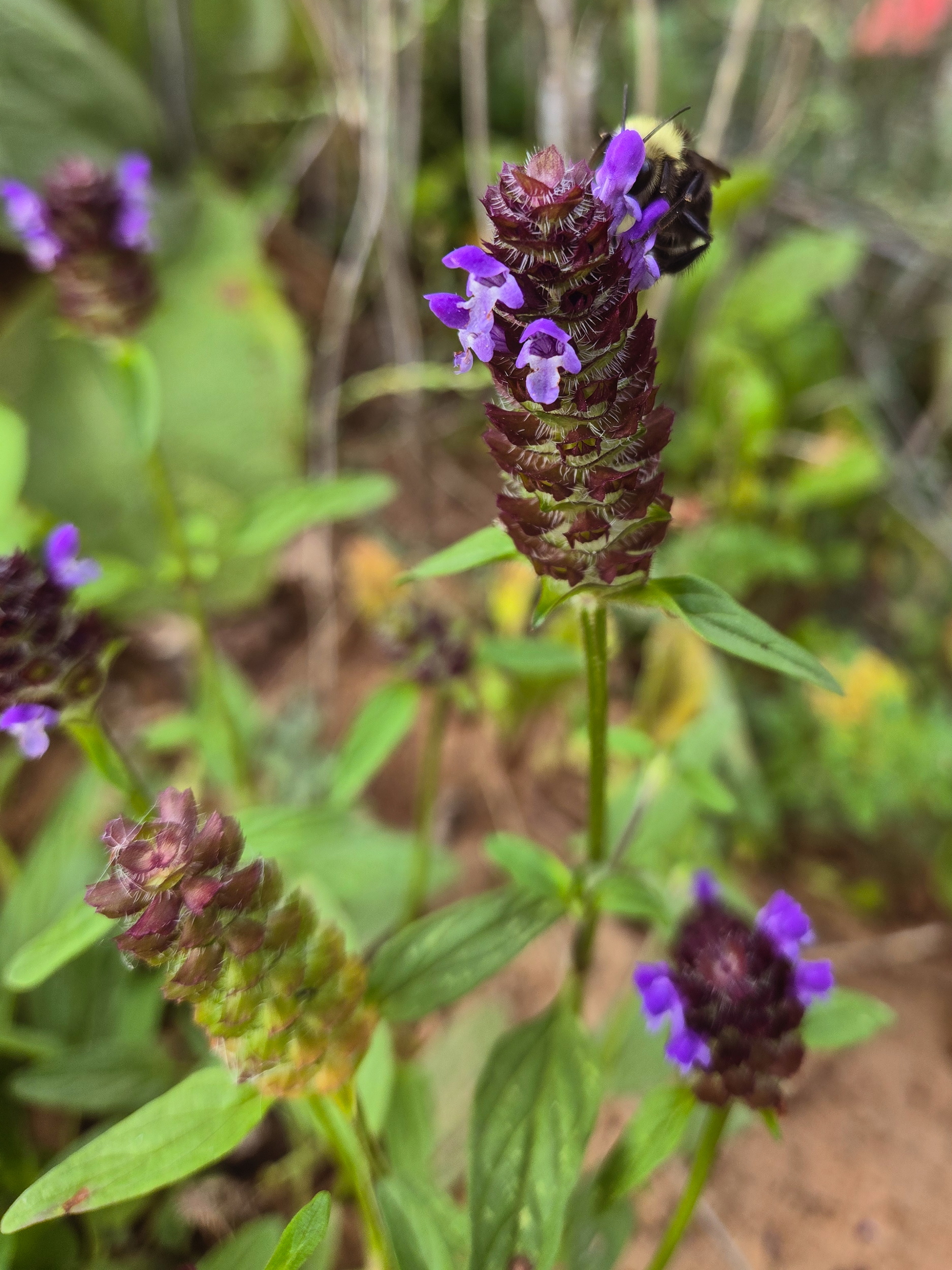
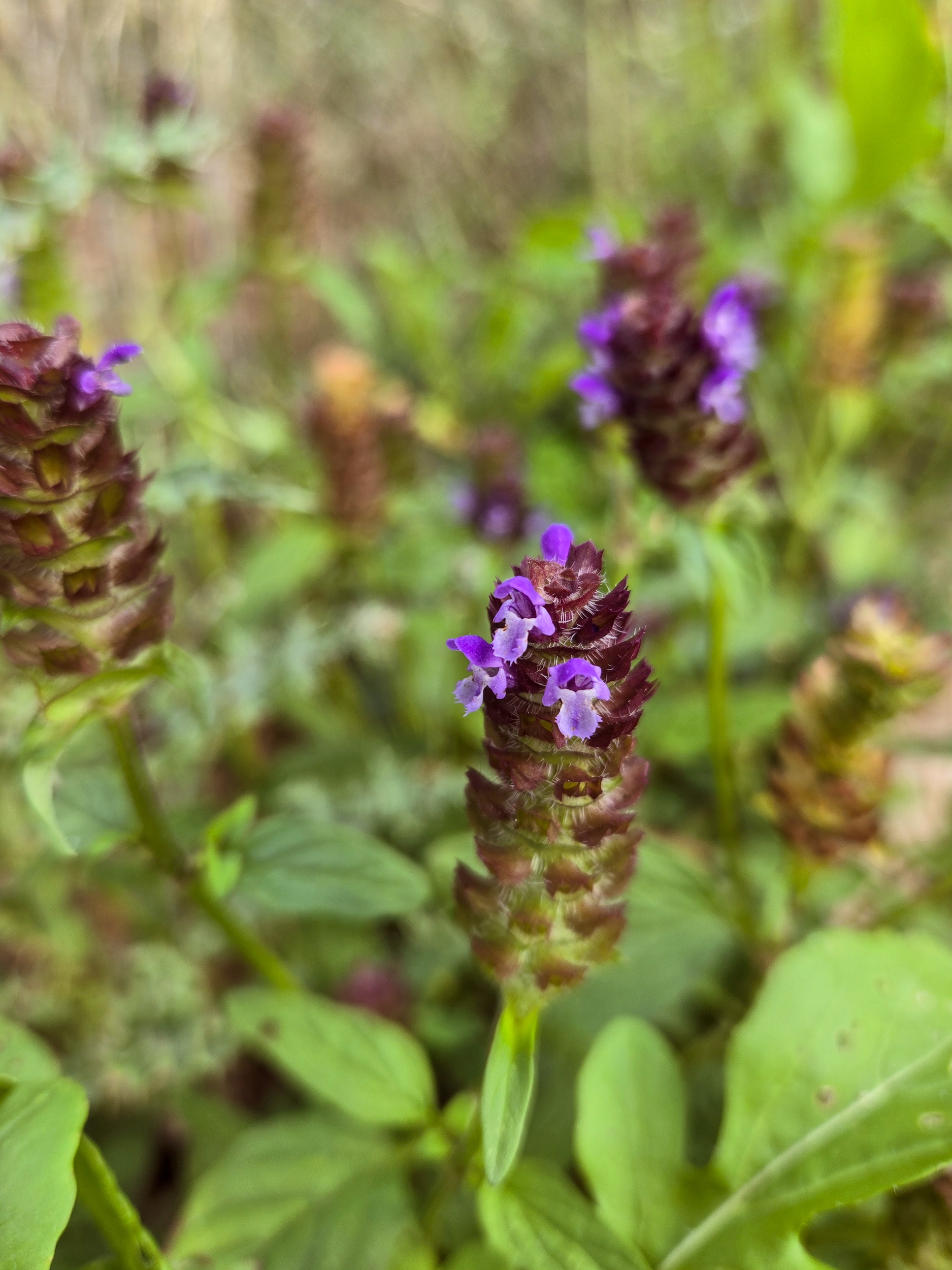
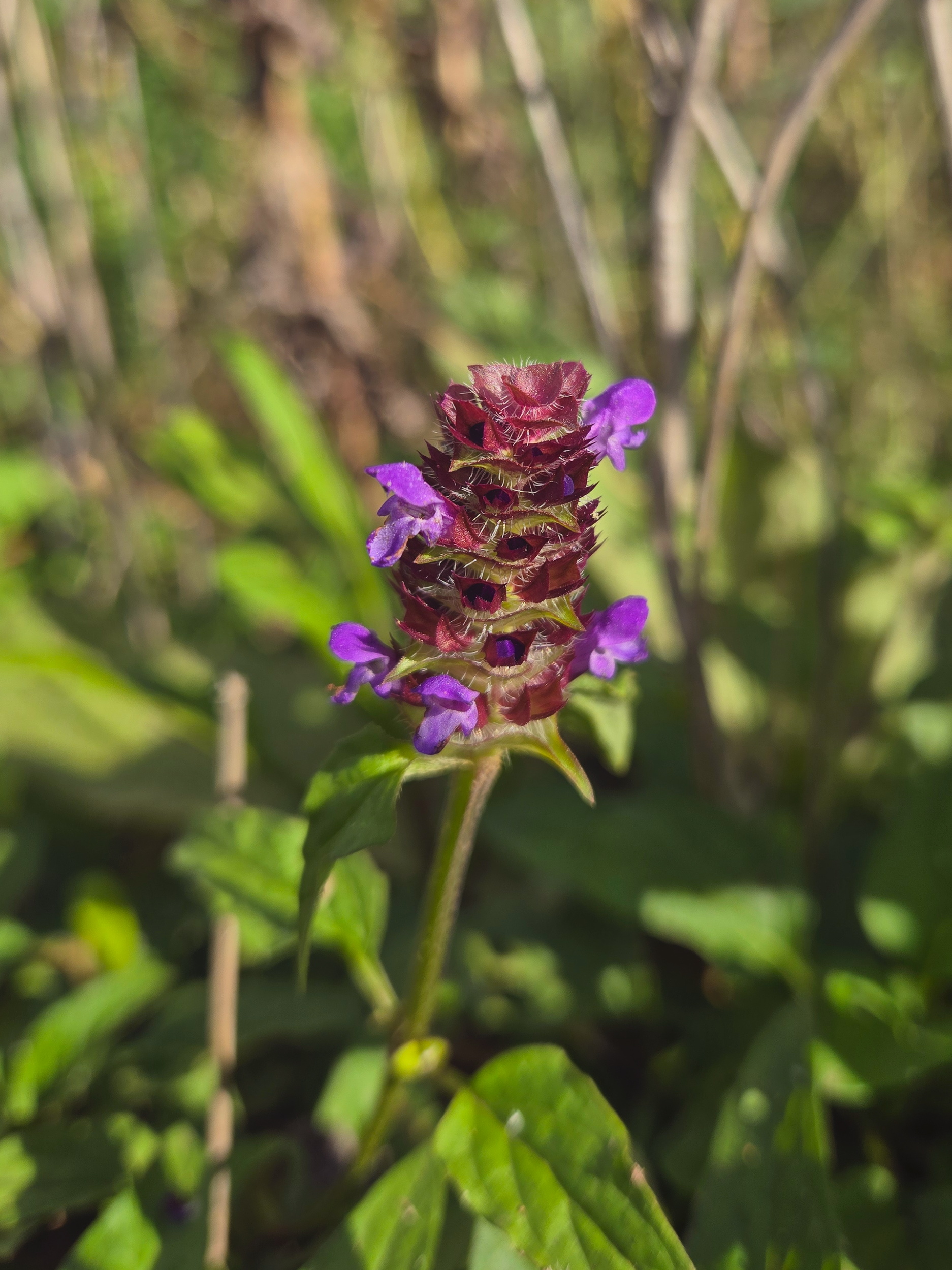
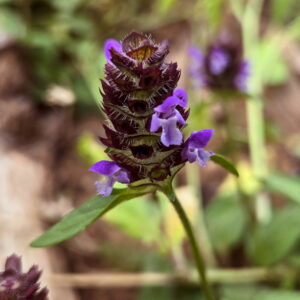
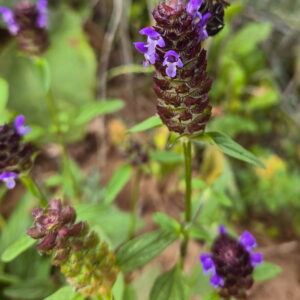
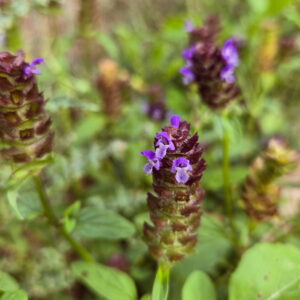
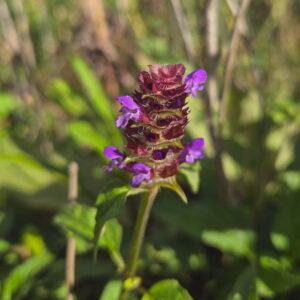
In the summer, Self Heal’s sends up multiple flower stalks from each plant. The dark purple-green flower stalks with bright purple-lavender petals are gorgeous. Get up close and admire the mouth like blossoms and tiny hairs on the flowers and under the leaves.
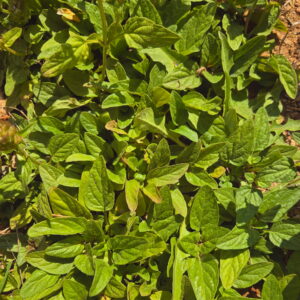
Self Heal is such a small plant, less than a foot in height, that I love to grow them on the inner most edges of pathways. Self Heal does really well growing in moist lawns, whether they are sunny or shady. I enjoy seeing Self Heal underfoot and everywhere I go, so I keep sprinkling Self Heal seeds along perennial bed edges and pathways each fall.
Once Self Heal gets established in a spot and starts flowering, you can bet you’ll find volunteer seedlings nearby soon because they self sow fairly readily. We are rewarded with more Self Heal blossoms each year, what a joy!
Self Heal is food as medicine and can be taken in salads, cooked, as infusions or tinctures. Self heal is a wonderful tonic herb that can be taken regularly, offering antioxidant, antiviral, anti-inflammatory and immune boosting properties.
Though it is a mint family (Lamiaceae) herb, Self Heal does not have a strongly scented oil or strong flavor. Mild in flavor, Self Heal is safe to consume and leaves and flowers can be cooked as a vegetable, a nice addition to just about any cooked meal. Self Heal can also be dried to consume later as tea or added as a dried herb anytime of year for additional nutrition.
Externally, as a vulnerary Self Heal is excellent for treating bruises and minor wounds. Self Heal is a styptic and can help slow down bleeding. Not only that, Self Heal is antiseptic and can help clean wounds as a wash and prevent infections in topical applications. As a poultice, in addition to helping heal wounds it is mucilaginous and cools hot tissues and draws out infections from infected flesh wounds. Self Heal can also be used externally to help heal and relieve pain from insect bites.
Taken internally, Self Heal treats inflammation or swelling in the mouth or throat and is also able to help heal internal ulcers. Self Heal offers gentle liver support. Self Heal also helps with lymphatic support, especially in the upper respiratory tract. Self Heal can help lower or regulate excessive histamine responses, such as in allergies.
Self Heal can help soften, break up and/or dissolve hard masses, cysts and tumors.
Self Heal is an antiviral that may pair well with other antiviral herbs. In addition, during viral infections, Self Heal can help regulate or modulate the immune system and cytokine responses.
More recent studies have shown Self Heal is able to help the brain by enhancing memory, preventing dementia and reducing neuroinflammation.
Like many other herbs, Self Heal has so many medicinal uses, more than we can list here, both traditionally and in modern herbal practice, depending on the culture and who use the herb. We are excited to continue learning about this amazing herb and we’re glad to have it growing with us!
Details
Lifecycle: Perennial
Lifespan: 5+ years
Hardiness zones: 3-9 (USDA)
Habitats: Meadows, fields, disturbed soils and forest edges in Europe
Plant size: 1 ft wide x 8 in tall
Light: Full sun to part-shade
Soil: All soil types
Water: Regular moisture preferred
Seed Starting
Surface sow seeds in the spring by lightly pressing/tamping seeds into the surface of quality potting soil. Keep moist until seeds germinate. When large enough to handle, divide seedlings into their own pots and grow up to plant in their permanent places in the fall or following spring.
Cultivation
Self Heal does will in soils with low fertility, but will grow larger leaves and more blooms if planted somewhere with more organic matter and regular moisture.
As a low growing herb, Self Heal can be mowed and is a good candidate for growing in or around lawns, pathways, edges or between other plants.
Self Heal will form clumps and can also self root when stems touch the soil, so it can creep slowly. Self Heal also reseeds itself quite successfully.
Harvest
Pick leaves and flowers, stem and all in the summer.
Propagation
Self Heal can be easily divided fall through spring.
Seed Saving
Pick seed heads after the flower has died and the whole flower head turns brown. Thresh the seeds out by rubbing the seedheads between your fingers or hands. Screen the seeds through a sieve or colander. Winnow off the dust and fine bits of chaff if cleaner seeds are desired.


Reviews
There are no reviews yet