


Description
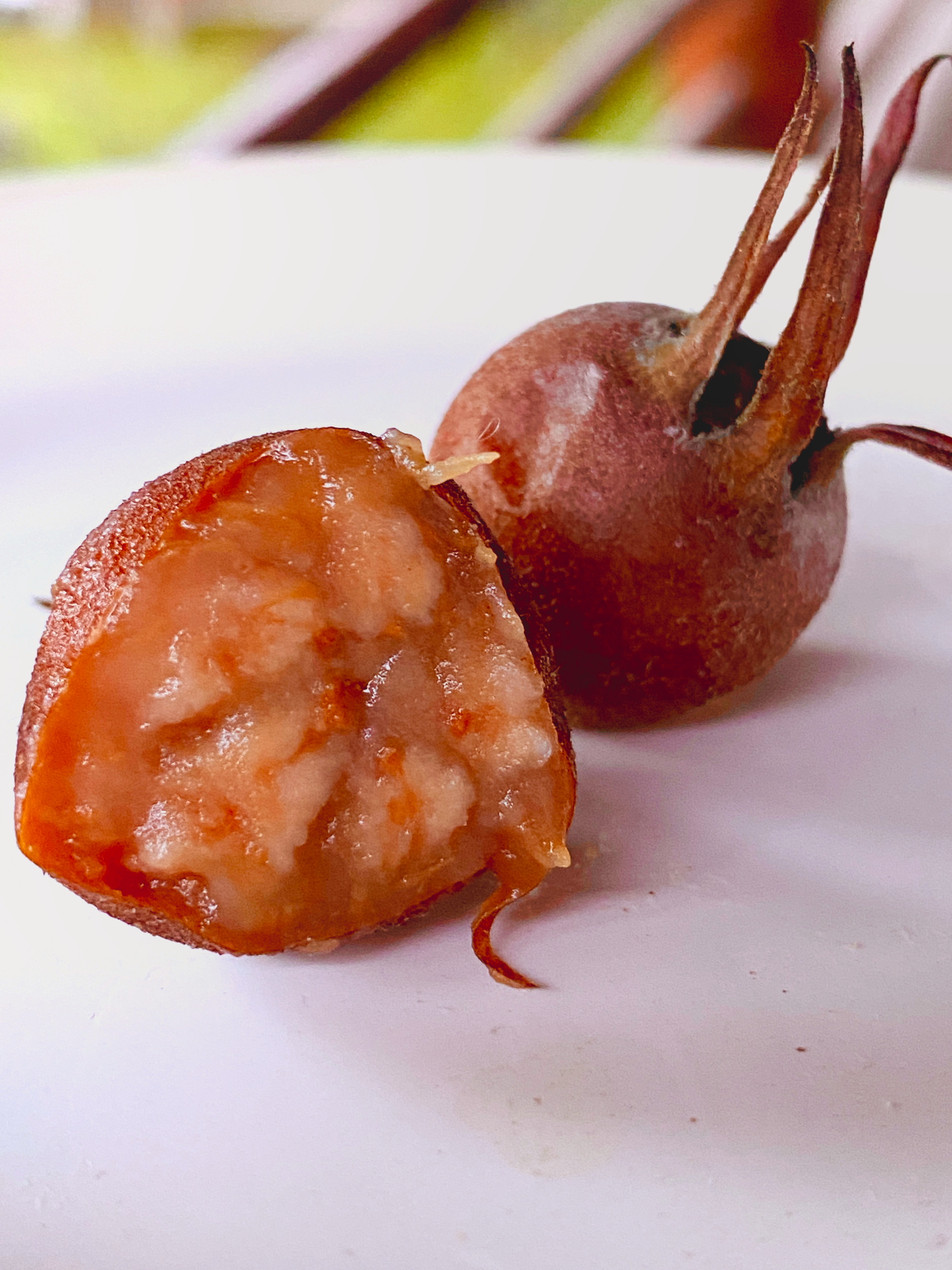
Medlar is a truly delectable fruit and quite unique at that. When fully ripe, Medlar fruits are soft, squishy and saucy. Eating a Medlar is like eating a tropical fruit that we can grow in the temperate northern climates!
If you like spiced apple sauce, you’ll probably love Medlars. Medlars have a very apple saucy consistency, but with more flavor than plain applesauce. Most have a tart note as well as sweet or sugary flavors similar to applesauce or figs with spice notes like cinnamon or toffee. The flavor and texture reminds Ann of tropical Cherimoya fruits and sweetened Tamarind pulp, which also have rich, deep flavors, but with additional spice notes which make Medlar unique all on its own.
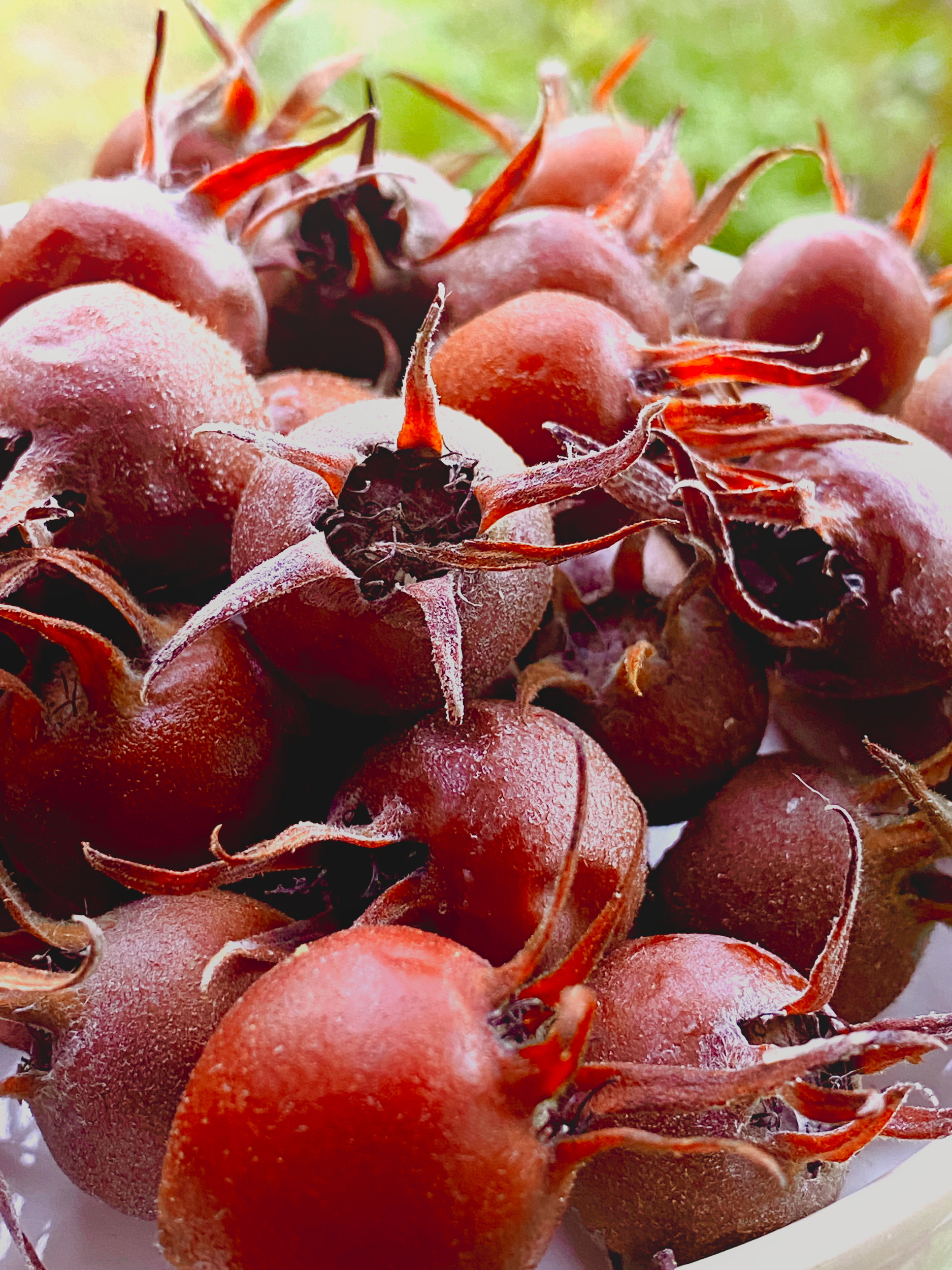
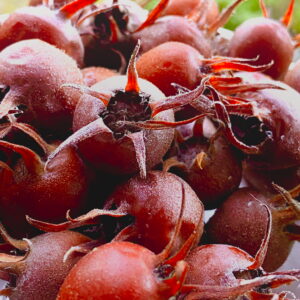
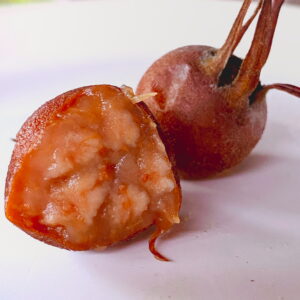
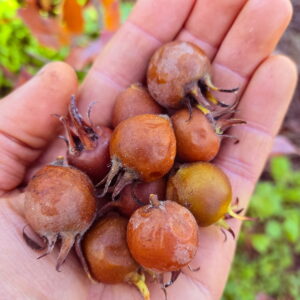
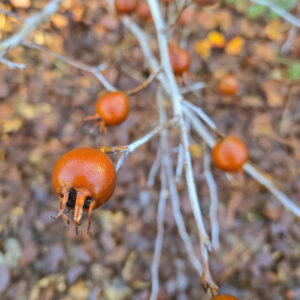
One thing that’s different about Medlars compared to other related fruits, like apples or pears for example, is that Medlar fruits needs to be bletted before they are edible. When the Medlar fruit is firm, it is quite astringent and not palatable. Bletting means letting the fruit go past the typical ripe stage until it softens and is almost to the point of rotting. Once bletted, Medlar flesh turns from pale/white (with a bit of green) to brown.
That description may not sound appetizing, because no one I know enjoys eating a mushy apple fresh, but trust me, with Medlars that’s exactly how we want to eat them! The soft flesh is delicious and the texture is smooth and creamy. The flavors are fruity, sweet, rich and delightful.
Medlars are fun to eat out of hand as the saucy flesh delights the taste buds. I enjoy picking soft Medlars off the tree and polling them in my mouth to enjoy right there on the spot. Just spit out the big seeds!
You can also harvest the Medlars while they are still firm and store them on the shelf in a cool room until they blett and are ready for eating. In colder climates, Medlar season, both on the tree and stored on a cool shelf, can be extended well into winter.
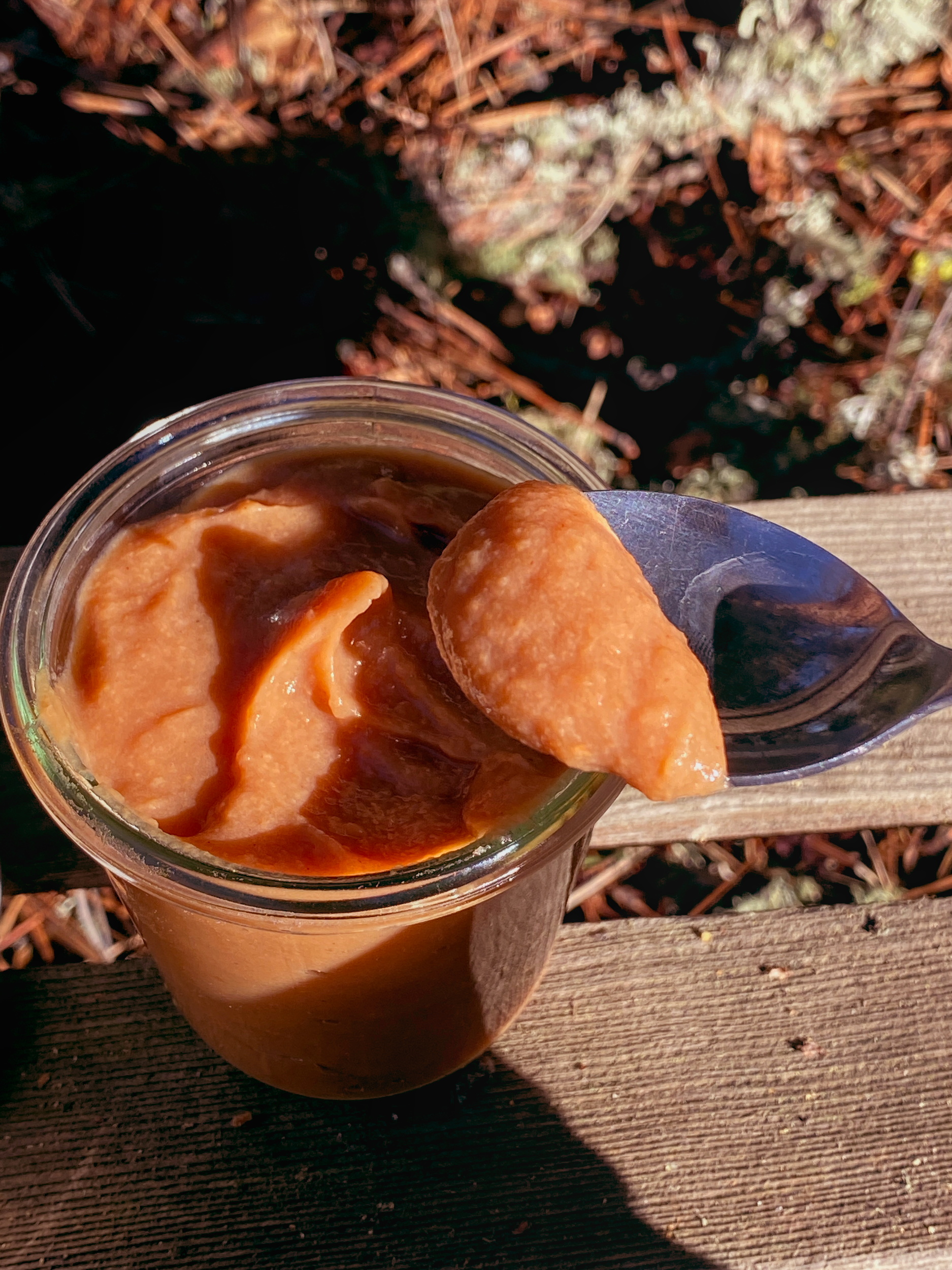
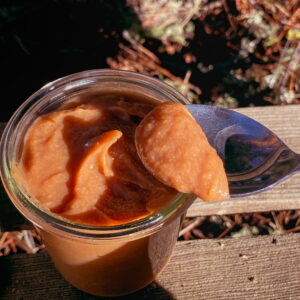
If you have a lot of ripe Medlars to deal with and want to put up some Medlar sauce, just squeeze the pulp out from the skin, into a bowl, and you already have sauce! No need to chop the fruit or blend it, it’s already creamy and saucy! You’ll need to use a food mill or a screen to separate the seeds from the pulp and you are good to go. It’s already a thick sauce consistency that doesn’t need to be cooked down. If you’ve ever made pear butter, then you’ll appreciate how thick Medlar sauce is without the need for extra cooking.
We’ve been enjoying our Medlar sauce on biscuits with butter, pancakes, toast, oatmeal and with yogurt and granola. I bet it would make a delicious glaze for meat and other savory foods. It would be delicious as a sweet and sour chutney, or just a spoonful or two of sauce as a condiment on the side.
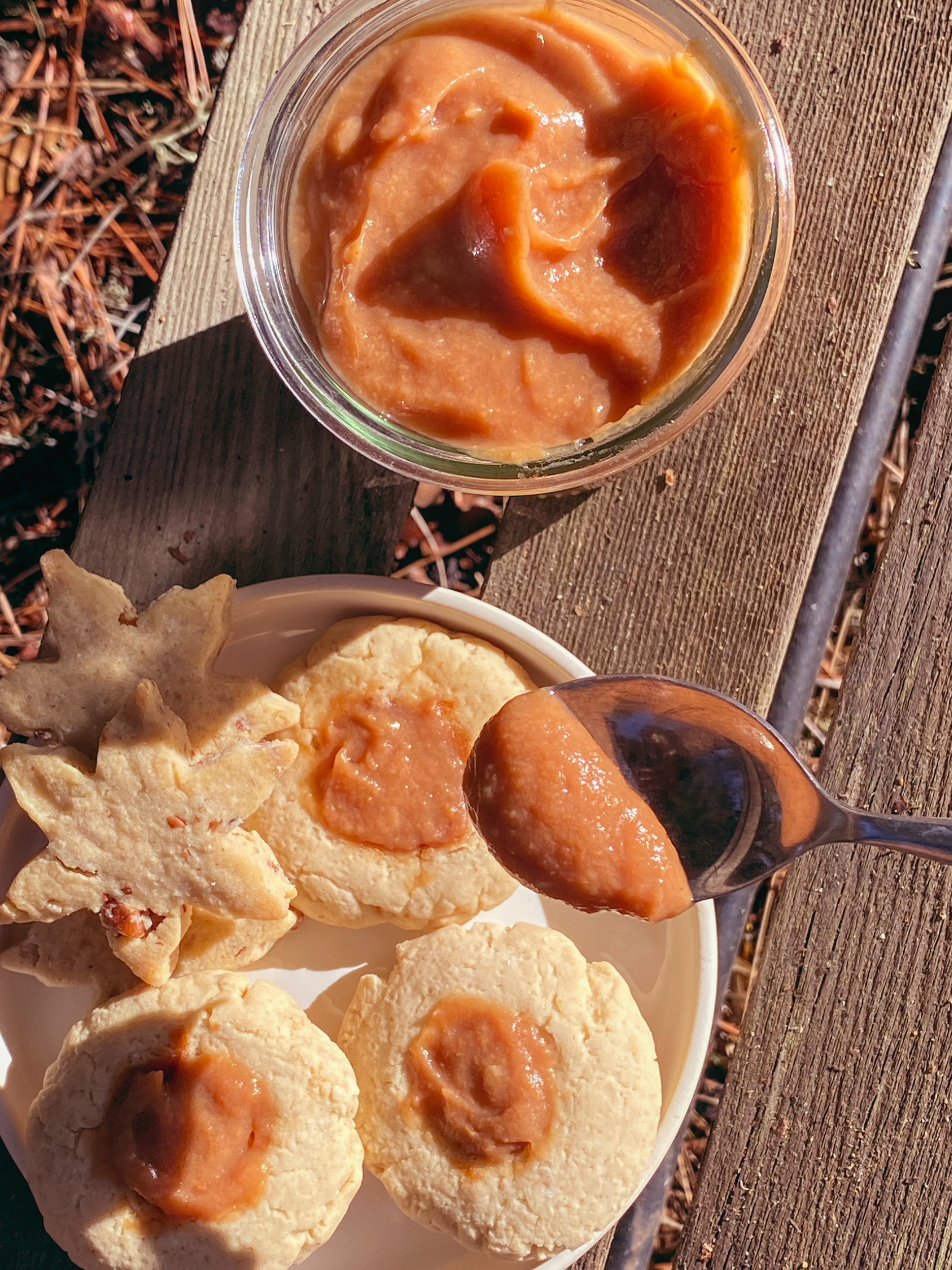
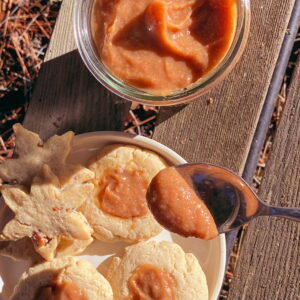
Medlar sauce lends itself well to all sorts of baked treats. This holiday season we enjoyed Medlar sauce on thumbprint cookies which was delicious. We immediately realized Medlar sauce would be an excellent addition to bars, crumbles and Medlar “newtons”. Don’t stop there though, try Medlar in any baked confection that calls for fruit, jam or sauce! Or, with its thick consistency and sweet-tart flavors, you could easily think of and use Medlar sauce as a rich, spiced, somewhat less tart substitute for lemon curd for adding to treats.
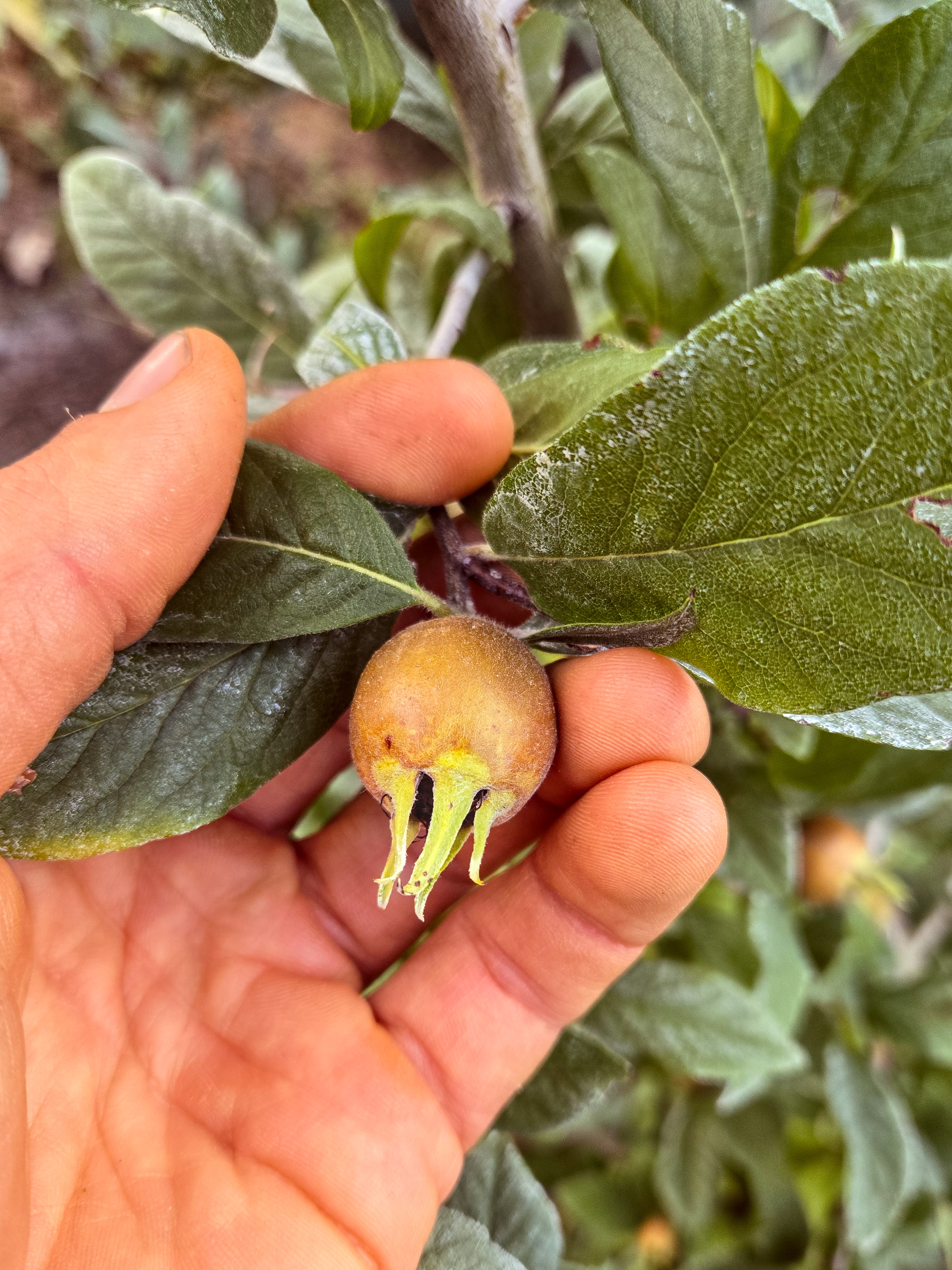
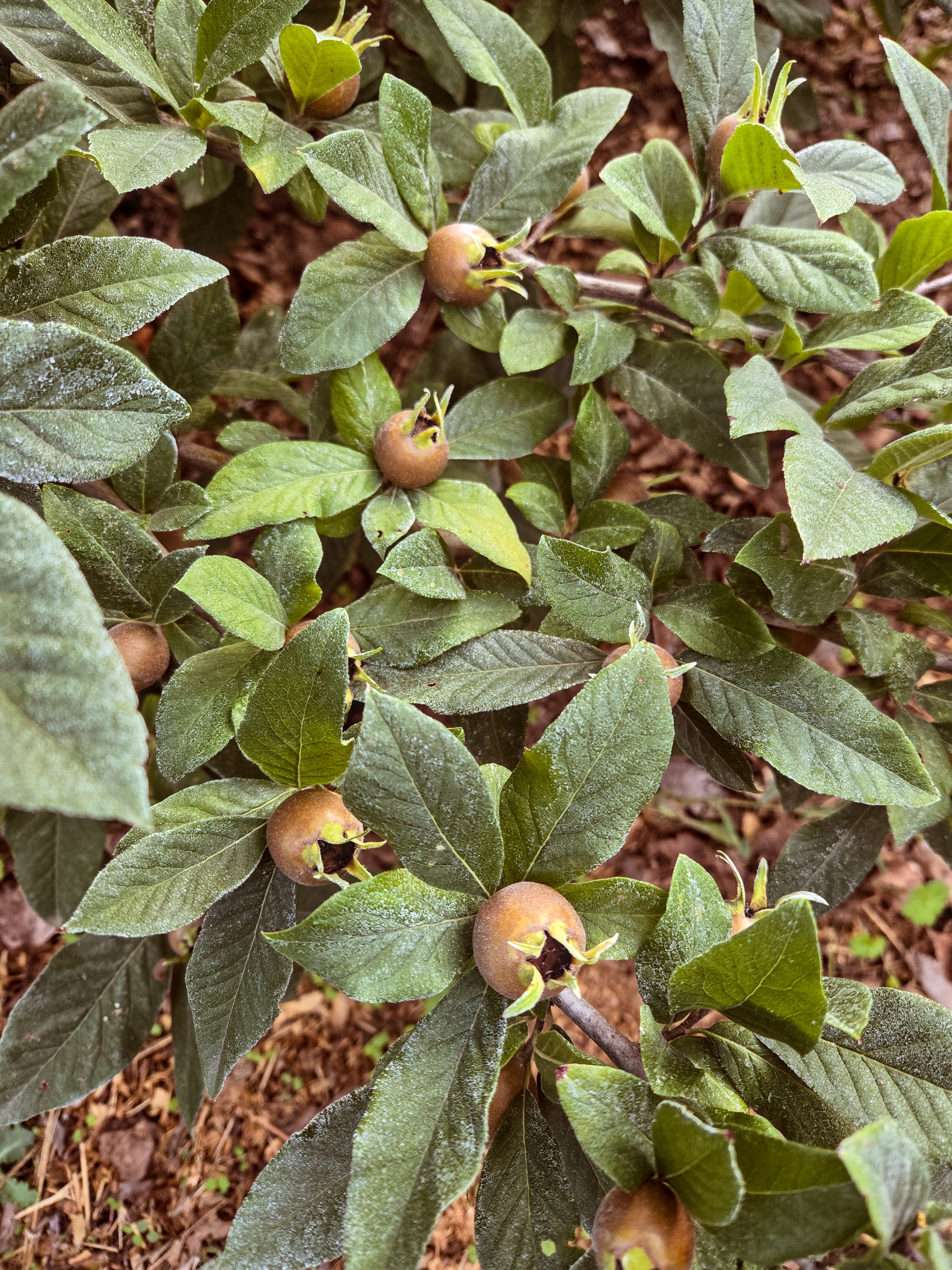
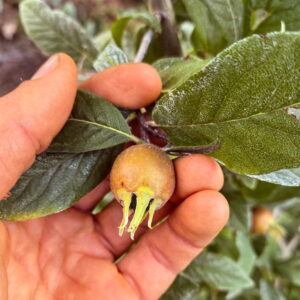
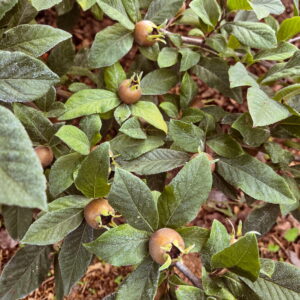
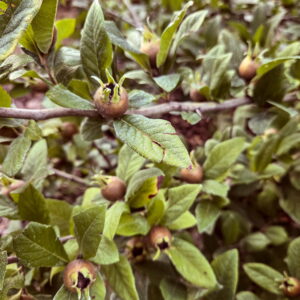
Medlar is a small tree (some call it a shrub) that grows quite quickly. In the Roseaceae family, Medlar’s spring blossoms are very beautiful and resemble apple or small rose flowers. The leaves are unique and I find them quite attractive.
I’ve noticed that Medlars have some level of built in deer resistance. You will likely need to give them at least some minimal deer protection while they are getting established, because their leaves are tasty to deer. However, Medlars seem to have two built in characteristics that limit deer browse. First, they have thorny branches which will prevent deer from sticking their heads in too deeply into dense Medlar growth. Secondly, unlike apple trees, Medlar trees will put on a new flush of growth in the same season after being browsed repeatedly by deer. Apples or pears, in contrast, can easily be set back a season by a similar amount of deer browsing, but Medlars seem to say “Bring it on!” as long as browse pressure isn’t too harsh.
Medlars would make a great tree for edible hedges, or even as a living fence with their thorny nature. Medlars put on a lot of new growth with many new stems each season and respond really well to fairly exuberant pruning, as long as they are happy with their soil and have enough water to respond.
On the other hand, Medlar trees are beautiful on their own or in a mixed orchard. With all their new growth each year, it’s fairly easy to prune the Medlar tree’s structure to a preferred form.
Medlar seedlings seem to be fairly precocious and can start fruiting in as little as 4-7 years. All of our young Medlar trees are seedlings from various sources and several of them started fruiting heavily this year.
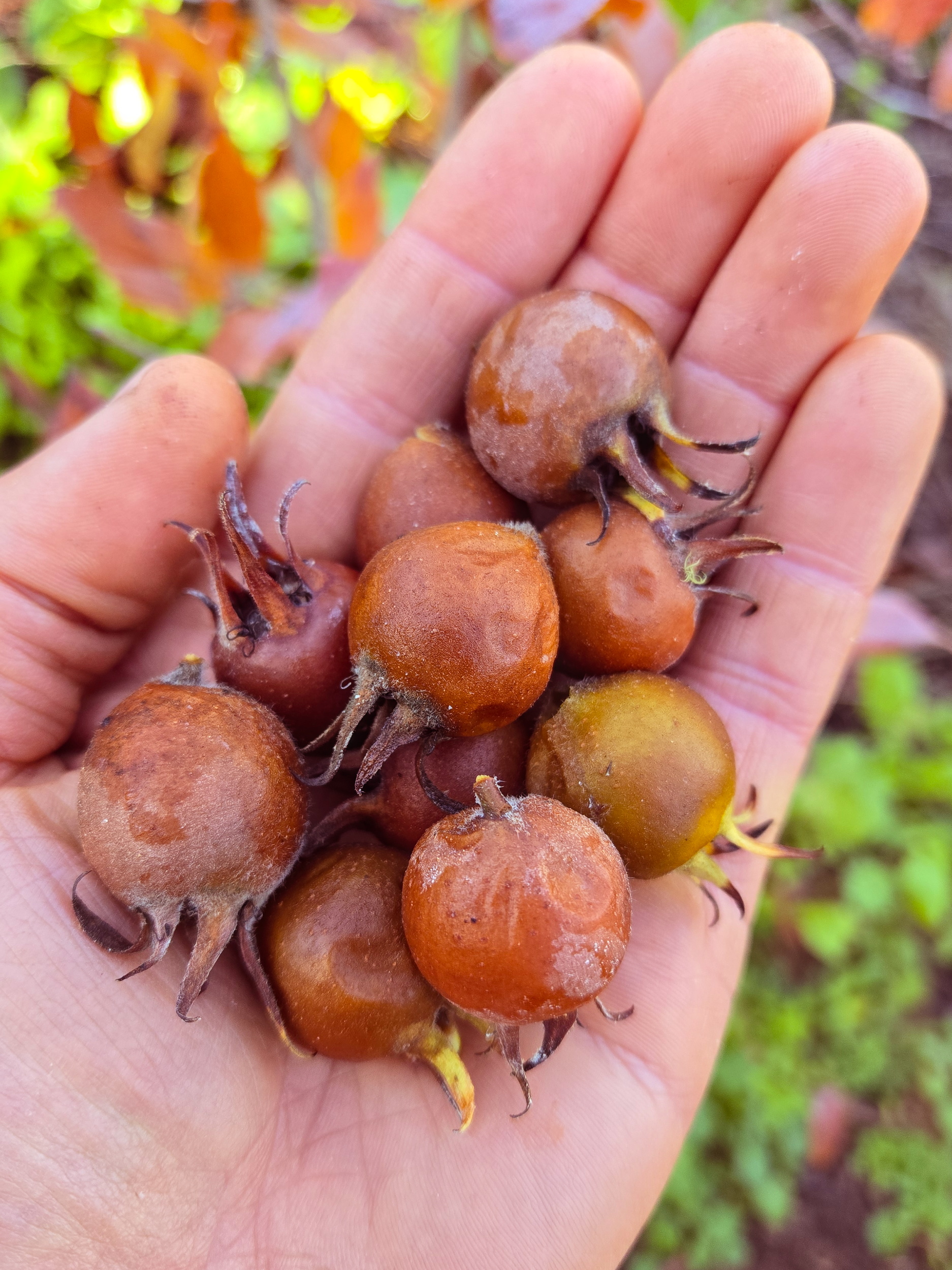
We are offering a mix of Medlar seed. Each of our seedling trees has a slightly different flavor but they are all equally delicious eaten out of hand or in a sauce. Our Medlar fruits are around 1 inch wide, which while small, is fairly common for Medlar seedlings.
You could enjoy the fruit from your Medlar seedlings or you could use the seedlings as rootstock to graft your varieties of choice.
If this description sounds fun or delicious, we invite you to give Medlar seeds a try!
Details
Lifecycle: Perennial
Lifespan: 30-60+ years
Hardiness zones: 5-9 (USDA)
Habitats: Forests & hedgerows in Europe to West Asia
Plant size: 20 ft wide x 20 ft tall
Light: Full sun to part shade
Soil: All soil types, prefers well draining soil
Water: Moist soil preferred
Seed Starting
Medlar seeds require a period of moist, cold stratification. First soak the seeds in warm water overnight, then cold stratify for 90 days. Because their seed coat is so thick, some Medlar seeds will sprout after going through their second winter or cold stratification period, so don’t give up on them!
Divide seedlings and pot up for their first season or two before planting in their final location.
Cultivation
Medlar is a fast growing shrub that is not too picky about soil types. Don’t be shy about pruning Medlar because they put on a lot of new growth each season once they are established.
Medlars are self-fertile, so you only need a single tree to get a good crop of fruit. However with multiple trees nearby, pollination and yield might be increased to a degree.
Harvest
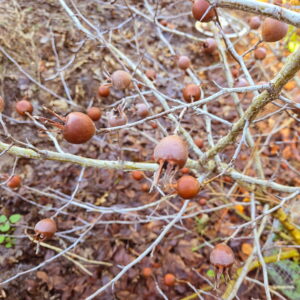
Medlar fruits are ready for harvest in the fall, sometimes extending into winter depending on the year and local climate. Hard fruits are still astringent and need to be bletted after harvest. Keep them on a shelf and wait for them to soften before consuming.
Or wait for the fruit to soften on the tree before harvesting and then eat them as you pick them or harvest them all to process in a big batch.
When the fruit is bletted, the skin softens, darkens a bit and may have a more wrinkled appearance. If you’re uncertain, just give the fruit a light squeeze to see if there is any give. If its very firm or hard, wait longer.
Propagation
Medlar can be layered in the fall or spring and the resulting rooted branch can be severed from the parent tree and replanted 2 seasons later.
You can also graft scion wood of Medlar cultivars onto Medlar seedlings.
Seed Saving
Separate seeds from bletted Medlar fruit pulp and skins. Add some water to cover seeds and remaining fruit pulp. Ferment and stir seeds for about 5 days. Decant seeds or strain through a course sieve or colander. Plant or begin moist stratifying seeds right away for best germination, or dry seed for prolonged storage or sharing with friends.



Reviews
There are no reviews yet