
Biochar: Black Gold Forged in Fire
Charcoal is an enigmatic artifact of the combustion process that has many interesting characteristics and abilities. This substance comes about when dried biological material of any type is held in a condition of high heat and low oxygen. In its purest forms, it is the structural carbon skeleton of biological material aka biomass left over after the volatile compounds burn off as smoke and flame. If the heat is maintained and oxygen is present, charcoal will burn to ash which are the incombustible mineral remainders. If you cut the heat off before the coal goes to ash, what remains is a rich black compound formed primarily of crystalline carbon that can last for ten to hundreds of years or more without degrading.
The charcoal matrix is electrically charged across its entire face and has a huge relative surface area throughout all the small pores and cavities, giving it a sponge-like appearance up close. Charcoal can have tens to thousands of square meters of available surface area per gram depending on the quality of the char. The charge and surface area are responsible for the excellent filtration capacity of charcoal which is why it is so heavily used in air and water filters. Freely available “positively” charged compounds will readily adhere to charcoal’s “negatively” charged surface area much like a magnet. These compounds are primarily adsorbed not absorbed, meaning they glom onto the surface and are not taken into the charcoal itself.
Nutrients, water, and microbes will all readily adhere to the electrified matrix known as charcoal. Typically charcoal will begin to accumulate nutrients and water from whatever is immediately around it, picking up microbes like bacteria and fungi who are drawn to the nutrient food, water, and living space the charcoal provides. Over the course of charging up the charcoal with the building blocks of life, we come to call this material biochar, or biological charcoal. Where charcoal is akin to a clear carbon canvas, biochar is more likened to a microbial mosaic masterpiece teeming with fertility and life.
The process of charging charcoal can take many different forms. Wherever excess nutrients occur in your home and garden systems, there are good opportunities to apply charcoal to help retain these nutrients, water, or microbial activity. A compost pile, animal bedding, within animal feed/water, grey water systems, worm bins, mixed with fertilizers, manure and/or urine sources, heavily mulched pathways in the garden, in overly nutrified ponds, and so on all are great starting places. When charcoal is added directly into the soil instead of biochar, it has a habit of seemingly sopping up the fertility of the soil until the charcoal becomes fully charged. Seen in various trials, raw charcoal tilled into the soil will have detrimental effects on plant growth the first year or two after applications, but beyond that it tends to start having a positive effect on the plants that lasts for many years.
However, if we use a quality matured biochar from the start, it almost immediately begins to boost the battery bank of the soil like a fresh expansion pack to the system. The nutrients, water, and life upon the biochar can actually flow from the charged surface into the environment and back into the char again later on. Biochar increases soil organic matter (carbon content), water holding capacity, nutrient holding capacity, microbial life and diversity, and aeration in denser soil types. Biochar also holds these vital substances through time better than any soil on its own, resistant to flood and drought alike, functioning like a potent slow-release fertilizer.
We see various places in the world where charcoal enriched soils stand out for their productivity and biodiversity. Consider the mollisol soils of North American’s heartland powering the prairies and breadbasket farmlands while Eastern Europe and West Asia have the chernozem soils which are also very high in organic matter, fertility, and biochar. It is speculated that regular low intensity fires created by nature and humans alike produced charcoal from burnt grasses and woody debris during some years and in others the charcoal soaked up the decay of winter from these rich ecosystems. Many generations of this cycle created deep rich layers of topsoil and some of the most productive agricultural lands known on Earth today.
Terra preta, or “black soil” in Portuguese, is yet another similar soil type found in Amazonia and provides a stark contrast to the naturally thin and oxidized jungle soils in most of the region. Humans played an integral role in this process of exalting the land where they created pockets of extra abundance in and around their villages and cities. While it is not known exactly how humans went about the process of creating terra preta, it is surmised that people would use charcoal to help clean and compost the various wastes from their large civilizations and offer this mixture and other sacraments back to the lands they tended. Today we can still observe deep black pools of soil growing a diversity of productive food and medicine plants throughout the forests that are rich and do not readily leach in the heavy tropical rains.
Amazonia had some of the most populous human settlements on Earth during the time of European contact, due in part to the high carrying capacity of the engineered soils and the year-round growing season. Terra preta seemingly allowed for dense human habitation while improving the ecosystem as a whole from the ground up simultaneously. These soils have even been known to regenerate over time, specifically in cases of closed terra preta mines that when revisited contain more terra preta than was originally left behind. Giving the impression of a super organism that can dance and move around the landscape, inoculating neighboring soils once fully matured.
To make the base charcoal needed for biochar there are many routes that one can take, from sophisticated pyrolysis (heat degradation) kilns to less technological containment methods, to simple burn piles or pit burns that are quenched/smothered at the right time. Usually, the more efficient technological methods produce higher amounts of charcoal from the starter material than the simpler strategies. One needs to decide which method best suites them and their situation. For reasons of simplicity, ease, and cost I’ve historically preferred to do conservation burn piles (pdf).
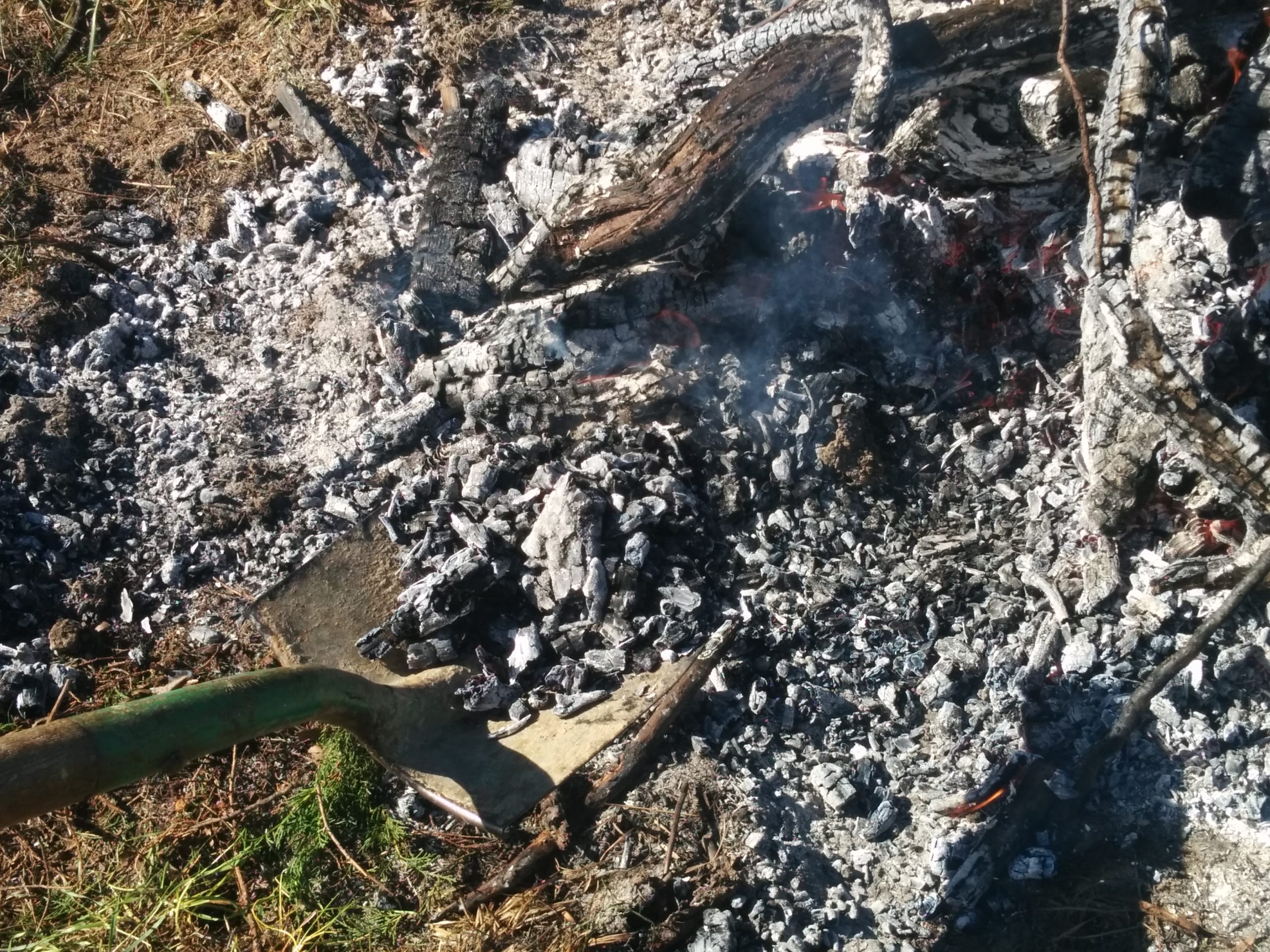
This burn style uses a standard fully dried brush pile that is lit from the top, greatly reducing smoke output, and as the pile burns down material is pushed down and folded into the middle until a pile of glowing coals is produced. The pile can be split with a rake between the still burning woody material and the coals starting to form a skin of ash nearer to the bottom. When a thin ashen skin begins to start forming on the charcoal pile, make a small puddle of water with a hose adjacent to the coal pile and rake them into the water to stop the burn or simply spray the thinly raked out charcoal layer down until it is completely quenched. If water is unavailable, one could also thinly rake out the coals and smother them with fresh soil cast over the top, although this is harder to collect afterwards.
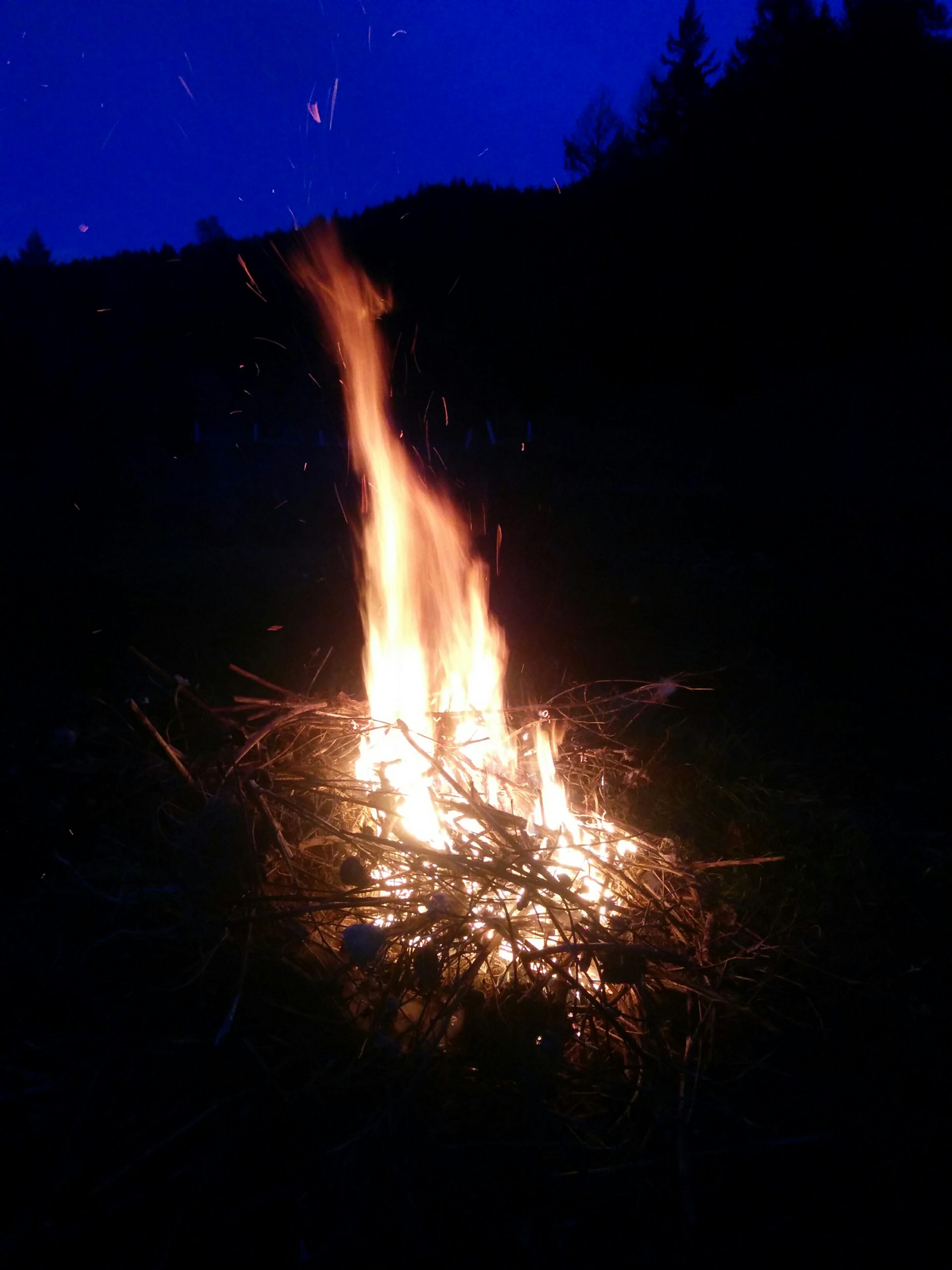
At home, we often can get several wheelbarrows of nice charcoal from a given burn pile of branches and other slash that would otherwise be reduced to pure ash that washes out and alkalinizes the soil. The coal can be crushed up further by stomping it, hitting it with a tamping plate, or some even run over it repeatedly with a vehicle thus giving the charcoal even more chargeable surface area overall. From there, once the charcoal is completely quenched and cooled, it can be gathered and redistributed into whatever systems you need nutrient stabilization.
At home, we like to use charcoal in the compost, animal bedding, composting toilet, to soak up and neutralize urine, with soaked/sprouted grains as animal feed supplement, or simply mixed into their water with a little sea salt. Our animals will actually freely eat raw charcoal as opportunity allows, which is seen by many wild species in nature such as orangutans. Several studies suggest that charcoal at the correct ratios in animal feed may help animals improve their overall digestion and assimilation of key nutrients and also helping to expel wastes from the body. Via microbial associates, charcoal catalyzes production of humic and fulvic acids known to function like transport vehicles for nutrients into the body and wastes out of the body.
We can possibly think of charcoal in the gut microbiome similarly to how biochar is working in the soil. Charcoal is much like a mop, soaking and spreading, and in conjunction with the body’s innate intelligence it can potentially be used to both nourish and detoxify. A personal favorite of mine is adding a dash of fine, human-grade charcoal powder to raw milk to help hold and better assimilate the nutrients and microbiota of the milk.
Biochar and charcoal’s role in our reality is multifaceted and profound. Initially, their action as a wondrous natural cleaner for air, soil, and water can help us remediate these elements and spawn more life. We can use charcoal as a natural cleaning agent to reduce odors, waste runoff, speed up composting, and many other ways of limiting our impact on the landscape. On the other hand, they can pull in nutrients, microbes, hyphae, water, and other life-giving materials, creating even more potential to bioremediate the environment. This ebb and flow of water, nutrients, and life lend toward a harmonizing and buffering effect on the land that both balances and transmutes the system as a whole.
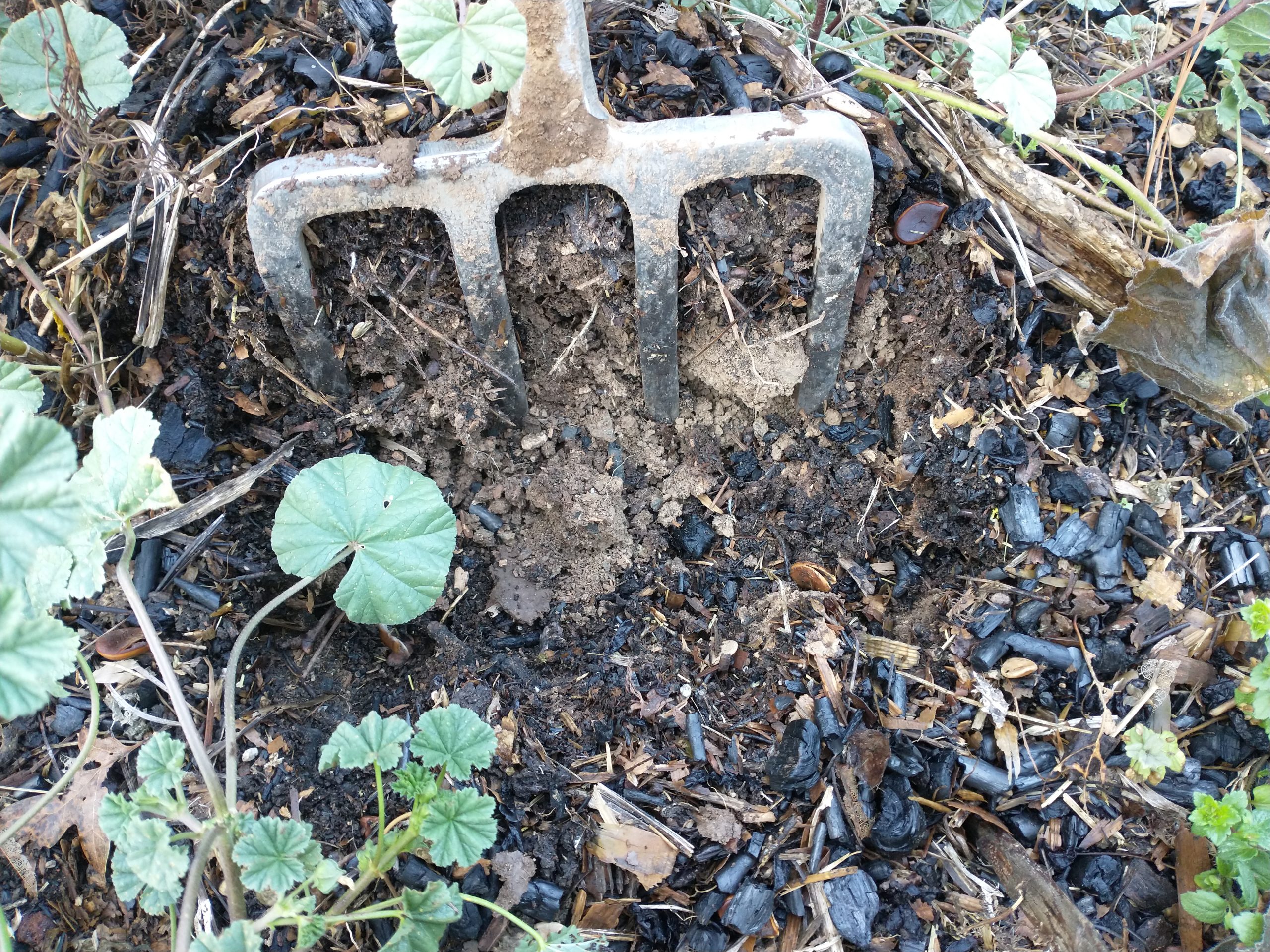
We still see the artifactual bio-charged soils of human and natural processes alike worldwide that continue to build generationally, some of the most fertile soils known. While we don’t know all of the exact mechanisms of creating these soils historically, we can work to experiment in our daily lives while inherently and almost unavoidably incurring multiple benefits even if we aren’t doing things “optimally”. The field of creating and applying biochar is actually rather new and burgeoning with new discoveries all the time. Our home scale experiments can meaningfully contribute to this new natural science and inform best practices for others working on a small scale.
We have to work within our means to figure out what makes most sense in our particular situation. Simple burn piles are the easiest way to help clear congested forest lands and reduce fire risks while actually generating a value-added product that further enhances that same land with all the benefits of stable organic matter. By using otherwise excess and/or wasted woody material to help soak up other nutrients, water, and life in our living systems, we create more resiliency that affords us a greater reserve of vitality to draw from as needed.
2 responses to “Biochar: Black Gold Forged in Fire”

Hello Martin Gordon
Have you any knowledge of commercial enterprices shipping crushed/screened bagged biochar that you are aware of? From the college where I vollunteer its suburban/city. Not feasible to burn/smoke piles of wood chips, slash wood or stacked waste wood due obvious concerns neighbors always have.
So I’m interested in doing demos by mixing in a % of biochar into compost layers of our air pruning boxes. These boxes we are building at Community College in NE Ohio for growing native bareroot trees. Primariy grafted Amercan Chestnut trees. If you have a source that ships such a product we would be interested in trialing side by side boxes for tree growth/vitality.
Also. I came across a Forestry paper a while back. They were making biochar similarly with slash piles of waste wood. If I remember correctly they did everything similar except the last steps. Dried out the wood well, then aerated the pile using pallet forks on big loader buckets. The last step before burning was different. They chose to scoop up soil from around these piles and then cover the piles to create a foot or more thick soil shell. Then when lit from the bottom the wood would not have the necessary oxygen to make ash. Smoldering I suppose it produced biochar better under that soil covering. Maybe you will find more on this topic and how or what they used their biochar for, as they made a lot of this very efficiently.Happy Trails
Chris
Hey Chris, thanks for reaching out. We have gotten super sacks (~1300lbs) of crude charcoal that is a nice grain-sized consistency from Oregon Biochar Solutions (https://www.chardirect.com/). They are local to us, but I know they do ship depending on quantity. Despite the name, you’ll need to charge this product up with nutrients prior to mixing it into soil.
Another premade biochar product I am familiar with is Black Gold Biochar (https://www.blackgoldbiochar.com/) who also ships and is ready to go. They are in Missouri and sell smaller bag amounts so may be a better option depending on your scale.
I have seen folks make char using the mud kilns built over the burn pile that have several holes left around the bottom and one on top. They light the pile from the top and when the pile fully ignites and burns through the volatiles, they cap all the side holes then the top with more mud and it produces a greater efficiency conversion to charcoal than open piles as oxygen is better excluded. Functions a lot like a rocket stove too, hot and clean burn. So many ways to make char!
Be well Chris,
-M





Share Your Thoughts