



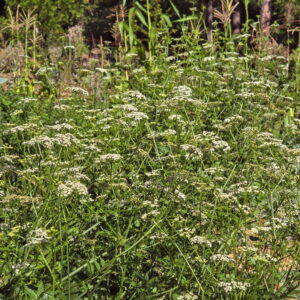
Description
We fell in love with Skirret the first season we grew it for the sweet, carrot like roots. Skirret is a perennial vegetable, meaning you can grow carrot like roots year after year without having to re-seed every year. Skirret was a popular medieval staple starchy root vegetable that fell into obscurity with the rise of industrial farming, but it’s starting to make a comeback with modern gardeners for a lot of practical and delectable reasons! Let’s dig in…
Skirret is in the same Apiaceae family as carrot, and Skirret’s roots have a somewhat similar flavor to carrots, but that’s where their similarities end.
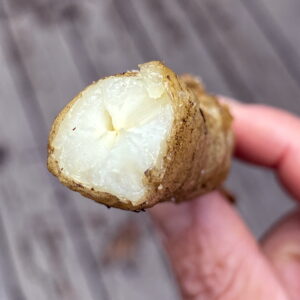
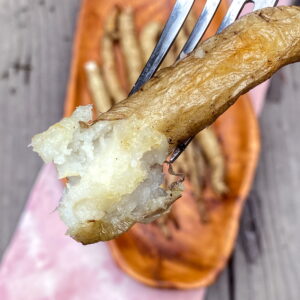
Actually Skirret is best described as tasting like a cross between carrots and potatoes. Skirret has an intense carroty flavor in the skin, and then Skirret’s cooked flesh is soft, silky smooth and starchy like a potato. But it’s also sweeter than a carrot or potato, no wonder another name for Skirret is sugar root!
Some people liken Skirret to tasting like a sweet potato. I personally would say yes with a carroty flavor also. But if you peel the roots before cooking, then Skirret flesh has a slightly less dense, more creamy sweet potato texture and flavor. What a joy for Northern gardeners to grow Skirret as a climate appropriate alternative for sweet potatoes, which need way more fussing in the beginning and a much longer season!
And unlike carrots, Skirret is a perennial and comes back every year. Some people call Skirret a perennial carrot for this reason! Sow seeds once and then get endless Skirret “carrots” for life!
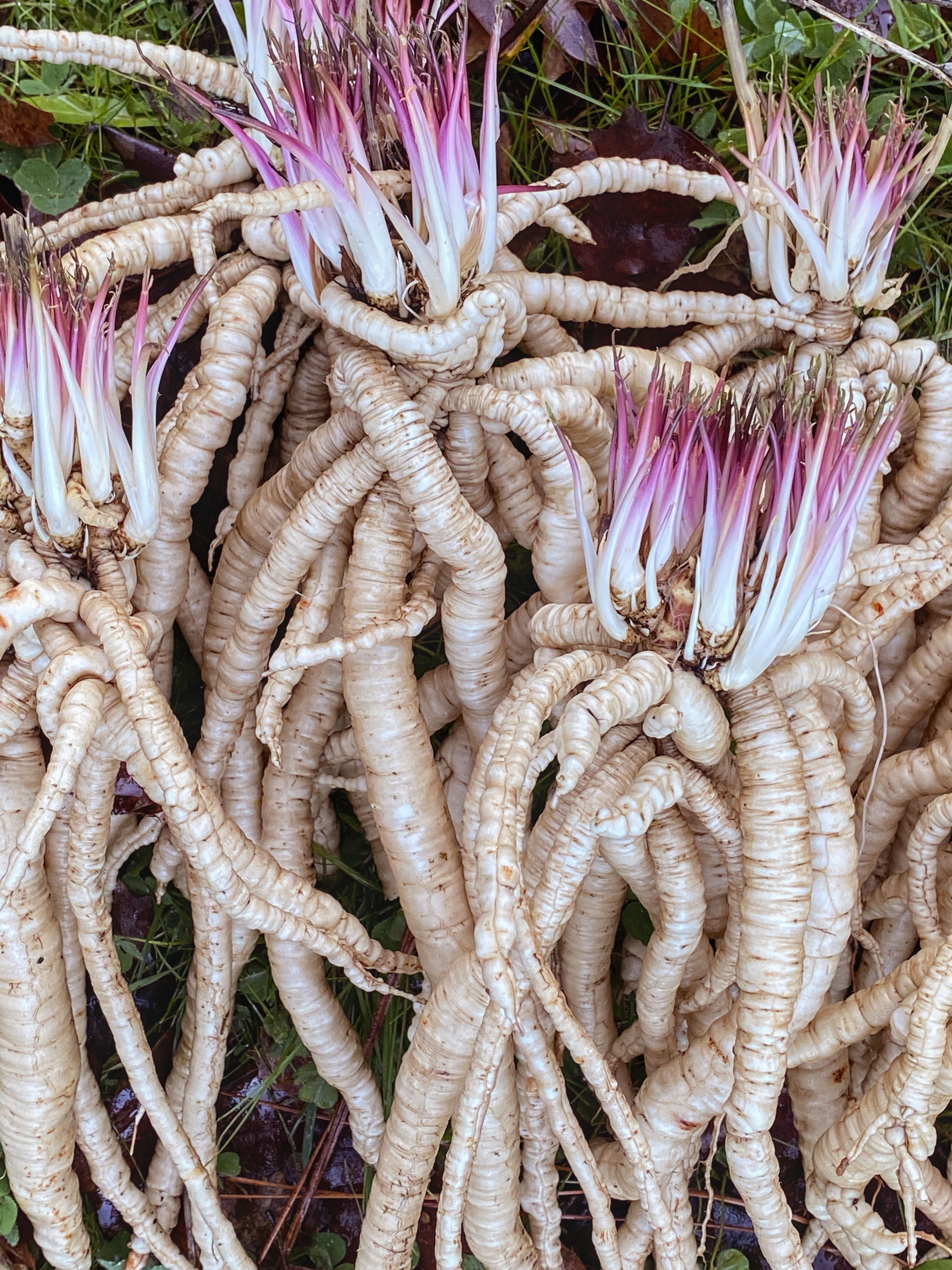
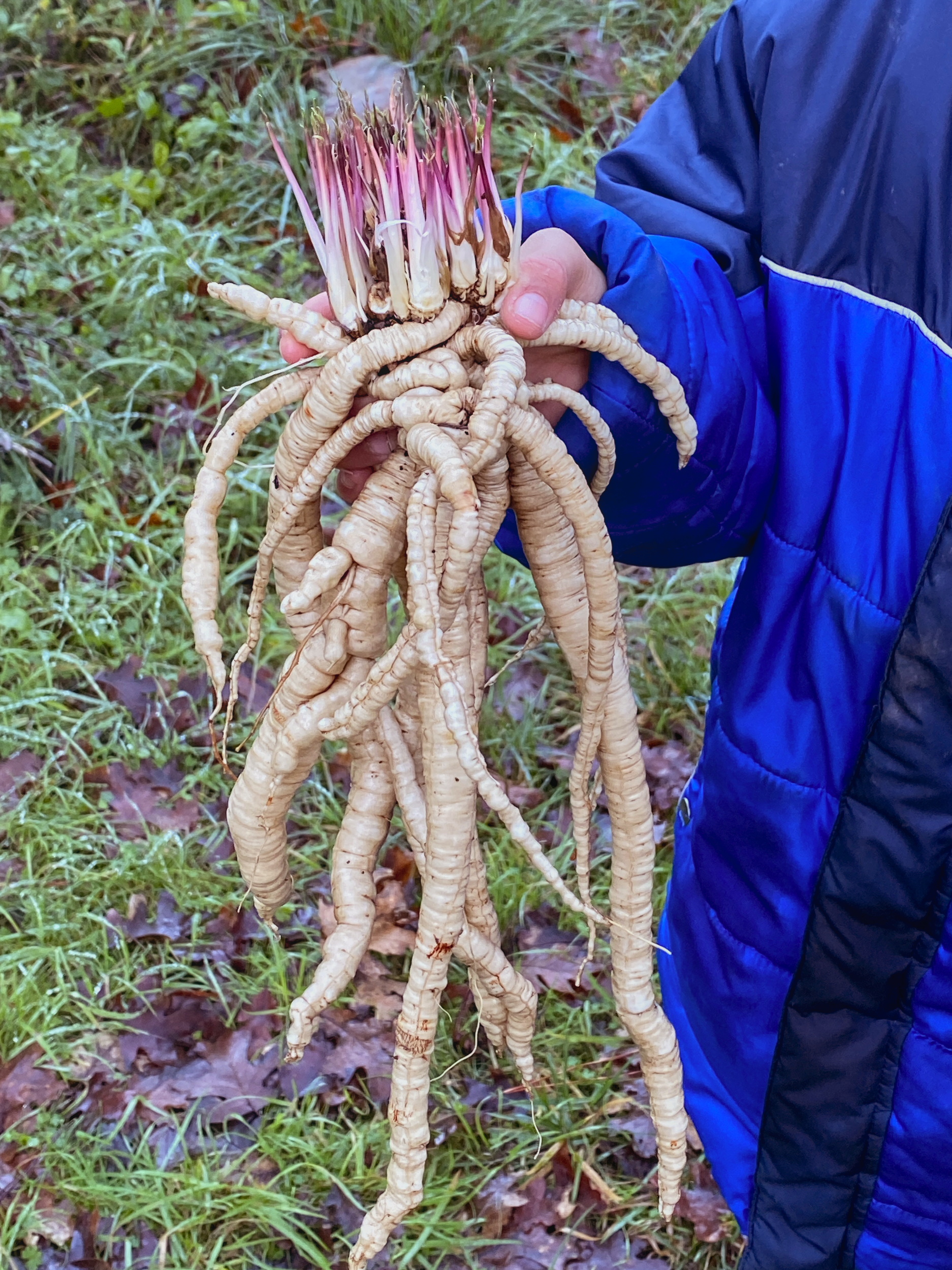
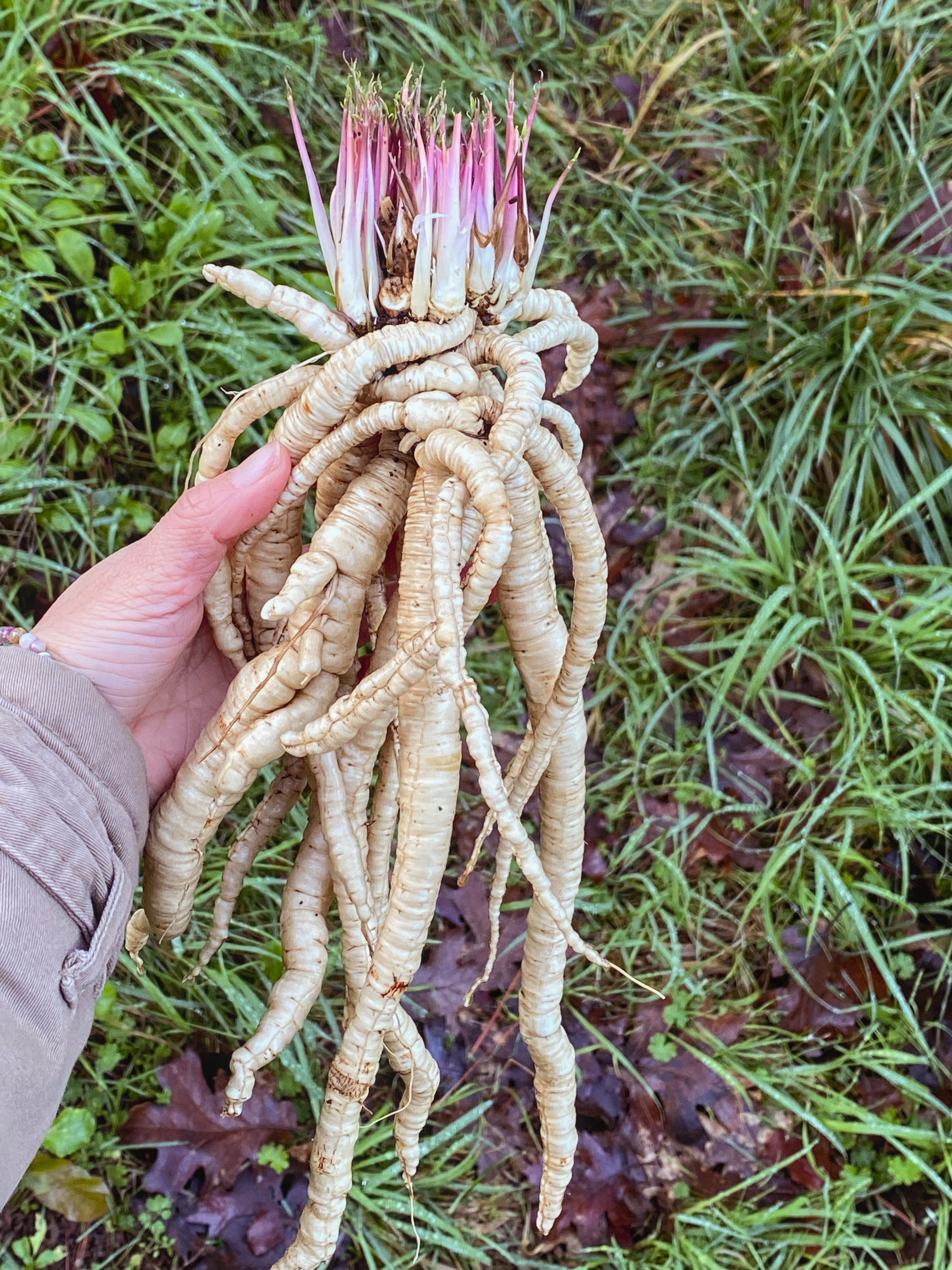
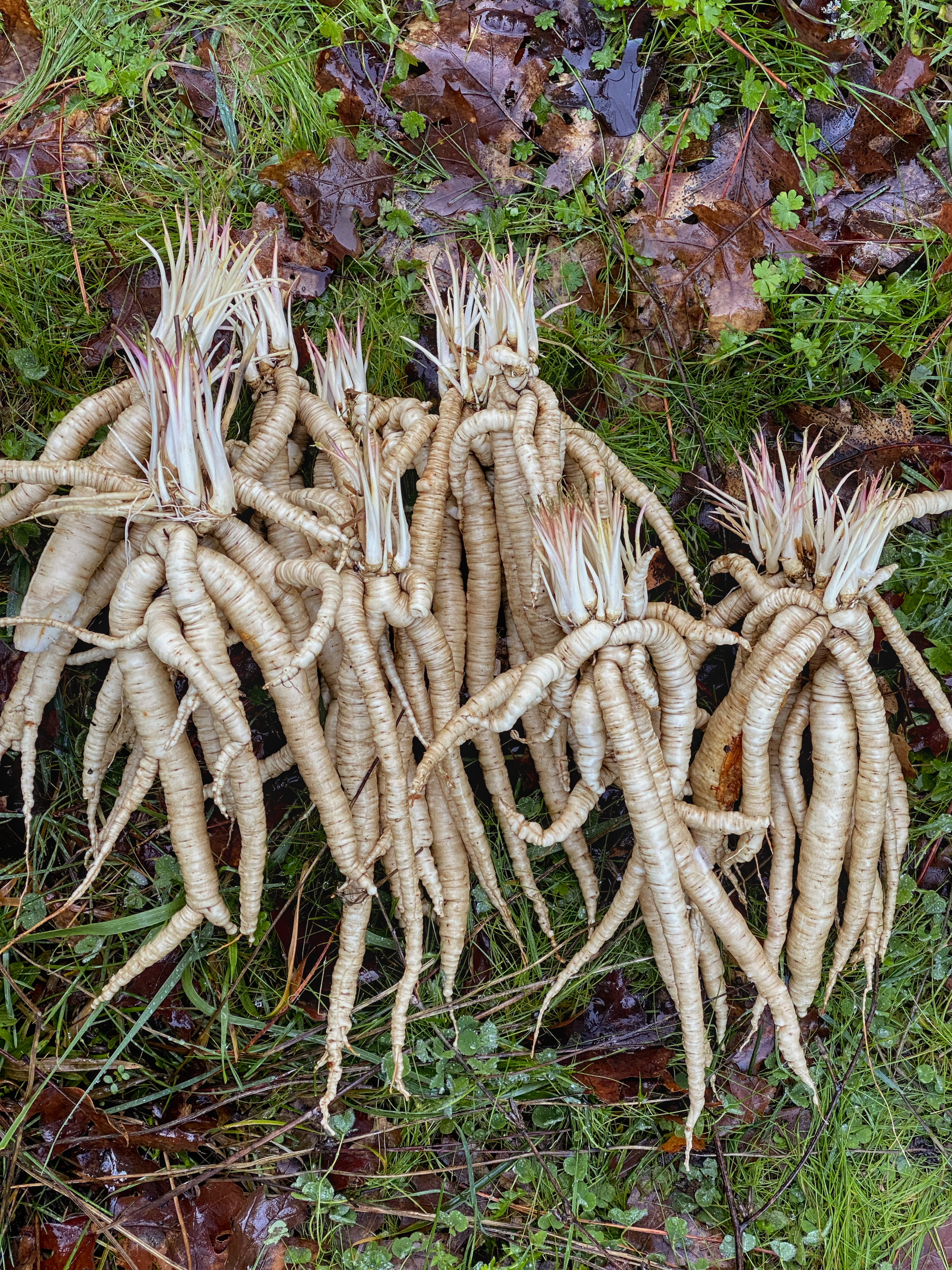
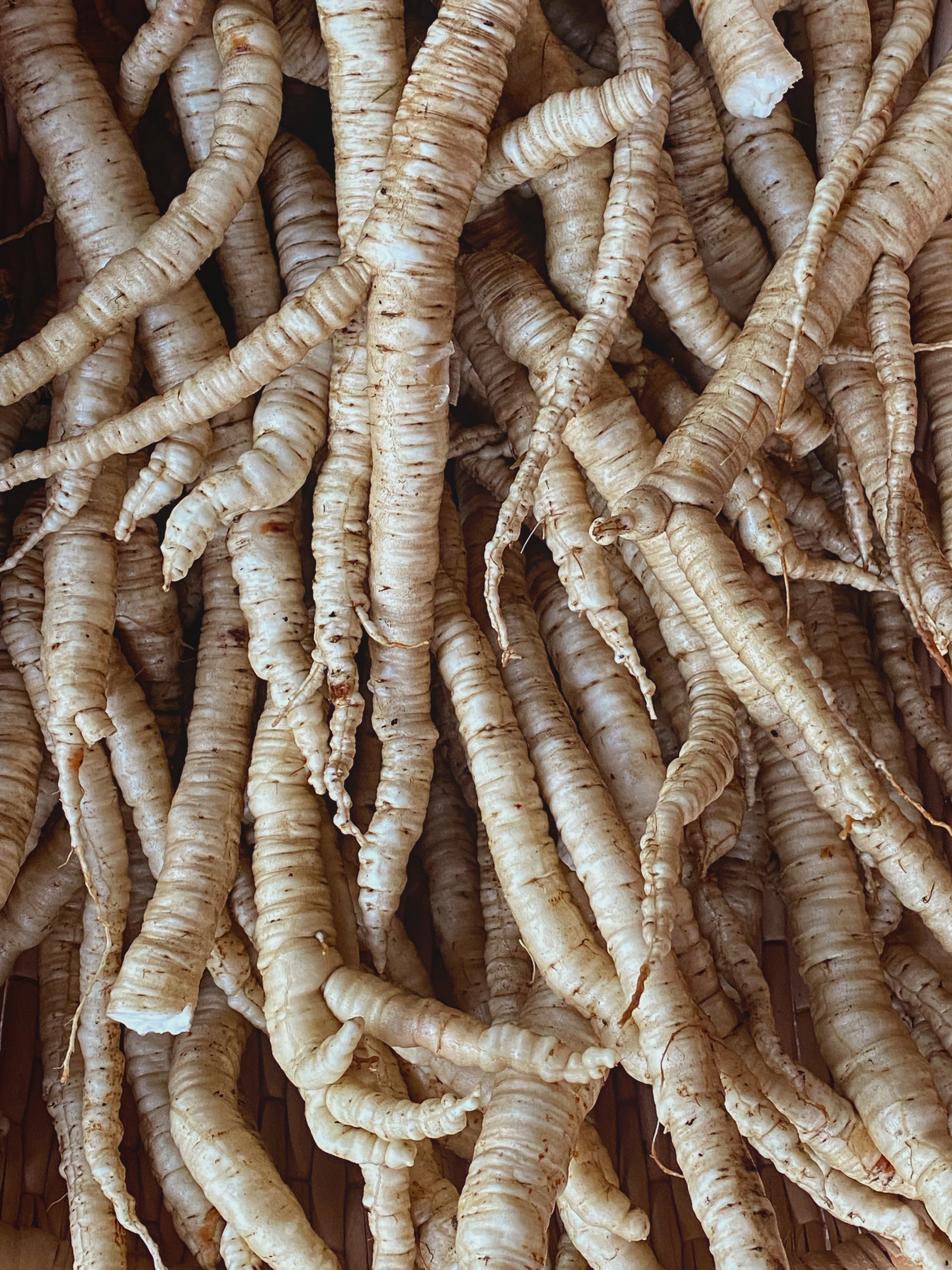
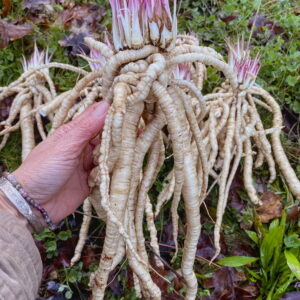
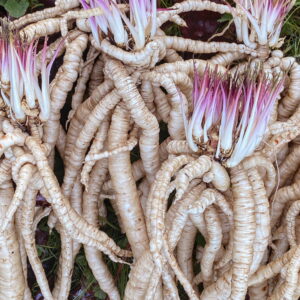
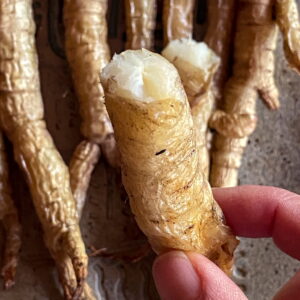
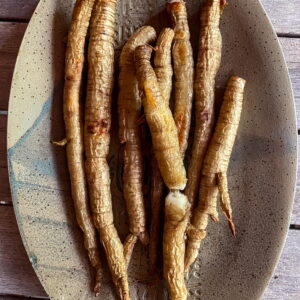
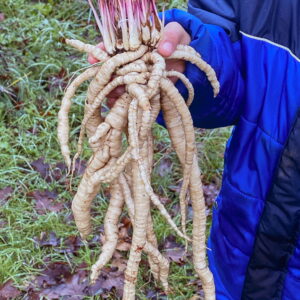
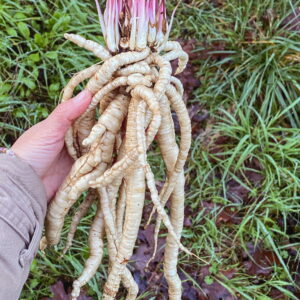
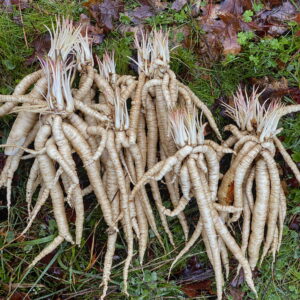
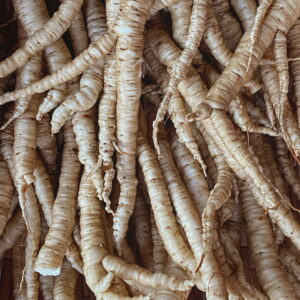
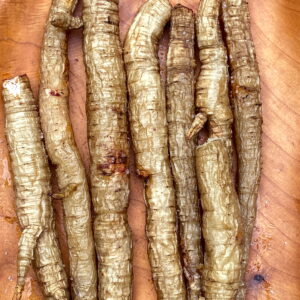
Skirret does not grow a single tap root. Instead, Skirret grows many white roots on each plant, from pencil thickness up to 3/4″ thick and 6-10″ long and tapered at the top.
When you dig your Skirret plant in the fall, you can sever off the best roots for eating and replant the crown to grow more roots the following year. While you’re at it, you can divide the crowns to make more plants if you wish. If you divide your plants each winter, after a few seasons you’ll end up with far more Skirret plants than you will ever need… it’s exponentially endless food!
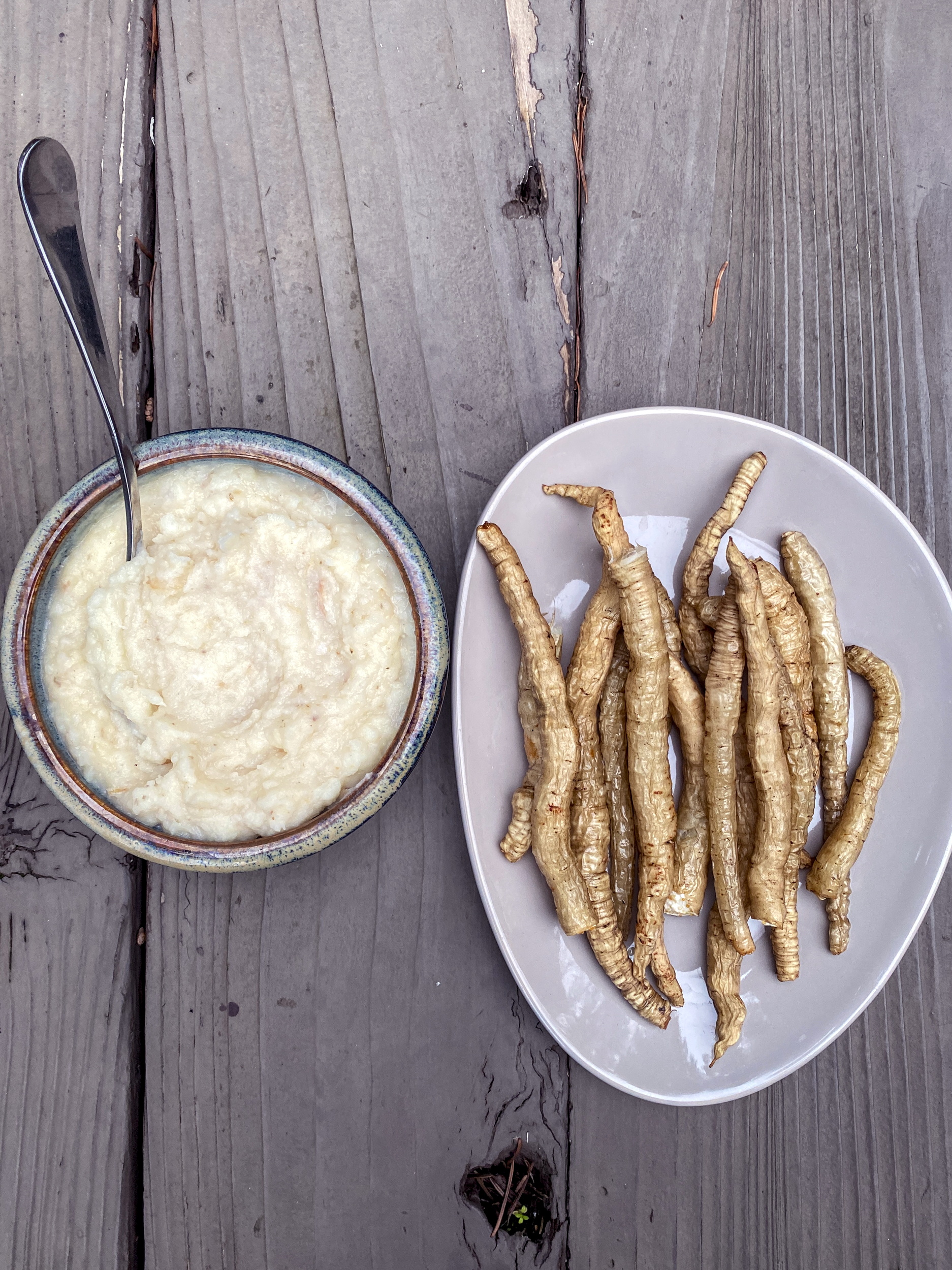
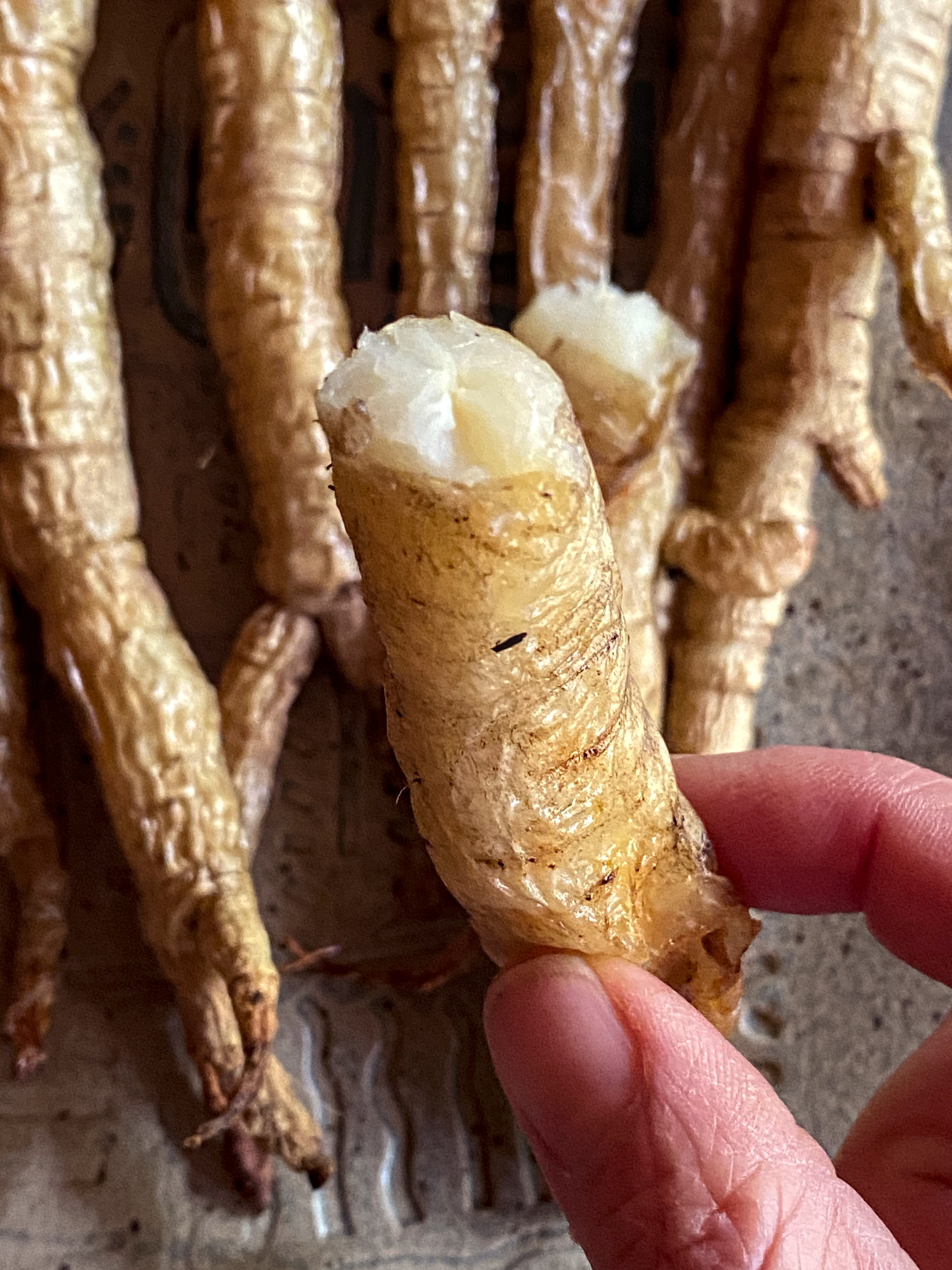
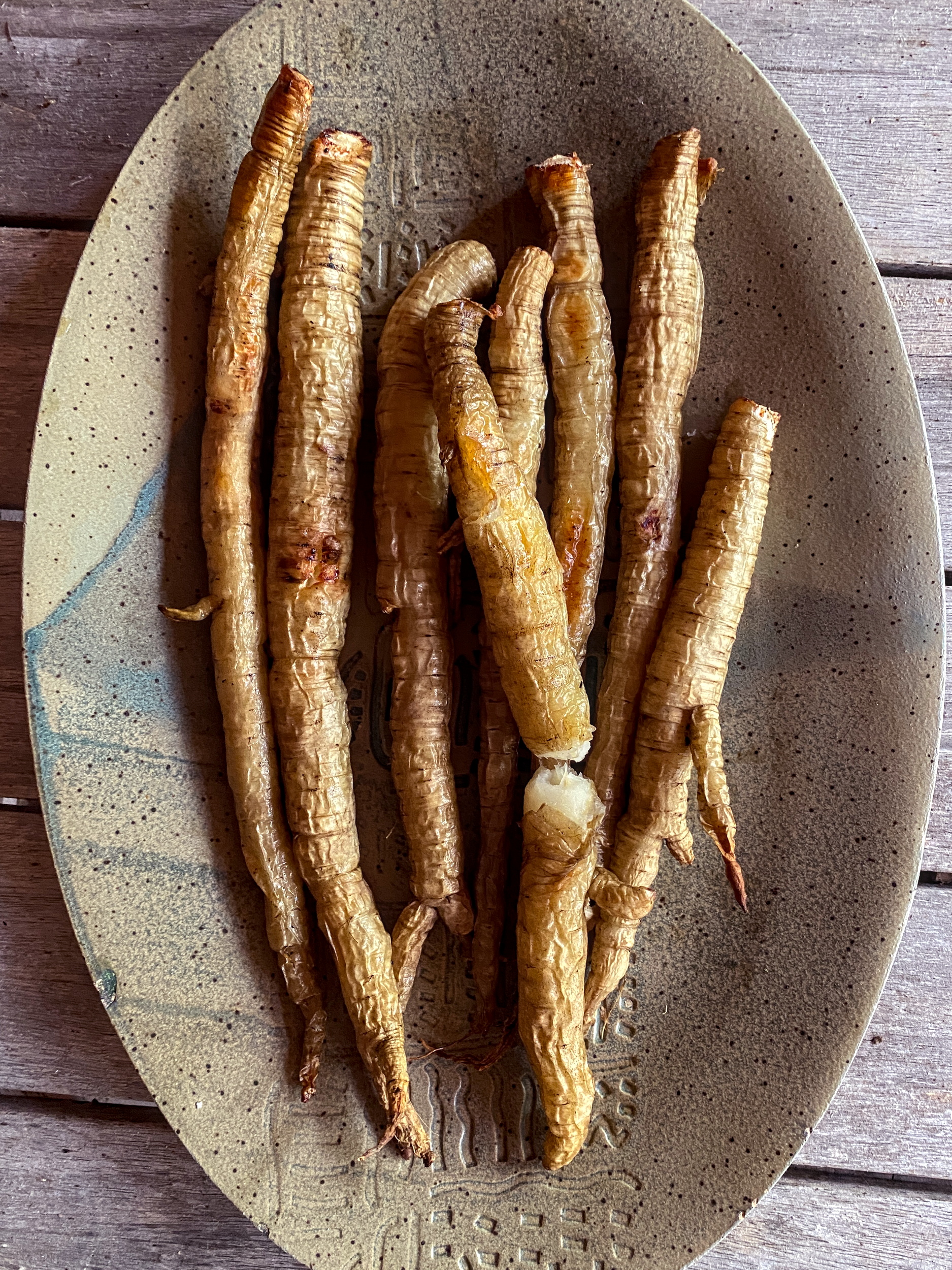
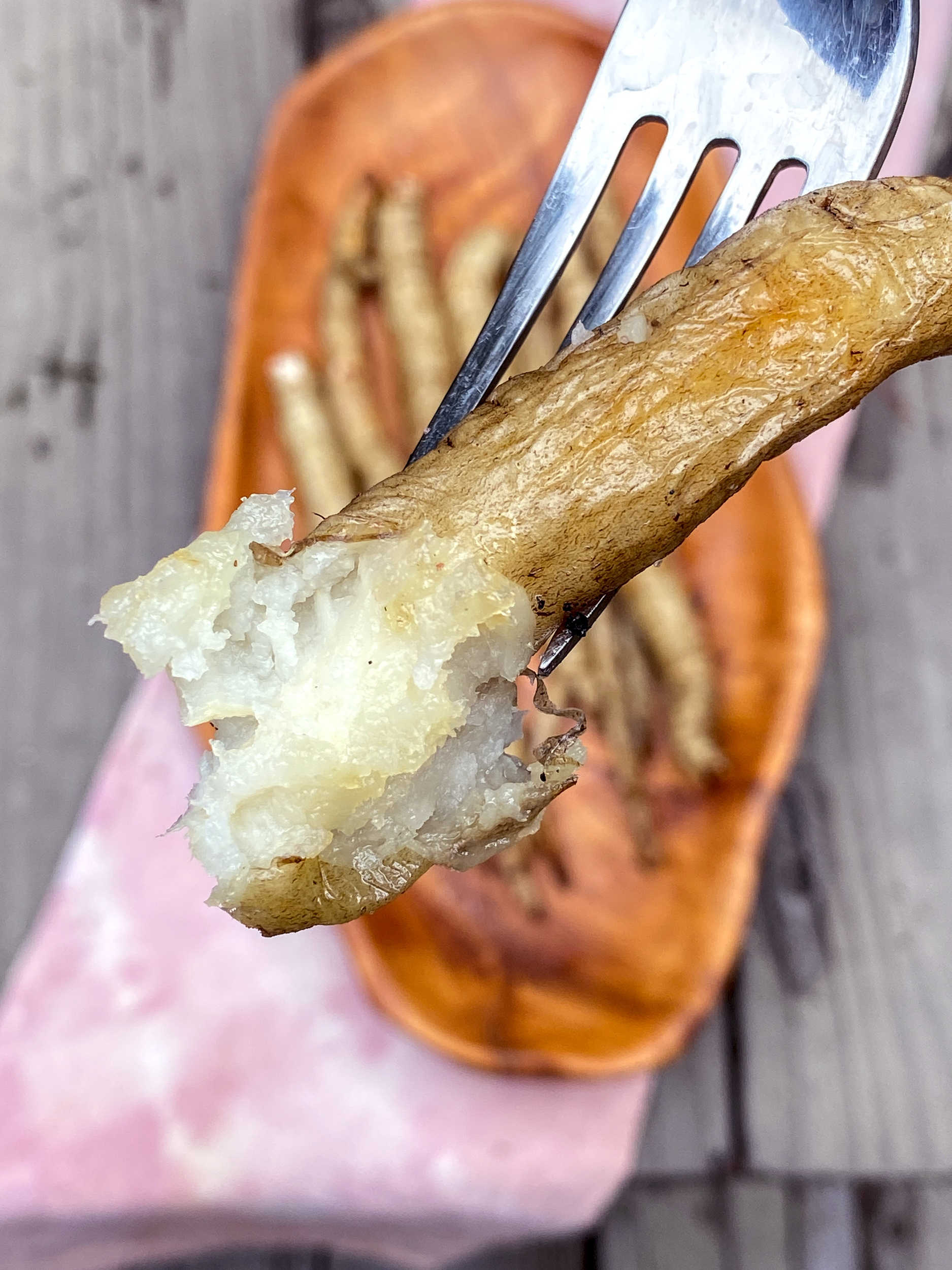
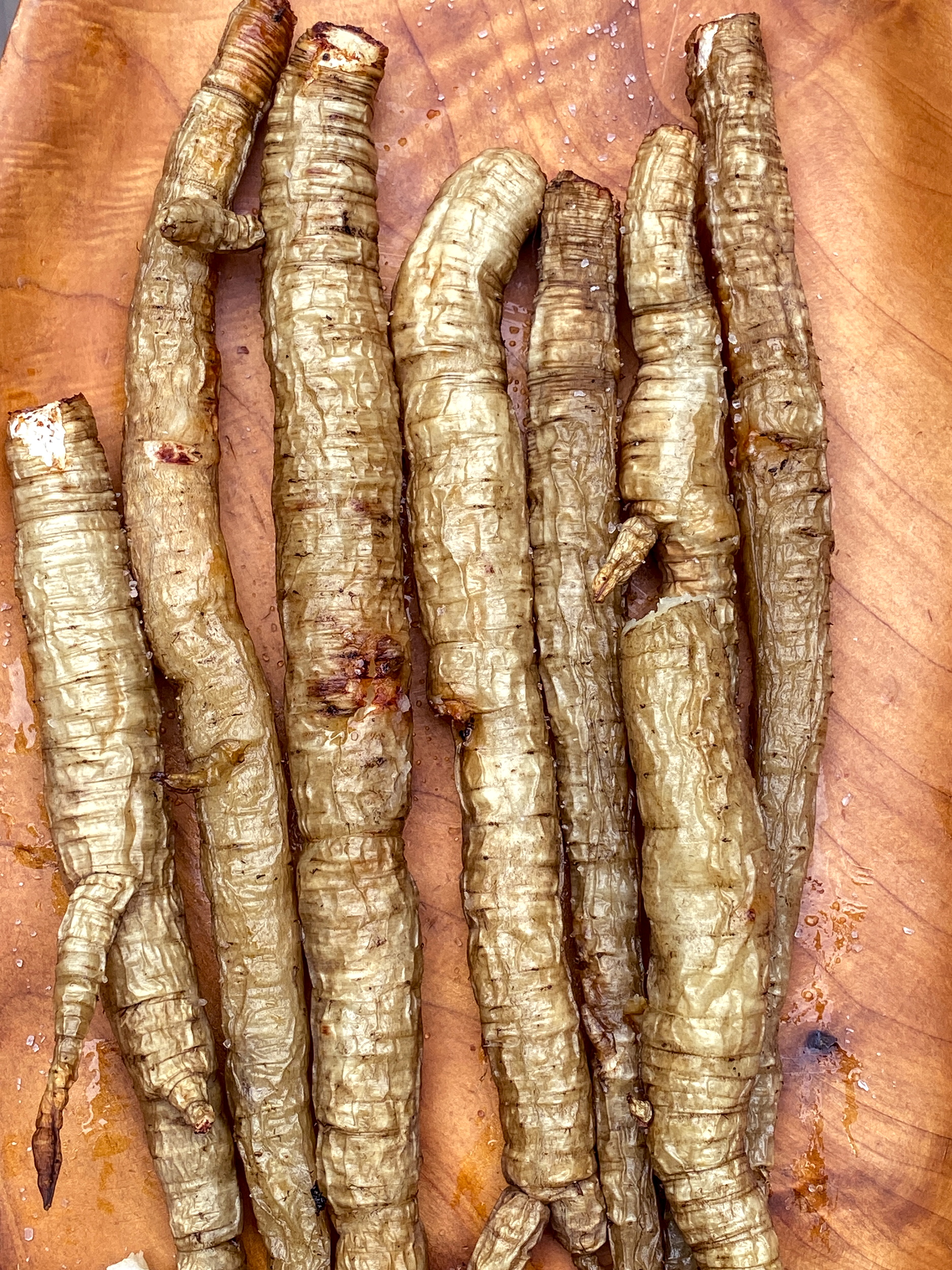
Skirret roots are sweeter and starchier than carrots, and we love their flavor and texture. Our favorite way to eat Skirret roots is roasted in the oven with a little olive oil and salt until they are starting to turn golden on the outside and soft inside. The texture of the roots gets soft and creamy. Skirret is slightly reminiscent of a mild carrot flavor, but much sweeter and a little nutty or earthy, a bit of potato flavor in there too.
Recently Ann tried making Indian carrot pudding (Gajar Ka Halwa) with Skirret, and it was amazing!! She recommends finding a good Indian carrot pudding recipe and substitute Skirret 1:1 for the carrot. For a smoother texture and a softer flavor, peel the Skirret roots before cooking and blending. Finally reduce or eliminate the sugar to taste. Skirret Halwa is so creamy and delicious, our 6 year old son kept asking for it over and over. With no added sugar, he was welcome to it any time he wanted!
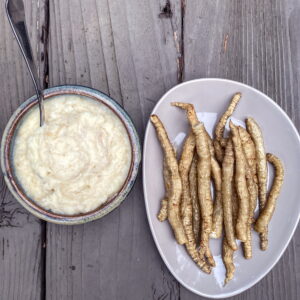
Skirret works well in soups and stews where you would enjoy some sweeter roots. Mashed Skirret roots are wonderful. Fried Skirret roots are delicious – Skirret fries! The skinnier Skirret roots are already the perfect “fry” diameter! It’s similar to eating a sweet potato fry but with a bit more texture and flavor in the skin.
Speaking of sweet potato, Skirret pie would be fantastic and is high on our list to try. When you peel Skirret roots before cooking, you’ll get that smooth, creamy, starchy consistency of sweet potato or baked squash. I bet Skirret would be an amazing replacement for sweet potato or squash pie!
Skirret roots also taste great raw in salads or as a crunch snack, similar to how you might eat carrots raw. However, when eaten raw the roots are taste less sweet than when they are cooked. Raw Skirret roots are crunchy, rather than the creamy texture you get when you cook them. Keep in mind that Skirret roots have some degree of inulin and eaters with sensitive digestive systems may not want to eat too much raw Skirret in one sitting.
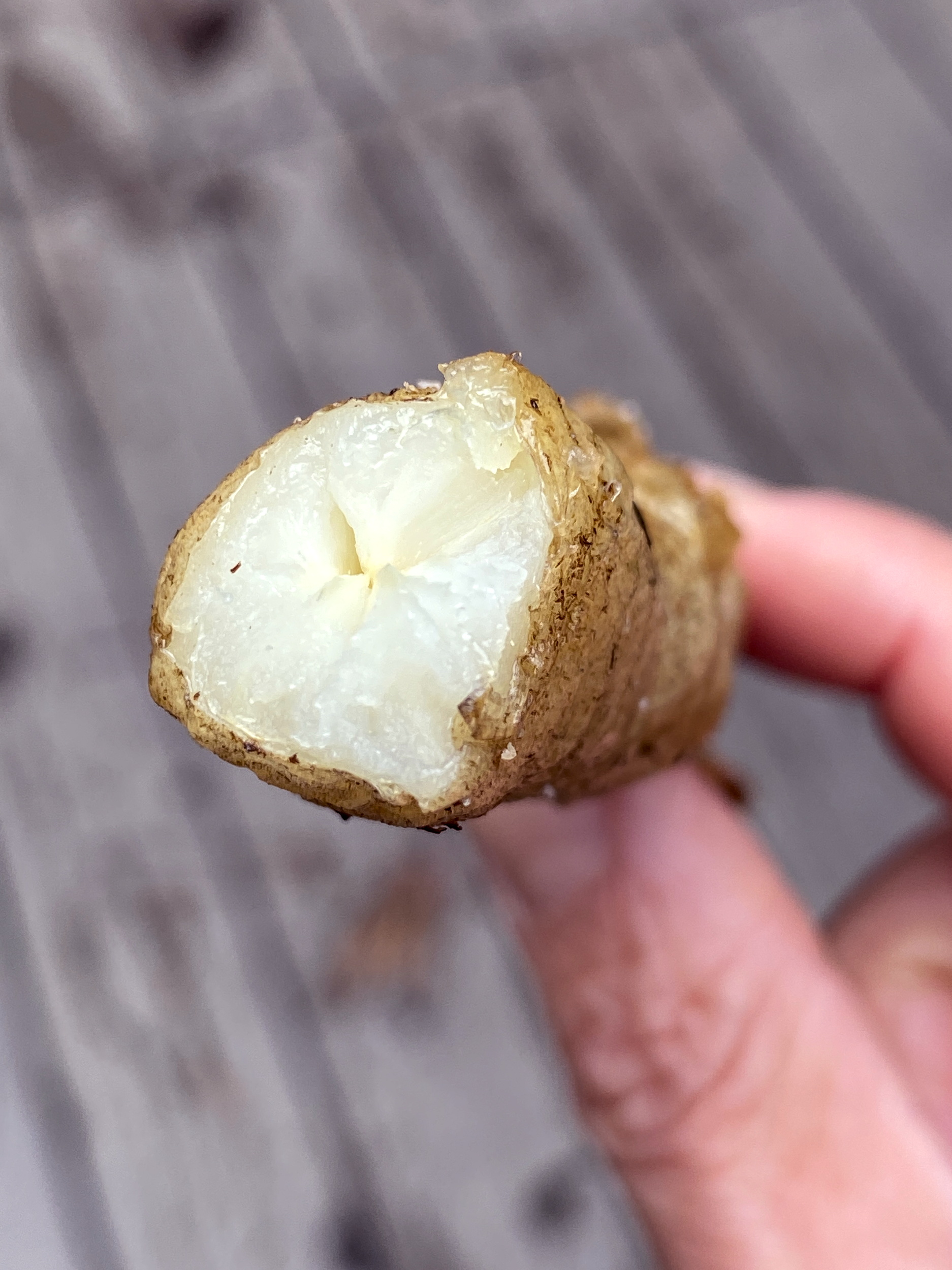
One thing to consider about Skirret is that some roots have a small fibrous core at the center that can be unpalatable. This can differ from plant to plant and variety to variety, but droughty conditions will increase the amount of fibrous cores. Keep your Skirret plants well watered and mulched through the hot season to minimize the amount of woody cores in your roots. Don’t let them dry out, if reasonably possible. Looser soil rich in organic matter helps a lot too. Partial shade conditions will help gardeners with more intense summer conditions.
In our experience so far, with the variety of Skirret that we are offering, the fibrous core is fairly minimal and easy to pull out or avoid while eating or preparing. If you have a roasted root with a woody core on your plate, just scrape the “meat” off of the core with your teeth or a fork and knife. It’s worth it! And if you end up with a lot of fibrous cores, keep in mind Skirret’s ideal growing conditions mentioned previously and consider giving them your garden’s most prime soil and regular moisture.
Or else, stick to harvesting and cooking first or second year roots with less pronounced cores. The fatter roots seem to be more core-free than the skinnier roots.
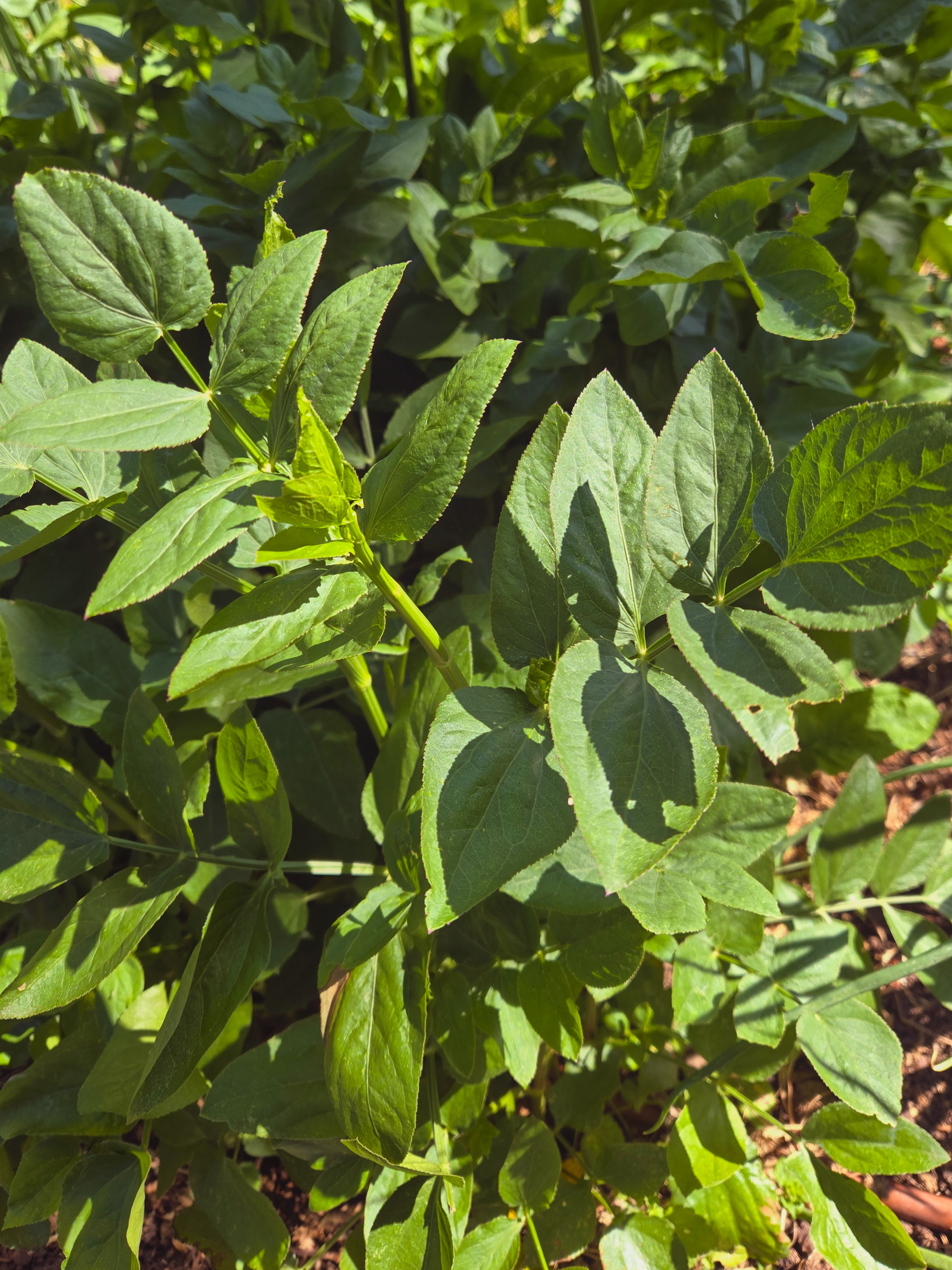
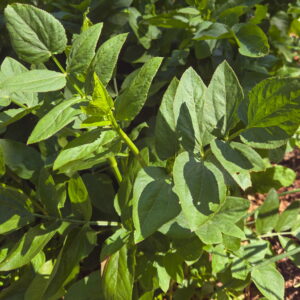
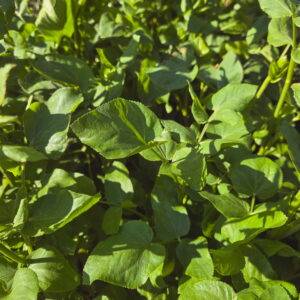
In addition to the roots, Skirret also offers a leaf and stem crop. Overwintered Skirret plants offer leaves early in the season! Skirret leaves have a very herby flavor similar to parsley or celery leaf (they are related). Harvest some leaves and/or stems for fresh eating before the plant starts to make flowers. Or dry the leaves to use in your cooking throughout the season.
You can also harvest and eat the young, immature flower stalk/shoots as their own vegetable. Be sure to leave enough leaves on the plant so Skirret can grow some good roots for you.
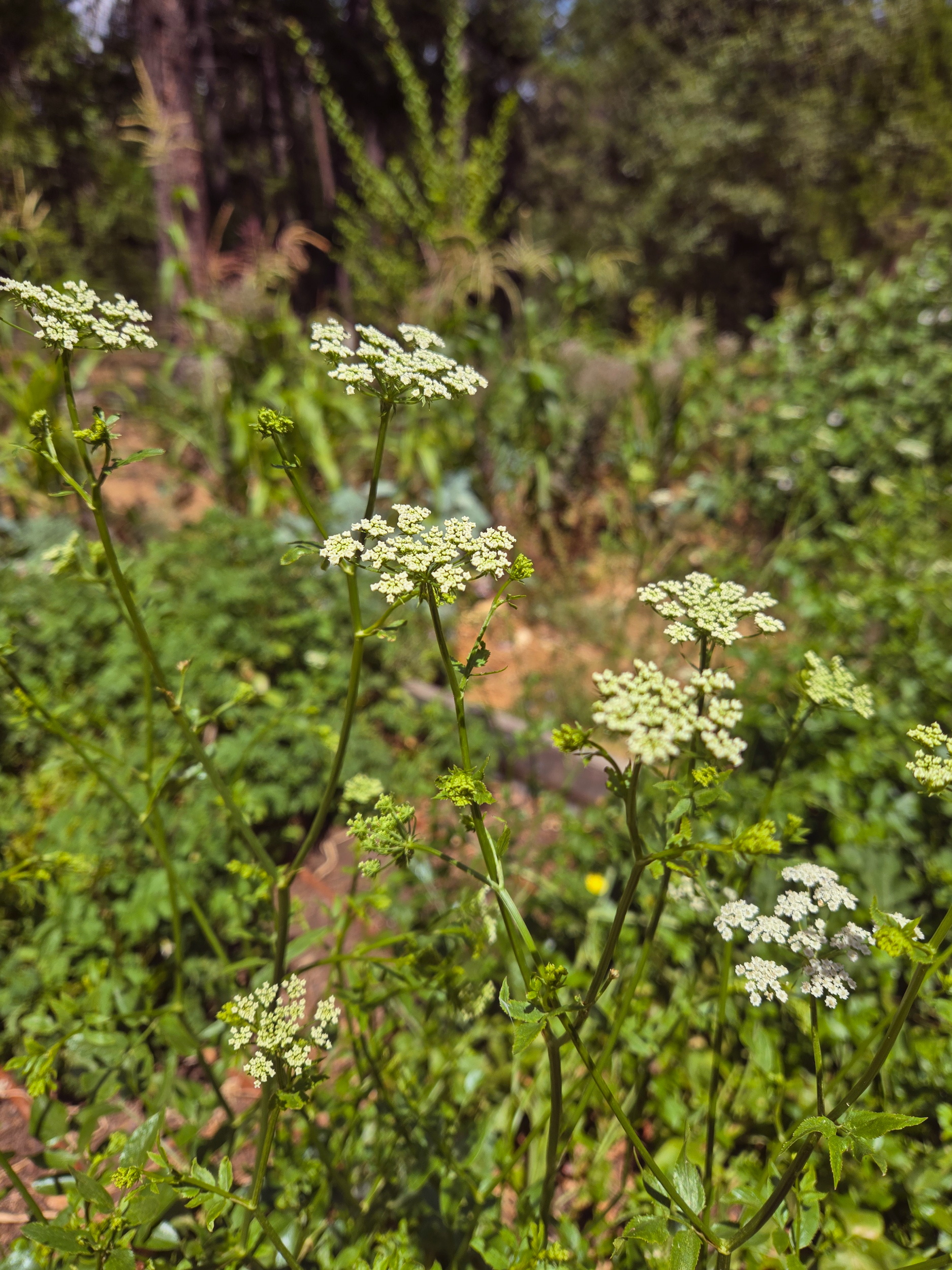
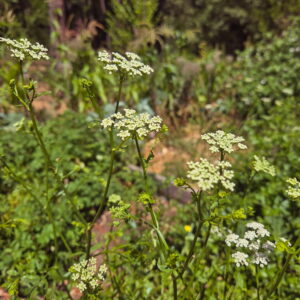
Like other plants in the Apiaceae family, Skirret puts on a dazzling show of many white umbels that the pollinators love. When grown from seed, Skirret already flowers in the first year! Which is a nice trait for seed saving, you can save some seeds as a backup in case your roots die for any reason or get eaten.
Skirret roots are easier for us to manage in the winter time because they don’t rot as easily. They seem to handle the freezing temperatures more gracefully than carrots (and potatoes!). Of course you’ll still want to offer protection if you live in the northern end of Skirret’s hardiness range. In our zone 7b climate we don’t need to offer any extra protection, whereas with carrots we have to harvest or mulch early enough or risk rot. Skirret roots also seem to be easier to store in bulk long term over winter in the fridge, for the same reasons.
We are growing a of Skirret plants from a few different seed sources to encourage a higher level of genetic diversity. The resulting seeds are what we are offering in this mix variety. This is also a long term effort to save seeds from the plants with the largest roots and the least or no fibrous cores.
Skirret is a plant that has become a mainstay for our family for the ease of growing, delicious flavor and the abundance of roots Skirret offers year after year. The dual purpose food crop (three if you count the edible seeds) and beauty are the icing on top.
The fact that Skirret roots are starchy and very delicious, plus the ease of growing year after year and the reliability of winter storage, makes Skirret an ideal candidate for a homestead staple crop. We are already planning on reducing the number of carrots we grow in favor of more Skirrets, because we can see ourselves eating quite a bit of it through the year, especially in the winter through spring months.
We are so excited to share Skirret seeds with you, because we think there’s a pretty good chance you’re going to enjoy Skirret too. Let’s bring back this Medieval sugar root!
Details
Lifecycle: Perennial
Lifespan: 5-10+ years; indefinitely with division
Hardiness zones: 4-9 (USDA)
Habitats: Unknown in the wild
Plant size: 1 1/2 ft wide x 3 ft tall
Light: Full sun to part shade
Soil: All soil types
Water: Regular moisture preferred
Seed Starting
Skirret seeds benefit from a 30-60 day period of moist, cold stratification, so its best to sow seeds in late winter, or else pre-stratify the seeds in the fridge.
Skirret seeds might be tricky to germinate. I had a few seasons of mixed results before I realized I needed to start Skirret seeds earlier in the season. I’ve heard that Skirret seeds need some alternating cold nights and warmers days to germinate successfully.
We plant our skirret seed outside in an unheated greenhouse early February and they get those conditions naturally. If you are in a warmer climate, or starting your seeds later in the season and find that the seedlings aren’t germinating, try sticking the pot or flat in the fridge at night and bringing it back out during the day. One customer that did not have germination tried this method after troubleshooting with us, and after alternating nights in the fridge and days on her windowsill, enjoyed germinating skirret seeds only 1 1/2 weeks later.
Sow seeds no more than 1/8″ deep in good quality potting soil in late winter to early spring indoors or under protection of greenhouse or coldframe. Prick out the seedlings and pot them up for their first season, or plant them in the garden if you can keep the small seedlings well weeded and tended until they get larger.
Direct sowing is possible and I’ve had good luck with direct sowing so long as the bed is well prepared and well marked for weeding and carefully watching for the seedlings.
Cultivation
Skirret does well in most soils but loves soils high in organic matter and regular moisture. You’ll want to keep the sweet roots protected from gophers and other rodents who love them!
Harvest
Harvest the leaves anytime from early spring until flowering. The roots are harvested in the late fall or winter when the plant has gone dormant. While you can enjoy roots from first year plants, consider waiting for the plant to be two years old, when grown from seed, to harvest the roots. You’ll have a much higher yield when the plant is a bit larger.
Propagation
It’s easy to divide Skirret. Split the crown between the roots into two or more new plants. Replant them immediately or if your divisions are small, pot them up to grow in the nursery for one season.
Seed Saving
Skirret flowers in its first year, so you can start saving seeds immediately! Look for the seed heads and their stalks to start turning yellow or brown before harvesting. The seeds should have turned from green to brown. Rub the seeds over a bowl or container to thresh them free of the stalks. Screen the seeds through a wide mesh sieve and/or winnow the seeds if cleaner seeds are desired.


Got the seeds no problem, and thank you. As for my happiness with the plants, I won’t be able to report on that for a year or so.
Thank you !
I love them! Still trying to figure out how to prepare them as they are so tiny
The seeds are viable. Packaged well. Looking forward to germination. Thanks