
Table of Contents
Deer Resistant Flowers for Indomitable Beauty
We share this land with many wildlife, including deer. Over the years, I’ve experimented quite a bit by planting many kinds of flowers where deer frequent. Some of my flowers didn’t pass the test and got eaten up by the hungry deer pretty quickly.
Learning to embrace a diverse palette of deer resistant flowers has allowed me to garden with abundant beauty outside of our deer fence, while reserving the valuable real estate inside the deer fence for the flowers that deer will obliterate.
Of the survivors, and especially the thrivers, I’ve compiled a list of some of my favorite flowers—both for beauty and resilience in the face of unrelenting deer.
Today it is my pleasure to share some of my favorite deer resistant flowers.
Please note: This list of deer resistant flowers is not exhaustive—instead, it’s very personal!
Table of Contents
My Requirements for Deer Resistant Flowers
To make the cut in this deer resistant flower list, each flower must:
- Have tempted deer in high traffic areas for at least several seasons.
- Be reliable in less-than-ideal garden conditions.
- Have multiple uses outside of the garden. (e.g. cut flowers, dries well, edible, or medicinal)
- Grow as a perennial or re-seed easily.
- Attract our family’s love and adoration.
- Produce abundant beauty for years to come!
Finally, we offer seeds for each of these deer resistant flowers that we love growing so much. These beautiful, deer resistant flowers really deserve to be grown in more gardens!

Globe Thistle
Globe thistle brings a bold, architectural presence to the garden, paired with reliable deer resistance.
Its spiny foliage and stems are tough and uninviting to deer, while bitter compounds in the plant further discourage browsing. Deer tend to pass it by in favor of softer, more palatable plants.
Exceptionally drought tolerant and heat loving, globe thistle thrives in poor soils and adds striking texture and steel-blue color, especially in dry, low-maintenance landscapes.
Bearded Iris
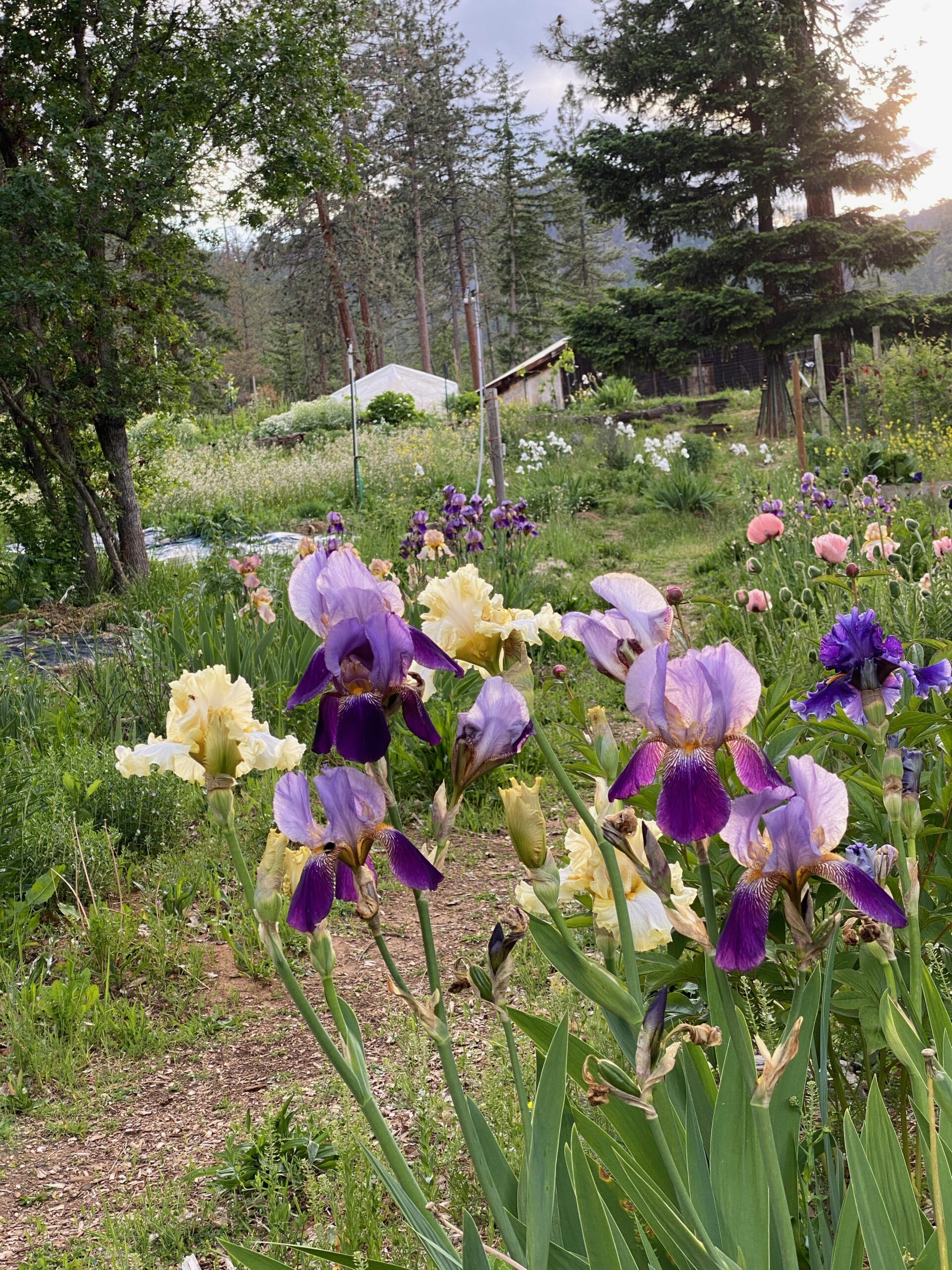
Bearded iris is a hardy, sun-loving perennial prized for its bold, ruffled blooms.
Deer avoid irises because of the bitter tasting glycosides within their tough, sword-like leaves.
Iris rhizomes also contain saponins and alkaloids that are poisonous to gophers.
For these reasons, this tough beauty is one of my favorite flowers to grow in our garden!

Nigella
Nigella is a very easy to grow annual flower that establishes quickly by self-seeding. Nigella has cute star-shaped flowers in blue, white, and pink.
Its feathery leaves give an airy feel to the garden and I like to use nigella to fill gaps in between perennial shrubs. It is relatively drought-tolerant as it flowers early in the season and then goes to seed when summer heats up.
The beige balloon shaped seed pods are excellent for dried flower arrangements. Nigella’s peppery scent and fine texture is unappealing to deer and I’ve had great success growing them outside our deer fence.

Poppies (all species)
Poppies are sun-loving annuals or perennials admired for their delicate, papery blooms and natural deer resistance.
The leaves, stem, and seed pods contain a milky sap that is bitter and toxic to deer and gophers, so you can grow them without worry in areas of heavy browsing.
Poppies bloom in late spring to early summer and the flowers attract numerous pollinators. Poppy pods are also great dried.

Columbine
Columbine is a graceful, sun-to-part-shade perennial known for its nodding, spurred flowers. Once established, it is relatively low maintenance and self-seeds readily.
It is a wonderful flower for woodland and cottage gardens.
Columbine has toxic alkaloids in the leaves and stems that deer typically avoid, but I’ve noticed that they do nibble on the young leaves. However, this has not set back my plants significantly and they continue to produce new leaves and flowers throughout spring and early summer.

Rudbeckia
Rudbeckia, commonly known as black-eyed Susan, is a tough, sun-loving perennial known for its yellow daisy-like flowers and dark central cones.
Our Dreamy Rudbeckia Mix offers a range of yellow, orange, and burgundy colors and single and double blooms.
Rudbeckia is drought-tolerant, pollinator-friendly, easy to grow, and provides long-lasting color from early summer through fall.
One of Rudbeckia’s standout qualities is its natural resistance to deer, as the foliage and stems have fine hair that can be irritating and unpalatable to browsing animals.

Lavender
Lavender is a woody, drought-tolerant perennial shrub best known for its calming scent often used in aromatherapy, herbal remedies, and natural skincare.
From late spring through summer, lavender plants are covered in numerous spikes of purple blooms that attract pollinators and create a soft, aromatic haze.
Lavender is deer resistant because its leaves and flowers contain concentrated essential oils that are a natural deterrent. Its narrow, resinous leaves and slightly woody stems also have a dry, tough texture that deer will avoid.
Lavender are excellent border plants, creating a protective boundary for your garden and emanating a gentle, soothing fragrance as you walk by.

Lamb’s Ears
Lamb’s ear offers a soft, silvery texture to the garden along with reliable deer resistance. Its fuzzy, velvety leaves are unappealing to deer, both in texture and taste, causing them to browse elsewhere.
Exceptionally drought tolerant once established, lamb’s ear thrives in sunny, well-drained sites.
Lamb’s ear works beautifully as a ground cover or edging plant, adding soft color and texture to landscapes.
Lunaria
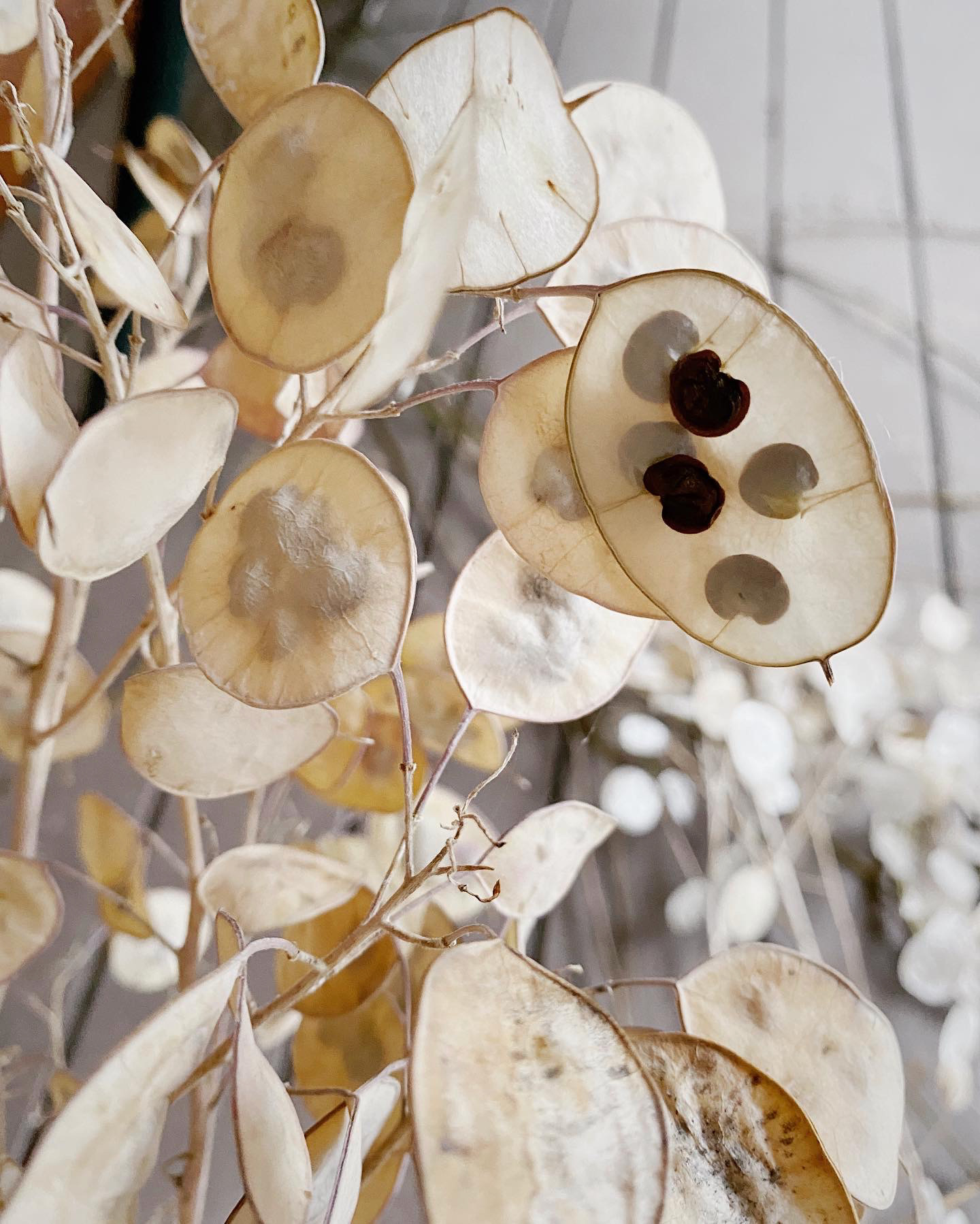
Lunaria is a charming biennial or short-lived perennial known for its distinctive, translucent seed pods often used in flower arranging.
The foliage contains bitter compounds that make it unpalatable to deer, but since Lunaria is an edible brassica, it is not completely impervious to deer. Deer browsed my patch of lunaria in the fall, but did not eat all the leaves so since then it has grown back and gotten larger in our mild winter.
It readily self-seeds, making it a lovely choice for naturalized gardens, woodland edges, and low-maintenance plantings.

Foxglove
Foxglove is a striking biennial or short-lived perennial prized for its tall spires of bell-shaped flowers and strong deer resistance.
All parts of the plant contain cardiac glycosides, which are very toxic and that deer instinctively avoid.
Thriving in sun to partial shade, foxglove readily self-seeds and naturalizes with ease. Its vertical form adds drama and height to cottage gardens and woodland borders while remaining largely untouched by browsing wildlife.

Rose Campion
Rose Campion is a short-lived perennial with bright magenta pink flowers and silvery foliage.
Rose Campion is highly deer-resistant due to the fuzzy, felted, or woolly hairs covering its leaves and stems.
Rose Campion is also hardy, drought-tolerant, and tolerant of poor soils, making it ideal for dry borders. Rose campion also self-seeds readily, truly a champion!

Clary Sage
Clary sage is a short-lived herbaceous perennial in the mint family. It produces distinctive flower spikes with soft lavender, pink, or white bracts that create a striking display in late spring and early summer.
Clary Sage is deer resistant because of its strong fragrance and bitter-tasting foliage. The plant’s leaves and stems contain aromatic essential oils that create a pungent scent many browsing animals find unpleasant.
Clary Sage’s thick, fuzzy leaves also have a slightly coarse texture, which further discourages grazing.

Wild Bergamot
Wild Bergamot is a hardy and tall flowering shrub with airy clusters of pale purple and green pom pom flowers that bloom in mid to late summer.
Wild Bergamot’s blossoms attract bees, butterflies, and hummingbirds while adding beautiful, flowing texture to the garden.
Wild Bergamot is reliably deer resistant because it releases a strong Greek oregano-like fragrance and spicy flavor when brushed or chewed. This pungent scent, along with the slightly coarse texture of the foliage, makes the plant unappealing to deer.
Because of Wild Bergamot’s similarity to Greek oregano, we also harvest and dry bergamot leaves for tea and cooking.
Disclaimer: While we are confident you’ll have success with any flower on this list, deer resistance is a gradient quality and our region’s deer may not be the same as your region’s deer. Your mileage may vary!
Are there any flowers calling out to you in this list? Do you have any favorite deer resistant flowers that you didn’t see here? Let us know in the comments!
Protect Fruit and Nut Trees from Deer and Rodents
Want to grow trees more naturally in the presence of deer? You don’t need to install a costly deer fence around your entire orchard or property. Protect your fruit and nut trees individually from deer. Fine tune deer protection based on your goals, habits of your local deer and any inherent deer resistant qualities within your trees. Allow deer and other wildlife safe passage through the land you steward.
See our course Protect Fruit and Nut Trees from Deer and Rodents for more details!
Recommended Reading
- Deer Resistant Herbs for Resilient Gardens
- Oh, How I Enjoy the Flowers I Grow
- Growing Trees More Naturally In the Presence of Deer
Got Deer? Read on!
Want more stories and tips about gardening in the presence of deer? Our family has been doing a lot of experimenting with deer resistance of herbs, flowers and fruit & nut trees. Come learn with us… browse our archive of articles about how we garden with deer!






Share Your Thoughts