
Seed Saving is Good For the Heart
This article was originally published in our local newspaper: The Applegater, Fall 2025 edition.
It’s seed saving season! I’m always amazed how abundantly plants produce seeds. A bean plant may make dozens of seeds, while kale can make thousands! In partnership with our plants, we gardeners can enjoy numerous seeds, often far beyond what’s needed for planting next season.
Extra seeds are:
- In the wings for planting years, sometimes even decades later.
- Imbued with love to share with family and friends.
- Squealing with joy when taken to local seed swaps.
- Enjoying healthy circulation when contributed to our seed library. (Shout-out to Ruch library’s seed library!)
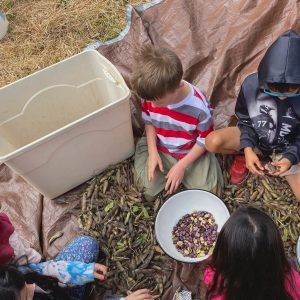
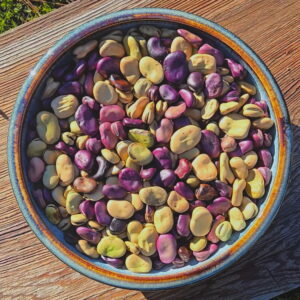
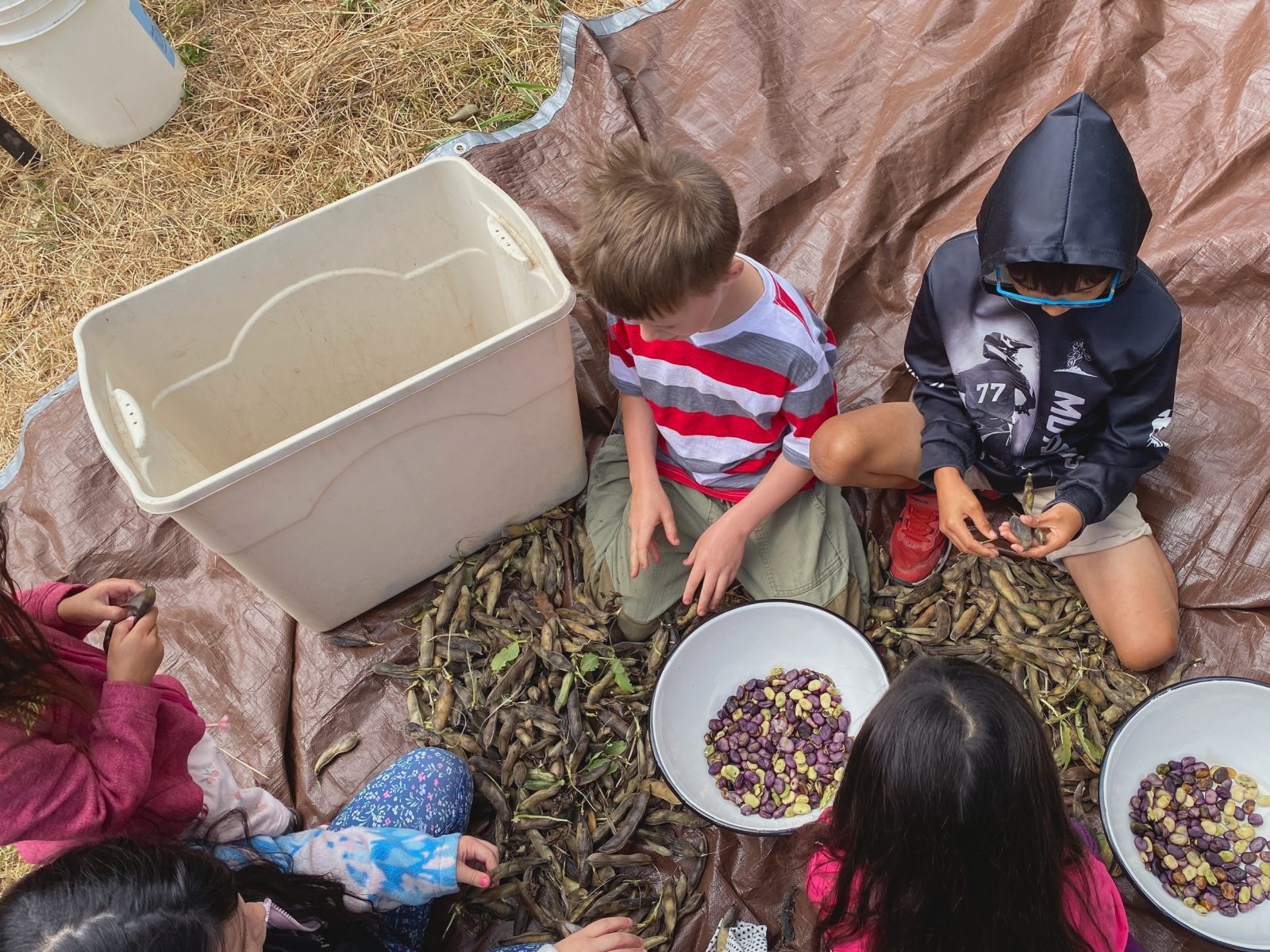
Seed saving empowers us to eat our seeds! Our family loves to eat homegrown dry beans and dry corn for masa/tortillas. We just started baking bread with homegrown winter wheat. (Shout-out Rogue Valley Heritage Grain Project!) We fill our spice cupboard with seeds too—kale seeds, mustard seeds, poppy seeds and fennel seeds are easy-to-grow favorites.
Saving seeds is natural. Saving seeds from plants that excel at volunteering can look like scattering seeds around. Kale, calendula, lettuce, poppies, fennel, chard, nigella, lemon balm, rudbeckia, and arugula for example, all love to volunteer in a wide range of garden conditions. We collect and scatter their seeds over exposed soil fall through spring for more plants next season.
Saving seeds is care giving. I take more care saving & planting seeds from summer plants like squash, tomatoes, corn, basil, watermelons, because they are frost tender, they take time to produce and often want the garden’s best soil.
Saving seeds is care free. Plants whose seeds require little thought about saving, because they don’t often cross with other varieties, include self pollinators like beans, tomatoes, lettuce and peas.
Saving seeds is adventurous. On the other hand, planting seeds that crossed with another variety (thanks bees!) can be a fun adventure the following season, provided we like both varieties that crossed!
Seed saving is a human right! Although we’re not the only species that saves and plants seeds—I’m looking at you rodents, ants and birds. Harvesting, eating, saving, adoring, adorning and planting seeds are activities that humans have really taken to heart, hands, belly, mind and spirit. Seeds are a rich, full body experience!
If we go back far enough, our ancestors were all intimately and directly connected with seeds. Not only for survival but as a way of life. We don’t have to look back that far really, only several generations for most of us.
Saving seeds connects us with our ancestors as far back as many millennia ago! My family’s relationship with seeds had been broken for at least a few generations on both sides. I don’t have a clear picture what it looked like before that. Anyway, saving seeds is still deeply ingrained in my DNA and mitochondria, as I’m certain it’s in yours. The seeds told me so when I held them in my hands.
It was the same feeling I had when I first started gardening, when I dug in the soil and planted those first seeds, when I adored those precious little seedlings. A feeling poured from wellsprings within letting me know I had come home to soil. I didn’t have knowledge of gardening, but I had an inner knowing that I was connecting with something deeply familiar.
Are you intrigued but perhaps uncertain about getting started saving seeds? Here are some words of comfort:
Seed saving, like gardening, is a journey of mystery and discovery!
Apparently gardening is designed this way so that knowledge isn’t as important as jumping in and having the experience. The seasonal ritual of saving seeds, the mystery, the not knowing, the patient waiting until next season, the excitement, the reverence—are all connecting us to something deeper, something special—little everyday miracles of life.
I invite you to let some of your favorite plants set seed this season. Visit the garden each day and watch flower petals whither away as the fruit or seeds swell. Find the seeds where the flower once was. Then invite those seeds into your life. It’s a recipe for mystery, transformation and joy.

Free Seed Saving Crash Course
Up your seed saving game in our free video: Seed Saving Made Simple We designed this presentation to help you have confidence knowing how to save seeds from your garden.
Free Seed Resources
We’ve put together a collection of stories, education and inspiration around gardening, living and working with seeds. They are all free and openly available for you to read and explore. Enjoy!






Share Your Thoughts