Table of Contents
Deer Resistant Herbs for Resilient Gardens
Do you garden in the presence of deer? We do! While many of our choice veggies and flowers are protected from deer, we also grow many herbs and other plants unprotected.
We didn’t deer fence the entire property because it would be cost and labor prohibitive. We also enjoy honoring the deer and allowing them access to (and safe passage through) a good portion of this land because it’s their home too. In some of these unprotected spaces, we garden with the deer.
I’m excited to share some of our favorite deer resistant herbs. Not all herbs are deer resistant, but because of their physical and medicinal qualities, there are actually a fair amount of deer resistant herbs in this world.
Practically speaking, this list is far from exhaustive—instead, it’s very personal and energizing!
Table of Contents
Our Requirements for Deer Resistant Herbs
To make the cut in this deer resistant herb list, each herb must:
- Have tempted deer in high traffic areas for at least several seasons.
- Be super easy to grow in less than optimal conditions.
- Attract our family’s love and adoration.
- Grow as a perennial or re-seed easily.
- Produce abundant food or medicine.
- Bonus points for beauty!
Finally, we offer seeds for each of these deer resistant herbs because they are so good—they really need to be shared with other passionate gardeners and homesteaders!

Bergamot
Bergamot is very deer resistant due to its strong fragrance and essential oils. Those oils are also what give bergamot its flavor and medicinal qualities.
I used to recommend everyone grow oregano as one of their first herbs, but now I am preferring bergamot to oregano when a taller herb is acceptable. Bergamot’s flavor is strikingly similar to greek oregano. But bergamot’s leaves are much larger and easier to harvest, dry and process.
Like other bee balms, bergamot’s flowers are stunning and numerous once established. We really enjoy bergamot leaves and flowers steeped in tea and cooked in food!

Burdock
Burdock root is a delicious, mineralizing “food as medicine”. The leaves, stalks and seeds are also food and medicine. Burdock is a powerful liver tonic and less bitter than dandelion.
We can all benefit from a little burdock in our diets and I try to eat some burdock or take burdock infusion or medicine daily because I feel so great when I do!
The above ground plant is beautiful and its lightly fuzzy leaves and bitterness keeps the deer at bay.

Clary Sage
Like many other sages, clary sage is very deer resistant for the scented oils and lightly hairy leaves. Clary sage’s flavor is not quite as strong as other sages and some prefer it as a gentle tea.
As a gardener I really appreciate clary sage’s big leaves for blocking weeds. The blossoms are so beautiful and lovely in a cut flower arrangement!
We use clary sage’s seeds like chia seeds in cooking, except they are bigger and easier to grow and harvest than chia seeds. Clary sage re-seeds easily (even in grass!) and is very drought tolerant!

Elecampane
Elecampane is a powerful lung medicine and helps our lungs in myriad ways. We especially appreciate elecampane as an expectorant and an antiviral for our lungs.
Since covid-19 we’ve been embracing elecampane medicine even more whenever viruses move into our lungs.
The blossoms are beautiful, like numerous small sunflowers or big yellow daisies growing on tall stalks from each plant.
Elecampane’s leaves are downy and deer don’t bother with even a nibble!

Fennel
Fennel is a must have in our gardens and kitchen! The strong anise/licorice flavor and scent keeps deer from eating our fennel plants, so we grow many unprotected!
Fennel is a delicious “food as medicine”. Some people grow fennel as an annual for the often swollen bulbous stem, but we prefer to grow fennel as a perennial and enjoy eating the tender young shoots in the spring.
We also collect the seeds in the fall and stock our tea and spice cupboard full of the flavorful seeds who help our digestive system.
Fennel reseeds easily, loves moist or dry soil, can handle some salt and loves rocks too!

Hyssop
Hyssop is a fun culinary and medicinal herb that we didn’t know for many years. Once I started growing hyssop, I want more hyssop plants in our garden!
Like many other Mediterranean herbs the leaves have a strong scent and flavor which give it medicine and help hyssop repel deer. I find hyssop’s leaves to taste like a unique blend of sage, mint and oregano with a light spicy note.
Hyssop leaves make a delicious immune strengthening tea and help our food taste more delicious!
I enjoy having numerous hyssop flower stalks jumping up from each plant. They are so beautiful, don’t you think?

Lavender
Oh lavender! Lavender is a favorite for bouquets, wreaths, flower crowns and just enjoying in the garden.
Lavender’s scent is delicious and floral, sending us into a day dreamy state. Indeed lavender tea and medicine is calming and relaxing.
We enjoy lavender tea in the winter, whether the flowers are dried or put up fresh in honey.
The best part is deer don’t touch these beauties thanks to their beautiful fragrance, so we plant lavender along our driveway and paths where deer have free access!

Lemon Balm
We are lucky to have lemon balm gracing our gardens with her beautiful fragrant leaves. I love brushing against lemon balm’s leaves and smelling the fragrance which I have come to adore. Deer, on the other hand, don’t appreciate the smell and stay away from lemon balm—their loss!
We enjoy lemon balm leaves dried and fresh in cooked meals and salads. We make pesto with lemon balm leaves and freeze it to eat throughout the year.
Lemon balm tea and tincture are relaxing medicine. Lemon balm is also a topical antiviral.
Lemon balm is drought tolerant, but perhaps the best characteristic about lemon balm is how easily it re-seeds for years of herbs and friendship to come.
Motherwort
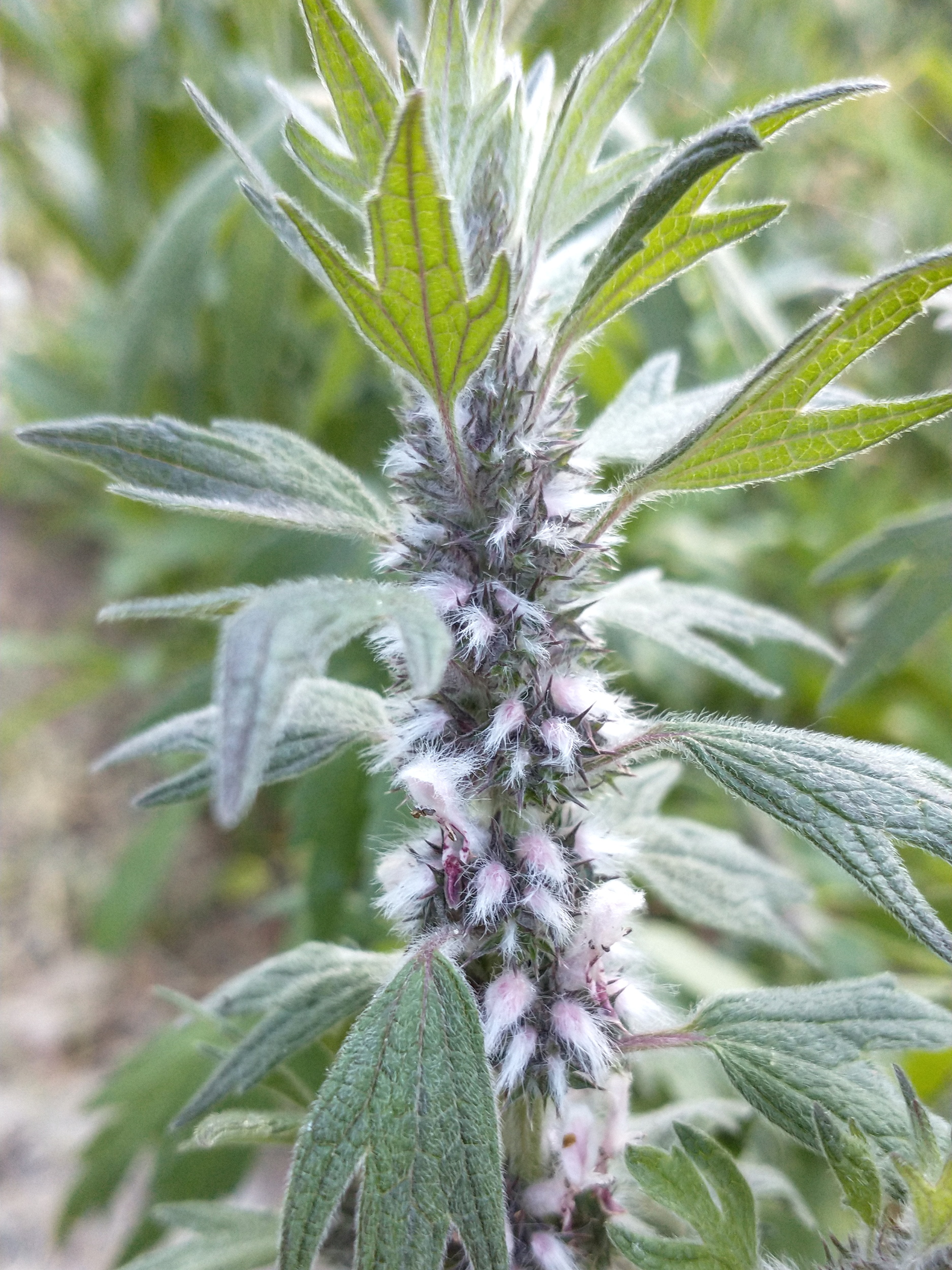
Motherwort is a beautiful herb! The leaves are very unique and attractive. Motherwort’s flower stalks are delicately beautiful. Up close, the open flowers look like fuzzy little pink dragon mouths!
Motherwort is a strong heart tonic and helps prevent and moderate heart conditions. As a preventative medicine, motherwort builds heart strength and grow new blood vessels in the heart.
Motherwort is also a calming herb and helps relieve mild anxiety and stress.
Deer don’t bother with motherwort’s lightly fuzzy leaves or flower stalk!
Rosemary
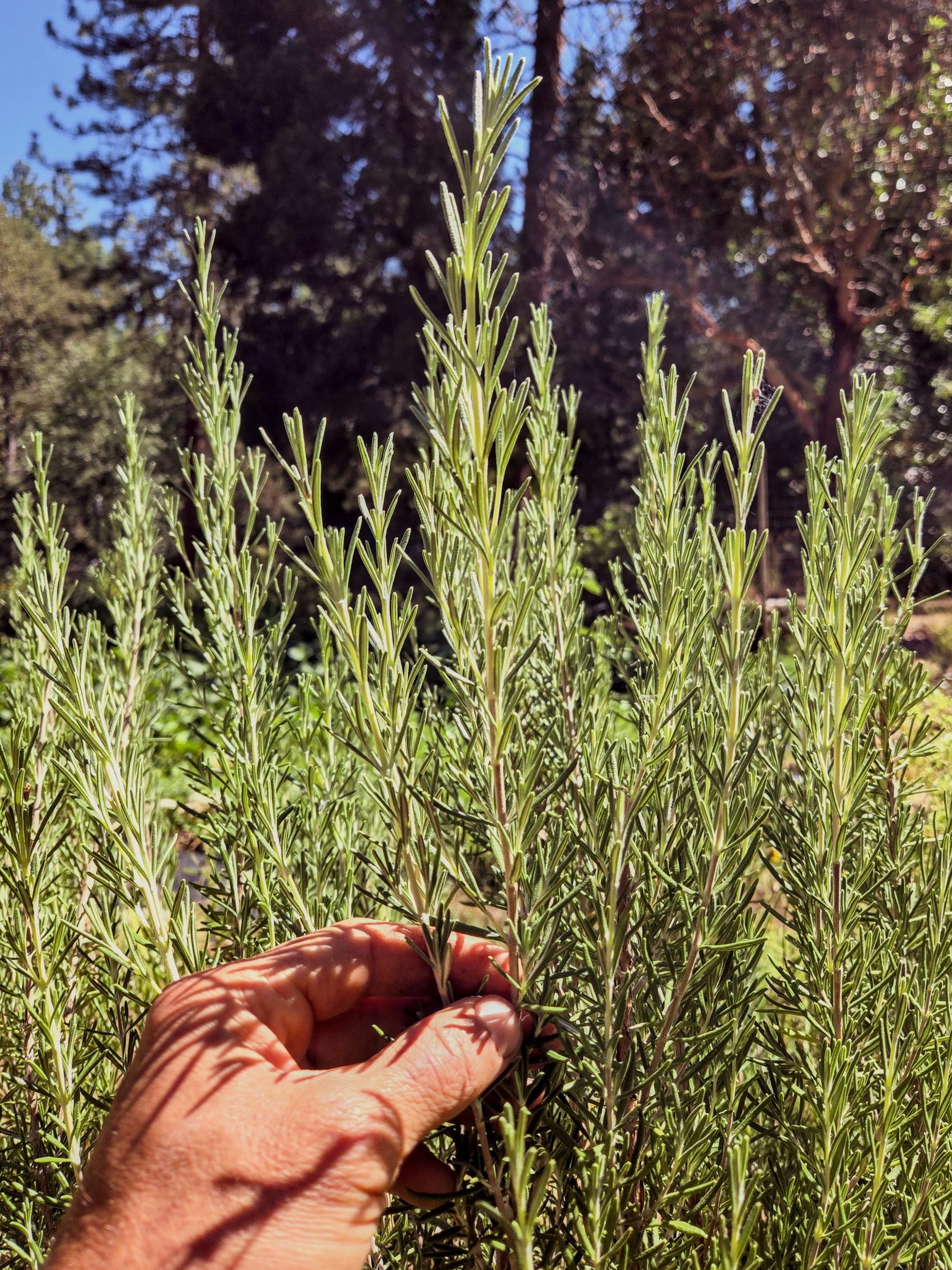
We love having Rosemary in our garden! Actually we grow most of our rosemary plants outside our garden fences where the deer frequent because we can!
Not only that, but as a Mediterranean herb, Rosemary is capable of growing in less than optimal soils and is very drought tolerant. Our rosemary plants are growing in thin soils with infrequent watering, even in the hottest time of year and they thrive!
Rosemary is a wonderful tonic herb helping improve circulation, improve memory, reduce inflammation, aiding digestion and offers help with treatment of colds.
Rosemary is also a calming herb and can help reduce anxiety and stress.
Deer don’t bother with motherwort’s lightly fuzzy leaves or flower stalk!
Stinging Nettle
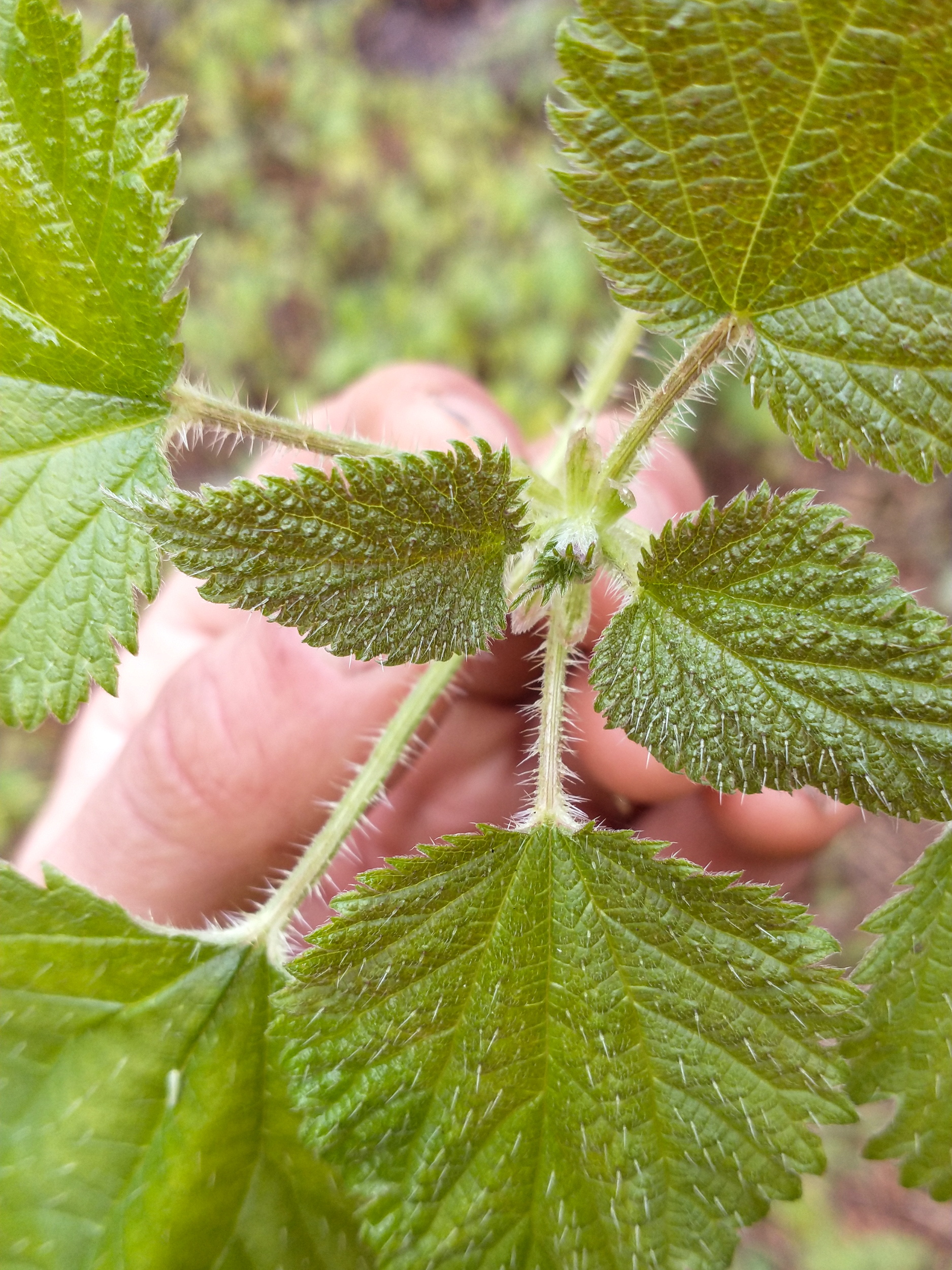
Stinging Nettle is one of the best “food as medicine” plants because their leaves are loaded with minerals. In fact, Stinging Nettle is so nutritive that it had to develop stinging hairs to defend its leaves and stems from being decimated by herbivores like deer.
We include stinging nettle in our diet regularly throughout the year in the form of herbal infusions. We love eating nettle leaves in soup seasonally in the spring and fall. And the tender young nettle leaves are also delicious as cooked greens.
Nettles’ incredibly nutritive properties often gives it the reputation of being able to clear up all kind of skin and chronic issues when consumed regularly, which is often a result of helping heal underlying issues via resolving nutrient deficiencies in organs and body systems.
Stinging Nettles also offers abundant medicine with pain relief and reducing prostate inflammation.
Thanks to the stinging hairs, Deer don’t mess around with Stinging Nettles!

Mullein
Mullein is a gorgeous, robust plant and makes quite a visible statement wherever it grows, which includes tough, derelict soils as well as good garden soil.
We consume mullein for its nourishing minerals and lung strengthening properties. Mullein is also an expectorant, nervine and can help heal ear infections.
Mullein helps build soil, grow biomass and does not need summer irrigation to thrive!
Mullein’s leaves are fuzzy/hairy and that quality repulses the deer from even nibbling this delicious, soft, gentle nourishing, powerful plant.
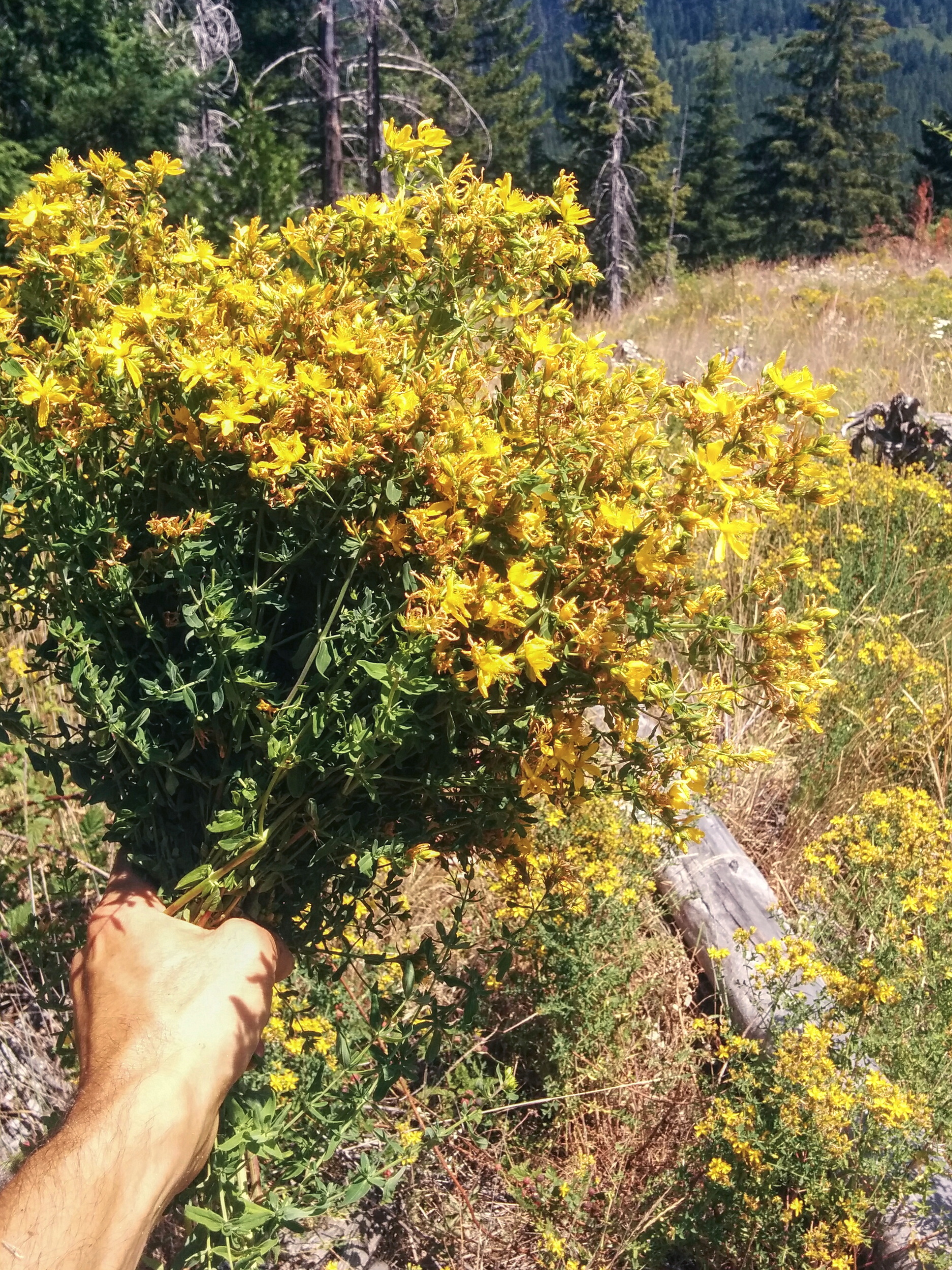
St. John’s / St. Joan’s Wort
Oh St. John’s Wort—A weed who battles are waged upon. If only more people knew how valuable, helpful and beautiful this versatile herb is.
St. John’s Wort, also known as St. Joan’s Wort, is a powerful systemic antiviral, healer of burns, nerve pain reliever, wound healer, mood lifter, has delicious tannins, and the list goes on… What more could we ask for from one plant!?
I didn’t even mention the beauty of these blossoms, and the incredible bright, blood red color that St. John’s wort medicine yields—quite magically!
St. John’s Wort is a strong survivor and grows well in derelict, dry soils as well as rich garden soils.
I am not sure exactly what qualities prevent the deer from eating much of St. John’s wort, but in my experience it doesn’t need protection!
Disclaimer: While we are confident you’ll have success with any herb on this list, deer resistance is a gradient quality and our region’s deer may not be the same as your region’s deer. Your mileage may vary!
Thanks for reading to the end! I’ll update this list in future seasons as our family continues to learn from other deer resistant herbs.
What herbs stand out to your or pique your curiosity? Are there any deer resistant herbs that you love to grow that weren’t mentioned here? Let us know in the comments!
Protect Fruit and Nut Trees from Deer and Rodents
Want to grow trees more naturally in the presence of deer? You don’t need to install a costly deer fence around your entire orchard or property. Protect your fruit and nut trees individually from deer. Fine tune deer protection based on your goals, habits of your local deer and any inherent deer resistant qualities within your trees. Allow deer and other wildlife safe passage through the land you steward.
See our course Protect Fruit and Nut Trees from Deer and Rodents for more details!
Recommended Reading
- Planting Trees in the Face of Hungry Deer
- Are There Any Reliably Deer Resistant Fruit Trees and Shrubs?
- Growing Trees More Naturally In the Presence of Deer
Got Deer? Read on!
Want more stories and tips about gardening in the presence of deer? Our family has been doing a lot of experimenting with deer resistance of herbs, flowers and fruit & nut trees. Come learn with us… browse our archive of articles about how we garden with deer!
2 responses to “Deer Resistant Herbs for Resilient Gardens”

Well actually, we live near the edge of a wooded area with creek and water reservoirs and an abundance of Stinging Nettles carpet this wide area entirely. As I began to eat these weekly I began to notice the deer also eat them. I have walked along many times as they grazed, and I noticed they were especially attracted to the patches were I had picked as they were sprouting new green tops. I wanted to extend my own “grazing” through June and did so by picking and promoting the new growth. Just yesterday my dog and I were face to face with a gentle doe munching away at one. So, yes they do eat them and not shyly, but I suppose would not if more attractive vegetation is available. This area sports a rather large herd and possibly because other resources are scarce they forage where they may.

Carey, thanks for sharing your experience with the deer resistance of nettles. That is not super surprising to me because I’ve seen deer prefer new growth on lots of other deer resistant plants. I see deer do the same here with the wild blackberries, preferring the young leaves but staying away from the older ones. Deer resistance is definitely a gradient with regard to so many variables, including new growth vs old growth like you pointed out. Deer regionality, availability of other food and the local ecotype of a plant are just some of the many variables that affect deer resistance! I think it’s amazing that nettles can share some food with wildlife but protect it’s center.





Share Your Thoughts